Neutrogena Rapid Wrinkle Repair Eye Cream for acne-prone skin

 Retinol Sa
 Sodium Hyaluronate
 Ascorbic Acid
 Glycerin
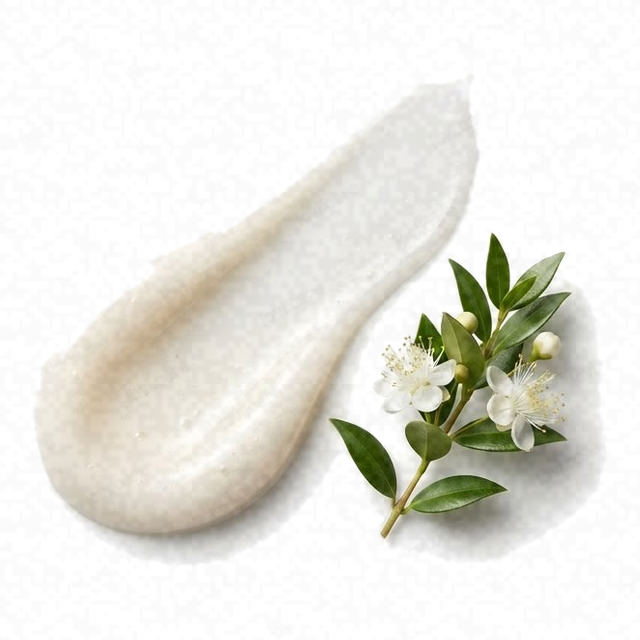 Hydrolyzed Myrtus Communis Leaf Extract
Average
- AverageCombination Skin Fit
- AverageEffectiveness
- Low RiskSafety
Works for acne-prone skin; other eye cares fit it better.
This fit is calculated for the concerns frequently associated with acne-prone skin: breakouts, blackheads, and post-acne marks. For scores and recommendations based on your full skin profile, including your 12D face scan results and any goals or preferences you have, please use the Lovi app.
Page built Nov 8, 2026How the Fit score works
Lovi Assistant explains
- Offers moderate wrinkle reduction for your combination skin, as retinol and sodium hyaluronate help minimize fine lines, though it lacks sufficient seboregulating ingredients for oilier areas.
- While providing general hydration with glycerin and sodium hyaluronate, the formula's benefits are largely supportive and not directly targeted at your acne, blemishes, and breakouts.
- The product is generally safe for your combination skin, with minor risks of irritation from retinol and ascorbic acid.
People Say
★4.4Overall rating based on 3.5k+ reviewsBased on a very large amount of data, this eye cream is frequently praised for smoothing fine lines and improving skin texture, making the under-eye area appear more awake and youthful due to its retinol and hyaluronic acid formula. A moderate number of users with sensitive skin report experiencing irritation, including stinging, redness, and flaking, particularly in the initial weeks of use.
Highlights
Lightweight and fast-absorbing Mostly Mentioned
- “non-greasy feel”
- “absorbs instantly”
- “lightweight consistency”
- “wears well under makeup”
- “doesn't feel heavy”
Improves texture Often Mentioned
- “skin feels silky”
- “smoother application”
- “softens rough patches”
- “crepeyness reduced”
- “makeup sits better”
Reduces fine lines Often Mentioned
- “fades crow's feet”
- “softens deep wrinkles”
- “eyes look younger”
- “smoothed under-eye texture”
- “diminished laugh lines”
Brightens dark circles Sometimes Noted
- “eyes look brighter”
- “helped with darkness”
- “looked less tired”
- “noticeable brightness”
- “reduced dark shadows”
Good value Sometimes Noted
- “better than expensive brands”
- “great price point”
- “affordable retinol option”
- “worth the money”
- “effective drugstore find”
Causes irritation Sometimes Noted
- “burned my skin”
- “stinging sensation”
- “caused redness”
- “eyes watered”
- “too harsh for sensitive skin”
Drying and flaking Sometimes Noted
- “caused flaky skin”
- “dried out under-eyes”
- “made skin crepey”
- “peeling skin”
- “needed extra moisturizer”
No visible results Rarely Noted
- “saw no difference”
- “wrinkles didn't change”
- “minimal improvement”
- “waste of money”
- “did nothing for me”
Packaging issues Rarely Noted
- “pump stopped working”
- “tube split open”
- “hard to get product out”
- “no safety seal”
- “messy cap”
Unpleasant scent Rarely Noted
- “smell is strong”
- “fragrance is off-putting”
- “chemical smell”
- “scent lingered”
- “too perfumed”
Sources: lovi.care, amazon.com, walmart.com, target.com, ulta.com, neutrogena.com, and more
Questions and answers
How well does Neutrogena Rapid Wrinkle Repair Eye Cream work for acne-prone skin?
Neutrogena Rapid Wrinkle Repair Eye Cream works for acne-prone skin, though other products fit it better because its benefits are supportive and not directly targeted at blemishes. While ingredients like retinol and sodium hyaluronate help smooth fine lines and glycerin provides hydration, it lacks sufficient oil-controlling ingredients. Eye care for acne-prone skin needs ingredients that clear blemishes and soothe while keeping the area balanced without clogging pores.
Which ingredients make this cream a good fit for acne-prone skin?
This cream is an average fit for acne-prone skin because its ingredients like glycerin and sodium hyaluronate provide general hydration, but it lacks specific oil-balancing and blemish-targeting ingredients. An eye care product for this skin type needs soothing, non-clogging moisturizers and blemish-fighting components like niacinamide to keep the skin clear and balanced.
What does Retinol SA do for acne-prone skin?
Retinol helps clear acne-prone skin by reducing blemishes and keeping pores unclogged, though it may cause some dryness or flaking initially. This type of product works best when paired with soothing and hydrating ingredients to keep the skin calm and comfortable.
American Journal of Clinical Dermatology, 2019Archives of Dermatological Research, 2024
What does Hyaluronic Acid do for acne-prone skin?
Hyaluronic acid helps acne-prone skin by soothing irritation, calming redness, and keeping the skin balanced without clogging pores. When combined with targeted ingredients like zinc oxide, it may also help reduce breakouts.
Where does this cream go in a skincare routine for acne-prone skin?
This cream goes into the evening treatment step, since retinol and vitamin C work best at night for safety around sun exposure. It is important to watch for mild irritation, and acne-prone skin also needs products with oil-balancing ingredients to better manage breakouts.
Can I use this cream with niacinamide, and in what order?
You can use this eye cream with niacinamide by applying niacinamide first and letting it absorb before putting on this cream. This order helps keep your skin calm while minimizing any mild irritation from the retinol.
How often should I use this cream?
This eye cream can be used daily to help smooth fine lines, though acne-prone skin may occasionally experience minor irritation from the retinol and vitamin C it contains. To achieve a better fit for acne-prone skin, this type of product needs added ingredients that help control oil and target breakouts.
Can this cream clog pores, cause breakouts or purging for acne-prone skin?
This cream is unlikely to clog pores, but the retinol inside may cause some flaking and irritation that looks like breakouts for acne-prone skin. Because it lacks ingredients to balance oil, acne-prone skin needs products that also include oil-controlling agents and blemish-targeting ingredients.
Is this cream fragrance-free and alcohol-free?
Yes, it has no fragrance and no drying alcohol. Cetearyl alcohol and stearyl alcohol are fatty alcohols, which soften the skin.
What the research says
Topical bakuchiol 0.5% applied twice daily compared with retinol 0.5% applied daily significantly decreased wrinkle surface area and hyperpigmentation with no statistical difference between the compounds in 44 patients over 12 weeks, while retinol users reported more facial skin scaling and stinging.
The British Journal of Dermatology, 2019A single application of a moisturizing fluid containing hyaluronic acid 1%, glycerin 5%, and Centella asiatica stem cells extract significantly increased skin hydration by 29% and reduced transepidermal water loss at 24 hours compared to baseline and an untreated control site in twenty healthy women.
Clinical, Cosmetic and Investigational Dermatology, 2017Topical hyaluronic acid filler serum combined with Botulinum toxin type A lengthened the duration of the toxin's effect in reducing wrinkles compared to Botulinum toxin type A alone.
Dermatologic Therapy, 2022Topical 0.4% retinol significantly increased epidermal thickness, dermal vascularity, and extracellular matrix production by stimulating keratinocyte proliferation, endothelial cell proliferation, and fibroblast activation in naturally aged human skin compared to vehicle.
International Journal of Cosmetic Science, 2017Silicone particles encapsulating retinol increased its half-life by 9-fold and yielded 12-23% lower skin irritation in human subjects compared to Microsponge particles while maintaining biological activity.
Journal of Controlled Release, 2018Topical stabilized retinol treatment induced HAS gene expression and increased hyaluronic acid production in human skin in vitro, ex vivo, and in vivo compared to vehicle.
Archives of Dermatological Research, 2017Topical application of 0.1% hyaluronic acid formulations of different molecular weights led to significant improvements in skin hydration and elasticity, with low-molecular-weight formulations also significantly reducing wrinkle depth in seventy-six female subjects compared to a vehicle control.
Journal of Drugs in Dermatology, 2011Topical application of hyaluronic acid in conjunction with free gingival graft significantly reduced donor site postoperative pain until day 7 compared to normal saline, with no significant differences in graft dimensions or patient satisfaction.
Clinical Oral Investigations, 2022Treatment with a hyaluronic acid-containing mouth rinse or topical gel led to significant lesion reduction, pain relief, and normalization of lesion color in adult patients with minor recurrent aphthous stomatitis, with the gel formulation showing an earlier healing onset at 3 days.
BMC Oral Health, 2019Topical application of 5% vitamin C cream significantly improved global clinical scores, increased skin microrelief density, and induced elastic tissue repair in photoaged skin compared to excipient control in healthy female volunteers.
Experimental Dermatology, 2003Ascorbic acid 2-glucoside gel significantly reduced gingival melanin pigmentation after 4 weeks compared to placebo in 73 subjects with symmetric pigmentation.
Journal of Periodontology, 2009Topical application of VC-IP cream twice daily for 8 weeks reduces periorbital wrinkles in female subjects compared to a placebo cream.
Journal of Cosmetic Dermatology, 2022The emollient V0034CR significantly reduced TEWL compared to vehicle and vehicle plus glycerol, and significantly increased corneometry scores compared to vehicle and vehicle plus petrolatum in healthy volunteers with dry skin, demonstrating combined barrier function improvement from petrolatum and hydration improvement from glycerol.
Journal of Cosmetic Dermatology, 2020Ten days of treatment with a cream containing 20% glycerin significantly increased skin hydration measured by corneometer values in 17 healthy volunteers compared to a placebo cream, but showed no influence on transepidermal water loss or skin sensitivity to an irritating surfactant.
International Journal of Cosmetic Science, 2001Niacinamide/glycerin body moisturizers provided better rapid and prolonged improvement of cosmetic xerosis through functional improvement of stratum corneum barrier function compared to no treatment and conventional moisturizers in female subjects.
Journal of Drugs in Dermatology, 2012Topical application of a dermocosmetic containing Myrtus communis extract and azelaic acid reduced acne relapses and helped maintain remission compared to a light moisturizing cream in adult females in the acne maintenance phase over 16 weeks.
Journal of the European Academy of Dermatology and Venereology, 2023Topical treatments including podophyllotoxin, sodium nitrite, myrtle leaf extract, phenol, salicylic acid with lactic acid, SB206, and VP-102 were more efficacious than control in patients with molluscum contagiosum, whereas cantharidin, potassium hydroxide, and imiquimod showed varying degrees of efficacy.
Clinics in Dermatology, 2021Topical Myrtle solution significantly reduced inflammatory lesions and acne severity index compared to 1% clindamycin solution in patients with mild to moderate acne vulgaris.
Journal of Pharmacopuncture, 2020
Why other eye cares fit acne-prone skin better
- Retinol in this eye care
Topical bakuchiol 0.5% applied twice daily compared with retinol 0.5% applied daily significantly decreased wrinkle surface area and hyperpigmentation with no statistical difference between the compounds in 44 patients over 12 weeks, while retinol users reported more facial skin scaling and stinging.
The British Journal of Dermatology, 2019 Sodium ascorbyl phosphate provides effective antimicrobial action, prevents sebum oxidation, and demonstrates superior clinical efficacy compared to a standard acne treatment in patients with acne vulgaris.
International Journal of Cosmetic Science, 2005A panthenol-enriched mask improved skin hydration, regulated sebum, and reduced redness and TEWL across dry sensitive, oily sensitive, and oily acne skin subgroups with excellent tolerance and no adverse reactions.
Journal of Cosmetic Dermatology, 2024
Ingredients
Water, Pentaerythrityl Tetraethylhexanoate, Dimethicone, Glycerin, Ppg-15 Stearyl Ether, Cetearyl Alcohol, Stearyl Alcohol, Butylene Glycol, Ceteareth-20, Isohexadecane, Dimethicone Crosspolymer, Trisiloxane, Phenoxyethanol, Caprylyl Glycol, Ammonium Acryloyldimethyltaurate Vp Copolymer, Polyacrylamide, Polyethylene, C13-14 Isoparaffin, Chlorphenesin, Hydrolyzed Myrtus Communis Leaf Extract, Bht, Sodium Hyaluronate, Disodium Edta, Laureth-7, Ascorbic Acid, Retinol, Sodium Hydroxide, Synthetic Wax, Ptfe
Behind this fit score
Lovi calculates every fit score from the full ingredient list with brand-independent rules our dermatologists and cosmetic chemists build and review, and personalizes every pick with AI trained on the real results of millions of users. Lovi trains its fit score models on a proprietary dataset built from more than 10,000 expert-labeled products and more than 100,000 simulated examples, following an internally consistent methodology presented at Cosmoprof, AMWC, and Skin of Color Update.
-

Co-founder, Medical Director
Cosmetic chemist, cosmetologist, aesthetic products developer
-

Co-founder, CEO and CTO
PhD in computer science, 3x US patent holder, ex-Google, ex-Yandex
-

Dr. Sofía Perea Pérez, MD, MSc
Medical Board
Aesthetic medicine practitioner, MSc in Longevity and Anti-Aging Medicine
-

Medical Board
Specialist dermatologist, MBBS, MD, IFAAD
-

Medical Board
Cosmetic chemist, SCS, IFSCC member
-

Medical Board, Medical Advisor
Dermatology MD
-

Elina Nazarenko, MD
Medical Board
Dermatology and diagnostic consultant
-

Victoria Derkova, MS
Medical Board
Cosmetic chemist, cosmetic development technologist


How does it fit your skin?
Scan your face, then any product: Lovi shows how well it fits you and what fits even better.