
Estée Lauder DayWear Multi-Protection Anti-Oxidant 24H-Moisture Creme SPF 15 for skin with dark spots

 Avobenzone
 Octisalate
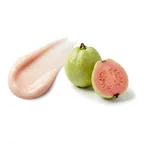 Psidium Guajava Fruit Extract
 Tetrahexyldecyl Ascorbate
 Squalane
Superior
- SuperiorNormal Skin Fit
- SuperiorEffectiveness
- ExcellentSafety
One of the best sunscreens for skin with dark spots.
This fit is calculated for the concerns frequently associated with dark spots: hyperpigmentation, sun spots, and uneven skin tone. For scores and recommendations based on your full skin profile, including your 12D face scan results and any goals or preferences you have, please use the Lovi app.
Updated How the Fit score works
Lovi Assistant explains
- Excellent suitability for your normal skin is provided by Tetrahexyldecyl Ascorbate and Ergothioneine, which offer superb antioxidant activity and support skin health, while also addressing your pigmentation concerns.
- Glycerin and sodium hyaluronate provide excellent moisturizing benefits, and the inclusion of avobenzone and octisalate ensures effective UV protection.
- The safety profile is excellent due to the absence of harsh ingredients and the presence of soothing agents like Glycyrrhetinic Acid and Ergothioneine.
Buy online

Prices checked 20 Nov 2026
The Lovi Fit is the same in every country; only the stores and prices differ, and the ones here are for India.
How to apply
- Use this moisturizing sunscreen AM daily to protect your normal skin and fight dark spots.
- Apply this product as the final step of your morning routine after your moisturizer.
- Gently spread a coin-sized amount evenly over your face, avoiding rough rubbing.
- Apply this product on clean, dry skin for the best coverage and protection.
- Avoid the sensitive eye area and reapply every two hours when outdoors.
People Say
★4.7Overall rating based on 5.0k+ reviewsBased on a very large amount of data, users with normal to combination skin highly recommend this cream for its lightweight, refreshing feel that provides lasting hydration and a dewy glow without pore-clogging. It effectively smooths fine lines and works well under makeup. Some users with very oily skin find it can feel greasy, and many feel the SPF 15 is insufficient for adequate sun protection.
Highlights
Intense hydration Mostly Mentioned
- “keeps my dry patches away”
- “skin drinks it up”
- “hydration lasts 24 hours”
Excellent makeup base Often Mentioned
- “foundation looks better on top”
- “no pilling under makeup”
- “creates a smooth canvas”
Lightweight texture Often Mentioned
- “sinks right in”
- “not heavy or thick”
- “perfect consistency for day wear”
Refreshing scent Often Mentioned
- “smells like fresh cucumbers”
- “light and pleasant scent”
- “love the signature fragrance”
High price Sometimes Noted
- “jar is too small for the price”
- “very expensive habit”
- “wish it was cheaper”
Low SPF Sometimes Noted
- “wish it was SPF 30”
- “SPF 15 is a joke”
- “still need extra sun protection”
Breakouts/Irritation Rarely Noted
- “caused small bumps”
- “stung my eyes”
- “broke me out immediately”
Greasy residue Rarely Noted
- “made my T-zone oily”
- “too shiny for summer”
- “left a greasy film”
Sources: lovi.care, macys.com, boots.com, walmart.com, dermstore.com, esteelauder.com, and more
Questions and answers
What makes Estée Lauder DayWear SPF 15 one of the best fits for skin with dark spots?
This cream is one of the best fits for skin with dark spots because it includes tetrahexyldecyl ascorbate and ergothioneine, which offer antioxidant activity and address pigmentation concerns. Glycerin and sodium hyaluronate provide moisturizing benefits while avobenzone and octisalate ensure effective UV protection.
Which ingredients make this cream a good fit for skin with dark spots?
This cream is a great fit for skin with dark spots because it contains tetrahexyldecyl ascorbate and ergothioneine, which help brighten dark areas and protect against sun damage. It also includes glycerin and sodium hyaluronate to keep skin soft and hydrated.
What does Avobenzone do for skin with dark spots?
Avobenzone helps protect skin with dark spots by providing broad-spectrum UV defense that prevents further sun-induced pigmentation. It offers reliable sun protection with a safe profile and low skin absorption, making it suitable for daily use.
What does Octisalate do for skin with dark spots?
Octisalate does not directly fade or treat dark spots, but it acts as a chemical UV filter that helps protect your skin from sun damage that can make dark spots darker. To effectively manage dark spots, a product of this type needs brightening ingredients like vitamin C or niacinamide alongside reliable sun protection.
Where does this cream go in a skincare routine for skin with dark spots?
This cream goes in the morning routine as a moisturizer and sunscreen step. It helps keep skin soft while providing antioxidant benefits and UV protection that address dark spots.
Can I use this cream with retinol, and in what order?
Yes, you can use this cream with retinol by applying the retinol first and following with this moisturizer to help keep your skin soft and calm. This product is a great fit because it provides reliable UV protection, powerful antioxidants, and hydrating ingredients that support your skin while using active treatments.
How often should I use this cream?
You can use this moisturizing spf daily in your morning routine to keep your skin hydrated while protecting it from the sun. Daily application helps maintain skin moisture and supports a bright, even complexion over time.
Journal of Cosmetic Dermatology, 2020Health Science Reports, 2021
Can this cream clog pores, cause breakouts or purging for skin with dark spots?
This cream is unlikely to clog pores or cause breakouts for skin with dark spots because it has a very safe formula free of harsh ingredients and includes soothing agents that keep skin calm. It also provides reliable daily hydration and UV protection to support overall skin health.
Clinical, Cosmetic and Investigational Dermatology, 2017Journal of the American Academy of Dermatology, 1987
Is this cream fragrance-free and alcohol-free?
It has no drying alcohol and contains fragrance (parfum). Stearyl alcohol and behenyl alcohol are fatty alcohols, which soften the skin.
What the research says
A triple combination of ergothioneine, collagen peptides, and sodium hyaluronate attenuated UV-induced skin damage ex vivo and improved facial skin hydration, elasticity, barrier function, and wrinkles in Chinese women.
Frontiers in Nutrition, 2026A single application of a moisturizing fluid containing hyaluronic acid 1%, glycerin 5%, and Centella asiatica stem cells extract significantly increased skin hydration by 29% and reduced transepidermal water loss at 24 hours compared to baseline and an untreated control site in twenty healthy women.
Clinical, Cosmetic and Investigational Dermatology, 2017Parsol 1789 and Eusolex 8020 provided slightly better photoprotection than oxybenzone in both normal and sensitized human skin when assessed using pigmentation end points, whereas all three sunscreens performed similarly against UVA-induced erythema.
Journal of the American Academy of Dermatology, 1987Methoxy-monobenzoylmethane protects human skin against UV-induced damage by converting to avobenzone under UVB light irradiation and demonstrating antioxidant and radical scavenging properties in vitro and in cell assays.
Molecules, 2021Encapsulation of ethylhexyl methoxycinnamate and butyl methoxydibenzoylmethane in lipid microparticles significantly reduced their in vivo human skin penetration compared to nonencapsulated filters.
Skin Pharmacology and Physiology, 2011Microencapsulation of the BMDBM/HP-beta-CD complex in lipid microparticles significantly decreased the percutaneous penetration of the UV filter into the stratum corneum of human volunteers compared to the non-encapsulated sunscreen agent.
Journal of Pharmaceutical and Biomedical Analysis, 2011Simulated real-life dermal sunscreen exposure in twenty human volunteers leads to the systemic bioavailability and urinary excretion of the UV filter 2-ethylhexyl salicylate and its metabolite, reaching concentration peaks at 7 to 8 hours with 70-80% of overall excretion within 24 hours.
Archives of Toxicology, 2019The application of a sunscreen formulation containing ethylhexyl methoxycinnamate, ethylhexyl salicylate, methyl anthranilate, and octocrylene does not significantly affect critical acne-related species such as Cutibacterium acnes and Staphylococcus epidermidis, refuting the induction of facial dysbiosis in men.
Archives of Dermatological Research, 2024Controlled single dermal exposure to an EHS-containing sunscreen in three volunteers resulted in delayed systemic resorption with elimination half-lives between 6.6 and 9.7 hours, where the parent compound EHS occurred as the dominant urinary parameter.
Archives of Toxicology, 2024A toner with 6% guava extract significantly reduced skin oiliness on the forehead and nose compared to the base toner in 21 volunteers over 28 days.
Journal of Cosmetic Dermatology, 2019Application of guava leaf extract-menthol toner significantly reduced post-exercise perspiration to about half of baseline and placebo values without affecting skin temperature or relative heart rate in 64 participants.
Pharmaceutical Biology, 2021Pre-incubation with guava crude extract significantly decreased apoptotic and dead cells and markers of oxidative damage while improving antioxidant enzyme activity in human dermal fibroblasts subjected to AAPH-mediated oxidative stress, compared to cells subjected to stress without prior pre-incubation.
Plant Foods for Human Nutrition, 2018Topical application of 5% vitamin C cream significantly improved global clinical scores, increased skin microrelief density, and induced elastic tissue repair in photoaged skin compared to excipient control in healthy female volunteers.
Experimental Dermatology, 2003Topical application of VC-IP cream twice daily for 8 weeks reduces periorbital wrinkles in female subjects compared to a placebo cream.
Journal of Cosmetic Dermatology, 2022Topical treatment with 5% vitamin C and 0.1% madecassoside significantly improved clinical scores for wrinkles, suppleness, firmness, roughness, and skin hydration, along with functional and structural remodeling of the elastic fiber network in 20 female volunteers with photoaged skin after 6 months compared to baseline.
Experimental Dermatology, 2008Application of fullerene-C60 dissolved in squalane cream twice daily for 8 weeks significantly enhanced skin moisture and reduced wrinkle formation compared to placebo in 23 Japanese women without severe side effects.
Journal of Nanoscience and Nanotechnology, 2010Squalane at 0.005-0.015% counteracts UVA-induced oxidative stress, inflammation, and collagen metabolism inhibition while stimulating fibroblast migration in human dermal fibroblasts.
Molecules, 2025Plant-derived squalane protected human dermal fibroblasts against UVA-induced damage by counteracting ROS formation, suppressing apoptosis-related proteins p53, caspase-3, caspase-9, and PARP, and restoring the pro-survival p-Akt/mTOR pathway.
Antioxidants, 2025
Ingredients
Avobenzone, Octisalate, Homosalate, Water, Dimethicone, Butyloctyl Salicylate, Butylene Glycol, Polyester-8, Cetyl Ricinoleate, Steareth-21, Steareth-2, Di-C12-15 Alkyl Fumarate, Caprylic Capric Myristic Stearic Triglyceride, Polysilicone-11, Psidium Guajava Fruit Extract, Gentiana Lutea Root Extract, Polygonum Cuspidatum Root Extract, Stearyl Alcohol, Hordeum Vulgare Extract Extrait Dorge Extract, Laminaria Ochroleuca Extract, Rosamarinus Officinalis Leaf Extract Rosemary Leaf Extract, Wheat Extract Germ Extract, Artemia Extract, Fumaria Officinalis Stem Extract Flower Leaf, Caffeine, Pentylene Glycol, Lemon Fruit Extract, Hydrolyzed Rice Extract, Vitis Vinifera Seed Extract Grape Seed Extract, Hydrolyzed Rice Bran Extract, Lauryl Peg-9 Polydimethylsiloxyethyl Dimethicone, Thermus Thermophillus Ferment, Behenyl Alcohol, Acrylic Acid Vp Crosspolymer, Triacontanyl Pvp, Glycerin, C12-15 Alkyl Benzoate, Linoleic Acid, Cholesterol, Squalane, Sodium Pca, 1,2-Hexanediol, Urea, Caprylic Capric Triglyceride, Dipropylene Glycol Dibenzoate, Tocopheryl Acetate, Acrylamide Sodium Acryloyldimethyltaurate Copolymer, Tetrahexyldecyl Ascorbate, Sodium Hyaluronate, Ergothioneine, Isohexadecane, Ppg-15 Stearyl Ether Benzoate, Glycyrrhetinic Acid, Trehalose, Polyquaternium-51, Polysorbate 80, Lecithin, Hydrogenated Lecithin, Fumaric Acid, Palmitoyl Hydroxypropyltrimonium Amylopectin Gycerin Crosspolymer, Caprylyl Glycol, Cyclodextrin, Sodium Hydroxide, Nordihydroguaiaretic Acid, Sodium Chloride, Ascorbyl Tocopheryl Maleate, Parfum, Citric Acid, Ethylbisiminomethylguaiacol Manganese Chloride, Pentaerythrityl Tetra-Di-T-Butyl Hydroxyhydrocinnamate, Disodium Edta, Bht, Sodium Dehydroacetate, Phenoxyethanol, Blue 1 Ci 42090, Yellow 5 Ci 19140, Chromium Hydroxide Green Ci 77289
Behind this fit score
Lovi calculates every fit score from the full ingredient list with brand-independent rules our dermatologists and cosmetic chemists build and review, and personalizes every pick with AI trained on the real results of millions of users. Lovi trains its fit score models on a proprietary dataset built from more than 10,000 expert-labeled products and more than 100,000 simulated examples, following an internally consistent methodology presented at Cosmoprof, AMWC, and Skin of Color Update.
-

Co-founder, Medical Director
Cosmetic chemist, cosmetologist, aesthetic products developer
-

Co-founder, CEO and CTO
PhD in computer science, 3x US patent holder, ex-Google, ex-Yandex
-

Dr. Sofía Perea Pérez, MD, MSc
Medical Board
Aesthetic medicine practitioner, MSc in Longevity and Anti-Aging Medicine
-

Medical Board
Specialist dermatologist, MBBS, MD, IFAAD
-

Medical Board
Cosmetic chemist, SCS, IFSCC member
-

Medical Board, Medical Advisor
Dermatology MD
-

Elina Nazarenko, MD
Medical Board
Dermatology and diagnostic consultant
-

Victoria Derkova, MS
Medical Board
Cosmetic chemist, cosmetic development technologist


How does it fit your skin?
Scan your face, then any product: Lovi shows how well it fits you and what fits even better.