
Linoleic acid
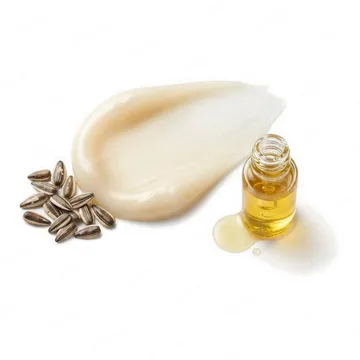
Topical linoleic acid visibly clears pores, balances sebum production, calms redness, deeply hydrates dry areas, and repairs the skin barrier. It suits dry skin and oily skin particularly well and is commonly available in serums. Furthermore, it fits into a routine easily because it works well with ceramide, glycolic acid, and niacinamide.
International Journal of Molecular Sciences, 2024Clinical and Experimental Dermatology, 1998
This page shows linoleic acid products with a Lovi page. For every product, and a routine built for your skin, use the Lovi app.
Popular linoleic acid products
-
The Ordinary
Granactive Retinoid 2% Emulsion
 ₹1,200.00
-
Dermalogica
Multivitamin Power Recovery Masque
₹4,481.07
- KraveBeauty Oil La La
- EltaMD PM Restore Moisturizer
- Dieux Skin Instant Angel Moisturizer
-
Minimalist
SPF 50 Sunscreen
₹455.10
- Murad Rapid Resurfacing Peel
- Ceradan Cream


Other linoleic acid products
-
The Ordinary
Granactive Retinoid 2% Emulsion
₹1,200.00
-
Dermalogica
Multivitamin Power Recovery Masque
₹4,481.07
- KraveBeauty Oil La La
- EltaMD PM Restore Moisturizer
- Dieux Skin Instant Angel Moisturizer
- Ceradan Cream
-
Minimalist
SPF 50 Sunscreen
₹455.10
- Murad Rapid Resurfacing Peel
-
Oskia
Renaissance Cleansing Gel
₹14,744.00

What reviewers say about popular linoleic acid products
The highlight reviewers mention most for each popular linoleic acid product on Lovi.
The Ordinary Granactive Retinoid 2% Emulsion Improves texture ★4.5 · 1.5k+ reviews
- Lightweight consistency
- Short shelf life
- “Felt a change in the texture of my skin from the very first use.”
Dermalogica Multivitamin Power Recovery Masque Deep hydration ★4.6 · 700+ reviews
- Skin recovery
- Texture improvement
- “super hydrating”
KraveBeauty Oil La La Lightweight texture ★3.4 · 100+ reviews
EltaMD PM Restore Moisturizer Lightweight, non-greasy ★4.4 · 1.6k+ reviews
- Effective hydration
- Soothing for sensitive
- “Absorbs quickly”
Dieux Skin Instant Angel Moisturizer Lightweight texture ★4.6 · 3.5k+ reviews
- Deeply hydrating
- Glowy finish
- “rich without feeling heavy”
Minimalist SPF 50 Sunscreen No white cast ★4.3 · 130.0k+ reviews
- Effective protection
- Moisturizing formula
- “leaves absolutely no white cast”
Linoleic acid for dry skin
- Dieux Skin Instant Angel Moisturizer
- Murad Rapid Resurfacing Peel
- KraveBeauty Oil La La
-
Minimalist
SPF 50 Sunscreen
₹455.10
- Ceradan Cream
-
Dermalogica
Multivitamin Power Recovery Masque
₹4,481.07
- EltaMD PM Restore Moisturizer
-
The Ordinary
Granactive Retinoid 2% Emulsion
₹1,200.00
-
Oskia
Renaissance Cleansing Gel
₹14,744.00


Linoleic acid for oily skin
- Murad Rapid Resurfacing Peel
- KraveBeauty Oil La La
-
The Ordinary
Granactive Retinoid 2% Emulsion
₹1,200.00
-
Minimalist
SPF 50 Sunscreen
₹455.10
-
Oskia
Renaissance Cleansing Gel
₹14,744.00
- Dieux Skin Instant Angel Moisturizer
- EltaMD PM Restore Moisturizer
-
Dermalogica
Multivitamin Power Recovery Masque
₹4,481.07
- Ceradan Cream


Linoleic acid for combination skin
- Murad Rapid Resurfacing Peel
-
Minimalist
SPF 50 Sunscreen
₹455.10
- KraveBeauty Oil La La
-
Oskia
Renaissance Cleansing Gel
₹14,744.00
-
The Ordinary
Granactive Retinoid 2% Emulsion
₹1,200.00
- Dieux Skin Instant Angel Moisturizer
- EltaMD PM Restore Moisturizer
-
Dermalogica
Multivitamin Power Recovery Masque
₹4,481.07
- Ceradan Cream


Linoleic acid for sensitive skin
- KraveBeauty Oil La La
- Dieux Skin Instant Angel Moisturizer
- Ceradan Cream
-
The Ordinary
Granactive Retinoid 2% Emulsion
₹1,200.00
- Murad Rapid Resurfacing Peel
-
Minimalist
SPF 50 Sunscreen
₹455.10
- EltaMD PM Restore Moisturizer
-
Dermalogica
Multivitamin Power Recovery Masque
₹4,481.07
-
Oskia
Renaissance Cleansing Gel
₹14,744.00


Linoleic acid for acne-prone skin
- KraveBeauty Oil La La
- Murad Rapid Resurfacing Peel
-
Minimalist
SPF 50 Sunscreen
₹455.10
-
The Ordinary
Granactive Retinoid 2% Emulsion
₹1,200.00
-
Oskia
Renaissance Cleansing Gel
₹14,744.00
- Dieux Skin Instant Angel Moisturizer
- EltaMD PM Restore Moisturizer
-
Dermalogica
Multivitamin Power Recovery Masque
₹4,481.07
- Ceradan Cream


Linoleic acid for mature skin
- Dieux Skin Instant Angel Moisturizer
- Murad Rapid Resurfacing Peel
-
Dermalogica
Multivitamin Power Recovery Masque
₹4,481.07
- KraveBeauty Oil La La
- EltaMD PM Restore Moisturizer
-
Minimalist
SPF 50 Sunscreen
₹455.10
-
Oskia
Renaissance Cleansing Gel
₹14,744.00
- Ceradan Cream
-
The Ordinary
Granactive Retinoid 2% Emulsion
₹1,200.00


What to combine linoleic acid with
| Ingredient | Together | How to use them |
|---|---|---|
 Ceramide |
Works well | Use them together in the same routine, applying your ceramide cream right after your fatty acid product to lock in extra moisture. Linoleic acid and ceramide |
 Glycolic acid |
Works well | Use them together by applying glycolic acid first and linoleic acid right after, because lipids help comfort skin after exfoliation. Linoleic acid and glycolic acid |
 Niacinamide |
Works well | Use them together in the same routine, applying niacinamide first to help your skin absorb the nourishing oils. Linoleic acid and niacinamide |
 Alpha hydroxy acid |
Works well | Use them in the same routine by applying the acid first and the linoleic acid after, because linoleic acid helps rebuild your skin barrier. Linoleic acid and alpha hydroxy acid |
 Salicylic acid |
Works well | Use salicylic acid first, then linoleic acid, because linoleic acid helps soothe dryness caused by the exfoliant. Linoleic acid and salicylic acid |
 Mandelic acid |
Works well | Use them in the same routine by applying mandelic acid first, waiting for it to sink in, and then following with linoleic acid to restore your skin. Linoleic acid and mandelic acid |
 Hyaluronic acid |
Works well | Use them together by applying the hyaluronic acid first and the linoleic acid second, because one pulls in moisture and the other locks it in. Linoleic acid and hyaluronic acid |
 Lactic acid |
Works well | Use them in the same routine by applying lactic acid first and linoleic acid right after to restore skin moisture. Linoleic acid and lactic acid |
 Citric acid |
Works well | Use them together by applying the acid first and the lipid oil right after, because the oil soothes the skin. Linoleic acid and citric acid |
From the ingredient rules behind the "Works well with" and "Don't mix with" notes on every product in the Lovi app.
Questions and answers
What does linoleic acid do for the skin?
Linoleic acid helps repair the skin barrier and provides anti-inflammatory effects. Topical application may also help reduce acne microcomedones and soothe dryness.
International Journal of Molecular Sciences, 2024Clinical and Experimental Dermatology, 1998
How do you use linoleic acid?
You can use linoleic acid in the same routine with exfoliating acids like salicylic acid by applying the exfoliant first and following with linoleic acid, which helps soothe dryness caused by the exfoliant. It also works well with ceramides by applying your ceramide cream right after your fatty acid product to lock in extra moisture.
Should you use linoleic acid in the morning or at night?
You can use linoleic acid both morning and night as part of your daily routine.
Can you use linoleic acid every day?
Yes, you can use linoleic acid every day to help support your skin barrier and maintain moisture. Topical application helps soothe dryness and provides anti-inflammatory effects.
Does linoleic acid cause purging or irritation?
Linoleic acid is unlikely to cause irritation and instead helps soothe dryness and comfort skin. Topical application of linoleic acid exhibits anti-inflammatory effects and helps repair your skin barrier.
Which skin types is linoleic acid best for?
Linoleic acid is best for dry, oily, combination, sensitive, and acne-prone skin, with Lovi fit levels ranging from high to superior for products like Dieux Skin Instant Angel Moisturizer, KraveBeauty Oil La La, and Murad Rapid Resurfacing Peel.
Can you use linoleic acid with ceramide?
Yes, you can use linoleic acid and ceramides together in the same routine by applying your ceramide cream right after your fatty acid product to lock in extra moisture. Topical application of a linoleic acid-ceramide containing moisturizer helps improve skin barrier function and reduce moisture loss.
Research on linoleic acid
Behind this ingredient guide
Lovi checks every ingredient with brand-independent rules our dermatologists and cosmetic chemists build and review, and personalizes every pick with AI trained on the real results of millions of users. Lovi trains its fit score models on a proprietary dataset built from more than 10,000 expert-labeled products and more than 100,000 simulated examples, following an internally consistent methodology presented at Cosmoprof, AMWC, and Skin of Color Update.
-

Co-founder, Medical Director
Cosmetic chemist, cosmetologist, aesthetic products developer
-

Co-founder, CEO and CTO
PhD in computer science, 3x US patent holder, ex-Google, ex-Yandex
-

Dr. Sofía Perea Pérez, MD, MSc
Medical Board
Aesthetic medicine practitioner, MSc in Longevity and Anti-Aging Medicine
-

Medical Board
Specialist dermatologist, MBBS, MD, IFAAD
-

Medical Board
Cosmetic chemist, SCS, IFSCC member
-

Medical Board, Medical Advisor
Dermatology MD
-

Elina Nazarenko, MD
Medical Board
Dermatology and diagnostic consultant
-

Victoria Derkova, MS
Medical Board
Cosmetic chemist, cosmetic development technologist
How does it fit your skin?
Scan your face, then any product: Lovi shows how well it fits you and what fits even better.


