Murad AHA/BHA Exfoliating Cleanser for oily acne-prone skin

 Glycolic Acid
 Lactic Acid
 Salicylic Acid
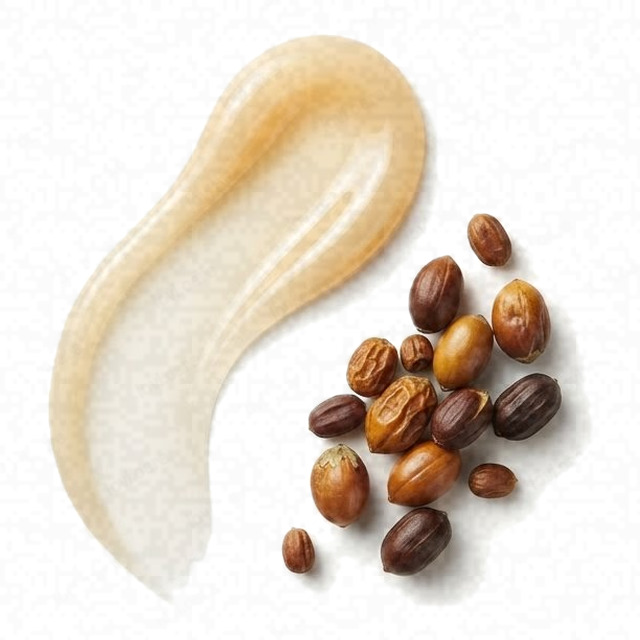 Jojoba Esters
 Sodium Ascorbyl Phosphate
Superior
- SuperiorOily Skin Fit
- SuperiorEffectiveness
- ExcellentSafety
One of the best products for oily acne-prone skin.
This fit is calculated for the concerns frequently associated with oily acne-prone skin: shine, breakouts, blemishes, and enlarged pores. For scores and recommendations based on your full skin profile, including your 12D face scan results and any goals or preferences you have, please use the Lovi app.
Page built Nov 8, 2026How the Fit score works
Lovi Assistant explains
- Excellent suitability for your oily skin and acne concerns is provided by the potent combination of glycolic acid, lactic acid, and salicylic acid, which effectively exfoliate and clear pores. Dipotassium Glycyrrhizate and Sodium Ascorbyl Phosphate further enhance this by soothing inflammation and supporting blemish reduction.
- The formula's excellent exfoliation and pore-clearing capabilities are further supported by the presence of Jojoba Esters, which help to balance oil production and maintain skin hydration.
- The safety profile is excellent, with no risks of irritation for your oily skin due to the absence of harsh ingredients and the inclusion of soothing components.
How to apply
- Use this exfoliant as part of your PM routine once a week to start, increasing frequency only if your skin tolerates it well.
- Apply the exfoliant after cleansing and toning, but before your final moisturizer step.
- Gently press 2-3 drops of the exfoliant into your skin and let it absorb for a minute.
- Apply the product directly onto clean, dry skin for the best results against breakouts.
- Avoid the sensitive eye area and always use a daily SPF since exfoliating makes skin more sensitive to the sun.
People Say
★4.5Overall rating based on 1.5k+ reviewsBased on a very large amount of data, this cleanser is highly effective at smoothing skin texture and brightening the complexion, with many users appreciating its ability to clear congestion and provide gentle exfoliation. Some users with sensitive skin have noted that it can be drying or harsh if used too frequently, and a few find the price point to be high.
Highlights
Smoother skin texture Mostly Mentioned
- “leaves my skin smooth”
- “felt so soft”
- “polished feel”
Brighter complexion Often Mentioned
- “skin looks glowing”
- “brighter appearance”
- “removes dullness”
Clears acne/congestion Sometimes Noted
- “reduced my breakouts”
- “blackheads diminished”
- “pores look smaller”
Gentle physical exfoliation Sometimes Noted
- “beads are gentle”
- “not scratchy”
- “dissolves nicely”
Drying or stripping Sometimes Noted
- “face felt tight”
- “skin felt dry”
- “stripped moisture”
Too harsh/irritating Sometimes Noted
- “burnt my face”
- “caused redness”
- “not for sensitive skin”
Efficient product usage Rarely Noted
- “little goes a long way”
- “lasts a long time”
- “good lather”
Expensive price point Rarely Noted
- “pricey for a wash”
- “expensive”
- “cost is high”
Not for daily use Rarely Noted
- “too strong for daily”
- “use sparingly”
- “over-exfoliated”
Runny consistency Rarely Noted
- “watery texture”
- “pours out fast”
- “hard to control”
Sources: lovi.care, sephora.com, kohls.com, ulta.com, murad.com, lovelyskin.com, and more
Questions and answers
What makes Murad AHA/BHA Exfoliating Cleanser one of the best fits for oily acne-prone skin?
This cleanser is a great fit because glycolic, lactic, and salicylic acids work together to clear pores, while jojoba esters help balance oil and keep skin hydrated. It also includes soothing components like dipotassium glycyrrhizate and sodium ascorbyl phosphate that help calm inflammation and support blemish reduction with a low risk of irritation.
International Journal of Cosmetic Science, 2009BioMed Research International, 2020
Which ingredients make this cleanser a good fit for oily acne-prone skin?
Glycolic acid, lactic acid, and salicylic acid make this cleanser a great fit by exfoliating the skin and clearing out pores. Ingredients like dipotassium glycyrrhizate, sodium ascorbyl phosphate, and jojoba esters further help by soothing redness, balancing oil production, and keeping the skin hydrated.
International Journal of Cosmetic Science, 2009BioMed Research International, 2020
What does Glycolic Acid do for oily acne-prone skin?
Glycolic acid helps clear acne-prone skin by reducing pimples and soothing breakouts. It exfoliates the surface to keep pores clear and leaves the skin feeling smooth.
Clinical, Cosmetic and Investigational Dermatology, 2019Dermatologic Surgery, 2014
What does Lactic Acid do for oily acne-prone skin?
Lactic acid helps oily acne-prone skin by gently clearing pores and reducing breakouts, which supports a smoother and clearer face. Using appropriate cosmetic acids helps calm red bumps and works well alongside acne treatments.
Der Hautarzt; Zeitschrift Fur Dermatologie, Venerologie, und Verwandte Gebiete, 2010Clinical, Cosmetic and Investigational Dermatology, 2023
Where does this cleanser go in a skincare routine for oily acne-prone skin?
This cleanser goes in your morning routine and your evening routine to help clear pores and balance oil production. It is unlikely to cause irritation for your oily skin due to the soothing ingredients included in the formula.
Can I use this cleanser with retinol, and in what order?
You can use this cleanser with retinol by using them on alternate nights or separating them into different routine steps to avoid irritation. Since both ingredients help clear pores and smooth your skin, spacing them out is unlikely to cause redness.
How often should I use this cleanser?
Start using this cleanser once a week, and if your skin feels comfortable and you see good results, you may carefully use it more often. The combination of glycolic, lactic, and salicylic acids helps clear pores and soothe oily skin without irritation.
Dermatologic Surgery, 2003Journal of Cosmetic Dermatology, 2021
Can this cleanser clog pores, cause breakouts or purging for oily acne-prone skin?
This cleanser is unlikely to clog pores or cause breakouts for oily acne-prone skin, as it contains salicylic acid, glycolic acid, and lactic acid to clear pores and exfoliate dead cells. The formula has a very safe profile for this skin type and helps calm inflammation without causing irritation.
BioMed Research International, 2020Journal of Cosmetic Dermatology, 2024
Is this cleanser fragrance-free and alcohol-free?
Yes, it has no fragrance and no drying alcohol.
What the research says
Topical combination of 5% sodium ascorbyl phosphate and 0.2% retinol reduced inflammatory acne lesions by 29.28% at 4 weeks and 63.10% at 8 weeks, outperforming either agent alone.
International Journal of Cosmetic Science, 2009A moisturizer containing licochalcone A, 1,2-decanediol, L-carnitine, and salicylic acid significantly reduced noninflammatory, inflammatory, and total acne lesion counts compared to a vehicle control in Thai patients during a 12-week maintenance phase.
BioMed Research International, 2020Twice daily application of a multitargeted dermocosmetic cream provided comparable efficacy to benzoyl peroxide 5% gel in reducing inflammatory, non-inflammatory, and total lesions in 150 Caucasian subjects with mild-to-moderate acne over 56 days, while demonstrating superior skin tolerability.
Journal of Cosmetic Dermatology, 2024Topical formulations containing 3.75% glycerol and 1.25% hydrolyzed jojoba esters produced significantly lower evaporative TEWL values compared to glycerol alone at 8 and 24 hours posttreatment in human subjects.
Journal of Cosmetic Dermatology, 2008The use of a salicylic acid-based dermocosmetic significantly reduces the needed quantity of benzoyl peroxide without impacting efficacy in mild to moderate acne, and as maintenance post-benzoyl peroxide allows a significant reduction of acne relapse compared to vehicle.
Journal of Drugs in Dermatology, 2023Repeated short-contact 70% glycolic acid peels provided superior results in atrophic acne scars compared to daily low-strength glycolic acid cream or placebo in 58 women over 24 weeks.
International Journal of Dermatology, 2000Serial glycolic acid peels combined with a modified Kligman formula significantly reduced facial PIH severity in Indian patients compared to the modified Kligman formula alone.
Dermatologic Surgery, 2017Application of a cream containing lactic acid 12% and pramoxine HCl 1% significantly improved skin dryness, hydration, and itch compared with a nontreated control in 24 women with a history of dry itchy skin.
Cutis, 2004Topical 12% ammonium lactate produced a significant sparing of epidermal and dermal atrophy induced by clobetasol propionate in human volunteers, without influencing the corticosteroid's bioavailability or antiinflammatory properties.
Journal of the American Academy of Dermatology, 1992A lactic acid/ceramide lotion significantly improved skin moisturization and desquamation compared to no treatment in women with dry, rough skin on the anterior shins.
The Journal of Clinical and Aesthetic Dermatology, 2020Cryotherapy with liquid nitrogen achieved a higher cure rate (39%) than salicylic acid (24%) and a wait-and-see approach (16%) for cutaneous warts at 13 weeks in primary care patients.
CMAJ, 2010Treatment with 2% supramolecular salicylic acid hydrogel resulted in a regression and markedly improvement rate of 51.01% compared to 43.10% for Adapaline gel in patients with mild to moderate facial acne vulgaris, showing no significant difference in efficacy.
Journal of Cosmetic Dermatology, 2024Topical 5% benzoyl peroxide plus salicylic acid achieved the greatest lesion reduction at early 2 to 4 week time points compared to benzoyl peroxide, clindamycin, and combination benzoyl peroxide/clindamycin, while 5% benzoyl peroxide plus salicylic acid and combination benzoyl peroxide/clindamycin showed similar efficacy at 10 to 12 weeks in acne patients.
Journal of the American Academy of Dermatology, 2010Clay jojoba oil facial masks reduced total skin lesions by a mean of 54% after 6 weeks in 133 participants with acne-prone, lesioned skin and mild acne compared to baseline.
Forschende Komplementarmedizin, 2012Topical application of jojoba wax reduced LPS-induced secretion of IL-6, IL-8, and TNFα by approximately 30% and increased the synthesis of pro-collagen III and hyaluronic acid compared to untreated skin in an ex-vivo human skin organ culture model.
Frontiers in Pharmacology, 2024Hybrid nanogels incorporating carrageenan, polyvinylpyrrolidone, and jojoba oil enhance and provide controlled cutaneous permeation of niacinamide, protecting human keratinocytes from UV radiation compared to standard delivery.
Pharmaceutics, 2021Topical application of 5% vitamin C cream significantly improved global clinical scores, increased skin microrelief density, and induced elastic tissue repair in photoaged skin compared to excipient control in healthy female volunteers.
Experimental Dermatology, 2003Ascorbic acid 2-glucoside gel significantly reduced gingival melanin pigmentation after 4 weeks compared to placebo in 73 subjects with symmetric pigmentation.
Journal of Periodontology, 2009Topical application of VC-IP cream twice daily for 8 weeks reduces periorbital wrinkles in female subjects compared to a placebo cream.
Journal of Cosmetic Dermatology, 2022
Ingredients
Water, Sodium Laureth Sulfate, Cocamidopropyl Betaine, Jojoba Esters, Acrylates Copolymer, Glycol Stearate, Butylene Glycol, Sodium Pca, Dipotassium Glycyrrhizate, Sodium Ascorbyl Phosphate, Glycolic Acid, Lactic Acid, Salicylic Acid, Polyquaternium-4, Sodium Hydroxide, Sodium Chloride, Citric Acid, Disodium Edta, Phenoxyethanol, Methylparaben, Propylparaben
Behind this fit score
Lovi calculates every fit score from the full ingredient list with brand-independent rules our dermatologists and cosmetic chemists build and review, and personalizes every pick with AI trained on the real results of millions of users. Lovi trains its fit score models on a proprietary dataset built from more than 10,000 expert-labeled products and more than 100,000 simulated examples, following an internally consistent methodology presented at Cosmoprof, AMWC, and Skin of Color Update.
-

Co-founder, Medical Director
Cosmetic chemist, cosmetologist, aesthetic products developer
-

Co-founder, CEO and CTO
PhD in computer science, 3x US patent holder, ex-Google, ex-Yandex
-

Dr. Sofía Perea Pérez, MD, MSc
Medical Board
Aesthetic medicine practitioner, MSc in Longevity and Anti-Aging Medicine
-

Medical Board
Specialist dermatologist, MBBS, MD, IFAAD
-

Medical Board
Cosmetic chemist, SCS, IFSCC member
-

Medical Board, Medical Advisor
Dermatology MD
-

Elina Nazarenko, MD
Medical Board
Dermatology and diagnostic consultant
-

Victoria Derkova, MS
Medical Board
Cosmetic chemist, cosmetic development technologist


How does it fit your skin?
Scan your face, then any product: Lovi shows how well it fits you and what fits even better.