
EltaMD UV Pure Broad-Spectrum SPF 47 for skin with dark spots

 Zinc Oxide
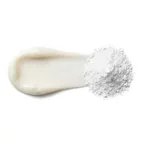 Titanium Dioxide
 Dimethicone
 Ascorbyl Palmitate
 Cyclopentasiloxane
Superior
- HighNormal Skin Fit
- HighEffectiveness
- ExcellentSafety
One of the best sunscreens for skin with dark spots.
- Journal of Photochemistry and Photobiology. B, Biology, 2009
- International Journal of Toxicology, 2011
This fit is calculated for the concerns frequently associated with dark spots: hyperpigmentation, sun spots, and uneven skin tone. For scores and recommendations based on your full skin profile, including your 12D face scan results and any goals or preferences you have, please use the Lovi app.
Updated How the Fit score works
Lovi Assistant explains
- Excellent for your normal skin, the zinc oxide and titanium dioxide provide superior broad-spectrum UV protection, which is key for managing pigmentation by preventing further darkening. Ascorbyl palmitate also offers antioxidant benefits, complementing the sun protection for overall skin health.
- The formulation is highly compatible with normal skin, ensuring a comfortable application without irritation.
- This product is safe for your skin, with no risks of irritation due to its gentle formulation and beneficial ingredients.
How to apply
- Apply your AM sunscreen as the final step of your morning skincare routine. Reapply every two hours when exposed to direct sunlight.
- Apply after your moisturizer and before applying any makeup. Make sure it is the very last step of your daytime skin care routine.
- Gently spread a generous amount evenly across your face and neck. Avoid rubbing too harshly to keep the protective layer even.
- Apply on completely dry skin after your moisturizer has fully absorbed. This ensures the protective barrier sits evenly on your face.
- Avoid direct contact with your eyes. Do a patch test before your first full application to ensure no irritation occurs.
People Say
★4.3Overall rating based on 500+ reviewsA significant drawback is its thick texture, which often results in a noticeable white cast and a shiny appearance, making it less ideal for daily cosmetic use but effective for outdoor activities.
Highlights
Leaves white cast Mostly Mentioned
- “Leaves a chalky coating”
- “Looking pasty and dull”
- “Holey moley... white cast”
Gentle on skin Often Mentioned
- “Best sunscreen for sensitive skin”
- “Doesn't irritate or burn”
Heavy greasy texture Often Mentioned
- “Distinctively waxy-feeling”
- “Leaves a shiny finish”
- “Heavy and sticky”
Effective physical protection Sometimes Noted
- “Good physical sunscreen”
- “Protects well against sun damage”
- “High zinc content protection”
No eye sting Sometimes Noted
- “Doesn't burn my eyes”
- “Safe for eyelids”
- “Great for kids, no tears”
Water resistant Sometimes Noted
- “Great sunscreen for the pool”
- “Waterproof and sweatproof”
- “Stays on during outdoor activities”
Difficult to blend Sometimes Noted
- “Takes work to play well with hair”
- “Hard to rub in completely”
- “Clings to stubble/brows”
Hard to remove Rarely Noted
- “Need to scrub to get it off”
- “Stays on skin stubbornly”
- “Hard to wash off hands”
Sources: lovi.care, eltamd.com, lovelyskin.com, walmart.com, amazon.com, and more
Questions and answers
What makes EltaMD UV Pure one of the best fits for skin with dark spots?
EltaMD UV Pure is an exceptional fit because its zinc oxide and titanium dioxide provide strong sun protection that stops dark spots from getting darker. It also includes ascorbyl palmitate, which offers helpful antioxidant benefits to support overall skin health.
Journal of Photochemistry and Photobiology. B, Biology, 2009
Which ingredients make this cream a good fit for skin with dark spots?
Zinc oxide and titanium dioxide make this a great fit because they provide strong sun protection that helps prevent dark spots from darkening further. Ascorbyl palmitate also helps by offering extra antioxidant benefits that support overall skin health.
Journal of Photochemistry and Photobiology. B, Biology, 2009
What does Titanium Dioxide do for skin with dark spots?
Titanium dioxide helps protect skin with dark spots from ultraviolet rays that can make pigmentation worse. When used as a pigment in tinted sunscreens, it also blocks visible light, which may help improve dark spots and uneven skin tone.
Journal of the American Academy of Dermatology, 2022Dermatology and Therapy, 2026
Where does this cream go in a skincare routine for skin with dark spots?
This sunscreen goes on in the morning as the final step before makeup, right after your moisturizer. It provides strong UV protection to help prevent dark spots from getting darker, while antioxidant ingredients support overall skin health.
Journal of Drugs in Dermatology, 2023Journal of Photochemistry and Photobiology. B, Biology, 2009
Can I use this cream with retinol, and in what order?
Yes, you can use this sunscreen in the morning after your retinol routine or moisturizer, as it provides high sun protection and antioxidants that help manage dark spots without causing irritation.
Journal of Photochemistry and Photobiology. B, Biology, 2009
How often should I use this cream?
Use this sunscreen every morning as the final step of your daytime routine to protect against UV rays and help manage dark spots. Its gentle formula is safe for daily use without irritation.
Can this cream clog pores, cause breakouts or purging for skin with dark spots?
This mineral sunscreen is unlikely to cause irritation or breakouts on your skin. Its gentle formulation and mineral ingredients provide safe protection without clogging pores.
Is this cream fragrance-free and alcohol-free?
Yes, it has no fragrance and no drying alcohol.
What the research says
Phenylalanine, ascorbyl palmitate, and sodium ascorbyl phosphate reduced UV-induced lipid peroxidation in linoleic acid and porcine ear skin both in the absence and presence of titania powders, with sodium ascorbyl phosphate and ascorbyl palmitate showing stronger antioxidant effects than phenylalanine on linoleic acid.
Journal of Photochemistry and Photobiology. B, Biology, 2009Cyclomethicone and specific chain length cyclic siloxanes (n = 4-7) are safe in present practices of use and concentration, showing minimal percutaneous absorption, no skin irritation or sensitization, and unlikely significant systemic exposure from cosmetics.
International Journal of Toxicology, 2011Biomimetic hyaluronic acid-stabilized zinc oxide nanoparticles selectively inhibited C. acnes, outperformed erythromycin in preclinical acne models, and safely reduced acne lesions and redness in a clinical trial.
Journal of Controlled Release, 2025Topical 0.5% hyaluronic-ZnO nanogel applied twice daily reduced inflammatory-lesion counts by 58% at week four in human subjects compared to baseline without causing erythema.
Biomedicines, 2025Daily use of a deep cleansing gel containing salicylic acid 2%, zinc gluconate 0.2% and lipohydroxy acid 0.05% significantly reduced total lesion count by 56.3% after 84 days in 35 subjects with mild to moderate truncal acne.
Clinical, Cosmetic and Investigational Dermatology, 2023Topical zinc oxide nanogels formulated using Dendrobium anosmum showed greater effectiveness against Gram-positive acne-causing bacteria compared to chemogenic nanoparticles.
Molecules, 2023Microfine titanium dioxide does not penetrate human skin when formulated in an oil-in-water emulsion with the pigment dispersed in the aqueous phase, compared to oily dispersions and liposomal encapsulation which allow deeper skin penetration.
International Journal of Cosmetic Science, 2000Replacing microsized titanium dioxide and zinc oxide with nanoparticles in sunscreens eliminates opaqueness and alters UV protection balance while inducing (photo)cyto- and genotoxicity and penetrating viable skin layers during long-term exposures.
Nanotechnology, Science and Applications, 2011Hyaluronic acid-grafted titanium dioxide nanoparticles increased SPF from 13.3 to 19.1 while demonstrating low photocatalytic activity, exceptional thermal stability with >95% SPF retention, enhanced moisturization with >80% hydration retention, and minimal cytotoxicity with 88.5% cell viability in HaCaT keratinocytes compared to unmodified nanoparticles.
International Journal of Biological Macromolecules, 2025Wearing an N95 mask alone compared to using dimethicone cream or hydrocolloid dressing caused more adverse skin reactions among 73 military health care workers, with no significant differences in fit test failure rates between groups.
Military Medicine, 2024Petrolatum-based skin protectants demonstrated protection against irritants and maceration while providing skin hydration, whereas dimethicone and zinc oxide products showed varying or limited performance across parameters among 18 healthy volunteers compared to positive and negative controls.
Ostomy/wound Management, 2005Treatment with a moisturizer containing dimethicone and glycerine increased epidermal thickness by 0.019 mm, improved barrier function by decreasing transepidermal water loss by 13%, decreased melanin intensity, and induced keratins 6 and 16 in fifteen women with moderately photoaged forearms.
Clinical and Experimental Dermatology, 2007Topical application of 5% vitamin C cream significantly improved global clinical scores, increased skin microrelief density, and induced elastic tissue repair in photoaged skin compared to excipient control in healthy female volunteers.
Experimental Dermatology, 2003Topical application of VC-IP cream twice daily for 8 weeks reduces periorbital wrinkles in female subjects compared to a placebo cream.
Journal of Cosmetic Dermatology, 2022Topical treatment with 5% vitamin C and 0.1% madecassoside significantly improved clinical scores for wrinkles, suppleness, firmness, roughness, and skin hydration, along with functional and structural remodeling of the elastic fiber network in 20 female volunteers with photoaged skin after 6 months compared to baseline.
Experimental Dermatology, 2008
Ingredients
Zinc Oxide, Titanium Dioxide, Water, Cyclopentasiloxane, Dimethicone, Octyldodecyl Neopentanoate, Lauryl Peg-9 Polymethylsiloxyethyl Dimethicone, Dimethicone Peg-10 15 Crosspolymer, Ascorbyl Palmitate, Potassium Sorbate, Sodium Chloride, Citric Acid, Triethoxycaprylylsilane, Silica
Behind this fit score
Lovi calculates every fit score from the full ingredient list with brand-independent rules our dermatologists and cosmetic chemists build and review, and personalizes every pick with AI trained on the real results of millions of users. Lovi trains its fit score models on a proprietary dataset built from more than 10,000 expert-labeled products and more than 100,000 simulated examples, following an internally consistent methodology presented at Cosmoprof, AMWC, and Skin of Color Update.
-

Co-founder, Medical Director
Cosmetic chemist, cosmetologist, aesthetic products developer
-

Co-founder, CEO and CTO
PhD in computer science, 3x US patent holder, ex-Google, ex-Yandex
-

Dr. Sofía Perea Pérez, MD, MSc
Medical Board
Aesthetic medicine practitioner, MSc in Longevity and Anti-Aging Medicine
-

Medical Board
Specialist dermatologist, MBBS, MD, IFAAD
-

Medical Board
Cosmetic chemist, SCS, IFSCC member
-

Medical Board, Medical Advisor
Dermatology MD
-

Elina Nazarenko, MD
Medical Board
Dermatology and diagnostic consultant
-

Victoria Derkova, MS
Medical Board
Cosmetic chemist, cosmetic development technologist


How does it fit your skin?
Scan your face, then any product: Lovi shows how well it fits you and what fits even better.