
NATURIUM Barrier Bounce for oily skin

 Squalane
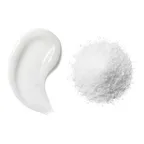 Urea
 Ceramide Np
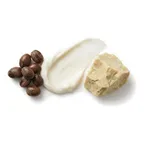 Shea Ethyl Esters Butter
 Sodium Hyaluronate
Average
- AverageOily Skin Fit
- AverageEffectiveness
- ExcellentSafety
Works for oily skin; other moisturizers fit it better.
This fit is calculated for the concerns frequently associated with oily skin: shine, enlarged pores, blackheads, and blemishes. For scores and recommendations based on your full skin profile, including your 12D face scan results and any goals or preferences you have, please use the Lovi app.
Updated How the Fit score works
Lovi Assistant explains
- Offers moderate suitability for oily skin due to the presence of urea and lactic acid for humectant action, but lacks sufficient ingredients for potent seboregulation to address oily shine.
- The formula provides excellent moisturizing and barrier support with squalane and ceramides, enhancing overall skin resilience.
- The safety profile is excellent, with no risks of irritation for your oily skin due to the absence of harsh ingredients and the inclusion of soothing agents like squalane and urea.
How to apply
- Could be used as part of your AM or PM routine every day to keep your face fresh.
- Apply this moisturizer after cleansing and toning, but right before your SPF in the morning.
- Gently press a small amount into your skin and let it absorb fully.
- Apply on clean, slightly dry skin to help control that oily shine.
- Avoid the eye area and do a quick patch test before your first use.
People Say
★4.3Overall rating based on 200+ reviewsThis hydrating oil-serum hybrid is highly praised for providing deep, lasting moisture and a radiant glow, particularly for dry or compromised skin. It effectively soothes irritation and plumps the skin. However, users with oily or acne-prone skin frequently find it too heavy or greasy, and some report issues with formula separation requiring vigorous shaking.
Highlights
Intense hydration Mostly Mentioned
- “instantly soothes”
- “skin feels comfortable all day”
- “cured my dryness”
Dewy finish Often Mentioned
- “gloriously dewy”
- “glassy finish”
- “healthy and dewy glow”
Formula separation Often Mentioned
- “formula can separate”
- “shake before applying”
- “separation issues”
Barrier support Sometimes Noted
- “supports healthy skin barrier”
- “soothes irritated skin”
Luxurious texture Sometimes Noted
- “rich without being greasy”
- “milky and silky”
- “feels luxurious”
Too heavy/greasy Sometimes Noted
- “might be too much for oily skin”
- “feels sticky”
- “good if you don't mind oils”
Packaging issues Rarely Noted
- “pump stopped working”
- “bottle was empty”
- “packaging is heavy”
Skin reactions Rarely Noted
- “stings and burns”
- “eye irritant”
- “caused breakouts”
Sources: lovi.care, naturium.com, spacenk.com, target.com, incidecoder.com, skinsort.com, and more
Questions and answers
How well does Naturium Barrier Bounce for oily skin work?
Naturium Barrier Bounce works moderately well for oily skin because it offers good moisture and barrier support with squalane and ceramides, though it lacks strong oil-controlling ingredients to manage shiny skin. A product of this type needs lightweight textures, peptides, and ingredients that control oil and hydrate without heavy oils or clogged pores.
Which ingredients make this cream a good fit for oily skin?
This cream works for oily skin because it has urea and lactic acid to hold in moisture, along with squalane and ceramides to keep your skin barrier strong without causing irritation. Oily skin works best with moisturizers that combine lightweight hydrating agents with ingredients that help control shine.
What does Squalane do for oily skin?
Squalane helps keep oily skin soft and smooth without feeling heavy, because it feels very light and absorbs easily. It is unlikely to clog pores, and it helps balance moisture while protecting against everyday irritation.
Biochimica Et Biophysica Acta, 2002Advances in Food and Nutrition Research, 2012
What does Urea do for oily skin?
Urea is typically too heavy and rich for oily skin, as it is mostly used to deeply hydrate and soften very dry, scaly skin. Oily skin needs light, oil-free hydration and ingredients that help balance excess oil without clogging pores.
Where does it go in a skincare routine for oily skin?
Naturium Barrier Bounce goes as the third step in your morning routine and the final step in your evening routine. It is a good fit for oily skin because it provides gentle moisture, but an oily skin routine also needs lightweight ingredients that help control shine.
Can I use it with retinol, and in what order?
Yes, you can use it with retinol, applying the moisturizer either before or after your retinol treatment. A moisturizer of this type works well with retinol because it strengthens the skin barrier and helps keep the skin soft and calm, though oily skin also needs ingredients that help control shine.
How often should I use this cream?
You can use this moisturizer twice daily as part of your morning and evening routine. Regular use helps keep your skin soft and well-hydrated while supporting your skin barrier.
Journal of Cosmetic Dermatology, 2020Skin Pharmacology and Physiology, 2026
Can it clog pores, cause breakouts or purging for oily skin?
This moisturizer is unlikely to cause skin reactions or breakouts on oily skin, as it has a very safe formula without harsh ingredients and includes soothing squalane and urea. However, because it can sometimes feel too heavy or greasy, an oily skin type needs lightweight, oil-free hydrators and ingredients that help control excess shine.
Can I use this cream around the eyes or on my body?
You can use this moisturizer on your body, but it is not specifically formulated for the thin skin around the eyes. Because the skin thickness varies across the body, products used here generally need versatile, gentle hydration and barrier support like squalane and ceramides to keep skin soft and resilient.
Is it fragrance-free and alcohol-free?
Yes, it has no fragrance and no drying alcohol.
What the research says
Topical application of a vitamin C-squalene bioconjugate significantly increased epidermal thickness, type III collagen production, and glycosaminoglycans production in human skin explants compared to free vitamin C and vitamin C-palmitate.
Scientific Reports, 2020Plant-derived squalane protected human dermal fibroblasts against UVA-induced damage by counteracting ROS formation, suppressing apoptosis-related proteins p53, caspase-3, caspase-9, and PARP, and restoring the pro-survival p-Akt/mTOR pathway.
Antioxidants, 2025Application of squalene/phosphotungstate calcium nanowires (Sql/PWC) oleogel on UVB-irradiated skin decreased epidermal thickness, increased dermal thickness, and promoted the expression of elastin, collagen, and skin barrier markers through antioxidant and anti-inflammatory activities.
Journal of Nanobiotechnology, 2025Application of fullerene-C60 dissolved in squalane cream twice daily for 8 weeks significantly enhanced skin moisture and reduced wrinkle formation compared to placebo in 23 Japanese women without severe side effects.
Journal of Nanoscience and Nanotechnology, 2010Squalane at 0.005-0.015% counteracts UVA-induced oxidative stress, inflammation, and collagen metabolism inhibition while stimulating fibroblast migration in human dermal fibroblasts.
Molecules, 2025Topical 0.025% tretinoin cream showed a significantly greater improvement in neck hyperpigmentation compared to 10% urea cream in patients with acanthosis nigricans.
The Journal of Dermatological Treatment, 2021Topical 40% urea cream achieved improvement in less time and showed superiority over 12% ammonium lactate lotion in skin roughness, fissure reduction, thickness, and dryness at day 14 in patients treated for moderate to severe xerosis.
American Journal of Clinical Dermatology, 2002Topical urea improves permeability barrier function and antimicrobial peptide expression in human volunteers and normal epidermis by acting as a small-molecule regulator after transporter uptake.
The Journal of Investigative Dermatology, 2012Ceramide and niacinamide-containing moisturizer combined with anti-acne treatment significantly improved non-inflammatory, inflammatory, and total acne lesions compared to hydrophilic cream in 40 patients with mild to moderate acne vulgaris after 8 weeks.
Journal of Cosmetic Dermatology, 2024Topical application of a pseudo-ceramide-containing spray improved stratum corneum water content, transepidermal water loss, cell area, and scaling score, and normalized the ceramide profile in patients with dry and sensitive skin compared to a control spray.
Journal of Cosmetic Dermatology, 2025A skin barrier restoring cream with shea butter, silkflo, and vitamin E increased type I procollagen synthesis, enhanced antioxidant enzyme activity, decreased reactive oxygen species generation, and promoted hyaluronic acid production in H2O2-stimulated human keratinocyte cells compared to untreated cells.
International Journal of Cosmetic Science, 2025Topical application of 0.1% hyaluronic acid formulations of different molecular weights led to significant improvements in skin hydration and elasticity, with low-molecular-weight formulations also significantly reducing wrinkle depth in seventy-six female subjects compared to a vehicle control.
Journal of Drugs in Dermatology, 2011Topical hyaluronic acid serum used twice daily by 40 females with facial photoaging produced an immediate 134% increase in skin hydration, a sustained 55% increase at week 6, and significant improvements in smoothness, plumping, fine lines, wrinkles, and global appearance without causing irritation.
Dermatology and Therapy, 2021A topical antioxidant serum significantly reduced air pollution-induced skin pigmentation and proinflammatory gene expression ex vivo, and improved skin aging signs in 40 healthy adult females after 90 days of daily use.
Journal of Cosmetic Dermatology, 2022
Ingredients
Water, Octyldodecanol, Squalane, Shea Ethyl Esters Butter, Polyglyceryl-4 Diisostearate Polyhydroxystearate Sebacate, Propanediol, C13-15 Alkane, Crambe Abyssinica Phytosterol Esters Seed Oil, Urea, Glycerin, Silica, Polyglyceryl-3 Polyricinoleate, Sodium Chloride, Jojoba Seed Oil, Silybum Marianum Seed Oil, Ceramide Np, Cholesterol, Oleic Acid, Blakeslea Trispora Mycelium Extract, Salicornia Herbacea Extract, Sodium Hyaluronate, Caprylic Capric Triglyceride, Disteardimonium Hectorite, Phytosphingosine, Hydrogenated Poly C6-14 Olefin, Benzotriazolyl Dodecyl P-Cresol, Hydrogenated Lecithin, Lactic Acid, Butylene Ethylene Styrene Copolymer, Ethylene Propylene Styrene Copolymer, Stearic Acid, Sodium Hydroxide, Citric Acid, Ethylhexylglycerin, Pentaerythrityl Tetra-Di-T-Butyl Hydroxyhydrocinnamate, Sodium Sulfate, Sodium Carbonate, Tocopherol, Caprylyl Glycol, Caprylhydroxamic Acid, 1,2-Hexanediol, Phenoxyethanol, Manganese Violet
Behind this fit score
Lovi calculates every fit score from the full ingredient list with brand-independent rules our dermatologists and cosmetic chemists build and review, and personalizes every pick with AI trained on the real results of millions of users. Lovi trains its fit score models on a proprietary dataset built from more than 10,000 expert-labeled products and more than 100,000 simulated examples, following an internally consistent methodology presented at Cosmoprof, AMWC, and Skin of Color Update.
-

Co-founder, Medical Director
Cosmetic chemist, cosmetologist, aesthetic products developer
-

Co-founder, CEO and CTO
PhD in computer science, 3x US patent holder, ex-Google, ex-Yandex
-

Dr. Sofía Perea Pérez, MD, MSc
Medical Board
Aesthetic medicine practitioner, MSc in Longevity and Anti-Aging Medicine
-

Medical Board
Specialist dermatologist, MBBS, MD, IFAAD
-

Medical Board
Cosmetic chemist, SCS, IFSCC member
-

Medical Board, Medical Advisor
Dermatology MD
-

Elina Nazarenko, MD
Medical Board
Dermatology and diagnostic consultant
-

Victoria Derkova, MS
Medical Board
Cosmetic chemist, cosmetic development technologist


How does it fit your skin?
Scan your face, then any product: Lovi shows how well it fits you and what fits even better.