
ILIA Beauty The Base Face Milk for acne-prone skin

 Squalane
 Sodium Hyaluronate
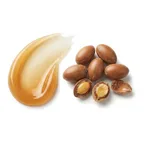 Argania Spinosa Kernel Oil
 Allantoin
 Lactic Acid
Average
- HighCombination Skin Fit
- AverageEffectiveness
- ExcellentSafety
Works for acne-prone skin; other moisturizers fit it better.
- Clinical, Cosmetic and Investigational Dermatology, 2017
- International Journal of Cosmetic Science, 2024
This fit is calculated for the concerns frequently associated with acne-prone skin: breakouts, blackheads, and post-acne marks. For scores and recommendations based on your full skin profile, including your 12D face scan results and any goals or preferences you have, please use the Lovi app.
Updated How the Fit score works
Lovi Assistant explains
- Offers moderate suitability for your combination skin as squalane and glycerin provide balanced hydration without exacerbating oily zones. Sodium hyaluronate and lactic acid offer general skincare benefits supportive for acne and blemishes, but lack targeted ingredients for significant improvement.
- Allantoin and argania spinosa kernel oil contribute to a soothing experience, ensuring a comfortable application for your skin.
- The product is safe for your skin, with no risks of irritation due to the absence of harsh ingredients and the presence of soothing components.
How to apply
- Use your moisturizer twice a day in your AM and PM routines. Apply it daily to help keep breakouts under control.
- Apply after your cleanser and toner, and make sure to use your SPF right after in the morning.
- Gently spread a small amount of moisturizer over your face using soft motions. Let it absorb into the skin for a minute before getting dressed or applying makeup.
- Apply on slightly damp skin to help lock in extra moisture. This keeps your combination skin balanced without feeling heavy.
- Avoid the eye area and do a patch test before your first use. Stop using if you feel any irritation.
People Say
★4.7Overall rating based on 2.0k+ reviewsBased on a very large amount of data, this lightweight essence-moisturizer hybrid is widely praised for its ability to deeply hydrate dry skin, soothe redness, and create a smooth, plump canvas for makeup. While most users with sensitive or mature skin report excellent results, those with acne-prone skin have mixed experiences, and many reviewers debate whether the high price point is justified compared to more affordable alternatives.
Highlights
Lightweight texture Mostly Mentioned
- “absorbs quickly”
- “milky and non-greasy”
- “light but effective”
- “sinks in effortlessly”
High price point Mostly Mentioned
- “too expensive for the size”
- “pricey for a toner”
- “hard to justify the cost”
Deep hydration & plumping Often Mentioned
- “floods skin with moisture”
- “leaves face feeling soft”
- “extremely hydrating for dry patches”
- “skin feels bouncy”
Excellent makeup prep Often Mentioned
- “perfect base for foundation”
- “makeup glides on”
- “prevents clinging to dry spots”
- “gives a glass-skin glow”
Barrier support Sometimes Noted
- “strengthens skin barrier”
- “healed my dry barrier”
- “feels protective”
- “good for winter skin”
Soothing & redness reduction Sometimes Noted
- “calms irritation instantly”
- “reduces redness significantly”
- “soothing on sensitive skin”
Better value alternatives Sometimes Noted
- “Rhode/Laneige is cheaper”
- “similar to other milky toners”
- “not revolutionary enough for price”
- “good but not unique”
Messy packaging Sometimes Noted
- “dispenses too fast”
- “pours out quickly”
- “messy bottle opening”
- “hard to control amount”
Breakouts (acne-prone) Rarely Noted
- “caused small bumps”
- “broke me out”
- “clogged my pores”
- “not for acne-prone skin”
Sources: lovi.care, sephora.com, iliabeauty.com, spacenk.com, reddit.com, reallyree.com, and more
Questions and answers
How well does ILIA The Base Face Milk work for acne-prone skin?
ILIA The Base Face Milk provides an average fit for acne-prone skin, offering balanced hydration and soothing comfort without causing irritation, though it lacks targeted ingredients for significant blemish improvement. To work best for this skin type, a moisturizer needs effective blemish-fighting ingredients and targeted support for breakouts alongside gentle hydration.
International Journal of Cosmetic Science, 2024Clinical, Cosmetic and Investigational Dermatology, 2017
Which ingredients make this milk a good fit for acne-prone skin?
Squalane and glycerin make this milk a good fit for acne-prone skin by providing balanced hydration without making oily areas worse, while sodium hyaluronate and lactic acid offer general support. However, because this is an average fit, acne-prone skin needs a product with targeted ingredients for significant blemish improvement, effective peptides, and soothing extracts.
What does Squalane do for acne-prone skin?
Squalane is generally a poor fit for acne-prone skin because natural squalene levels can already be elevated in acne, and oxidized forms may trigger inflammation. An acne-prone skin type needs lightweight, non-clogging hydration with ingredients that help balance oil and calm irritation without heavy oils.
The Journal of Investigative Dermatology, 2006Dermato-endocrinology, 2009
What does Hyaluronic Acid do for acne-prone skin?
Hyaluronic acid helps hydrate acne-prone skin without clogging pores and may be paired with targeted ingredients to calm breakouts and reduce redness. A product of this type for acne-prone skin needs lightweight hydration and ingredients that balance oil and soothe irritation.
Where does this milk go in a skincare routine for acne-prone skin?
This moisturizer goes after your hydrating toner in the morning and after your treatment step at night. To work best for acne-prone skin, a product of this type needs targeted blemish-fighting ingredients alongside balanced hydrators.
Can I use this milk with retinol, and in what order?
How often should I use this milk?
You can use this milk twice daily as part of your morning and evening routine. Regular application helps keep acne-prone skin comfortably hydrated while remaining safe and unlikely to cause irritation.
Journal of Cosmetic Dermatology, 2020Health Science Reports, 2021
Can this milk clog pores, cause breakouts or purging for acne-prone skin?
This moisturizer is unlikely to cause breakouts or clog pores on acne-prone skin, as it has a safe formula with soothing ingredients and balanced hydration that avoids harsh components. However, because it lacks targeted blemish-fighting ingredients for significant improvement, acne-prone skin needs products containing specialized active ingredients like salicylic acid or retinoids to truly clear and prevent breakouts.
Can I use this milk around the eyes or on my body?
This moisturizer is safe to use around the eyes or on the body, as it contains soothing ingredients like allantoin and is unlikely to cause irritation. Because skin is exceptionally thin around the eyes and varies in thickness across the body, a product of this type needs lightweight hydrators and gentle, barrier-supporting ingredients to keep those areas comfortable.
Is this milk fragrance-free and alcohol-free?
Yes, it has no fragrance and no drying alcohol.
What the research says
A single application of a moisturizing fluid containing hyaluronic acid 1%, glycerin 5%, and Centella asiatica stem cells extract significantly increased skin hydration by 29% and reduced transepidermal water loss at 24 hours compared to baseline and an untreated control site in twenty healthy women.
Clinical, Cosmetic and Investigational Dermatology, 2017The combination of allantoin, bisabolol, D-panthenol and dipotassium glycyrrhizinate reduces UVB-induced PGE2, inflammatory cytokines, and mitochondrial superoxide in human epidermal keratinocytes.
International Journal of Cosmetic Science, 2024Application of fullerene-C60 dissolved in squalane cream twice daily for 8 weeks significantly enhanced skin moisture and reduced wrinkle formation compared to placebo in 23 Japanese women without severe side effects.
Journal of Nanoscience and Nanotechnology, 2010Squalane at 0.005-0.015% counteracts UVA-induced oxidative stress, inflammation, and collagen metabolism inhibition while stimulating fibroblast migration in human dermal fibroblasts.
Molecules, 2025Plant-derived squalane protected human dermal fibroblasts against UVA-induced damage by counteracting ROS formation, suppressing apoptosis-related proteins p53, caspase-3, caspase-9, and PARP, and restoring the pro-survival p-Akt/mTOR pathway.
Antioxidants, 2025Topical application of 0.1% hyaluronic acid formulations of different molecular weights led to significant improvements in skin hydration and elasticity, with low-molecular-weight formulations also significantly reducing wrinkle depth in seventy-six female subjects compared to a vehicle control.
Journal of Drugs in Dermatology, 2011Topical hyaluronic acid serum used twice daily by 40 females with facial photoaging produced an immediate 134% increase in skin hydration, a sustained 55% increase at week 6, and significant improvements in smoothness, plumping, fine lines, wrinkles, and global appearance without causing irritation.
Dermatology and Therapy, 2021A topical antioxidant serum significantly reduced air pollution-induced skin pigmentation and proinflammatory gene expression ex vivo, and improved skin aging signs in 40 healthy adult females after 90 days of daily use.
Journal of Cosmetic Dermatology, 2022Topical application of an argan oil NLC-based hydrogel formulation increased skin hydration in healthy volunteers over a one-month period through a synergistic effect of NLC occlusion and argan oil hydration.
International Journal of Nanomedicine, 2014Incorporating allantoin into argan oil enriched liposomes improved its accumulation in the dermis (~8.7μg/cm(2)) and permeation through the skin (~33μg/cm(2)) compared to conventional liposomes, water dispersion, and a commercial gel.
International Journal of Pharmaceutics, 2016The ThriveCo Bumps Eraser Kit increased skin hydration by 131.75%, reduced redness by 69.30%, decreased pigmentation by 35.77%, dropped itchiness by 92.63%, improved smoothness by 55.00%, reduced roughness by 148.54%, and decreased scaliness by 87.09% without adverse effects.
Cureus, 2025Application of a cream containing lactic acid 12% and pramoxine HCl 1% significantly improved skin dryness, hydration, and itch compared with a nontreated control in 24 women with a history of dry itchy skin.
Cutis, 2004A lactic acid/ceramide lotion significantly improved skin moisturization and desquamation compared to no treatment in women with dry, rough skin on the anterior shins.
The Journal of Clinical and Aesthetic Dermatology, 2020Treatment with 12% lactic acid increased epidermal and dermal firmness and thickness and improved skin smoothness and wrinkles compared to baseline, whereas 5% lactic acid induced clinical and epidermal changes without dermal changes.
Journal of the American Academy of Dermatology, 1996
Why other moisturizers fit acne-prone skin better
Co-delivery of paeonol and madecassoside via nanoemulsions improved transdermal delivery, promoted barrier repair proteins, inhibited inflammatory cytokine secretion in cellular and 3D models, and reduced transepidermal water loss and acne in human facial skin compared to free components.
Molecules, 2023
Ingredients
Water, Propanediol, Caprylic Capric Glycerides, Squalane, Butylene Glycol, Glycerin, Argania Spinosa Kernel Oil, 1,2-Hexanediol, Hydroxyethyl Acrylate Sodium Acryloyldimethyl Taurate Copolymer, Hydroxyacetophenone, Isohexadecane, Allantoin, Linoleic Acid, Phytosterols, Caprylyl Glycol, Polyglyceryl-10 Stearate, Hydrolyzed Opuntia Ficus-Indica Flower Extract, Polysorbate 60, Sorbitan Isostearate, Sodium Hyaluronate, Hydrolyzed Hyaluronic Acid, Chlorella Vulgaris Extract, Lactic Acid
Behind this fit score
Lovi calculates every fit score from the full ingredient list with brand-independent rules our dermatologists and cosmetic chemists build and review, and personalizes every pick with AI trained on the real results of millions of users. Lovi trains its fit score models on a proprietary dataset built from more than 10,000 expert-labeled products and more than 100,000 simulated examples, following an internally consistent methodology presented at Cosmoprof, AMWC, and Skin of Color Update.
-

Co-founder, Medical Director
Cosmetic chemist, cosmetologist, aesthetic products developer
-

Co-founder, CEO and CTO
PhD in computer science, 3x US patent holder, ex-Google, ex-Yandex
-

Dr. Sofía Perea Pérez, MD, MSc
Medical Board
Aesthetic medicine practitioner, MSc in Longevity and Anti-Aging Medicine
-

Medical Board
Specialist dermatologist, MBBS, MD, IFAAD
-

Medical Board
Cosmetic chemist, SCS, IFSCC member
-

Medical Board, Medical Advisor
Dermatology MD
-

Elina Nazarenko, MD
Medical Board
Dermatology and diagnostic consultant
-

Victoria Derkova, MS
Medical Board
Cosmetic chemist, cosmetic development technologist


How does it fit your skin?
Scan your face, then any product: Lovi shows how well it fits you and what fits even better.