
Dr. Althea Pure Vitamin C 50% Boosting Powder

 Ascorbic Acid
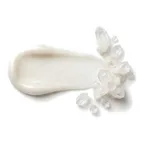 Silica
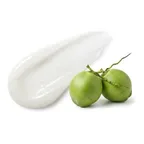 Caprylic Capric Triglyceride
Ascorbic acid and silica brighten skin, so it suits most skin types. For skin that needs soothing, serums with panthenol and madecassoside get higher fit scores.
Each fit is calculated for the concerns frequently associated with that skin type. For scores and recommendations based on your full skin profile, including your 12D face scan results and goals, use the Lovi app.
Updated How the Fit score works
Where it fits best and least
Best fit Average
Oily Skin, Combination Skin, Acne-Prone Skin, Skin with Dark Spots, Mature Skin, Oily Acne-Prone Skin
Works for oily skin; other serums fit it better.
- Offers moderate brightening for your oily skin due to ascorbic acid and tocopherol, which provide antioxidant effects and help even skin tone.
Lowest fit Caution
A poor match for dry skin.
- Offers moderate brightening and smoothing for your dry skin due to ascorbic acid, which can be drying and lacks sufficient humectant or emollient ingredients to counteract this effect.
Other skin types
How to apply
- Apply this serum PM, starting 3×/week and working up to daily use as your skin adjusts.
- Place the serum after cleansing and toner, but right before your moisturizer.
- Gently press 2-3 drops of the serum into your skin and let it absorb for a minute.
- Apply the serum on slightly damp skin to help lock in extra moisture.
- Avoid the eye area and do a patch test before your first use.
People Say
★0.0Overall rating based on 100+ reviewsBased on limited data, this product is designed as a high-potency vitamin C booster to be mixed with other skincare. Users appreciate the clean ingredient list and the ability to customize the concentration, though some find the powder format less convenient than a pre-mixed serum.
Highlights
Lack of social proof Mostly Mentioned
- “No reviews yet”
- “hard to find user photos”
- “unknown real-world results”
Customizable versatility Often Mentioned
- “Mix with your favorite toner”
- “adaptable to your routine”
- “mix with essence or cream”
High potency Often Mentioned
- “50% pure vitamin content”
- “stabilizes vitamin C in the freshest state”
- “highly concentrated powder”
Clean ingredients Sometimes Noted
- “Ingredient list is clean and concise”
- “EWG Green grade ingredients”
- “vegan formula”
Targeted brightening Sometimes Noted
- “Brightens skin tone”
- “reduces dark spots”
- “improves elasticity”
Inconvenient format Sometimes Noted
- “Wish they released this as a serum”
- “requires mixing”
- “extra step in routine”
Potential irritation Rarely Noted
- “High concentration”
- “might be strong for sensitive skin”
- “patch test recommended”
Sources: lovi.care, dr-althea.com, yesstyle.com, stylekorean.com, hwahae.co.kr, kbeautyave.com, and more
Questions and answers
How well does Dr. Althea Pure Vitamin C 50% Boosting Powder work for oily skin?
This powder works moderately well for oily skin, helping brighten your tone and calm irritation while staying gentle. To work best for oily skin, a product of this type needs ingredients like niacinamide to control excess oil and shine, along with lightweight hydrators.
Journal of Cosmetic Dermatology, 2020Journal of Cosmetic Dermatology, 2022
Which ingredients make this treatment a good fit for oily acne-prone skin?
Ascorbic acid and tocopherol make this treatment a good fit by providing moderate brightening and antioxidant protection that helps even skin tone and supports breakouts. To be a top fit for oily acne-prone skin, this type of product needs targeted blemish-fighting ingredients like niacinamide, propolis, or benzoyl peroxide.
Journal of Cosmetic Dermatology, 2020Journal of Cosmetic Dermatology, 2022
Why is Dr. Althea Pure Vitamin C 50% Boosting Powder a weak match for sensitive skin?
Dr. Althea Pure Vitamin C 50% Boosting Powder is a weak match for sensitive skin because it lacks targeted ingredients for redness and irritation concerns. A treatment for this skin needs soothing ingredients and gentle hydrators that calm redness without triggering irritation.
Why does Lovi advise caution with Dr. Althea Vitamin C 50% Boosting Powder for dry skin?
Lovi advises caution because this product can be drying for dry skin and lacks enough rich, softening ingredients to counteract that effect. A treatment of this type needs ingredients that specifically target hydration and skin barrier support, such as ceramides, soothing plant extracts, or hydrating agents like hyaluronic acid, to properly nourish dry skin.
Why does Lovi advise caution with Dr. Althea Pure Vitamin C 50% Boosting Powder for dry sensitive skin?
Lovi advises caution because this high concentration of ascorbic acid may be too drying for dry sensitive skin and lacks enough moisturization to keep skin soft. Treatment products for this skin need effective hydrating and nourishing ingredients, antioxidants, ceramides, and gentle vitamin C to provide deep moisture and protect the skin barrier without causing irritation.
Journal of Cosmetic Dermatology, 2020Journal of Cosmetic Dermatology, 2023
Is this powder fragrance-free and alcohol-free?
Yes, it has no fragrance and no drying alcohol.
How well does Dr. Althea Pure Vitamin C 50% Boosting Powder work for combination skin?
This product works moderately well for your combination skin, helping to even your skin tone and providing antioxidants, though other products fit this skin type better. To work best for combination skin, a product of this type needs ingredients like niacinamide, propolis, or zinc PCA that balance and regulate oiliness while enhancing radiance.
Journal of Cosmetic Dermatology, 2023Journal of Cosmetic Dermatology, 2020
How well does Dr. Althea Pure Vitamin C 50% Boosting Powder work for acne-prone skin?
Dr. Althea Pure Vitamin C 50% Boosting Powder is an average fit for acne-prone skin because, while it provides moderate brightening and antioxidant benefits safely, it lacks specialized ingredients to directly target breakouts. A treatment for this skin needs effective ingredients like niacinamide, propolis, or zinc PCA that target blemishes while keeping skin balanced and hydrated without excess oiliness.
Journal of Cosmetic Dermatology, 2023Journal of Cosmetic Dermatology, 2020
How well does Dr. Althea Pure Vitamin C 50% Boosting Powder work for skin with dark spots?
Dr. Althea Pure Vitamin C 50% Boosting Powder offers moderate brightening for dark spots using Ascorbic Acid, though it lacks specialized ingredients to directly target pigmentation concerns as effectively as top-rated treatments. Treatments that fit this skin better need a blend of effective antioxidants, soothing ingredients, niacinamide, and propolis to deliver optimal results for dark spots without irritation.
How well does Dr. Althea Pure Vitamin C 50% Boosting Powder work for mature skin?
This powder works for mature skin by offering moderate brightening and supporting collagen, though it does not directly target wrinkles and fine lines. To fit mature skin best, a treatment of this type needs to effectively target wrinkles and fine lines with high concentrations of potent antioxidants, nourishing oils, and peptides.
Journal of Cosmetic Dermatology, 2020Journal of Cosmetic Dermatology, 2022
What the research says
A topical serum containing vitamin C, vitamin E, and raspberry leaf cell culture extract improved skin color, elasticity, radiance, smoothness, scaliness, and wrinkles compared to the untreated contralateral side in fifty female volunteers.
Journal of Cosmetic Dermatology, 2020Topical application of 5% vitamin C cream significantly improved global clinical scores, increased skin microrelief density, and induced elastic tissue repair in photoaged skin compared to excipient control in healthy female volunteers.
Experimental Dermatology, 2003Topical application of VC-IP cream twice daily for 8 weeks reduces periorbital wrinkles in female subjects compared to a placebo cream.
Journal of Cosmetic Dermatology, 2022Topical treatment with 5% vitamin C and 0.1% madecassoside significantly improved clinical scores for wrinkles, suppleness, firmness, roughness, and skin hydration, along with functional and structural remodeling of the elastic fiber network in 20 female volunteers with photoaged skin after 6 months compared to baseline.
Experimental Dermatology, 2008Film-forming formulations containing porous silica achieved skin permeation rates comparable to immediate release formulations while confirming prolonged drug availability and causing no skin irritation in healthy volunteers.
European Journal of Pharmaceutical Sciences, 2017Topical treatment with silica mud and microalgae extracts from the Blue Lagoon improved skin barrier function by inducing epidermal gene expression and reducing transepidermal water loss in healthy humans, while preventing skin aging markers in vitro.
Experimental Dermatology, 2008Flower-like mesoporous silica nanoparticles exhibited a significantly superior oil-absorption capacity, including a 226.3% increase in adsorbing large-molecular-weight PDMS-15000 w, compared to conventional mesoporous silica nanoparticles.
RSC Advances, 2026Topical application of an emollient emulsion containing 15.0% caprylic/capric triglyceride doubled the amount of urocanic acid isomers and increased skin hydration with reduced transepidermal water loss in healthy subjects, though it did not prevent ultraviolet-induced urocanic acid isomerization.
Life, 2023A topical antioxidant serum significantly reduced air pollution-induced skin pigmentation and proinflammatory gene expression ex vivo, and improved skin aging signs in 40 healthy adult females after 90 days of daily use.
Journal of Cosmetic Dermatology, 2022Vitamin C is widely used as a depigmenting agent in dermatology, though limited studies evaluate its use for gingival depigmentation.
Journal of Oral and Maxillofacial Pathology, 2020A nighttime topical antioxidant containing resveratrol, baicalin, and vitamin E significantly improved fine lines, wrinkles, firmness, elasticity, laxity, hyperpigmentation, radiance, roughness, and dermal thickness in subjects with mild to moderately photodamaged skin over 12 weeks.
Journal of Drugs in Dermatology, 2014Topical vitamin C effectively treats uneven and wrinkled skin while providing depigmenting properties in patients with melasma and photoaging compared to baseline or placebo.
Journal of Cosmetic Dermatology, 2023The combination of allantoin, bisabolol, D-panthenol and dipotassium glycyrrhizinate reduces UVB-induced PGE2, inflammatory cytokines, and mitochondrial superoxide in human epidermal keratinocytes.
International Journal of Cosmetic Science, 2024The combination of anionic and nonionic surfactants with silica nanoparticles generally mitigates surfactant toxicity and can reduce skin irritation, although nanoparticles reduce biodegradation efficacy.
Toxics, 2025Mesoporous silica nanoparticles entrapping licorice polysaccharide and coated with polydopamine showed 76% entrapment efficiency, 89% in vitro release at pH 5, increased sebocytes' cellular uptake, and mediated inflammatory response by inhibiting pro-inflammatory cytokines and regulating anti-inflammatory cytokines.
Carbohydrate Polymers, 2024Hydrogels containing vitamin E-loaded nanostructured lipid carriers exhibited better occlusive properties and long-lasting effects, while vitamin E-loaded nanoemulsions performed a faster skin hydration effect and were selected as more attractive for skin application.
Colloids and Surfaces. B, Biointerfaces, 2019
Ingredients
Ascorbic Acid, Silica, Caprylic Capric Triglyceride, Allantoin, Tocopherol, 1,2-Hexanediol, Glyceryl Caprylate, Triethoxycaprylylsilane, Iron Oxides Ci 77492
Behind these fit scores
Lovi calculates every fit score from the full ingredient list with brand-independent rules our dermatologists and cosmetic chemists build and review, and personalizes every pick with AI trained on the real results of millions of users. Lovi trains its fit score models on a proprietary dataset built from more than 10,000 expert-labeled products and more than 100,000 simulated examples, following an internally consistent methodology presented at Cosmoprof, AMWC, and Skin of Color Update.
-

Co-founder, Medical Director
Cosmetic chemist, cosmetologist, aesthetic products developer
-

Co-founder, CEO and CTO
PhD in computer science, 3x US patent holder, ex-Google, ex-Yandex
-

Dr. Sofía Perea Pérez, MD, MSc
Medical Board
Aesthetic medicine practitioner, MSc in Longevity and Anti-Aging Medicine
-

Medical Board
Specialist dermatologist, MBBS, MD, IFAAD
-

Medical Board
Cosmetic chemist, SCS, IFSCC member
-

Medical Board, Medical Advisor
Dermatology MD
-

Elina Nazarenko, MD
Medical Board
Dermatology and diagnostic consultant
-

Victoria Derkova, MS
Medical Board
Cosmetic chemist, cosmetic development technologist


How does it fit your skin?
Scan your face, then any product: Lovi shows how well it fits you and what fits even better.