
ZO Skin Health Exfoliating Polish for oily acne-prone skin

 Retinyl Palmitate
 Tocopheryl Acetate
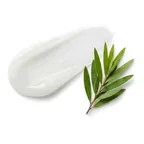 Melaleuca Alternifolia Tree Oil Leaf
 Ascorbyl Palmitate
 Glycerin
High
- HighOily Skin Fit
- AverageEffectiveness
- HighSafety
A great choice for oily acne-prone skin; a few products fit it even better.
This fit is calculated for the concerns frequently associated with oily acne-prone skin: shine, breakouts, blemishes, and enlarged pores. For scores and recommendations based on your full skin profile, including your 12D face scan results and any goals or preferences you have, please use the Lovi app.
Updated How the Fit score works
Lovi Assistant explains
- Offers moderate exfoliation for your oily skin and acne concerns due to sodium bicarbonate and magnesium oxide, which physically exfoliate and provide mild astringent properties, though it lacks specialized ingredients to directly target acne.
- The presence of melaleuca alternifolia leaf oil offers some antimicrobial benefits, which can be helpful for breakouts on oily skin.
- The product is safe for your oily skin, as it does not contain prohibited or harsh ingredients that would cause irritation.
Buy online

Prices checked 20 Nov 2026
The Lovi Fit is the same in every country; only the stores and prices differ, and the ones here are for India.
How to apply
- Use this exfoliant as part of your PM routine once a week to start, increasing frequency only if your skin tolerates it well.
- Apply the exfoliant after cleansing and toning, but before your final moisturizer step.
- Gently press 2-3 drops of the exfoliant into your skin and let it absorb for a minute.
- Apply the product directly onto clean, dry skin for the best results against breakouts.
- Avoid the sensitive eye area and always use a daily SPF since exfoliating makes skin more sensitive to the sun.
People Say
★4.9Overall rating based on 3.1k+ reviewsBased on a very large amount of data, users with dull, rough, or congestion-prone skin consistently report immediate improvements in texture and radiance, often describing a "glass skin" effect. While highly effective for smoothing fine lines and clearing pores, those with active acne or extreme sensitivity occasionally find the physical exfoliation too abrasive.
Highlights
Instant skin smoothness Mostly Mentioned
- “skin instantly became baby smooth”
- “leaves my skin so soft like a baby butt”
- “feels baby-soft and smooth”
- “smoothest my face has ever felt”
Radiant glow Often Mentioned
- “looking for glowing baby like skin”
- “leaves skin healthy and glowing”
- “notice my skin shining”
- “closest to glass skin I have seen”
High price point Often Mentioned
- “my wallet winced”
- “quite pricey”
- “expensive for the size”
- “wish it was cheaper”
High efficiency Sometimes Noted
- “a little goes a long way”
- “only need a small amount”
- “jar lasts forever”
- “pea-sized amount is enough”
Pleasant experience Sometimes Noted
- “smells very clean and fresh”
- “invigorating citrusy scent”
- “feels like a mini spa treatment”
- “warming sensation is nice”
Rinsing difficulty Rarely Noted
- “hard to rinse off completely”
- “leaves a film”
- “found blue crystals in hairline”
- “sticky residue left behind”
Strong fragrance Rarely Noted
- “synthetic scent irritates”
- “fragrance is very strong”
- “smell gave me a headache”
- “wish it was fragrance-free”
Too abrasive Rarely Noted
- “crystals feel rough”
- “stings active pimples”
- “felt like sandpaper”
Sources: lovi.care, zoskinhealth.com, influenster.com, amazon.com, dermstreet.com, newbeauty.com, and more
Questions and answers
What makes ZO Exfoliating Polish a great fit for oily acne-prone skin?
ZO Exfoliating Polish is a great fit because it uses sodium bicarbonate and magnesium oxide to provide moderate physical exfoliation while keeping your oily skin safe from irritation. It also contains tea tree leaf oil, which helps calm breakouts and offers antimicrobial benefits for acne-prone skin.
Indian Journal of Dermatology, Venereology and Leprology, 2007Clinical Pharmacology, 2018
Which ingredients make this exfoliant a good fit for oily acne-prone skin?
Sodium bicarbonate and magnesium oxide provide moderate physical exfoliation, while tea tree leaf oil offers helpful antimicrobial benefits for breakouts on oily skin. These ingredients work safely to help keep your skin smooth and calm without causing unwanted irritation.
Indian Journal of Dermatology, Venereology and Leprology, 2007Clinical Pharmacology, 2018
What does Vitamin E do for oily acne-prone skin?
Vitamin E helps calm oily acne-prone skin and is unlikely to clog pores or cause breakouts. It may also reduce dryness and irritation when used alongside acne treatments while keeping the skin soft and moisturized.
Where does this exfoliant go in a skincare routine for oily acne-prone skin?
This exfoliant treatment goes in the weekly routine for oily acne-prone skin, starting at once a week after a cleanser and before a cleansing mask, and can be used more often if your skin tolerates it well.
Can I use this exfoliant with retinol, and in what order?
It is generally best to use your retinol and this exfoliant on different days or in separate routines, because using strong smoothing treatments together may easily dry out or irritate your skin. If you do use both, apply the exfoliant first on a day you skip retinol to keep your skin feeling smooth and calm.
How often should I use this exfoliant?
Start using this exfoliant treatment once a week as part of your weekly routine, and if your oily acne-prone skin tolerates it well and sees good results, you can carefully use it more often. This product is a great fit, offering moderate exfoliation and helpful antimicrobial benefits for breakouts without harsh ingredients that cause irritation.
Can this exfoliant clog pores, cause breakouts or purging for oily acne-prone skin?
This exfoliant is a great fit for your oily acne-prone skin and is unlikely to clog pores or cause breakouts. It helps smooth your skin with moderate physical exfoliation, while tea tree oil provides antimicrobial benefits that may help keep breakouts under control.
Indian Journal of Dermatology, Venereology and Leprology, 2007Clinical Pharmacology, 2018
What the research says
Topical 5% tea tree oil gel significantly improved total acne lesions and acne severity index compared to placebo in 60 patients with mild to moderate acne vulgaris, showing 3.55 times and 5.75 times greater efficacy respectively.
Indian Journal of Dermatology, Venereology and Leprology, 2007A cream combining propolis, tea tree oil, and Aloe vera reduced erythema scars, acne severity index, and total lesion count better than erythromycin cream in sixty patients with mild to moderate acne vulgaris compared to placebo.
Clinical Pharmacology, 2018Tea tree oil nanoemulsion containing adapalene gel demonstrated significantly greater reductions in total, inflammatory, and non-inflammatory acne lesions as well as acne severity index compared to adapalene marketed gel in 100 patients with acne vulgaris over 12 weeks.
Archives of Dermatological Research, 2022Topical bakuchiol 0.5% applied twice daily compared with retinol 0.5% applied daily significantly decreased wrinkle surface area and hyperpigmentation with no statistical difference between the compounds in 44 patients over 12 weeks, while retinol users reported more facial skin scaling and stinging.
The British Journal of Dermatology, 2019Topical 0.3% and 1% retinol comparably improved biomarkers of cutaneous photoageing in photoaged volunteers, while 0.3% retinol demonstrated better tolerance with fewer and milder adverse events compared to 1% retinol in a daily escalation regimen.
International Journal of Cosmetic Science, 2022Daily application of 0.3% and 0.5% retinol serums in 37 volunteers over 12 weeks reduced skin hyperpigmentation, unevenness, and wrinkles on both sides of the face, with the 0.5% concentration causing more frequent and intense skin irritation.
Skin Pharmacology and Physiology, 2020Topical application of an antioxidant serum containing 15% ascorbic acid, 0.5% ferulic acid, and 1% tocopherol prevented particulate matter-induced degradation of extracellular matrix components, inflammation, and oxidative stress in the skin of 15 female volunteers compared to untreated controls.
Journal of Cosmetic Dermatology, 2025Dermatological products containing d-alpha tocopheryl acetate showed non-comedogenic potential with less than a 50% increase in microcomedones in 12 healthy male subjects compared to octyl palmitate.
Contemporary Clinical Trials Communications, 2021Topical application of an antioxidant mix containing 15% ascorbic acid, 0.5% ferulic acid, and 1% tocopherol prevented PM and UV-induced skin barrier perturbation, lipid peroxidation, inflammatory markers, MMP9 activation, and Type I collagen loss in 15 healthy females compared to untreated exposed skin.
Journal of Cosmetic Dermatology, 2024Weekly treatment with tea tree oil-saturated human amniotic membrane showed superior efficacy in healing pityriasis versicolor lesions and fungicidal activity compared to daily application of 1% tioconazole cream in 120 patients.
Cell and Tissue Banking, 2020Tea tree oil gel and face wash significantly reduced total facial acne lesions from 23.7 to 10.7 and improved investigator global assessment scores in 14 participants with mild to moderate facial acne over 12 weeks.
The Australasian Journal of Dermatology, 2017Topical application of 100% tea tree oil significantly reduced histamine-induced mean weal volume compared to control in twenty-seven volunteers.
The British Journal of Dermatology, 2002Topical application of 5% vitamin C cream significantly improved global clinical scores, increased skin microrelief density, and induced elastic tissue repair in photoaged skin compared to excipient control in healthy female volunteers.
Experimental Dermatology, 2003Topical application of VC-IP cream twice daily for 8 weeks reduces periorbital wrinkles in female subjects compared to a placebo cream.
Journal of Cosmetic Dermatology, 2022Topical treatment with 5% vitamin C and 0.1% madecassoside significantly improved clinical scores for wrinkles, suppleness, firmness, roughness, and skin hydration, along with functional and structural remodeling of the elastic fiber network in 20 female volunteers with photoaged skin after 6 months compared to baseline.
Experimental Dermatology, 2008A single application of a moisturizing fluid containing hyaluronic acid 1%, glycerin 5%, and Centella asiatica stem cells extract significantly increased skin hydration by 29% and reduced transepidermal water loss at 24 hours compared to baseline and an untreated control site in twenty healthy women.
Clinical, Cosmetic and Investigational Dermatology, 2017The emollient V0034CR significantly reduced TEWL compared to vehicle and vehicle plus glycerol, and significantly increased corneometry scores compared to vehicle and vehicle plus petrolatum in healthy volunteers with dry skin, demonstrating combined barrier function improvement from petrolatum and hydration improvement from glycerol.
Journal of Cosmetic Dermatology, 2020Ten days of treatment with a cream containing 20% glycerin significantly increased skin hydration measured by corneometer values in 17 healthy volunteers compared to a placebo cream, but showed no influence on transepidermal water loss or skin sensitivity to an irritating surfactant.
International Journal of Cosmetic Science, 2001
Ingredients
Peg-8, Sodium Bicarbonate, Magnesium Oxide, Ethoxydiglycol, Glycerin, Butylene Glycol, Oleth-20, Trihydroxystearin, Glyceryl Stearate, Peg-100 Stearate, Paraffinum Liquidum Huile Minérale Mineral Oil, Water, Tocopheryl Acetate, Melaleuca Alternifolia Tree Oil Leaf, Glycine Soja Soybean Sterols, Parfum, Limonene, Linalool, Ascorbyl Palmitate, Retinyl Palmitate, Stearyl Glycyrrhetinate, Tetrahexyldecyl Ascorbate, Caprylic Capric Triglyceride, Linoleic Acid, Phenoxyethanol, Green 6 Ci 61565
Behind this fit score
Lovi calculates every fit score from the full ingredient list with brand-independent rules our dermatologists and cosmetic chemists build and review, and personalizes every pick with AI trained on the real results of millions of users. Lovi trains its fit score models on a proprietary dataset built from more than 10,000 expert-labeled products and more than 100,000 simulated examples, following an internally consistent methodology presented at Cosmoprof, AMWC, and Skin of Color Update.
-

Co-founder, Medical Director
Cosmetic chemist, cosmetologist, aesthetic products developer
-

Co-founder, CEO and CTO
PhD in computer science, 3x US patent holder, ex-Google, ex-Yandex
-

Dr. Sofía Perea Pérez, MD, MSc
Medical Board
Aesthetic medicine practitioner, MSc in Longevity and Anti-Aging Medicine
-

Medical Board
Specialist dermatologist, MBBS, MD, IFAAD
-

Medical Board
Cosmetic chemist, SCS, IFSCC member
-

Medical Board, Medical Advisor
Dermatology MD
-

Elina Nazarenko, MD
Medical Board
Dermatology and diagnostic consultant
-

Victoria Derkova, MS
Medical Board
Cosmetic chemist, cosmetic development technologist


How does it fit your skin?
Scan your face, then any product: Lovi shows how well it fits you and what fits even better.