
Trader Joe's Retinol Night Serum for sensitive skin

 Retinol
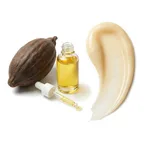 Adansonia Digitata Seed Oil
 Sodium Hyaluronate
 Tocopherol
 Salicylic Acid
Average
- HighNormal Skin Fit
- AverageEffectiveness
- HighSafety
Works for sensitive skin; other serums fit it better.
This fit is calculated for the concerns frequently associated with sensitive skin: redness, stinging, and reactions to new products. For scores and recommendations based on your full skin profile, including your 12D face scan results and any goals or preferences you have, please use the Lovi app.
Updated How the Fit score works
Lovi Assistant explains
- Suitable for normal skin, this serum contains retinol and retinyl palmitate to promote collagen production and reduce fine lines, while salicylic acid helps regulate desquamation.
- Sodium hyaluronate and tocopherol offer general hydration and antioxidant benefits that can support redness and irritation, though they do not directly target these concerns.
- The product is safe for your sensitive skin as it lacks harsh ingredients and prohibited substances, minimizing the risk of irritation.
How to apply
- Use your serum in the PM routine, starting 3 times a week before building up to daily use if your skin is happy.
- Apply the serum after cleansing and toning, but before putting on your moisturizer for the best results.
- Gently press 2-3 drops of the serum into your skin and wait a minute ⏱ for it to soak in.
- Since your skin is sensitive and easily irritated, apply the serum on completely dry skin to help keep it calm.
- Always do a patch test before your first use and avoid getting the serum too close to your eyes .
People Say
★4.0Overall rating based on 100+ reviewsBased on limited data, this serum is frequently praised as a gentle and affordable option for those new to retinol, with users often noting its lightweight feel and positive effects on fine lines and skin texture. Many users find the baobab oil helps mitigate dryness, though some sensitive skin types report initial peeling or stinging, and experienced retinol users sometimes find it too mild for significant results.
Highlights
Gentle for beginners Mostly Mentioned
- “good entry-level”
- “super mild”
- “no bad reaction”
Affordable price Often Mentioned
- “bang for buck”
- “unbeatable price”
- “budget friendly”
Pleasant texture Often Mentioned
- “absorbs quickly”
- “lightweight gel”
- “non-greasy”
Quality packaging Sometimes Noted
- “glass bottle”
- “pump dispenser”
- “opaque container”
Visible improvements Sometimes Noted
- “smoother texture”
- “brighter skin”
- “softened fine lines”
Dryness and peeling Sometimes Noted
- “skin peeling”
- “drying”
- “flaky patches”
Availability issues Rarely Noted
- “hard to find”
- “stock issues”
- “discontinued fears”
Initial irritation Rarely Noted
- “burning sensation”
- “stinging”
- “redness”
Lack of potency Rarely Noted
- “no noticeable change”
- “too gentle”
- “weak for pros”
Sources: lovi.care, traderjoesreviews.com, reddit.com, becomebetty.com, dcgirlinpearls.com, youtube.com, and more
Questions and answers
How well does Trader Joe's Retinol Night Serum work for sensitive skin?
This serum works for sensitive skin, though other products fit it better because they directly calm redness and irritation with ingredients like niacinamide and snail secretion filtrate.
Which ingredients make this serum a good fit for sensitive skin?
Sodium hyaluronate and tocopherol help provide hydration and antioxidants that support calm skin, while the formula avoids harsh ingredients to keep your face comfortable. Sensitive skin needs treatments with soothing components like niacinamide and snail secretion filtrate to help manage redness and irritation.
What does Retinol do for sensitive skin?
Retinol helps smooth fine lines and even out skin tone by boosting collagen, but it may cause dryness, scaling, and stinging in sensitive skin. Products for sensitive skin need soothing and hydrating ingredients to help calm irritation while delivering these anti-aging benefits.
The British Journal of Dermatology, 2019Toxicology Letters, 2003
What does Baobab Seed Oil do for sensitive skin?
Baobab seed oil helps calm sensitive skin by supporting the skin barrier and easing inflammation with its natural plant nutrients. It is unlikely to cause irritation when properly stored and processed.
Where does it go in a skincare routine for sensitive skin?
This treatment goes in the evening routine after your toner and before your moisturizer. Sensitive skin does best with products that combine gentle hydrators like sodium hyaluronate with soothing ingredients to keep the skin calm while using active ingredients.
Can I use this serum with niacinamide, and in what order?
Yes, you can use this serum with niacinamide by applying niacinamide first and following with this treatment once it absorbs. A sensitive skin product of this type needs calming ingredients like soothing botanical extracts and gentle hydrators to keep skin comfortable while using active ingredients.
How often should I use it?
Start by using this treatment once a week in your evening routine, and carefully use it more often only if your skin tolerates it well and shows good results. A product of this type for sensitive skin needs soothing ingredients and gentle hydrators to keep the skin calm and comfortable.
Can this serum clog pores, cause breakouts or purging for sensitive skin?
This serum is unlikely to cause severe breakouts, but the retinol and salicylic acid in it may cause some initial dryness, peeling, or mild purging when you first start using it. To keep sensitive skin calm and smooth, a product of this type needs gentle soothing ingredients and extra moisture to support the skin barrier.
Is it fragrance-free and alcohol-free?
Yes, it has no fragrance and no drying alcohol.
What the research says
Topical application of retinol and retinoic acid both increased epidermal thickness and upregulated collagen genes and proteins in human skin, with retinol producing similar histological and molecular changes to retinoic acid alongside a significant reduction in facial wrinkles after 12 weeks.
Journal of Cosmetic Dermatology, 2016A topical antioxidant serum significantly reduced air pollution-induced skin pigmentation and proinflammatory gene expression ex vivo, and improved skin aging signs in 40 healthy adult females after 90 days of daily use.
Journal of Cosmetic Dermatology, 2022Hydrogels containing vitamin E-loaded nanostructured lipid carriers exhibited better occlusive properties and long-lasting effects, while vitamin E-loaded nanoemulsions performed a faster skin hydration effect and were selected as more attractive for skin application.
Colloids and Surfaces. B, Biointerfaces, 2019Topical bakuchiol 0.5% applied twice daily compared with retinol 0.5% applied daily significantly decreased wrinkle surface area and hyperpigmentation with no statistical difference between the compounds in 44 patients over 12 weeks, while retinol users reported more facial skin scaling and stinging.
The British Journal of Dermatology, 2019Topical 0.3% and 1% retinol comparably improved biomarkers of cutaneous photoageing in photoaged volunteers, while 0.3% retinol demonstrated better tolerance with fewer and milder adverse events compared to 1% retinol in a daily escalation regimen.
International Journal of Cosmetic Science, 2022Daily application of 0.3% and 0.5% retinol serums in 37 volunteers over 12 weeks reduced skin hyperpigmentation, unevenness, and wrinkles on both sides of the face, with the 0.5% concentration causing more frequent and intense skin irritation.
Skin Pharmacology and Physiology, 2020Topical application of 0.1% hyaluronic acid formulations of different molecular weights led to significant improvements in skin hydration and elasticity, with low-molecular-weight formulations also significantly reducing wrinkle depth in seventy-six female subjects compared to a vehicle control.
Journal of Drugs in Dermatology, 2011Topical hyaluronic acid serum used twice daily by 40 females with facial photoaging produced an immediate 134% increase in skin hydration, a sustained 55% increase at week 6, and significant improvements in smoothness, plumping, fine lines, wrinkles, and global appearance without causing irritation.
Dermatology and Therapy, 2021Daily use of multi-weight hyaluronic acid plus antioxidant complex-based topical formulations significantly improved skin moisturization within 30 minutes and reduced dryness, roughness, fine lines, and wrinkles as early as two weeks compared to baseline.
The Journal of Clinical and Aesthetic Dermatology, 2024Topical application of an antioxidant serum containing 15% ascorbic acid, 0.5% ferulic acid, and 1% tocopherol prevented particulate matter-induced degradation of extracellular matrix components, inflammation, and oxidative stress in the skin of 15 female volunteers compared to untreated controls.
Journal of Cosmetic Dermatology, 2025Dermatological products containing d-alpha tocopheryl acetate showed non-comedogenic potential with less than a 50% increase in microcomedones in 12 healthy male subjects compared to octyl palmitate.
Contemporary Clinical Trials Communications, 2021Topical application of an antioxidant mix containing 15% ascorbic acid, 0.5% ferulic acid, and 1% tocopherol prevented PM and UV-induced skin barrier perturbation, lipid peroxidation, inflammatory markers, MMP9 activation, and Type I collagen loss in 15 healthy females compared to untreated exposed skin.
Journal of Cosmetic Dermatology, 2024A moisturizer containing licochalcone A, 1,2-decanediol, L-carnitine, and salicylic acid significantly reduced noninflammatory, inflammatory, and total acne lesion counts compared to a vehicle control in Thai patients during a 12-week maintenance phase.
BioMed Research International, 2020Treatment with 2% supramolecular salicylic acid hydrogel resulted in a regression and markedly improvement rate of 51.01% compared to 43.10% for Adapaline gel in patients with mild to moderate facial acne vulgaris, showing no significant difference in efficacy.
Journal of Cosmetic Dermatology, 2024Topical 5% benzoyl peroxide plus salicylic acid achieved the greatest lesion reduction at early 2 to 4 week time points compared to benzoyl peroxide, clindamycin, and combination benzoyl peroxide/clindamycin, while 5% benzoyl peroxide plus salicylic acid and combination benzoyl peroxide/clindamycin showed similar efficacy at 10 to 12 weeks in acne patients.
Journal of the American Academy of Dermatology, 2010
Why other serums fit sensitive skin better
Cosmetic formulations containing 5% Centella asiatica extract showed the best efficacy in improving skin moisture and decreasing transepidermal water loss, while also exhibiting antiinflammatory properties in 25 volunteers compared to baseline measurements.
Indian Journal of Pharmaceutical Sciences, 2016
Ingredients
Water, Propanediol, Caprylic Capric Triglyceride, Polyglyceryl-4 Laurate Succinate, Sorbitan Oleate, Sodium Ascorbate, Tocopherol, Sodium Hyaluronate, Phenoxyethanol, Ammonium Acryloyldimethyltaurate Vp Copolymer, Retinol Vitamin A, Ethylhexylglycerin, Citric Acid, Adansonia Digitata Seed Oil, Retinyl Palmitate Vitamin A Palmitate, Tocopheryl Acetate Vitamin E Acetate, Ascorbyl Palmitate Vitamin C Palmitate, Salicylic Acid, Sorbic Acid
Behind this fit score
Lovi calculates every fit score from the full ingredient list with brand-independent rules our dermatologists and cosmetic chemists build and review, and personalizes every pick with AI trained on the real results of millions of users. Lovi trains its fit score models on a proprietary dataset built from more than 10,000 expert-labeled products and more than 100,000 simulated examples, following an internally consistent methodology presented at Cosmoprof, AMWC, and Skin of Color Update.
-

Co-founder, Medical Director
Cosmetic chemist, cosmetologist, aesthetic products developer
-

Co-founder, CEO and CTO
PhD in computer science, 3x US patent holder, ex-Google, ex-Yandex
-

Dr. Sofía Perea Pérez, MD, MSc
Medical Board
Aesthetic medicine practitioner, MSc in Longevity and Anti-Aging Medicine
-

Medical Board
Specialist dermatologist, MBBS, MD, IFAAD
-

Medical Board
Cosmetic chemist, SCS, IFSCC member
-

Medical Board, Medical Advisor
Dermatology MD
-

Elina Nazarenko, MD
Medical Board
Dermatology and diagnostic consultant
-

Victoria Derkova, MS
Medical Board
Cosmetic chemist, cosmetic development technologist


How does it fit your skin?
Scan your face, then any product: Lovi shows how well it fits you and what fits even better.