
MZ Skin Radiance & Renewal Instant Clarity Refining Mask for oily skin

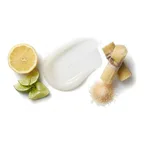 Aha Alpha Hydroxy Acid
 Lactobionic Acid
 Azelaic Acid
 Lactic Acid
 Hydrolyzed Yeast Extract
Average
- HighOily Skin Fit
- AverageEffectiveness
- HighSafety
Works for oily skin; other cleansing masks fit it better.
This fit is calculated for the concerns frequently associated with oily skin: shine, enlarged pores, blackheads, and blemishes. For scores and recommendations based on your full skin profile, including your 12D face scan results and any goals or preferences you have, please use the Lovi app.
Updated How the Fit score works
Lovi Assistant explains
- Offers moderate exfoliation and pore cleansing for your oily skin, as lactic acid and azelaic acid work to decongest pores and gently remove dead skin cells.
- Lactobionic acid and papain provide general skincare benefits like hydration and mild exfoliation, which can help with oily shine.
- The formula is safe for your oily skin, with no risks of irritation due to the absence of harsh ingredients.
Buy online

Prices checked 20 Nov 2026
The Lovi Fit is the same in every country; only the stores and prices differ, and the ones here are for India.
How to apply
- Use this cleansing mask PM as part of your weekly routine, starting 1×/week and working up if tolerated.
- Apply this cleansing mask after your cleanser and enzyme powder, and before applying your hydrating toner.
- Smooth an even layer over your face using clean fingers, avoiding harsh rubbing.
- Apply this cleansing mask on clean, dry skin to help control excess oil effectively.
- Avoid the sensitive eye area and always do a patch test before your first use.
People Say
★4.9Overall rating based on 100+ reviewsBased on limited data, users consistently praise this mask for its ability to deliver an instant glow and revive dull complexions. It is frequently described as a gentle yet effective exfoliator that smooths skin texture and refines pores without causing dryness or irritation, making it suitable for acne-prone and mature skin. Some users note the high price point and occasional packaging issues.
Highlights
Instant radiance Mostly Mentioned
- “Instantly brightens tired skin”
- “Glowy mask”
- “Wake up with a luminous complexion”
- “Skin looks brighter”
Smoother texture Often Mentioned
- “Softens the skin's texture”
- “Skin looks smoother”
- “Results in smooth complexion”
- “Face feels like velvet”
Gentle formulation Sometimes Noted
- “Does not leave skin dry”
- “Gentle fragrance”
- “No irritation”
- “Soothing sensation”
Pore refinement Sometimes Noted
- “Made my pores shrink away”
- “Refines pores”
- “Decongests and exfoliates”
- “Helps eliminate pigmentation”
High price point Sometimes Noted
- “Worth the splurge”
- “Very expensive skincare”
- “Break the bank”
- “Luxury price tag”
Packaging issues Rarely Noted
- “Improve the lid”
- “Lid peels off”
- “Annoying packaging”
- “Lid quality could be better”
Shipping and availability Rarely Noted
- “Delivery never arrived”
- “Shipping took longer”
- “Hard to find in stock”
- “Delivery failed”
Sources: lovi.care, lookfantastic.com, bloomingdales.com, spacenk.com, lovelyskin.com, trustpilot.com, and more
Questions and answers
How well does MZ Skin Radiance & Renewal Instant Clarity Refining Mask work for oily skin?
This mask works for your oily skin by offering moderate exfoliation and pore cleansing, though other products fit it better. To fit oily skin like yours best, a cleansing mask needs effective ingredients like BHA and blue tansy that manage oiliness and refine pores without causing irritation.
Which ingredients make this mask a good fit for oily skin?
Lactic acid and azelaic acid help clear clogged pores and remove dead skin cells to manage oily shine. Lactobionic acid and papain provide mild exfoliation and hydration for this skin type. Oily skin also benefits from masks containing BHA, blue tansy, and soothing, hydrating ingredients.
What does Alpha Hydroxy Acid do for oily skin?
Alpha Hydroxy Acid helps clear clogged pores and smooth oily skin while calming redness. This type of ingredient works best when it also includes soothing agents and barrier-strengthening ingredients to keep the skin balanced and comfortable.
What does Lactobionic Acid do for oily skin?
Lactobionic acid helps keep oily skin hydrated and smooth while keeping irritation very unlikely. Because this ingredient is gentle, an average or poor fit for oily skin needs a product formulated with soothing polyhydroxy acids and lightweight hydrators to balance oil without clogging pores.
Journal of Cosmetic Dermatology, 2019Journal of Cosmetic Dermatology, 2018
Where does this mask go in a skincare routine for oily skin?
This cleansing mask is used once a week as part of an oily skin routine, applied after a cleanser and enzyme powder, and before a hydrating toner, treatment, and moisturizer. Oily skin of this type needs a cleansing mask with exfoliating acids like lactic and azelaic acid to help decongest pores and remove dead skin cells.
Can I use it with retinol, and in what order?
You can use this mask in your weekly routine, but avoid applying it on the same nights you use retinol to prevent irritation. Instead, use retinol on separate evenings and follow up with a gentle moisturizer to keep your skin calm and hydrated.
How often should I use this mask?
This cleansing mask is used once a week as part of your weekly routine. Oily skin works well with a product of this type when it includes ingredients like lactic acid, azelaic acid, and lactobionic acid to gently clear pores, remove dead skin cells, and hydrate.
Can this mask clog pores, cause breakouts or purging for oily skin?
This mask is unlikely to clog pores or cause breakouts on oily skin, as lactic acid and azelaic acid help to gently clear out dead skin cells and decongest pores. The formula is generally safe for your skin, though an oily skin type also benefits from ingredients that control excess oil and balance sebum production.
What the research says
Azelaic acid nanocrystal hydrogel 10% achieved a higher success rate and greater lesion reduction than azelaic acid cream 20% in patients with mild to moderate facial acne.
Pharmaceutics, 2021Application of 15% azelaic acid gel significantly reduced post-inflammatory erythema and hyperpigmentation, decreased hemoglobin and melanin content, improved quality of life, and contributed to acne improvement in patients with mild to moderate acne compared to placebo.
Dermatology and Therapy, 2024Combining a 20% lactobionic acid peel with aluminum oxide crystal microdermabrasion increases skin hydration, improves elasticity, and decreases transepidermal water loss in 20 Caucasian females compared to lactobionic acid peel alone.
Journal of Cosmetic Dermatology, 2019An emulsion containing 10% lactobionic acid significantly reduces human skin surface pH without causing skin irritation or barrier impairment.
Journal of Cosmetic Dermatology, 2019Daily application of an antiaging cream containing 0.1% retinaldehyde, glycylglycine oleamide, and pre-tocopheryl is as effective as three sequential glycolic acid peels in reducing wrinkles and superior in refining skin texture in women with photoaging, with a 12-fold lower incidence of physical signs of adverse events.
Journal of Cosmetic Dermatology, 2018An antiaging skin care system containing alpha hydroxy acids and vitamins significantly improves wrinkle depth, skin roughness, and elasticity parameters in 52 volunteers compared to baseline over 21 days.
Clinical, Cosmetic and Investigational Dermatology, 2015Topical emulsions containing 2 and 10 wt% glycolic acid stabilized with long chain alkyl polyglucoside lowered skin surface pH to 5 and less in 24-hour and 7-day studies and inhibited Staphylococcus epidermidis growth without barrier impairment or irritation.
International Journal of Cosmetic Science, 2021Carboxytherapy alone and combined with lactobionic acid, ferulic acid, and ascorbic acid significantly reduced vascular dark circles and combined pigmentation in the tear trough and lower eyelid of 39 Caucasian participants.
Clinical, Cosmetic and Investigational Dermatology, 2024Lactobionic acid produced better skin performance with a lack of skin irritation and barrier impairment compared to glycolic acid in 77 healthy volunteers.
Journal of Cosmetic Dermatology, 2010Lactobionic acid improved skin barrier function most compared to other AHAs and BHAs when tested on an ex vivo porcine skin model, confirming significant barrier-protective effects and enabling toxicity evaluation of cosmetic ingredients.
International Journal of Molecular Sciences, 2021Topical application of a dermocosmetic containing Myrtus communis extract and azelaic acid reduced acne relapses and helped maintain remission compared to a light moisturizing cream in adult females in the acne maintenance phase over 16 weeks.
Journal of the European Academy of Dermatology and Venereology, 2023Topical administration of 20% azelaic acid cream and 5% tranexamic acid solution comparably improved acne-related postinflammatory hyperpigmentation in patients with acne vulgaris, while tranexamic acid demonstrated a significantly better safety profile at week 4.
Journal of Research in Medical Sciences, 2023Azelaic acid 15% gel showed comparable efficacy to adapalene 0.1% gel in reducing lesions, severity, and Dermatology Life Quality Index in women with adult acne, with significantly lower dryness and scaling, and demonstrated superiority during maintenance compared to no further treatment.
Journal of the European Academy of Dermatology and Venereology, 2015Application of a cream containing lactic acid 12% and pramoxine HCl 1% significantly improved skin dryness, hydration, and itch compared with a nontreated control in 24 women with a history of dry itchy skin.
Cutis, 2004A lactic acid/ceramide lotion significantly improved skin moisturization and desquamation compared to no treatment in women with dry, rough skin on the anterior shins.
The Journal of Clinical and Aesthetic Dermatology, 2020Treatment with 12% lactic acid increased epidermal and dermal firmness and thickness and improved skin smoothness and wrinkles compared to baseline, whereas 5% lactic acid induced clinical and epidermal changes without dermal changes.
Journal of the American Academy of Dermatology, 1996
Ingredients
Water, Lactobionic Acid, Propylene Glycol, Ammonium Acryloyldimethyltaurate Vp Copolymer, Glycerin, Hydrolyzed Yeast Extract, Lactic Acid, Azelaic Acid, Sodium Lactate, Phenoxyethanol, Synthetic Fluorphlogopite, Adipic Acid Neopentyl Glycol Crosspolymer, Lemon Peel Oil, Ethylhexylglycerin, Disodium Edta, Tropaeolum Majus Stem Extract Flower Leaf, Cetyl Hydroxyethylcellulose, Peppermint Oil, Parfum, Carbomer Papain Crosspolymer, Polyglucuronic Acid, Potassium Sorbate, Sodium Benzoate, Tin Oxide, Lecithin, 1,2-Hexanediol, Caprylyl Glycol, Algin, Ci 77891 Titanium Dioxide, Citral, Limonene, Linalool
Behind this fit score
Lovi calculates every fit score from the full ingredient list with brand-independent rules our dermatologists and cosmetic chemists build and review, and personalizes every pick with AI trained on the real results of millions of users. Lovi trains its fit score models on a proprietary dataset built from more than 10,000 expert-labeled products and more than 100,000 simulated examples, following an internally consistent methodology presented at Cosmoprof, AMWC, and Skin of Color Update.
-

Co-founder, Medical Director
Cosmetic chemist, cosmetologist, aesthetic products developer
-

Co-founder, CEO and CTO
PhD in computer science, 3x US patent holder, ex-Google, ex-Yandex
-

Dr. Sofía Perea Pérez, MD, MSc
Medical Board
Aesthetic medicine practitioner, MSc in Longevity and Anti-Aging Medicine
-

Medical Board
Specialist dermatologist, MBBS, MD, IFAAD
-

Medical Board
Cosmetic chemist, SCS, IFSCC member
-

Medical Board, Medical Advisor
Dermatology MD
-

Elina Nazarenko, MD
Medical Board
Dermatology and diagnostic consultant
-

Victoria Derkova, MS
Medical Board
Cosmetic chemist, cosmetic development technologist


How does it fit your skin?
Scan your face, then any product: Lovi shows how well it fits you and what fits even better.