
MiamiMD Dark Spot Corrector for oily acne-prone skin

 Ascorbic Acid
 Niacinamide
 Sodium Hyaluronate
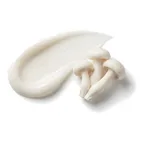 Kojic Acid
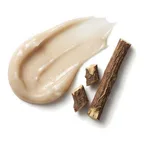 Licorice Extract
High
- HighOily Skin Fit
- HighEffectiveness
- HighSafety
A great choice for oily acne-prone skin; a few serums fit it even better.
This fit is calculated for the concerns frequently associated with oily acne-prone skin: shine, breakouts, blemishes, and enlarged pores. For scores and recommendations based on your full skin profile, including your 12D face scan results and any goals or preferences you have, please use the Lovi app.
Updated How the Fit score works
Lovi Assistant explains
- Highly suitable for your oily skin, this product effectively targets dark spots and evens skin tone with alpha-arbutin and kojic acid, which regulate melanogenesis and provide mild exfoliation.
- Tetrahexyldecyl ascorbate offers antioxidant benefits, complementing the brightening effects and supporting your goals for managing oiliness and blemishes.
- The formulation is safe for your skin, free from harsh ingredients that could cause irritation on oily skin.
How to apply
- Could be used as part of your PM routine. Start 3 times a week and build up to daily use if your skin tolerates it well.
- Apply your serum after cleansing and toning, but before putting on your moisturizer.
- Gently press 2 to 3 drops of the serum into your skin and let it absorb for a minute.
- Apply the serum on clean, dry skin to help manage your blemishes safely.
- Do a patch test before your first use and avoid the delicate eye area.
People Say
★3.8Overall rating based on 1.6k+ reviewsBased on a very large amount of data, users report mixed experiences. Many find that the product effectively fades dark spots and hyperpigmentation, leading to smoother, brighter, and more radiant skin on the face, hands, and chest. Conversely, a significant number of reviews highlight issues with aggressive marketing, a challenging subscription and refund process, and a lack of noticeable results for some.
Highlights
Lightweight formula Often Mentioned
- “Light texture and absorbs quickly”
- “Not greasy”
- “Feels good on my skin”
Aggressive sales tactics Often Mentioned
- “Pushy sales person”
- “Received 6 bottles instead of one”
- “Unwanted monthly subscription”
Difficult refund process Often Mentioned
- “Hiding behind 60 day refund policy”
- “Run around for months”
- “Had to pay to return”
Brightens complexion Sometimes Noted
- “Face looks so clean and clear”
- “Brightens dull, tired complexions”
- “Skin glows”
Fades dark spots Sometimes Noted
- “Spots on my cheeks start to disappear”
- “Seeing pigmented spots slowly fade”
- “Gets rid of unflattering dark aging spots”
Improves skin texture Sometimes Noted
- “Makes my skin feel very supple”
- “Skin looks more plump”
- “Skin is much softer and smoother”
No visible results Sometimes Noted
- “Did not do anything”
- “Results never materialized”
- “Yet to see any improvement”
Skin irritation Rarely Noted
- “Left my skin very dry”
- “Skin irritated”
- “Had to stop using”
Sources: lovi.care, walmart.com, bbb.org, trustpilot.com, miamimd.co, myprosandcons.com, and more
Questions and answers
What makes MiamiMD Dark Spot Corrector a great fit for oily acne-prone skin?
MiamiMD Dark Spot Corrector is a great fit because alpha-arbutin and kojic acid fade dark spots and even your skin tone with mild exfoliation while avoiding harsh ingredients that could trigger breakouts. Vitamin C provides antioxidant support to help manage oiliness and keep your skin bright and smooth.
Which ingredients make this cream a good fit for oily acne-prone skin?
MiamiMD Dark Spot Corrector is a great fit for oily acne-prone skin because alpha-arbutin and kojic acid fade dark spots and even skin tone while providing mild exfoliation. In addition, the vitamin C derivative helps brighten the skin and supports your goals for managing oiliness and blemishes without causing irritation.
What does Vitamin C do for oily acne-prone skin?
Vitamin C helps brighten skin and fade dark spots left by breakouts while smoothing out texture. It is a good fit for oily skin, though an average or weak fit product for this skin type also needs ingredients that control excess oil and soothe redness.
Journal of Cosmetic Dermatology, 2020Journal of Cosmetic Dermatology, 2023
What does Niacinamide do for oily acne-prone skin?
Niacinamide helps balance oil production, calms redness, and is unlikely to irritate oily, acne-prone skin while improving blemishes. Clinical tests show it reduces excess oil and helps clear up both inflammatory and non-inflammatory acne breakouts.
Journal of Cosmetic and Laser Therapy, 2006Journal of Cosmetic Dermatology, 2024
Where does this cream go in a skincare routine for oily acne-prone skin?
This treatment goes in the evening routine after cleansing and before moisturizing. Putting treatments in the evening helps keep things simple and provides extra safety around sun exposure.
Can I use it with retinol, and in what order?
You can use this treatment with retinol by applying your retinol first and following with this product, or by alternating the nights you use each to help keep your skin calm and smooth. Using both together is unlikely to cause irritation because this formula is free from harsh ingredients.
How often should I use this cream?
Use this treatment in your evening routine once a week to start, and you may carefully use it more often if your skin tolerates it well and shows good results. Applying active treatments at night helps keep things simple and provides extra safety around sun exposure.
Can it clog pores, cause breakouts or purging for oily acne-prone skin?
MiamiMD Dark Spot Corrector is unlikely to clog pores or cause breakouts on oily acne-prone skin because it has a safe formula free from harsh ingredients that could cause irritation. While some reviewers report skin irritation, the product helps fade dark spots and even skin tone safely.
Is this cream fragrance-free and alcohol-free?
Yes, it has no fragrance and no drying alcohol.
What the research says
Encapsulation of alpha arbutin in an optimized ethosomal gel significantly improved skin melanin reduction, moisture content, and elasticity in human volunteers compared to conventional formulations.
Heliyon, 2023A topical serum containing vitamin C, vitamin E, and raspberry leaf cell culture extract improved skin color, elasticity, radiance, smoothness, scaliness, and wrinkles compared to the untreated contralateral side in fifty female volunteers.
Journal of Cosmetic Dermatology, 2020Topical application of 5% vitamin C cream significantly improved global clinical scores, increased skin microrelief density, and induced elastic tissue repair in photoaged skin compared to excipient control in healthy female volunteers.
Experimental Dermatology, 2003Topical application of VC-IP cream twice daily for 8 weeks reduces periorbital wrinkles in female subjects compared to a placebo cream.
Journal of Cosmetic Dermatology, 2022Topical treatment with 5% vitamin C and 0.1% madecassoside significantly improved clinical scores for wrinkles, suppleness, firmness, roughness, and skin hydration, along with functional and structural remodeling of the elastic fiber network in 20 female volunteers with photoaged skin after 6 months compared to baseline.
Experimental Dermatology, 2008Topical nicotinamide prevented solar-simulated UV-induced immunosuppression in healthy volunteers, and men experienced immunosuppression at solar-simulated UV doses three times lower than those required for women.
The Journal of Investigative Dermatology, 2008Topical 5% niacinamide applied twice daily for 12 weeks reduced fine lines and wrinkles, hyperpigmented spots, red blotchiness, and skin sallowness, and improved skin elasticity compared to vehicle control in 50 female white subjects with facial photoaging.
Dermatologic Surgery, 2005Topical 2% niacinamide significantly decreased sebum excretion rate in Japanese individuals and casual sebum levels in Caucasian individuals compared to placebo or baseline.
Journal of Cosmetic and Laser Therapy, 2006Topical application of 0.1% hyaluronic acid formulations of different molecular weights led to significant improvements in skin hydration and elasticity, with low-molecular-weight formulations also significantly reducing wrinkle depth in seventy-six female subjects compared to a vehicle control.
Journal of Drugs in Dermatology, 2011Topical hyaluronic acid serum used twice daily by 40 females with facial photoaging produced an immediate 134% increase in skin hydration, a sustained 55% increase at week 6, and significant improvements in smoothness, plumping, fine lines, wrinkles, and global appearance without causing irritation.
Dermatology and Therapy, 2021A topical antioxidant serum significantly reduced air pollution-induced skin pigmentation and proinflammatory gene expression ex vivo, and improved skin aging signs in 40 healthy adult females after 90 days of daily use.
Journal of Cosmetic Dermatology, 2022A topical formulation containing kojic acid, emblica extract, and glycolic acid demonstrated efficacy parity compared with hydroquinone 4% in multiethnic participants with mild to moderate facial dyschromia.
Cutis, 2010Kojic acid is safe for use in cosmetic products up to a concentration of 1% because dermal sensitization and skin lightening would not be seen below that level.
International Journal of Toxicology, 2010Polymeric nanocapsules containing 0.1% kojic acid dipalmitate and 5% rosehip oil formulated with PLGA demonstrated high stability, antioxidant and tyrosinase-inhibiting activities, and a 25% melanin reduction in normal human epidermal melanocytes.
ACS Omega, 2025Combining 755 nm alexandrite laser with topical licorice gel significantly reduces terminal hair counts compared to alexandrite laser with placebo in women with idiopathic hirsutism.
Evidence-based Complementary and Alternative Medicine, 2015Licochalcone A activated Nrf2 signaling, elevated cytoprotective enzymes, increased the reduced-to-oxidized glutathione ratio, and decreased reactive oxygen species in human fibroblasts and neutrophils, while a LicA-rich licorice extract lowered UVA-induced oxidative processes in vivo.
Experimental Dermatology, 2015Mesoporous silica nanoparticles entrapping licorice polysaccharide and coated with polydopamine showed 76% entrapment efficiency, 89% in vitro release at pH 5, increased sebocytes' cellular uptake, and mediated inflammatory response by inhibiting pro-inflammatory cytokines and regulating anti-inflammatory cytokines.
Carbohydrate Polymers, 2024
Ingredients
Water, Dicaprylyl Ether, Alpha-Arbutin, Kojic Acid, Tetrahexyldecyl Ascorbate Vitamin C Derivative, Tocopherol Vitamin E, Tocopheryl Acetate, Resveratrol, Squalane
Behind this fit score
Lovi calculates every fit score from the full ingredient list with brand-independent rules our dermatologists and cosmetic chemists build and review, and personalizes every pick with AI trained on the real results of millions of users. Lovi trains its fit score models on a proprietary dataset built from more than 10,000 expert-labeled products and more than 100,000 simulated examples, following an internally consistent methodology presented at Cosmoprof, AMWC, and Skin of Color Update.
-

Co-founder, Medical Director
Cosmetic chemist, cosmetologist, aesthetic products developer
-

Co-founder, CEO and CTO
PhD in computer science, 3x US patent holder, ex-Google, ex-Yandex
-

Dr. Sofía Perea Pérez, MD, MSc
Medical Board
Aesthetic medicine practitioner, MSc in Longevity and Anti-Aging Medicine
-

Medical Board
Specialist dermatologist, MBBS, MD, IFAAD
-

Medical Board
Cosmetic chemist, SCS, IFSCC member
-

Medical Board, Medical Advisor
Dermatology MD
-

Elina Nazarenko, MD
Medical Board
Dermatology and diagnostic consultant
-

Victoria Derkova, MS
Medical Board
Cosmetic chemist, cosmetic development technologist


How does it fit your skin?
Scan your face, then any product: Lovi shows how well it fits you and what fits even better.