
La Roche-Posay Anthelios AOX Daily Antioxidant Serum with Sunscreen SPF 50 for acne-prone skin

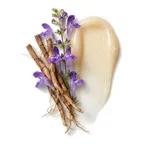 Baicalin
 Ascorbic acid, ascorbyl glucoside
 Vitamin E
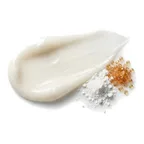 Cell-Ox Shield Technology
High
- HighCombination Skin Fit
- HighEffectiveness
- HighSafety
A great choice for acne-prone skin; a few sunscreens fit it even better.
This fit is calculated for the concerns frequently associated with acne-prone skin: breakouts, blackheads, and post-acne marks. For scores and recommendations based on your full skin profile, including your 12D face scan results and any goals or preferences you have, please use the Lovi app.
Updated How the Fit score works
Lovi Assistant explains
- Offers high suitability for your combination skin, as Tocopherol and Ascorbyl Glucoside provide antioxidant activity beneficial for acne, blemishes, and breakouts.
- The inclusion of Avobenzone and Homosalate offers excellent UV protection, further supporting your skin's health and recovery.
- The product is safe for your skin, with no risks of irritation due to the absence of prohibited or harsh ingredients.
How to apply
- Apply this sunscreen every morning as the final step of your skincare routine. Reapply every two hours if you are outdoors for best protection against breakouts.
- Apply the sunscreen after your moisturizer and before applying any makeup. Let it absorb completely ⏱ before going outside.
- Take a nickel-sized amount and gently pat it evenly across your face and neck. Avoid rubbing aggressively to keep your combination skin calm.
- Apply the sunscreen on clean, dry skin to ensure an even protective layer. This helps manage excess shine without clogging your pores.
- Avoid the immediate eye area and do a quick patch test before first use. Stop using it if you notice any irritation and consult a specialist.
People Say
★4.6Overall rating based on 1.0k+ reviewsBased on a very large amount of data, users with sensitive and aging skin highly praise this product for its dual function as a lightweight, non-greasy serum and a high-protection sunscreen that layers seamlessly under makeup. While many report visible improvements in skin texture and fine lines, a notable subset of users experiences irritation around the eyes and finds the price high for the small bottle size.
Highlights
Lightweight and non-greasy Mostly Mentioned
- “absorbs quickly”
- “feels weightless”
- “no oily residue”
Excellent makeup base Often Mentioned
- “layers well”
- “no pilling”
- “acts as primer”
No white cast Often Mentioned
- “invisible finish”
- “clear on skin”
- “no chalky look”
Improves skin texture Sometimes Noted
- “skin feels smoother”
- “softer”
- “more radiant”
Suitable for sensitive skin Sometimes Noted
- “no breakouts”
- “gentle formula”
- “non-comedogenic”
Eye irritation Sometimes Noted
- “stings eyes”
- “burns if migrates”
- “causes tearing”
High price Sometimes Noted
- “expensive for size”
- “small bottle”
- “pricey daily use”
Packaging issues Rarely Noted
- “pump malfunctions”
- “hard to get last drops”
- “leaks”
Scent complaints Rarely Noted
- “strong sunscreen smell”
- “unpleasant odor”
- “lingers”
Staining potential Rarely Noted
- “stains clothes yellow”
- “orange residue on collars”
Sources: lovi.care, target.com, dermstore.com, lovelyskin.com, ulta.com, amazon.com, and more
Questions and answers
What makes La Roche-Posay Anthelios AOX Daily Antioxidant Serum with Sunscreen SPF 50 a great fit for acne-prone skin?
This product is a great fit for acne-prone skin because it combines strong UV protection with antioxidants like vitamin E and vitamin C derivatives that help support skin recovery from breakouts. It is safe for your skin, with no risk of irritation from harsh ingredients.
Journal of Cosmetic Dermatology, 2024Colloids and Surfaces. B, Biointerfaces, 2019
Which ingredients make this serum a good fit for acne-prone skin?
This sunscreen is a great fit for acne-prone skin because tocopherol and ascorbyl glucoside provide antioxidant activity that helps with breakouts, while avobenzone and homosalate offer strong sun protection to support skin recovery. These ingredients are safe for your skin and are unlikely to cause irritation.
Journal of Cosmetic Dermatology, 2024Journal of Drugs in Dermatology, 2025
What does Baicalin do for acne-prone skin?
What does Vitamin C do for acne-prone skin?
Vitamin C helps brighten uneven skin tones and smooth out marks left by breakouts while fighting dark spots. It is unlikely to clog pores and may improve overall skin texture when used regularly in your routine.
Journal of Cosmetic Dermatology, 2023Journal of Drugs in Dermatology, 2024
Where does this serum go in a skincare routine for acne-prone skin?
This product goes in the morning routine as the final step after your moisturizer. It provides high sun protection and antioxidant support that is very safe for acne-prone skin.
Can I use this serum with retinol, and in what order?
You can use this sunscreen serum in the morning after your moisturizer while using retinol at night. This helps protect your skin from UV rays while supporting recovery, and it is safe and unlikely to cause irritation.
Journal of Cosmetic Dermatology, 2024Journal of the American Academy of Dermatology, 1987
How often should I use this serum?
Apply this sunscreen every morning as the final step of your daytime routine. The antioxidant formula and UV protection support your skin safely without irritation.
Can this serum clog pores, cause breakouts or purging for acne-prone skin?
This serum is a great fit and is unlikely to clog pores or cause breakouts on acne-prone skin. It is made without harsh ingredients and is well tolerated, helping to protect your skin while keeping it calm.
Journal of Cosmetic Dermatology, 2024Journal of Drugs in Dermatology, 2025
Is this serum fragrance-free and alcohol-free?
Yes, it has no fragrance and no drying alcohol.
What the research says
Topical application of tocopherol succinate ethosomal gel decreased erythema, melanin, and sebum levels while improving moisture content and skin elasticity in 34 human women.
Journal of Cosmetic Dermatology, 2024Parsol 1789 and Eusolex 8020 provided slightly better photoprotection than oxybenzone in both normal and sensitized human skin when assessed using pigmentation end points, whereas all three sunscreens performed similarly against UVA-induced erythema.
Journal of the American Academy of Dermatology, 1987Chemical sunscreens containing avobenzone, octocrylene, homosalate, and octisalate showed no to minimal risks of dermal irritation, sensitization, photo-allergy, and photo-irritation in human subjects.
Journal of Drugs in Dermatology, 2025Hydrogels containing vitamin E-loaded nanostructured lipid carriers exhibited better occlusive properties and long-lasting effects, while vitamin E-loaded nanoemulsions performed a faster skin hydration effect and were selected as more attractive for skin application.
Colloids and Surfaces. B, Biointerfaces, 2019Mexoryl SX (5%) efficiently prevents UVA-induced skin alterations including pigmentation, stratum corneum thickening, and protein expression changes in human skin.
Journal of Photochemistry and Photobiology. B, Biology, 1998A nighttime topical antioxidant containing resveratrol, baicalin, and vitamin E significantly improved fine lines, wrinkles, firmness, elasticity, laxity, hyperpigmentation, radiance, roughness, and dermal thickness in subjects with mild to moderately photodamaged skin over 12 weeks.
Journal of Drugs in Dermatology, 2014Motor baicalin encapsulated in bio-vesicles enhanced water solubility, stability, transdermal penetration, antioxidant activity, and clinical skin antiaging efficacy compared to liposome baicalin and baicalin raw material.
Journal of Cosmetic Dermatology, 2025Chronomodulated daytime application of baicalin and nighttime application of palmitoyl tripeptide-1 synergistically improved skin luminance by 16.29%, nasolabial fold depth by -36.35%, and firmness by 24.35% in 30 female participants.
Journal of Cosmetic Dermatology, 2026Topical application of 5% vitamin C cream significantly improved global clinical scores, increased skin microrelief density, and induced elastic tissue repair in photoaged skin compared to excipient control in healthy female volunteers.
Experimental Dermatology, 2003Topical application of VC-IP cream twice daily for 8 weeks reduces periorbital wrinkles in female subjects compared to a placebo cream.
Journal of Cosmetic Dermatology, 2022Topical treatment with 5% vitamin C and 0.1% madecassoside significantly improved clinical scores for wrinkles, suppleness, firmness, roughness, and skin hydration, along with functional and structural remodeling of the elastic fiber network in 20 female volunteers with photoaged skin after 6 months compared to baseline.
Experimental Dermatology, 2008Topical application of an antioxidant serum containing 15% ascorbic acid, 0.5% ferulic acid, and 1% tocopherol prevented particulate matter-induced degradation of extracellular matrix components, inflammation, and oxidative stress in the skin of 15 female volunteers compared to untreated controls.
Journal of Cosmetic Dermatology, 2025Dermatological products containing d-alpha tocopheryl acetate showed non-comedogenic potential with less than a 50% increase in microcomedones in 12 healthy male subjects compared to octyl palmitate.
Contemporary Clinical Trials Communications, 2021Topical application of an antioxidant mix containing 15% ascorbic acid, 0.5% ferulic acid, and 1% tocopherol prevented PM and UV-induced skin barrier perturbation, lipid peroxidation, inflammatory markers, MMP9 activation, and Type I collagen loss in 15 healthy females compared to untreated exposed skin.
Journal of Cosmetic Dermatology, 2024Sunscreens containing Mexoryl SX provide superior protection against UVA- and solar-simulated radiation-induced biological damage, including pigmentation, DNA damage, immune suppression, and dermal alterations, compared to formulations without it in human volunteers and patients.
Photodermatology, Photoimmunology & Photomedicine, 2008Topical application of a 5% Mexoryl SX sunscreen formulation reduced or abolished the visible, histological, electron microscopic, and biochemical cutaneous changes induced by chronic sub-erythemal UV-A irradiation in hairless mice compared to unprotected irradiated animals.
Photochemistry and Photobiology, 1992
Ingredients
Avobenzone, Homosalate, Octisalate, Octocrylene, Oxybenzone, Water, Dimethicone, Cyclopentasiloxane, Tocopherol, Acrylates Dimethicone Copolymer, Phenoxyethanol, Propylene Glycol, Caprylyl Glycol, Silica, Sodium Polyacrylate, Ascorbyl Glucoside, Scutellaria Baicalensis Root Extract, Acrylates C10-30 Alkyl Acrylate Crosspolymer, Disodium Edta, Diethylhexyl Syringylidenemalonate, Polyacrylamide, C13-14 Isoparaffin, Laureth-7, Cassia Alata Leaf Extract, Maltodextrin, Triethanolamine
Behind this fit score
Lovi calculates every fit score from the full ingredient list with brand-independent rules our dermatologists and cosmetic chemists build and review, and personalizes every pick with AI trained on the real results of millions of users. Lovi trains its fit score models on a proprietary dataset built from more than 10,000 expert-labeled products and more than 100,000 simulated examples, following an internally consistent methodology presented at Cosmoprof, AMWC, and Skin of Color Update.
-

Co-founder, Medical Director
Cosmetic chemist, cosmetologist, aesthetic products developer
-

Co-founder, CEO and CTO
PhD in computer science, 3x US patent holder, ex-Google, ex-Yandex
-

Dr. Sofía Perea Pérez, MD, MSc
Medical Board
Aesthetic medicine practitioner, MSc in Longevity and Anti-Aging Medicine
-

Medical Board
Specialist dermatologist, MBBS, MD, IFAAD
-

Medical Board
Cosmetic chemist, SCS, IFSCC member
-

Medical Board, Medical Advisor
Dermatology MD
-

Elina Nazarenko, MD
Medical Board
Dermatology and diagnostic consultant
-

Victoria Derkova, MS
Medical Board
Cosmetic chemist, cosmetic development technologist


How does it fit your skin?
Scan your face, then any product: Lovi shows how well it fits you and what fits even better.