
Glow Recipe Avocado Melt Retinol Eye Cream for sensitive skin

 Retinol
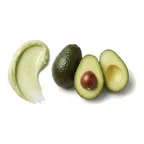 Avocado Oil
 Niacinamide
 Sodium Hyaluronate
 Squalane
Average
- HighNormal Skin Fit
- AverageEffectiveness
- Low RiskSafety
Works for sensitive skin; other eye cares fit it better.
This fit is calculated for the concerns frequently associated with sensitive skin: redness, stinging, and reactions to new products. For scores and recommendations based on your full skin profile, including your 12D face scan results and any goals or preferences you have, please use the Lovi app.
Updated How the Fit score works
Lovi Assistant explains
- Offers moderate benefits for your normal skin, as retinol and niacinamide work to stimulate collagen and repair your skin barrier, respectively, while shea butter and glycerin provide hydration that can support your redness and irritation.
- The formula's texture smoothing and fine line minimizing properties are beneficial for the eye area, though it lacks specialized ingredients to directly target your primary concerns of redness and irritation.
- The product is generally safe for your sensitive skin, with a low risk of irritation from retinol and fragrance.
People Say
★4.5Overall rating based on 200+ reviewsThis eye cream is highly praised by users with dry and sensitive skin for its gentle, non-irritating retinol formula that provides deep hydration and a smoother under-eye appearance. Results regarding dark circles and fine lines are mixed, with some users finding the product ineffective for major anti-aging concerns or experiencing issues with the jar packaging.
Highlights
Deeply hydrating Mostly Mentioned
- “Under eye is more moisturized”
- “Dry skin's dream”
- “Mega smooth under-eye”
Gentle, non-irritating Often Mentioned
- “No irritation to sensitive skin”
- “Gentle enough for beginners”
- “No redness even with use”
Rich, spreadable texture Often Mentioned
- “Whipped consistency”
- “Spreads out like butter”
- “Little goes a long way”
Impractical jar packaging Often Mentioned
- “Hard to get cream out”
- “Wish it came with a tool”
- “Not hygienic”
Improves skin texture Sometimes Noted
- “Skin felt smoother”
- “Under eyes are bright”
- “Skin felt stronger”
Ineffective for puffiness Sometimes Noted
- “No effect on puffy eyes”
- “Not sure about depuffing”
- “Did not help”
Limited anti-aging results Sometimes Noted
- “No difference on fine lines”
- “No WOW factor”
- “No visible difference”
Potential for milia Rarely Noted
- “Making milia seeds worse”
- “Clogs my pores”
- “Not for everyone”
Sources: lovi.care, influenster.com, facebook.com, blushsuede.com, doctoranne.de, skincarmanyc.com, and more
Questions and answers
How well does Glow Recipe Avocado Melt Retinol Eye Cream work for sensitive skin?
This eye cream works as an average fit for sensitive skin, offering moderate benefits for anti-aging while lacking specialized ingredients to directly target redness and irritation. An eye cream for sensitive skin needs soothing and calming ingredients to effectively address redness and irritation without any risks of unsuitability.
Which ingredients make this cream a good fit for sensitive skin?
Shea butter and glycerin help make this cream a good fit by providing gentle hydration that can support redness and irritation. To be a better fit for sensitive skin, this type of product needs soothing and calming ingredients that directly target redness and irritation without any risks of unsuitability.
What does Retinol do for sensitive skin?
Retinol helps smooth fine lines and even out skin tone by boosting collagen, but it may cause dryness, scaling, and stinging in sensitive skin. Products for sensitive skin need soothing and hydrating ingredients to help calm irritation while delivering these anti-aging benefits.
The British Journal of Dermatology, 2019Toxicology Letters, 2003
What does Avocado Oil do for sensitive skin?
Avocado oil helps keep sensitive skin calm and moisturized while supporting skin repair. It is unlikely to cause irritation and may help reduce redness and boost healing.
Journal of Cosmetic Dermatology, 2020International Journal of Molecular Sciences, 2017
Where does this cream go in a skincare routine for sensitive skin?
This eye cream goes in the evening routine as a treatment step after your soothing toner and before your moisturizer. It is generally safe for sensitive skin, though an eye product for this skin needs specialized soothing ingredients to directly target redness and irritation.
Can I use this cream with vitamin C, and in what order?
You can use this cream with vitamin C by applying your vitamin C serum in the morning and saving this retinol cream for your evening routine. Using them at different times of the day helps you get the anti-aging benefits of both ingredients while keeping the risk of irritation low for your sensitive skin.
How often should I use this cream?
You can use this eye cream in the evening, as treatments with active ingredients work best then for safety and simplicity around sun exposure. This product is generally safe for your sensitive skin with a low risk of irritation, but because it is an average fit, sensitive skin prone to redness and irritation needs a product with soothing and calming ingredients like centella asiatica, green tea, or bisabolol.
Can this cream clog pores, cause breakouts or purging for sensitive skin?
This cream is generally safe for sensitive skin, but because it contains retinol, it may occasionally cause mild purging or irritation as your skin adjusts. An average fit for sensitive skin needs soothing ingredients like centella asiatica or green tea along with gentle hydrators to calm redness and keep pores clear.
Is this cream fragrance-free and alcohol-free?
It has no drying alcohol and contains fragrance (parfum). Cetearyl alcohol is a fatty alcohol, which soften the skin.
What the research says
Topical application of retinol and retinoic acid both increased epidermal thickness and upregulated collagen genes and proteins in human skin, with retinol producing similar histological and molecular changes to retinoic acid alongside a significant reduction in facial wrinkles after 12 weeks.
Journal of Cosmetic Dermatology, 2016Topical hyaluronic acid filler serum combined with Botulinum toxin type A lengthened the duration of the toxin's effect in reducing wrinkles compared to Botulinum toxin type A alone.
Dermatologic Therapy, 2022Topical bakuchiol 0.5% applied twice daily compared with retinol 0.5% applied daily significantly decreased wrinkle surface area and hyperpigmentation with no statistical difference between the compounds in 44 patients over 12 weeks, while retinol users reported more facial skin scaling and stinging.
The British Journal of Dermatology, 2019Topical 0.3% and 1% retinol comparably improved biomarkers of cutaneous photoageing in photoaged volunteers, while 0.3% retinol demonstrated better tolerance with fewer and milder adverse events compared to 1% retinol in a daily escalation regimen.
International Journal of Cosmetic Science, 2022Daily application of 0.3% and 0.5% retinol serums in 37 volunteers over 12 weeks reduced skin hyperpigmentation, unevenness, and wrinkles on both sides of the face, with the 0.5% concentration causing more frequent and intense skin irritation.
Skin Pharmacology and Physiology, 2020Topical application of 0.1% retinol induced CRABP2 and HBEGF gene expression, increased keratinocyte proliferation and epidermal thickness ex vivo, and improved major skin aging signs without significant adverse reactions in 48 volunteers compared to placebo.
Skin Pharmacology and Physiology, 2009Topical cream containing saffron extract and avocado oil improved wrinkle grading, reduced nasolabial fold area and volume, and increased skin elasticity in twenty healthy volunteers over 12 weeks without allergic reactions.
Journal of Cosmetic Dermatology, 2020Incorporation of apigenin into nanoemulsions formulated with d-alpha-tocopheryl polyethylene glycol 1000 succinate, hydrogenated soy lecithin, black soldier fly larvae oil, and avocado oil achieved nearly 99 percent encapsulation efficiency, improved chemical stability, elevated antioxidant ability, and optimal skin deposition.
Polymers, 2021Topical nicotinamide prevented solar-simulated UV-induced immunosuppression in healthy volunteers, and men experienced immunosuppression at solar-simulated UV doses three times lower than those required for women.
The Journal of Investigative Dermatology, 2008Topical 5% niacinamide applied twice daily for 12 weeks reduced fine lines and wrinkles, hyperpigmented spots, red blotchiness, and skin sallowness, and improved skin elasticity compared to vehicle control in 50 female white subjects with facial photoaging.
Dermatologic Surgery, 2005Topical 2% niacinamide significantly decreased sebum excretion rate in Japanese individuals and casual sebum levels in Caucasian individuals compared to placebo or baseline.
Journal of Cosmetic and Laser Therapy, 2006Topical application of 0.1% hyaluronic acid formulations of different molecular weights led to significant improvements in skin hydration and elasticity, with low-molecular-weight formulations also significantly reducing wrinkle depth in seventy-six female subjects compared to a vehicle control.
Journal of Drugs in Dermatology, 2011Topical hyaluronic acid serum used twice daily by 40 females with facial photoaging produced an immediate 134% increase in skin hydration, a sustained 55% increase at week 6, and significant improvements in smoothness, plumping, fine lines, wrinkles, and global appearance without causing irritation.
Dermatology and Therapy, 2021A topical antioxidant serum significantly reduced air pollution-induced skin pigmentation and proinflammatory gene expression ex vivo, and improved skin aging signs in 40 healthy adult females after 90 days of daily use.
Journal of Cosmetic Dermatology, 2022Application of fullerene-C60 dissolved in squalane cream twice daily for 8 weeks significantly enhanced skin moisture and reduced wrinkle formation compared to placebo in 23 Japanese women without severe side effects.
Journal of Nanoscience and Nanotechnology, 2010Squalane at 0.005-0.015% counteracts UVA-induced oxidative stress, inflammation, and collagen metabolism inhibition while stimulating fibroblast migration in human dermal fibroblasts.
Molecules, 2025Plant-derived squalane protected human dermal fibroblasts against UVA-induced damage by counteracting ROS formation, suppressing apoptosis-related proteins p53, caspase-3, caspase-9, and PARP, and restoring the pro-survival p-Akt/mTOR pathway.
Antioxidants, 2025
Why other eye cares fit sensitive skin better
- Retinol in this eye care
Topical bakuchiol 0.5% applied twice daily compared with retinol 0.5% applied daily significantly decreased wrinkle surface area and hyperpigmentation with no statistical difference between the compounds in 44 patients over 12 weeks, while retinol users reported more facial skin scaling and stinging.
The British Journal of Dermatology, 2019
Ingredients
Water, Glycerin, Propanediol, Cetearyl Alcohol, Glyceryl Stearate, Persea Gratissima Oil Avocado Oil, C9-12 Alkane, Stearic Acid, Butyrospermum Parkii Butter Shea Butter, Kaolin, Sodium Lauroyl Glutamate, Persea Gratissima Fruit Extract Avocado Fruit Extract, Squalane, Niacinamide, Ethylhexylglycerin, Hexylresorcinol, Rice Extract, Tocopheryl Acetate, Aloe Barbadensis Leaf Juice, Coffea Arabica Fruit Extract Coffee Fruit Extract, Sodium Hyaluronate, Ethylhexyl Palmitate, Retinol, Pei-10, Hydrated Silica, Sodium Chloride, Fructan, Maltodextrin, Spirulina Platensis Extract, Ci 75300, Potassium Chloride, Potassium Phosphate, Butylene Glycol, Sodium Phosphate, Hydrogenated Hydrolysate Starch, Maltooligosyl Glucoside, Arginine, Silica Dimethyl Silylate, Sodium Dilauramidoglutamide Lysine, Sodium Hydroxide, Citric Acid, Caprylyl Glycol, Carthamus Tinctorius Seed Extract, Lavandula Angustifolia Stem Extract Flower Leaf Lavender Stem Extract Flower Leaf, Malachite Extract, Rosmarinus Officinalis Leaf Extract Rosemary Leaf Extract, Ppg-3 Benzyl Ether Myristate, Polyisobutene, Pvp, C13-15 Alkane, Acrylates C10-30 Alkyl Acrylate Crosspolymer, Sodium Hydroxypropylsulfonate Laurylglucoside Crosspolymer, Parfum, Hexylene Glycol, Potassium Sorbate, Sodium Benzoate, Phenoxyethanol
Behind this fit score
Lovi calculates every fit score from the full ingredient list with brand-independent rules our dermatologists and cosmetic chemists build and review, and personalizes every pick with AI trained on the real results of millions of users. Lovi trains its fit score models on a proprietary dataset built from more than 10,000 expert-labeled products and more than 100,000 simulated examples, following an internally consistent methodology presented at Cosmoprof, AMWC, and Skin of Color Update.
-

Co-founder, Medical Director
Cosmetic chemist, cosmetologist, aesthetic products developer
-

Co-founder, CEO and CTO
PhD in computer science, 3x US patent holder, ex-Google, ex-Yandex
-

Dr. Sofía Perea Pérez, MD, MSc
Medical Board
Aesthetic medicine practitioner, MSc in Longevity and Anti-Aging Medicine
-

Medical Board
Specialist dermatologist, MBBS, MD, IFAAD
-

Medical Board
Cosmetic chemist, SCS, IFSCC member
-

Medical Board, Medical Advisor
Dermatology MD
-

Elina Nazarenko, MD
Medical Board
Dermatology and diagnostic consultant
-

Victoria Derkova, MS
Medical Board
Cosmetic chemist, cosmetic development technologist


How does it fit your skin?
Scan your face, then any product: Lovi shows how well it fits you and what fits even better.