Moon Juice Acid Potion for oily skin

 Glycolic Acid
 Lactic Acid
 Niacinamide
 Salicylic Acid
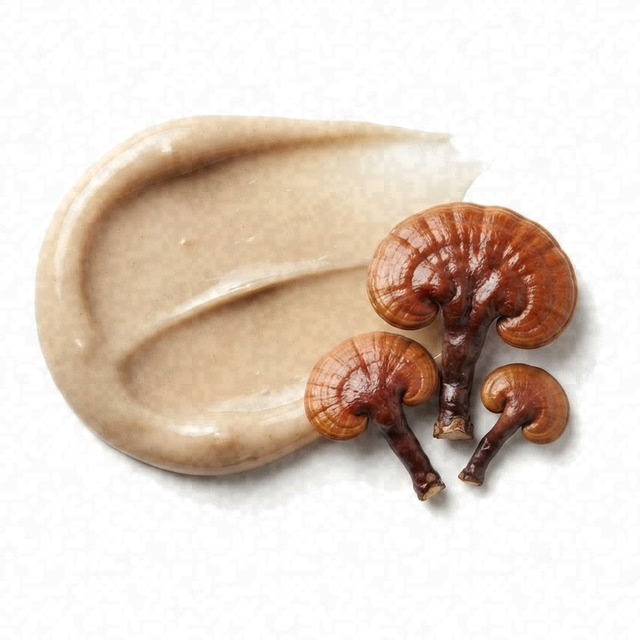 Ganoderma Lucidum Extract
Average
- HighOily Skin Fit
- AverageEffectiveness
- HighSafety
Works for oily skin; other products fit it better.
This fit is calculated for the concerns frequently associated with oily skin: shine, enlarged pores, blackheads, and blemishes. For scores and recommendations based on your full skin profile, including your 12D face scan results and any goals or preferences you have, please use the Lovi app.
Page built Nov 8, 2026How the Fit score works
Lovi Assistant explains
- Offers moderate exfoliation for your oily skin due to the presence of glycolic acid, lactic acid, and salicylic acid, which help with skin renewal and texture smoothing.
- While Glycerin and Allantoin provide general hydration and soothing benefits, they are not directly targeted at your primary concern of oily shine.
- The formula is highly suitable for oily skin and is safe, with no reported irritation risks.
How to apply
- Use this exfoliant product as part of your PM routine once a week. Start slowly and build up frequency only if your skin tolerates it well.
- Apply the exfoliant after cleansing and toner, but right before your moisturizer.
- Gently press 2-3 drops of the exfoliant into your skin and let it absorb fully. Avoid any harsh rubbing to keep your skin calm.
- Apply the exfoliant directly onto completely dry skin to get the best balance and results. Clean, dry skin helps the product work evenly.
- Always avoid the delicate eye area when applying. Be sure to use a broad-spectrum SPF 30+ daily while using exfoliating acids.
People Say
★4.8Overall rating based on 1000+ reviewsMoon Juice Acid Potion is highly regarded for its potent resurfacing abilities, effectively smoothing skin texture, clearing congestion, and brightening dull complexions. While many users with oily, combination, or normal skin report transformative results, those with sensitive skin should exercise caution, as the high concentration of acids can cause irritation or peeling if used too frequently.
Highlights
Smooths texture Mostly Mentioned
- “Skin feels so soft”
- “Refined my skin texture”
- “Noticeable difference in smoothness”
Clears congestion Often Mentioned
- “Spots just disappeared”
- “Effective against blackheads”
- “Stopped a bad breakout”
Brightens complexion Sometimes Noted
- “Gives a nice glow”
- “Skin appears brighter”
- “Revealed radiant skin”
Lasting value Sometimes Noted
- “A little goes a long way”
- “Bottle lasts forever”
- “Economical for the price”
Causes irritation Sometimes Noted
- “Too strong for my skin”
- “Red, irritated skin”
- “Caused stinging/burning”
Tacky feel Sometimes Noted
- “I don't like the tacky feeling”
- “Left my face feeling tacky”
- “Sticky residue”
Drying effect Rarely Noted
- “Skin felt tight and dry”
- “Caused peeling”
- “Too drying for me”
Packaging issues Rarely Noted
- “Cap coating started to deteriorate”
- “Tiny white chips on my face”
- “Poor cap quality”
Sources: lovi.care, moonjuice.com, nordstrom.com, heydayskincare.com, cleanbeautycritic.com, capreabeauty.com, and more
Questions and answers
How well does Moon Juice Acid Potion work for oily skin?
Moon Juice Acid Potion works moderately well for oily skin by offering moderate exfoliation that helps with skin renewal and texture smoothing. Although it is safe and causes no irritation, an exfoliant treatment for oily skin needs ingredients like niacinamide to control sebum production and enhance radiance.
BioMed Research International, 2020Journal of Cosmetic Dermatology, 2024
Which ingredients make this exfoliant a good fit for oily skin?
Glycolic acid, lactic acid, and salicylic acid make this exfoliant a good fit for oily skin by offering moderate exfoliation that helps with skin renewal and texture smoothing. To better fit oily skin, products of this type need ingredients like niacinamide to control sebum production and enhance radiance without irritation.
BioMed Research International, 2020Journal of Cosmetic Dermatology, 2024
What does Glycolic Acid do for oily skin?
Glycolic acid helps clear away dead skin and excess oil for a smooth, clean feel. It gently removes buildup from the surface, which keeps pores clear and skin looking fresh.
Molecules, 2023Journal of the European Academy of Dermatology and Venereology, 2011
What does Lactic Acid do for oily skin?
Lactic acid helps manage oily skin by significantly reducing oil production and pore size while improving moisture levels. It supports a clearer and smoother look through gentle surface renewal.
Where does it go in a skincare routine for oily skin?
This exfoliant treatment goes in the evening routine after cleansing. It helps smooth texture on oily skin, but an average fit product of this type also needs ingredients that directly control oily shine.
Can I use this exfoliant with retinol, and in what order?
You should use this exfoliant on separate nights from your retinol to avoid irritation, as combining strong treatments can overwhelm your skin. It has an excellent safety profile, but alternating nights helps keep your skin calm while still smoothing your texture.
How often should I use it?
Start using this treatment once a week in your evening routine, and if your skin tolerates it well and you see good results, you may carefully use it more often. Oily skin also needs ingredients that balance oil and target shine to work best for you.
Can this exfoliant clog pores, cause breakouts or purging for oily skin?
This exfoliant is unlikely to clog pores and may help smooth texture on oily skin, though some users report moderate irritation. A product of this type needs ingredients like salicylic acid and niacinamide to help control excess oil and clear pores.
BioMed Research International, 2020Journal of Cosmetic Dermatology, 2024
Is it fragrance-free and alcohol-free?
Yes, it has no fragrance and no drying alcohol.
What the research says
A moisturizer containing licochalcone A, 1,2-decanediol, L-carnitine, and salicylic acid significantly reduced noninflammatory, inflammatory, and total acne lesion counts compared to a vehicle control in Thai patients during a 12-week maintenance phase.
BioMed Research International, 2020Twice daily application of a multitargeted dermocosmetic cream provided comparable efficacy to benzoyl peroxide 5% gel in reducing inflammatory, non-inflammatory, and total lesions in 150 Caucasian subjects with mild-to-moderate acne over 56 days, while demonstrating superior skin tolerability.
Journal of Cosmetic Dermatology, 2024A single application of a moisturizing fluid containing hyaluronic acid 1%, glycerin 5%, and Centella asiatica stem cells extract significantly increased skin hydration by 29% and reduced transepidermal water loss at 24 hours compared to baseline and an untreated control site in twenty healthy women.
Clinical, Cosmetic and Investigational Dermatology, 2017Glycolic acid, salicylic acid, gluconolactone, and licochalcone A combined with 0.1% adapalene showed no hindrance compared to adapalene monotherapy and provided benefits in reducing complications in 25 subjects with mild-to-moderate acne vulgaris.
Clinical, Cosmetic and Investigational Dermatology, 2019Repeated short-contact 70% glycolic acid peels provided superior results in atrophic acne scars compared to daily low-strength glycolic acid cream or placebo in 58 women over 24 weeks.
International Journal of Dermatology, 2000Serial glycolic acid peels combined with a modified Kligman formula significantly reduced facial PIH severity in Indian patients compared to the modified Kligman formula alone.
Dermatologic Surgery, 2017Application of a cream containing lactic acid 12% and pramoxine HCl 1% significantly improved skin dryness, hydration, and itch compared with a nontreated control in 24 women with a history of dry itchy skin.
Cutis, 2004Topical 12% ammonium lactate produced a significant sparing of epidermal and dermal atrophy induced by clobetasol propionate in human volunteers, without influencing the corticosteroid's bioavailability or antiinflammatory properties.
Journal of the American Academy of Dermatology, 1992A lactic acid/ceramide lotion significantly improved skin moisturization and desquamation compared to no treatment in women with dry, rough skin on the anterior shins.
The Journal of Clinical and Aesthetic Dermatology, 2020Topical post-laser application of human adipocyte-derived mesenchymal stem cell media combined with niacinamide significantly improved wrinkle index, melanin index, patient satisfaction, and investigator esthetic improvement scores compared to vehicle cream in patients with aging skin.
Journal of Cosmetic Dermatology, 2021Topical nicotinamide prevented solar-simulated UV-induced immunosuppression in healthy volunteers, and men experienced immunosuppression at solar-simulated UV doses three times lower than those required for women.
The Journal of Investigative Dermatology, 2008Topical 5% niacinamide applied twice daily for 12 weeks reduced fine lines and wrinkles, hyperpigmented spots, red blotchiness, and skin sallowness, and improved skin elasticity compared to vehicle control in 50 female white subjects with facial photoaging.
Dermatologic Surgery, 2005Cryotherapy with liquid nitrogen achieved a higher cure rate (39%) than salicylic acid (24%) and a wait-and-see approach (16%) for cutaneous warts at 13 weeks in primary care patients.
CMAJ, 2010Treatment with 2% supramolecular salicylic acid hydrogel resulted in a regression and markedly improvement rate of 51.01% compared to 43.10% for Adapaline gel in patients with mild to moderate facial acne vulgaris, showing no significant difference in efficacy.
Journal of Cosmetic Dermatology, 2024Topical 5% benzoyl peroxide plus salicylic acid achieved the greatest lesion reduction at early 2 to 4 week time points compared to benzoyl peroxide, clindamycin, and combination benzoyl peroxide/clindamycin, while 5% benzoyl peroxide plus salicylic acid and combination benzoyl peroxide/clindamycin showed similar efficacy at 10 to 12 weeks in acne patients.
Journal of the American Academy of Dermatology, 2010Topical application of soap enriched with Ganoderma lucidum and goat's milk for 3 days resulted in almost complete regression of annular cutaneous sarcoidosis lesions in a 44-year-old male patient.
Dermatology and Therapy, 2016Ganoderma lucidum polysaccharides at concentrations of 10, 20, and 40 ΓΖg/mL significantly increased fibroblast viability, migration, and CICP and TGF-Β1 expression compared to the control group, and external use in mice significantly increased wound healing rates and reduced healing time.
Chinese Journal of Integrative Medicine, 2019Ethanolic extracts of Ganoderma lucidum rich in triterpenoids and phenolic acids exhibit antioxidant, anti-inflammatory, antityrosinase, antimicrobial, and cytotoxic effects, and can be successfully incorporated into topical cosmeceutical formulations while preserving their bioactivities.
Food and Chemical Toxicology, 2017
Why other products fit oily skin better
A panthenol-enriched mask improved skin hydration, regulated sebum, and reduced redness and TEWL across dry sensitive, oily sensitive, and oily acne skin subgroups with excellent tolerance and no adverse reactions.
Journal of Cosmetic Dermatology, 2024Niacinamide and ferulic acid incorporated in a stable multiple emulsion successfully reduced melanin, sebum, and skin erythema while improving skin elasticity and hydration in human skin compared to a placebo.
BioMed Research International, 2022
Ingredients
Water, Glycolic Acid, Lactic Acid, Salicylic Acid, Phytic Acid, Sodium Hydroxide, Niacinamide, Propanediol, Glycereth-7 Trimethyl Ether, Allantoin, Ganoderma Lucidum Extract, Glycerin, Polyglyceryl-10 Oleate, Rice Bran Oil, Tocopherol, Tocotrienols, Salvia Sclarea Oil, Citric Acid, Lonicera Caprifolium Flower Extract Honeysuckle Flower Extract, Lonicera Japonica Flower Extract Honeysuckle Flower Extract
Behind this fit score
Lovi calculates every fit score from the full ingredient list with brand-independent rules our dermatologists and cosmetic chemists build and review, and personalizes every pick with AI trained on the real results of millions of users. Lovi trains its fit score models on a proprietary dataset built from more than 10,000 expert-labeled products and more than 100,000 simulated examples, following an internally consistent methodology presented at Cosmoprof, AMWC, and Skin of Color Update.
-

Co-founder, Medical Director
Cosmetic chemist, cosmetologist, aesthetic products developer
-

Co-founder, CEO and CTO
PhD in computer science, 3x US patent holder, ex-Google, ex-Yandex
-

Dr. Sofía Perea Pérez, MD, MSc
Medical Board
Aesthetic medicine practitioner, MSc in Longevity and Anti-Aging Medicine
-

Medical Board
Specialist dermatologist, MBBS, MD, IFAAD
-

Medical Board
Cosmetic chemist, SCS, IFSCC member
-

Medical Board, Medical Advisor
Dermatology MD
-

Elina Nazarenko, MD
Medical Board
Dermatology and diagnostic consultant
-

Victoria Derkova, MS
Medical Board
Cosmetic chemist, cosmetic development technologist


How does it fit your skin?
Scan your face, then any product: Lovi shows how well it fits you and what fits even better.