
ZO® SKIN HEALTH Daily Sheer Broad-Spectrum Sunscreen SPF 50 for oily acne-prone skin

 Zinc Oxide
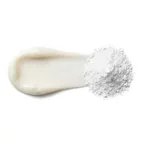 Titanium Dioxide
 Niacinamide
 Sodium Hyaluronate
 Vitamin E
Superior
- SuperiorOily Skin Fit
- SuperiorEffectiveness
- ExcellentSafety
One of the best sunscreens for oily acne-prone skin.
- Journal of the American Academy of Dermatology, 1987
- Contemporary Clinical Trials Communications, 2021
This fit is calculated for the concerns frequently associated with oily acne-prone skin: shine, breakouts, blemishes, and enlarged pores. For scores and recommendations based on your full skin profile, including your 12D face scan results and any goals or preferences you have, please use the Lovi app.
Updated How the Fit score works
Lovi Assistant explains
- Excellent suitability for your oily skin is provided by dimethicone and silica, which mattify and absorb excess sebum, while avobenzone and homosalate offer superior UV protection and help manage oiliness, directly addressing your concerns with acne, blemishes, and breakouts.
- Tocopheryl acetate contributes antioxidant benefits, further supporting skin health without irritation.
- The safety profile is excellent, with no risks of irritation due to the absence of harsh ingredients and the presence of soothing components.
How to apply
- Apply this sunscreen AM as the final step of your morning skincare routine. Reapply every two hours when exposed to the sun for continuous protection.
- Apply after your moisturizer as the last step before makeup. Do not apply anything on top of your sunscreen.
- Gently spread a coin-sized amount evenly across your face and neck. Avoid harsh rubbing to prevent disturbing the protective layer.
- Apply on completely dry skin after your moisturizer has fully absorbed. This ensures the sunscreen forms an even, protective barrier.
- Avoid direct contact with your eyes during application. Do a patch test before first use to ensure no irritation occurs.
People Say
★4.9Overall rating based on 1.9k+ reviewsBased on a very large amount of data, users with various skin types, including oily, acne-prone, and darker skin tones, highly praise this sunscreen for its lightweight, non-greasy texture that prevents breakouts and leaves no white cast. It effectively protects against sun damage while hydrating the skin and drying down to a smooth, matte finish. A moderate number of users mention its high price point as a drawback.
Highlights
Lightweight and non-greasy Mostly Mentioned
- “incredibly lightweight”
- “light weight and no white residue”
- “non-greasy formula”
- “doesn't weigh you down”
No white cast Mostly Mentioned
- “blends seamlessly into my skin without leaving any white residue”
- “goes on without any white residue”
- “best protection without the white cast”
- “doesn't leave a white case”
Matte finish Often Mentioned
- “dries to a smooth, sheer finish”
- “absorbs fast to a soft matte finish”
- “clean, matte, everyday sunscreen”
- “sheer matte finish”
Doesn't cause breakouts Sometimes Noted
- “doesn't cause breakouts”
- “terrific for all skin types”
- “doesn't cause milia”
- “trust not to cause any breakouts”
Expensive product Sometimes Noted
- “too expensive but it is so worth it”
- “price point gets in my way”
- “wish they were a bit more affordable”
- “search for less expensive options”
Chemical ingredients Rarely Noted
- “ingredients that are unsafe to use”
- “uses chemical sunscreen ingredients”
- “not a mineral sunscreen”
Taste when sweating Rarely Noted
- “taste that occurs after about 30 minutes of running”
- “mixing in with sweat”
- “uncertain why / how”
Sources: lovi.care, antiagingvancouver.com, monarchmdshop.ca, ebay.com, shop.app, myfacedr.com, and more
Questions and answers
What makes ZO® SKIN HEALTH Daily Sheer Broad-Spectrum Sunscreen SPF 50 one of the best fits for oily acne-prone skin?
This sunscreen is one of the best fits because dimethicone and silica mattify and absorb excess sebum while UV filters help manage oiliness without causing irritation. Tocopheryl acetate also contributes antioxidant benefits to further support your skin health.
Which ingredients make this sunscreen a good fit for oily acne-prone skin?
Dimethicone and silica make this sunscreen a great fit for your oily skin because they absorb extra oil and keep your face matte. Avobenzone and homosalate also help manage oiliness while protecting you from the sun.
What does Zinc Oxide do for oily acne-prone skin?
Zinc oxide helps calm oily, acne-prone skin by reducing redness and targeting the bacteria that cause breakouts. It may also help decrease excess oil while remaining gentle, making it less likely to cause peeling or dryness than some harsher treatments.
What does Titanium Dioxide do for oily acne-prone skin?
Titanium dioxide acts as a mineral sunscreen filter that protects oily, acne-prone skin from UV rays without clogging pores or triggering breakouts. Because this type of skin tends to have barrier vulnerabilities or altered lipid levels, sunscreens containing physical minerals like titanium dioxide or zinc oxide provide a safe, non-irritating alternative that helps shield the skin without heavy oils.
Where does this sunscreen go in a skincare routine for oily acne-prone skin?
This sunscreen goes as the last step in your morning skincare routine, right after your moisturizer. It is an excellent fit for your oily, acne-prone skin because dimethicone and silica absorb excess oil and keep your face looking matte.
Can I use this sunscreen with retinol, and in what order?
You can use this sunscreen in the morning as the final step of your routine, after your retinol and moisturizer are fully absorbed. This product is a great fit because dimethicone and silica help mattify and absorb excess oil, while tocopheryl acetate supports skin health without irritation.
How often should I use this sunscreen?
Apply this sunscreen every morning as the final step in your daytime routine. Using it daily provides high UV protection while helping to manage oiliness and breakouts without causing irritation.
Can this sunscreen clog pores, cause breakouts or purging for oily acne-prone skin?
This sunscreen is unlikely to clog pores or cause breakouts on oily acne-prone skin because dimethicone and silica help mattify and absorb excess sebum without irritation. Tocopheryl acetate further supports skin health safely.
Is this sunscreen fragrance-free and alcohol-free?
Yes, it has no fragrance and no drying alcohol.
What the research says
Parsol 1789 and Eusolex 8020 provided slightly better photoprotection than oxybenzone in both normal and sensitized human skin when assessed using pigmentation end points, whereas all three sunscreens performed similarly against UVA-induced erythema.
Journal of the American Academy of Dermatology, 1987Dermatological products containing d-alpha tocopheryl acetate showed non-comedogenic potential with less than a 50% increase in microcomedones in 12 healthy male subjects compared to octyl palmitate.
Contemporary Clinical Trials Communications, 2021Biomimetic hyaluronic acid-stabilized zinc oxide nanoparticles selectively inhibited C. acnes, outperformed erythromycin in preclinical acne models, and safely reduced acne lesions and redness in a clinical trial.
Journal of Controlled Release, 2025Topical 0.5% hyaluronic-ZnO nanogel applied twice daily reduced inflammatory-lesion counts by 58% at week four in human subjects compared to baseline without causing erythema.
Biomedicines, 2025Daily use of a deep cleansing gel containing salicylic acid 2%, zinc gluconate 0.2% and lipohydroxy acid 0.05% significantly reduced total lesion count by 56.3% after 84 days in 35 subjects with mild to moderate truncal acne.
Clinical, Cosmetic and Investigational Dermatology, 2023Topical zinc oxide nanogels formulated using Dendrobium anosmum showed greater effectiveness against Gram-positive acne-causing bacteria compared to chemogenic nanoparticles.
Molecules, 2023Microfine titanium dioxide does not penetrate human skin when formulated in an oil-in-water emulsion with the pigment dispersed in the aqueous phase, compared to oily dispersions and liposomal encapsulation which allow deeper skin penetration.
International Journal of Cosmetic Science, 2000Replacing microsized titanium dioxide and zinc oxide with nanoparticles in sunscreens eliminates opaqueness and alters UV protection balance while inducing (photo)cyto- and genotoxicity and penetrating viable skin layers during long-term exposures.
Nanotechnology, Science and Applications, 2011Hyaluronic acid-grafted titanium dioxide nanoparticles increased SPF from 13.3 to 19.1 while demonstrating low photocatalytic activity, exceptional thermal stability with >95% SPF retention, enhanced moisturization with >80% hydration retention, and minimal cytotoxicity with 88.5% cell viability in HaCaT keratinocytes compared to unmodified nanoparticles.
International Journal of Biological Macromolecules, 2025Topical nicotinamide prevented solar-simulated UV-induced immunosuppression in healthy volunteers, and men experienced immunosuppression at solar-simulated UV doses three times lower than those required for women.
The Journal of Investigative Dermatology, 2008Topical 5% niacinamide applied twice daily for 12 weeks reduced fine lines and wrinkles, hyperpigmented spots, red blotchiness, and skin sallowness, and improved skin elasticity compared to vehicle control in 50 female white subjects with facial photoaging.
Dermatologic Surgery, 2005Topical 2% niacinamide significantly decreased sebum excretion rate in Japanese individuals and casual sebum levels in Caucasian individuals compared to placebo or baseline.
Journal of Cosmetic and Laser Therapy, 2006Topical application of 0.1% hyaluronic acid formulations of different molecular weights led to significant improvements in skin hydration and elasticity, with low-molecular-weight formulations also significantly reducing wrinkle depth in seventy-six female subjects compared to a vehicle control.
Journal of Drugs in Dermatology, 2011Topical hyaluronic acid serum used twice daily by 40 females with facial photoaging produced an immediate 134% increase in skin hydration, a sustained 55% increase at week 6, and significant improvements in smoothness, plumping, fine lines, wrinkles, and global appearance without causing irritation.
Dermatology and Therapy, 2021A topical antioxidant serum significantly reduced air pollution-induced skin pigmentation and proinflammatory gene expression ex vivo, and improved skin aging signs in 40 healthy adult females after 90 days of daily use.
Journal of Cosmetic Dermatology, 2022A topical serum containing vitamin C, vitamin E, and raspberry leaf cell culture extract improved skin color, elasticity, radiance, smoothness, scaliness, and wrinkles compared to the untreated contralateral side in fifty female volunteers.
Journal of Cosmetic Dermatology, 2020A nighttime topical antioxidant containing resveratrol, baicalin, and vitamin E significantly improved fine lines, wrinkles, firmness, elasticity, laxity, hyperpigmentation, radiance, roughness, and dermal thickness in subjects with mild to moderately photodamaged skin over 12 weeks.
Journal of Drugs in Dermatology, 2014Tocopherol succinate-loaded ethosomal gel increased skin deposition, stability, moisture, and mechanical properties in 13 human subjects compared to a control gel over 12 weeks.
Journal of Cosmetic Dermatology, 2022
Ingredients
Avobenzone, Homosalate, Octisalate, Octocrylene, Water, C12-15 Alkyl Benzoate, Dimethicone, Glycerin, Silica, Polymethylsilsesquioxane, Caprylyl Methicone, Peg-10 Dimethicone, Phenoxyethanol, Tocopheryl Acetate, Sodium Chloride, Disodium Edta
Behind this fit score
Lovi calculates every fit score from the full ingredient list with brand-independent rules our dermatologists and cosmetic chemists build and review, and personalizes every pick with AI trained on the real results of millions of users. Lovi trains its fit score models on a proprietary dataset built from more than 10,000 expert-labeled products and more than 100,000 simulated examples, following an internally consistent methodology presented at Cosmoprof, AMWC, and Skin of Color Update.
-

Co-founder, Medical Director
Cosmetic chemist, cosmetologist, aesthetic products developer
-

Co-founder, CEO and CTO
PhD in computer science, 3x US patent holder, ex-Google, ex-Yandex
-

Dr. Sofía Perea Pérez, MD, MSc
Medical Board
Aesthetic medicine practitioner, MSc in Longevity and Anti-Aging Medicine
-

Medical Board
Specialist dermatologist, MBBS, MD, IFAAD
-

Medical Board
Cosmetic chemist, SCS, IFSCC member
-

Medical Board, Medical Advisor
Dermatology MD
-

Elina Nazarenko, MD
Medical Board
Dermatology and diagnostic consultant
-

Victoria Derkova, MS
Medical Board
Cosmetic chemist, cosmetic development technologist


How does it fit your skin?
Scan your face, then any product: Lovi shows how well it fits you and what fits even better.