
Trader Joe's Retinol Night Serum for dry sensitive skin

 Retinol
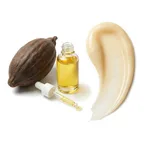 Adansonia Digitata Seed Oil
 Sodium Hyaluronate
 Tocopherol
 Salicylic Acid
Low
- AverageDry Skin Fit
- HighEffectiveness
- ConcerningSafety
A weak match for dry sensitive skin; the serums alongside fit it better.
This fit is calculated for the concerns frequently associated with dry sensitive skin: flakiness, tightness, redness, fine lines, and wrinkles. For scores and recommendations based on your full skin profile, including your 12D face scan results and any goals or preferences you have, please use the Lovi app.
Updated How the Fit score works
Lovi Assistant explains
- Offers moderate exfoliation for your dry or flaky skin due to salicylic acid, which can potentially irritate sensitive skin and worsen dryness.
- Retinol and retinyl palmitate provide excellent anti-aging benefits by promoting skin renewal, though the salicylic acid may cause some dryness.
How to apply
- Use this PM routine for your evening skincare. Start using the serum 3 times a week and increase to daily use if your skin feels comfortable.
- Apply the serum after cleansing and toner, but right before your moisturizer. This step locks in deep hydration for dry skin.
- Gently press 2-3 drops of the serum into your skin using your palms. Let it absorb completely for a minute ⏱ before applying your next product.
- Since your skin is sensitive, apply the serum on completely dry skin for better tolerance and less irritation.
- Avoid the sensitive eye area during application. Always do a patch test before your first use to ensure your skin reacts well.
People Say
★4.0Overall rating based on 100+ reviewsBased on limited data, this serum is frequently praised as a gentle and affordable option for those new to retinol, with users often noting its lightweight feel and positive effects on fine lines and skin texture. Many users find the baobab oil helps mitigate dryness, though some sensitive skin types report initial peeling or stinging, and experienced retinol users sometimes find it too mild for significant results.
Highlights
Gentle for beginners Mostly Mentioned
- “good entry-level”
- “super mild”
- “no bad reaction”
Affordable price Often Mentioned
- “bang for buck”
- “unbeatable price”
- “budget friendly”
Pleasant texture Often Mentioned
- “absorbs quickly”
- “lightweight gel”
- “non-greasy”
Quality packaging Sometimes Noted
- “glass bottle”
- “pump dispenser”
- “opaque container”
Visible improvements Sometimes Noted
- “smoother texture”
- “brighter skin”
- “softened fine lines”
Dryness and peeling Sometimes Noted
- “skin peeling”
- “drying”
- “flaky patches”
Availability issues Rarely Noted
- “hard to find”
- “stock issues”
- “discontinued fears”
Initial irritation Rarely Noted
- “burning sensation”
- “stinging”
- “redness”
Lack of potency Rarely Noted
- “no noticeable change”
- “too gentle”
- “weak for pros”
Sources: lovi.care, traderjoesreviews.com, reddit.com, becomebetty.com, dcgirlinpearls.com, youtube.com, and more
Questions and answers
Why is Trader Joe's Retinol Night Serum a weak match for dry sensitive skin?
This serum is a weak match because it contains salicylic acid, which can easily irritate sensitive skin and worsen your dryness. A treatment for this skin needs gentle hydrating and nourishing ingredients that provide excellent moisture and barrier support without any risk of irritation.
Which ingredients make this serum a poor fit for dry sensitive skin?
Salicylic acid and retinol make this serum a poor fit because they can easily irritate sensitive skin and worsen dryness. Treatments for this skin need soothing, highly hydrating ingredients that lock in moisture and protect the skin barrier without any risk of irritation.
The British Journal of Dermatology, 2019Journal of Cosmetic Dermatology, 2016
What does retinol do for dry sensitive skin?
Retinol is a poor fit for dry sensitive skin because it often causes scaling and stinging, so this skin type needs barrier-improving and hydrating ingredients along with a very gradual application.
The British Journal of Dermatology, 2019Dermatology Research and Practice, 2024
What does baobab seed oil do for dry sensitive skin?
Baobab seed oil helps keep dry sensitive skin soft and nourished by providing essential fatty acids and antioxidants. This type of product works best when it also includes soothing ingredients like ceramides to calm irritation and strengthen the skin barrier.
Where does this serum go in a skincare routine for dry sensitive skin?
This serum goes in the evening routine after cleansing and toning, and before moisturizing. Because it contains exfoliating ingredients that may irritate dry and sensitive skin, a product of this type needs soothing and hydrating ingredients like ceramides, glycerin, or hyaluronic acid to calm the skin and keep it comfortable.
Can I use this serum with niacinamide, and in what order?
You can use this serum with niacinamide by applying niacinamide first to calm and hydrate your skin, followed by this treatment to help smooth fine lines. Because this formula contains exfoliating ingredients that may irritate dry sensitive skin, a product of this type needs gentle, soothing hydrators and barrier-repairing ingredients to keep skin soft and comfortable.
How often should I use this serum?
This serum is a weak match for your dry sensitive skin because its salicylic acid and retinol may cause irritation and worsen dryness. When introducing such products, start by using them just once a week, and only increase frequency if your skin tolerates it well without discomfort. A product for this skin type needs gentle hydrators and soothing ingredients to keep skin comfortable while supporting renewal.
Can this serum clog pores, cause breakouts or purging for dry sensitive skin?
This serum is unlikely to clog pores, but it may cause mild peeling or irritation for dry sensitive skin because of the retinol and salicylic acid inside. A product of this type needs soothing ingredients like ceramides, glycerin, or plant oils to keep dry skin calm and comfortable.
Is this serum fragrance-free and alcohol-free?
Yes, it has no fragrance and no drying alcohol.
What the research says
Topical application of retinol and retinoic acid both increased epidermal thickness and upregulated collagen genes and proteins in human skin, with retinol producing similar histological and molecular changes to retinoic acid alongside a significant reduction in facial wrinkles after 12 weeks.
Journal of Cosmetic Dermatology, 2016Topical bakuchiol 0.5% applied twice daily compared with retinol 0.5% applied daily significantly decreased wrinkle surface area and hyperpigmentation with no statistical difference between the compounds in 44 patients over 12 weeks, while retinol users reported more facial skin scaling and stinging.
The British Journal of Dermatology, 2019Topical 0.3% and 1% retinol comparably improved biomarkers of cutaneous photoageing in photoaged volunteers, while 0.3% retinol demonstrated better tolerance with fewer and milder adverse events compared to 1% retinol in a daily escalation regimen.
International Journal of Cosmetic Science, 2022Daily application of 0.3% and 0.5% retinol serums in 37 volunteers over 12 weeks reduced skin hyperpigmentation, unevenness, and wrinkles on both sides of the face, with the 0.5% concentration causing more frequent and intense skin irritation.
Skin Pharmacology and Physiology, 2020Topical application of 0.1% retinol induced CRABP2 and HBEGF gene expression, increased keratinocyte proliferation and epidermal thickness ex vivo, and improved major skin aging signs without significant adverse reactions in 48 volunteers compared to placebo.
Skin Pharmacology and Physiology, 2009Topical application of 0.1% hyaluronic acid formulations of different molecular weights led to significant improvements in skin hydration and elasticity, with low-molecular-weight formulations also significantly reducing wrinkle depth in seventy-six female subjects compared to a vehicle control.
Journal of Drugs in Dermatology, 2011Topical hyaluronic acid serum used twice daily by 40 females with facial photoaging produced an immediate 134% increase in skin hydration, a sustained 55% increase at week 6, and significant improvements in smoothness, plumping, fine lines, wrinkles, and global appearance without causing irritation.
Dermatology and Therapy, 2021A topical antioxidant serum significantly reduced air pollution-induced skin pigmentation and proinflammatory gene expression ex vivo, and improved skin aging signs in 40 healthy adult females after 90 days of daily use.
Journal of Cosmetic Dermatology, 2022A topical serum containing vitamin C, vitamin E, and raspberry leaf cell culture extract improved skin color, elasticity, radiance, smoothness, scaliness, and wrinkles compared to the untreated contralateral side in fifty female volunteers.
Journal of Cosmetic Dermatology, 2020A nighttime topical antioxidant containing resveratrol, baicalin, and vitamin E significantly improved fine lines, wrinkles, firmness, elasticity, laxity, hyperpigmentation, radiance, roughness, and dermal thickness in subjects with mild to moderately photodamaged skin over 12 weeks.
Journal of Drugs in Dermatology, 2014Tocopherol succinate-loaded ethosomal gel increased skin deposition, stability, moisture, and mechanical properties in 13 human subjects compared to a control gel over 12 weeks.
Journal of Cosmetic Dermatology, 2022A moisturizer containing licochalcone A, 1,2-decanediol, L-carnitine, and salicylic acid significantly reduced noninflammatory, inflammatory, and total acne lesion counts compared to a vehicle control in Thai patients during a 12-week maintenance phase.
BioMed Research International, 2020Treatment with 2% supramolecular salicylic acid hydrogel resulted in a regression and markedly improvement rate of 51.01% compared to 43.10% for Adapaline gel in patients with mild to moderate facial acne vulgaris, showing no significant difference in efficacy.
Journal of Cosmetic Dermatology, 2024Topical 5% benzoyl peroxide plus salicylic acid achieved the greatest lesion reduction at early 2 to 4 week time points compared to benzoyl peroxide, clindamycin, and combination benzoyl peroxide/clindamycin, while 5% benzoyl peroxide plus salicylic acid and combination benzoyl peroxide/clindamycin showed similar efficacy at 10 to 12 weeks in acne patients.
Journal of the American Academy of Dermatology, 2010
Ingredients
Water, Propanediol, Caprylic Capric Triglyceride, Polyglyceryl-4 Laurate Succinate, Sorbitan Oleate, Sodium Ascorbate, Tocopherol, Sodium Hyaluronate, Phenoxyethanol, Ammonium Acryloyldimethyltaurate Vp Copolymer, Retinol Vitamin A, Ethylhexylglycerin, Citric Acid, Adansonia Digitata Seed Oil, Retinyl Palmitate Vitamin A Palmitate, Tocopheryl Acetate Vitamin E Acetate, Ascorbyl Palmitate Vitamin C Palmitate, Salicylic Acid, Sorbic Acid
Behind this fit score
Lovi calculates every fit score from the full ingredient list with brand-independent rules our dermatologists and cosmetic chemists build and review, and personalizes every pick with AI trained on the real results of millions of users. Lovi trains its fit score models on a proprietary dataset built from more than 10,000 expert-labeled products and more than 100,000 simulated examples, following an internally consistent methodology presented at Cosmoprof, AMWC, and Skin of Color Update.
-

Co-founder, Medical Director
Cosmetic chemist, cosmetologist, aesthetic products developer
-

Co-founder, CEO and CTO
PhD in computer science, 3x US patent holder, ex-Google, ex-Yandex
-

Dr. Sofía Perea Pérez, MD, MSc
Medical Board
Aesthetic medicine practitioner, MSc in Longevity and Anti-Aging Medicine
-

Medical Board
Specialist dermatologist, MBBS, MD, IFAAD
-

Medical Board
Cosmetic chemist, SCS, IFSCC member
-

Medical Board, Medical Advisor
Dermatology MD
-

Elina Nazarenko, MD
Medical Board
Dermatology and diagnostic consultant
-

Victoria Derkova, MS
Medical Board
Cosmetic chemist, cosmetic development technologist


How does it fit your skin?
Scan your face, then any product: Lovi shows how well it fits you and what fits even better.