
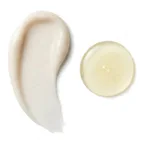
Trader Joe's Enrich Moisturizing Face Lotion for combination skin

 Octinoxate
 Zinc Oxide
 Glycerin
 Ascorbic Acid
 Retinyl Palmitate
Low
- HighCombination Skin Fit
- AverageEffectiveness
- HighSafety
A weak match for combination skin; the sunscreens alongside fit it better.
This fit is calculated for the concerns frequently associated with combination skin: an oily T-zone, enlarged pores, and dry cheeks. For scores and recommendations based on your full skin profile, including your 12D face scan results and any goals or preferences you have, please use the Lovi app.
Updated How the Fit score works
Lovi Assistant explains
- Suboptimal compatibility with your oily shine and combination skin because while glycerin and allantoin offer moderate hydration and soothing benefits, the formula lacks specialized ingredients for effective oil control.
- Retinyl palmitate is present to help regulate desquamation, which is beneficial for combination skin, but its concentration may not be sufficient to significantly impact oiliness.
- The safety profile is good, with no risks of irritation for your combination skin due to the absence of prohibited or harsh ingredients.
How to apply
- Apply this moisturizing sunscreen AM daily to protect your skin and control shine. Reapply as needed throughout the day.
- Use it as the final step of your morning routine after applying your moisturizer. It combines hydration and sun protection in one.
- Gently smooth a nickel-sized amount evenly over your face, avoiding harsh rubbing. Let it absorb fully before putting on makeup.
- Apply it directly to clean, dry skin for the best oil-controlling finish. Ensure your face is completely dry so the product sets properly.
- Avoid the immediate eye area during application. Do a patch test before your first use to check for any sensitivity.
Questions and answers
Why is Trader Joe's Enrich Moisturizing Face Lotion a weak match for combination skin?
Which ingredients make this cream a poor fit for combination skin?
This cream is a weak match for combination skin mainly because it lacks specialized oil-control ingredients to properly manage oily shine. To work well for this skin type, a product of this type needs ingredients that provide balanced hydration and sun protection while actively helping to control excess oil without causing irritation.
What does Octinoxate do for combination skin?
Octinoxate helps protect combination skin from the sun while staying on the surface rather than sinking deeply into the skin. It is unlikely to cause irritation and works well in daily sunscreens for balanced or mixed skin types.
Journal of Cosmetic Science, 2008International Journal of Nanomedicine, 2013
What does Zinc Oxide do for combination skin?
Zinc oxide helps calm redness and balances oily areas while protecting against irritation, making it a good fit for combination skin. To work best on combination skin, this type of product needs soothing ingredients and lightweight moisture that will not clog pores in oily zones or dry out sensitive patches.
Where does this cream go in a skincare routine for combination skin?
This moisturizing spf goes in the morning routine after your toner and moisturizer, though it is a weak match for combination skin. Combination skin needs products with specialized oil control ingredients to help manage oily shine while providing balanced hydration.
Can I use this cream with niacinamide, and in what order?
You can use this cream with niacinamide by applying your niacinamide serum first and letting it absorb before putting on this lotion. This combination is unlikely to cause irritation since the lotion has a good safety profile, but a moisturizer of this type for combination skin needs specialized ingredients for effective oil control.
How often should I use this cream?
This moisturizing spf may be used daily in the morning as part of your regular routine. It is unlikely to irritate combination skin, though this type of skin needs specialized oil-control ingredients to properly manage oily shine.
Can this cream clog pores, cause breakouts or purging for combination skin?
Trader Joe's Enrich Moisturizing Face Lotion is unlikely to cause irritation for your combination skin because it lacks harsh ingredients, but it may not control oily shine well since it lacks specialized oil-control ingredients. A product of this type for combination skin needs balancing ingredients like niacinamide or clay to help manage excess oil.
Is this cream fragrance-free and alcohol-free?
Yes, it has no fragrance and no drying alcohol. Cetyl alcohol and stearyl alcohol are fatty alcohols, which soften the skin.
What the research says
A single application of a moisturizing fluid containing hyaluronic acid 1%, glycerin 5%, and Centella asiatica stem cells extract significantly increased skin hydration by 29% and reduced transepidermal water loss at 24 hours compared to baseline and an untreated control site in twenty healthy women.
Clinical, Cosmetic and Investigational Dermatology, 2017The application of a sunscreen formulation containing ethylhexyl methoxycinnamate, ethylhexyl salicylate, methyl anthranilate, and octocrylene does not significantly affect critical acne-related species such as Cutibacterium acnes and Staphylococcus epidermidis, refuting the induction of facial dysbiosis in men.
Archives of Dermatological Research, 2024Encapsulation of ethylhexyl methoxycinnamate and butyl methoxydibenzoylmethane in lipid microparticles significantly reduced their in vivo human skin penetration compared to nonencapsulated filters.
Skin Pharmacology and Physiology, 2011Replacing 20% of the chemical UV filter octyl methoxycinnamate with urucum oil in solid lipid nanoparticles maintained the skin protection factor without inducing toxic responses or significant skin penetration in human volunteers.
Skin Pharmacology and Physiology, 2018Multilamellar liposomes containing octyl methoxycinnamate increased stratum corneum accumulation and reduced deeper skin penetration compared to conventional emulsions and small unilamellar liposomes in six volunteers, resulting in a slightly better sun protection factor.
Journal of Cosmetic Science, 2008Topical 0.5% hyaluronic-ZnO nanogel applied twice daily reduced inflammatory-lesion counts by 58% at week four in human subjects compared to baseline without causing erythema.
Biomedicines, 2025Daily use of a deep cleansing gel containing salicylic acid 2%, zinc gluconate 0.2% and lipohydroxy acid 0.05% significantly reduced total lesion count by 56.3% after 84 days in 35 subjects with mild to moderate truncal acne.
Clinical, Cosmetic and Investigational Dermatology, 2023Topical zinc oxide nanogels formulated using Dendrobium anosmum showed greater effectiveness against Gram-positive acne-causing bacteria compared to chemogenic nanoparticles.
Molecules, 2023The emollient V0034CR significantly reduced TEWL compared to vehicle and vehicle plus glycerol, and significantly increased corneometry scores compared to vehicle and vehicle plus petrolatum in healthy volunteers with dry skin, demonstrating combined barrier function improvement from petrolatum and hydration improvement from glycerol.
Journal of Cosmetic Dermatology, 2020Ten days of treatment with a cream containing 20% glycerin significantly increased skin hydration measured by corneometer values in 17 healthy volunteers compared to a placebo cream, but showed no influence on transepidermal water loss or skin sensitivity to an irritating surfactant.
International Journal of Cosmetic Science, 2001Niacinamide/glycerin body moisturizers provided better rapid and prolonged improvement of cosmetic xerosis through functional improvement of stratum corneum barrier function compared to no treatment and conventional moisturizers in female subjects.
Journal of Drugs in Dermatology, 2012Topical application of 5% vitamin C cream significantly improved global clinical scores, increased skin microrelief density, and induced elastic tissue repair in photoaged skin compared to excipient control in healthy female volunteers.
Experimental Dermatology, 2003Topical application of VC-IP cream twice daily for 8 weeks reduces periorbital wrinkles in female subjects compared to a placebo cream.
Journal of Cosmetic Dermatology, 2022Topical treatment with 5% vitamin C and 0.1% madecassoside significantly improved clinical scores for wrinkles, suppleness, firmness, roughness, and skin hydration, along with functional and structural remodeling of the elastic fiber network in 20 female volunteers with photoaged skin after 6 months compared to baseline.
Experimental Dermatology, 2008Topical bakuchiol 0.5% applied twice daily compared with retinol 0.5% applied daily significantly decreased wrinkle surface area and hyperpigmentation with no statistical difference between the compounds in 44 patients over 12 weeks, while retinol users reported more facial skin scaling and stinging.
The British Journal of Dermatology, 2019Topical 0.3% and 1% retinol comparably improved biomarkers of cutaneous photoageing in photoaged volunteers, while 0.3% retinol demonstrated better tolerance with fewer and milder adverse events compared to 1% retinol in a daily escalation regimen.
International Journal of Cosmetic Science, 2022Daily application of 0.3% and 0.5% retinol serums in 37 volunteers over 12 weeks reduced skin hyperpigmentation, unevenness, and wrinkles on both sides of the face, with the 0.5% concentration causing more frequent and intense skin irritation.
Skin Pharmacology and Physiology, 2020
Why other sunscreens fit combination skin better
Combined ascorbyl palmitate and sodium ascorbyl phosphate treatment significantly reduced facial sebum secretions in healthy female volunteers compared to a placebo control over 90 days.
Drug Research, 2017
Ingredients
Octinoxate, Zinc Oxide, Allantoin, Ascorbic Acid, Caprylyl Glycol, Cetyl Alcohol, Chlorphenesin, Cyclomethicone, Cyclopentasiloxane, C13-14 Isoparaffin, Dimethicone Vinyl Dimethicone Crosspolymer, Disodium Edta, Ethylhexylglycerin, Glycerin, Glyceryl Stearate, Hexylene Glycol, Isohexadecane, Laureth-7 Coconut, Peg-100 Stearate, Phenoxyethanol, Polyacrylamide, Retinyl Palmitate Vitamin A, Stearyl Alcohol, Tocopheryl Acetate, Triethoxycaprylylsilane, Water
Behind this fit score
Lovi calculates every fit score from the full ingredient list with brand-independent rules our dermatologists and cosmetic chemists build and review, and personalizes every pick with AI trained on the real results of millions of users. Lovi trains its fit score models on a proprietary dataset built from more than 10,000 expert-labeled products and more than 100,000 simulated examples, following an internally consistent methodology presented at Cosmoprof, AMWC, and Skin of Color Update.
-

Co-founder, Medical Director
Cosmetic chemist, cosmetologist, aesthetic products developer
-

Co-founder, CEO and CTO
PhD in computer science, 3x US patent holder, ex-Google, ex-Yandex
-

Dr. Sofía Perea Pérez, MD, MSc
Medical Board
Aesthetic medicine practitioner, MSc in Longevity and Anti-Aging Medicine
-

Medical Board
Specialist dermatologist, MBBS, MD, IFAAD
-

Medical Board
Cosmetic chemist, SCS, IFSCC member
-

Medical Board, Medical Advisor
Dermatology MD
-

Elina Nazarenko, MD
Medical Board
Dermatology and diagnostic consultant
-

Victoria Derkova, MS
Medical Board
Cosmetic chemist, cosmetic development technologist


How does it fit your skin?
Scan your face, then any product: Lovi shows how well it fits you and what fits even better.