
Sunday Riley Luna Sleeping Night Oil for oily acne-prone skin

 Retinol
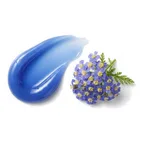 Blue Tansy
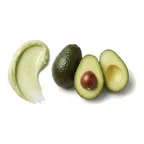 Avocado Oil
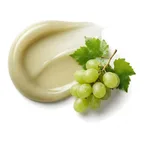 Grape Seed Oil
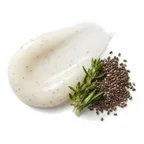 Salvia Hispanica Seed Oil
High
- HighOily Skin Fit
- AverageEffectiveness
- ExcellentSafety
A great choice for oily acne-prone skin; a few serums fit it even better.
This fit is calculated for the concerns frequently associated with oily acne-prone skin: shine, breakouts, blemishes, and enlarged pores. For scores and recommendations based on your full skin profile, including your 12D face scan results and any goals or preferences you have, please use the Lovi app.
Updated How the Fit score works
Lovi Assistant explains
- Highly suitable for your oily skin, this product contains Blackberry Seed Oil and Salvia Hispanica Oil which offer emollient action and support barrier repair, though they do not directly address your primary concerns of acne and breakouts.
- The inclusion of Hydroxypinacolone Retinoate provides excellent skin smoothing and anti-aging benefits, which are supportive but not the main focus for your skin issues.
- The safety profile is excellent, with no risks of irritation for your oily skin due to the absence of harsh ingredients and the presence of soothing components like Blackberry Seed Oil and Chamomilla Recutita Oil.
How to apply
- Could be used as part of your PM routine. Start 3 times a week and build up to daily use if your skin tolerates it well.
- Apply your serum after cleansing and toning, but before putting on your moisturizer.
- Gently press 2 to 3 drops of the serum into your skin and let it absorb for a minute.
- Apply the serum on clean, dry skin to help manage your blemishes safely.
- Do a patch test before your first use and avoid the delicate eye area.
People Say
★4.3Overall rating based on 3.8k+ reviewsBased on a very large amount of data, users with diverse skin types, particularly those with acne-prone, mature, or sensitive skin, frequently praise this oil for its ability to simultaneously calm redness and refine texture. The combination of retinol and blue tansy is widely credited with delivering a "morning glow," reducing the appearance of pores, and soothing inflammation, though the herbal scent and high price point are common points of contention.
Highlights
Calms redness & irritation Mostly Mentioned
- “Instantly calms the skin”
- “Soothes visible redness”
- “Neutralizes signs of sensitivity”
- “Reduced redness overnight”
Delivers radiant glow Often Mentioned
- “Woke up with a beautiful glow”
- “Skin looked brighter and revitalized”
- “Gives a hydrated glow”
- “Luminous complexion by morning”
Smooths skin texture Often Mentioned
- “Pores look smaller”
- “Skin feels glass-like”
- “Texture is significantly improved”
- “Smoothed out fine lines”
Expensive price tag Often Mentioned
- “Ridiculously expensive”
- “Jaw-dropping sum of money”
- “Price is steep”
- “Not worth the splurge”
Unpleasant scent Often Mentioned
- “Smells like Vicks VapoRub”
- “Scent is somewhat grandma-like”
- “Smells like old oil”
- “Overpowering earthy scent”
Clears acne & breakouts Sometimes Noted
- “Skin looks clearer”
- “Doesn't break me out”
- “Saved my skin from acne”
- “Helps with hormonal breakouts”
Oily or heavy feel Sometimes Noted
- “Feels a little cloying”
- “Heavy on the skin”
- “Very oily residue”
- “Takes a long time to sink in”
Causes breakouts Rarely Noted
- “Gave me horrible acne”
- “Breaks me out every time”
- “Ruined my skin”
- “Caused deep cystic bumps”
Sources: lovi.care, sephora.com, influenster.com, ulta.com, spacenk.com, cultbeauty.co.uk, and more
Questions and answers
What does Retinol do for oily acne-prone skin?
Retinol helps oily acne-prone skin by clearing breakouts and keeping skin smooth, though it can sometimes cause mild dryness or stinging at first. A product of this type for this skin needs added soothing ingredients and lightweight oils to keep the skin calm and balanced.
Drug Research, 2025American Journal of Clinical Dermatology, 2019
What does Blue Tansy do for oily acne-prone skin?
Blue Tansy helps calm redness and balances oily skin to keep pores clear. It is unlikely to clog pores and may soothe breakouts.
Where does this oil go in a skincare routine for oily acne-prone skin?
This oil goes in the evening routine as a treatment step after cleansing and before moisturizing. It is unlikely to cause irritation on oily skin due to its soothing ingredients.
Can I use this oil with vitamin C, and in what order?
You can use this treatment oil in your evening routine after your cleansing toner and before your moisturizer. It is unlikely to cause irritation for your oily skin, thanks to soothing ingredients like Blackberry Seed Oil and Chamomilla Recutita Oil.
How often should I use this oil?
You can use this treatment in your evening routine, applying it after cleansing and before your moisturizer. Since it has a very safe profile with soothing ingredients and no harsh components, it is unlikely to cause irritation on oily skin.
Can this oil clog pores, cause breakouts or purging for oily acne-prone skin?
Sunday Riley Luna Sleeping Night Oil is unlikely to cause irritation or breakouts on your oily acne-prone skin because it avoids harsh ingredients and features soothing components like chamomile and blackberry seed oil. Reviewers rarely complain about breakouts, and the formula helps smooth your skin without clogging pores.
Journal of Cosmetic Dermatology, 2023Journal of Clinical Medicine, 2023
Is this oil fragrance-free and alcohol-free?
Yes, it has no fragrance and no drying alcohol.
What the research says
Hydroxypinacolone retinoate and retinyl propionate at a 5:9 weight ratio synergistically enhanced antiaging gene expressions in vitro and improved skin wrinkles, smoothness, transepidermal water loss, and elasticity in 42 Chinese urban women over an 8-week period without adverse reactions compared to retinol.
Journal of Cosmetic Dermatology, 2023Combined probiotic supplementation and topical azelaic acid with hydroxypinacolone retinoate reduced non-inflammatory lesions from 11.5 to 7.3 and decreased microscopic acne features measured by reflectance confocal microscopy and dynamic optical coherence tomography in 20 patients over 12 weeks.
Journal of Clinical Medicine, 2023Topical bakuchiol 0.5% applied twice daily compared with retinol 0.5% applied daily significantly decreased wrinkle surface area and hyperpigmentation with no statistical difference between the compounds in 44 patients over 12 weeks, while retinol users reported more facial skin scaling and stinging.
The British Journal of Dermatology, 2019Topical 0.3% and 1% retinol comparably improved biomarkers of cutaneous photoageing in photoaged volunteers, while 0.3% retinol demonstrated better tolerance with fewer and milder adverse events compared to 1% retinol in a daily escalation regimen.
International Journal of Cosmetic Science, 2022Daily application of 0.3% and 0.5% retinol serums in 37 volunteers over 12 weeks reduced skin hyperpigmentation, unevenness, and wrinkles on both sides of the face, with the 0.5% concentration causing more frequent and intense skin irritation.
Skin Pharmacology and Physiology, 2020Topical cream containing saffron extract and avocado oil improved wrinkle grading, reduced nasolabial fold area and volume, and increased skin elasticity in twenty healthy volunteers over 12 weeks without allergic reactions.
Journal of Cosmetic Dermatology, 2020Incorporation of apigenin into nanoemulsions formulated with d-alpha-tocopheryl polyethylene glycol 1000 succinate, hydrogenated soy lecithin, black soldier fly larvae oil, and avocado oil achieved nearly 99 percent encapsulation efficiency, improved chemical stability, elevated antioxidant ability, and optimal skin deposition.
Polymers, 2021Grapeseed oil-loaded dermocosmetic nanoemulgel applied on the cheeks of healthy volunteers significantly reduced skin melanin, erythema, sebum production, and pores while increasing moisture and elasticity compared to a placebo.
Journal of Cosmetic Dermatology, 2022An ionic liquid-based grapeseed oil emulsion increased transdermal penetration by 4.63-fold and improved skin hydration, firmness, elasticity, and facial wrinkles after 28 days of continuous use compared to ordinary emulsion.
Pharmaceuticals, 2024
Ingredients
Blackberry Seed Oil, Salvia Hispanica Oil, Dimethyl Isosorbide, Hydroxypinacolone Retinoate, Chamomilla Recutita Oil Flower Matricaria Oil Flower, Tanacetum Annuum Oil Blue Tansy Oil, Anthemis Nobilis Oil English Chamomile Oil, Eriocephalus Punctualatus Oil Cape Chamomile Oil, Citrus Aurantium Amara Oil, Citrus Aurantium Dulcis Oil Blood Orange Oil, Cananga Odorata Flower Oil Ylang Ylang Flower Oil, Vetivera Zizanoides Oil Vetiveria Zizanoides Oil, Helianthus Annuus Seed Oil Sunflower Seed Oil, Rosmarinus Officinalis Leaf Extract Rosemary Leaf Extract, Ci 61565 Green 6, Ci 60725 Violet 2
Behind this fit score
Lovi calculates every fit score from the full ingredient list with brand-independent rules our dermatologists and cosmetic chemists build and review, and personalizes every pick with AI trained on the real results of millions of users. Lovi trains its fit score models on a proprietary dataset built from more than 10,000 expert-labeled products and more than 100,000 simulated examples, following an internally consistent methodology presented at Cosmoprof, AMWC, and Skin of Color Update.
-

Co-founder, Medical Director
Cosmetic chemist, cosmetologist, aesthetic products developer
-

Co-founder, CEO and CTO
PhD in computer science, 3x US patent holder, ex-Google, ex-Yandex
-

Dr. Sofía Perea Pérez, MD, MSc
Medical Board
Aesthetic medicine practitioner, MSc in Longevity and Anti-Aging Medicine
-

Medical Board
Specialist dermatologist, MBBS, MD, IFAAD
-

Medical Board
Cosmetic chemist, SCS, IFSCC member
-

Medical Board, Medical Advisor
Dermatology MD
-

Elina Nazarenko, MD
Medical Board
Dermatology and diagnostic consultant
-

Victoria Derkova, MS
Medical Board
Cosmetic chemist, cosmetic development technologist


How does it fit your skin?
Scan your face, then any product: Lovi shows how well it fits you and what fits even better.