
Sunday Riley C.E.O. 15% Vitamin C Brightening Serum for acne-prone skin

 Tetrahexyldecyl Ascorbate Ascorbic Acid
 Squalane
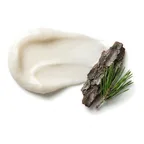 Phytosterols
 Glycolic Acid
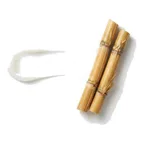 Saccharide Isomerate
High
- HighCombination Skin Fit
- HighEffectiveness
- HighSafety
A great choice for acne-prone skin; a few serums fit it even better.
This fit is calculated for the concerns frequently associated with acne-prone skin: breakouts, blackheads, and post-acne marks. For scores and recommendations based on your full skin profile, including your 12D face scan results and any goals or preferences you have, please use the Lovi app.
Updated How the Fit score works
Lovi Assistant explains
- Offers excellent brightening for your combination skin due to tetrahexyldecyl ascorbate and glycolic acid, which effectively exfoliate and even skin tone while supporting barrier repair.
- The formula provides moderate exfoliation for your acne and blemishes, promoting skin renewal without causing irritation.
- The product is safe for your acne-prone skin, as it lacks prohibited or harsh ingredients that could cause irritation.
How to apply
- Use your serum as part of your PM routine and start 3x/week before working up to daily use.
- Apply this treatment after cleansing and toner, and before your moisturizer.
- Gently press 2-3 drops of the serum into your skin and let it absorb for a minute.
- Apply the product on clean, dry skin to help manage your breakouts safely.
- Avoid the eye area and do a patch test before your first use.
People Say
★4.6Overall rating based on 4.5k+ reviewsBased on a very large amount of data, users with dull, dry, and sensitive skin frequently praise this serum for its rich, creamy texture that hydrates while delivering a visible "lit-from-within" glow. Many report significant fading of acne scars and hyperpigmentation without the irritation common to other Vitamin C products, though a minority of users found the high price point unjustifiable for the results achieved.
Highlights
Brightens and evens tone Mostly Mentioned
- “leaves complexion glowing”
- “faded my acne scars”
- “skin looks noticeably brighter”
- “got rid of dullness”
Hydrating creamy texture Mostly Mentioned
- “sinks in immediately”
- “non-greasy but moisturizing”
- “feels like a lotion”
- “plumps my skin”
High price point Mostly Mentioned
- “way too expensive”
- “hard to justify the price”
- “luxury splurge only”
- “wallet hurts buying this”
Gentle on sensitive skin Often Mentioned
- “zero irritation”
- “gentle enough for daily use”
- “no tingling sensation”
Pleasant citrus scent Often Mentioned
- “smells like fresh oranges”
- “delicious citrus scent”
- “smells spa-like”
- “uplifting fragrance”
Packaging issues Sometimes Noted
- “pump stopped working”
- “can't get the last bit out”
- “bottle design is wasteful”
- “have to unscrew to use”
Caused breakouts Rarely Noted
- “gave me tiny white bumps”
- “caused cystic acne”
- “clogged my pores”
- “broke me out immediately”
Lack of results Rarely Noted
- “didn't see a difference”
- “dark spots didn't fade”
- “glorified moisturizer”
- “expected more for the money”
Sources: lovi.care, dermstore.com, spacenk.com, sephora.com, ulta.com, cultbeauty.co.uk, and more
Questions and answers
What makes Sunday Riley C.E.O. Brightening Serum a great fit for acne-prone skin?
Sunday Riley C.E.O. Brightening Serum is a great fit for your acne-prone skin because it offers moderate exfoliation that helps promote skin renewal without causing irritation. The formula is safe for your skin type as it lacks harsh ingredients, and it uses ingredients like tetrahexyldecyl ascorbate and glycolic acid to even out skin tone.
Clinical, Cosmetic and Investigational Dermatology, 2019Experimental Dermatology, 2003
Which ingredients make this serum a good fit for acne-prone skin?
Tetrahexyldecyl ascorbate and glycolic acid make this serum a great fit by gently renewing the skin and evening your tone without causing irritation. These ingredients provide moderate exfoliation for blemishes while safely supporting your skin barrier.
What does Tetrahexyldecyl Ascorbate do for acne-prone skin?
Tetrahexyldecyl Ascorbate may help brighten dark spots left behind by blemishes and protect acne-prone skin with antioxidants, but because it is not a targeted blemish treatment, this skin type typically needs a formula that also includes soothing agents and pore-clearing ingredients like salicylic acid.
Journal of Cosmetic Dermatology, 2022Journal of Cosmetic Dermatology, 2024
What does Squalane do for acne-prone skin?
Squalane is generally a poor fit for acne-prone skin because natural squalene levels can already be elevated in acne, and oxidized forms may trigger inflammation. An acne-prone skin type needs lightweight, non-clogging hydration with ingredients that help balance oil and calm irritation without heavy oils.
The Journal of Investigative Dermatology, 2006Dermato-endocrinology, 2009
Where does this serum go in a skincare routine for acne-prone skin?
This serum goes in your evening routine, placed after cleansing and before your moisturizer. Starting it once a week is best for acne-prone skin, and you can slowly use it more often if your skin tolerates it well.
Can I use this serum with retinol, and in what order?
You can use this serum in your evening routine, but it is best to apply it on a different night than your retinol to help prevent dry or irritated skin. Using active exfoliants like glycolic acid and vitamin C on alternating nights with your retinol keeps your acne-prone skin smooth and bright without overwhelming it.
How often should I use this serum?
Start by using this treatment once a week in the evening, and if your skin feels comfortable and you see good results, you can carefully use it more often. It provides moderate exfoliation that helps promote skin renewal without causing irritation.
Can this serum clog pores, cause breakouts or purging for acne-prone skin?
This serum is a great fit and is unlikely to cause breakouts on acne-prone skin because it lacks harsh or pore-clogging ingredients. Its gentle exfoliating ingredients help clear blemishes and promote skin renewal without causing irritation.
What the research says
Topical application of 5% vitamin C cream significantly improved global clinical scores, increased skin microrelief density, and induced elastic tissue repair in photoaged skin compared to excipient control in healthy female volunteers.
Experimental Dermatology, 2003Glycolic acid, salicylic acid, gluconolactone, and licochalcone A combined with 0.1% adapalene showed no hindrance compared to adapalene monotherapy and provided benefits in reducing complications in 25 subjects with mild-to-moderate acne vulgaris.
Clinical, Cosmetic and Investigational Dermatology, 2019Topical application of VC-IP cream twice daily for 8 weeks reduces periorbital wrinkles in female subjects compared to a placebo cream.
Journal of Cosmetic Dermatology, 2022Topical treatment with 5% vitamin C and 0.1% madecassoside significantly improved clinical scores for wrinkles, suppleness, firmness, roughness, and skin hydration, along with functional and structural remodeling of the elastic fiber network in 20 female volunteers with photoaged skin after 6 months compared to baseline.
Experimental Dermatology, 2008Topical ascorbic acid application resulted in a statistically significant improvement in Ra and shadows north-south facial axis values as well as clinical, photographic, and patient self-appraisal scores compared with vehicle control in nineteen patients with mild to moderately photodamaged facial skin.
Archives of Otolaryngology--head & Neck Surgery, 1999Application of fullerene-C60 dissolved in squalane cream twice daily for 8 weeks significantly enhanced skin moisture and reduced wrinkle formation compared to placebo in 23 Japanese women without severe side effects.
Journal of Nanoscience and Nanotechnology, 2010Squalane at 0.005-0.015% counteracts UVA-induced oxidative stress, inflammation, and collagen metabolism inhibition while stimulating fibroblast migration in human dermal fibroblasts.
Molecules, 2025Plant-derived squalane protected human dermal fibroblasts against UVA-induced damage by counteracting ROS formation, suppressing apoptosis-related proteins p53, caspase-3, caspase-9, and PARP, and restoring the pro-survival p-Akt/mTOR pathway.
Antioxidants, 2025Topical application of phytosterols and ceramides on healthy skin blocked the UV-induced down-regulation of COL1A1 and COL1A2 expression, while all four tested preparations inhibited the UV-induced up-regulation of MMP-1.
Der Hautarzt; Zeitschrift Fur Dermatologie, Venerologie, und Verwandte Gebiete, 2008Sacha inchi seed oil provides high levels of essential fatty acids, phytosterols, and tocopherols whose nutrient profiles and physicochemical properties vary by extraction method, offering nutritional enhancement in food and moisturizing benefits in cosmetics.
Critical Reviews in Food Science and Nutrition, 2025Cottonseed oil provides skin barrier support and oxidative stability due to its linoleic to oleic acid ratio, phytosterols, and tocopherols, making it a lightweight emollient for personal care formulations.
Frontiers in Pharmacology, 2025Serial glycolic acid peels combined with a modified Kligman formula significantly reduced facial PIH severity in Indian patients compared to the modified Kligman formula alone.
Dermatologic Surgery, 2017Short contact therapy with a tretinoin, clindamycin, and glycolic acid gel significantly improved skin tolerability and reduced acne severity scores compared to standard application therapy in patients with mild-to-moderate acne.
Dermatologic Therapy, 2021
Ingredients
Water, Tetrahexyldecyl Ascorbate, Squalane, Peg-8 Beeswax, Hydrogenated Polydecene, Polyglyceryl-6 Distearate, Ppg-12 Smdi Copolymer, Phenoxyethanol, Acetamidoethoxyethanol, Jojoba Esters, Sodium Acrylate Sodium Acryloyldimethyl Taurate Copolymer, Glycine Soja Sterols, Tocopherol, Glycolic Acid, Caprylyl Glycol, Sodium Phytate, Citrus Aurantium Dulcis Oil, Chlorphenesin, Alba Cera, Glycerin, Isosqualane, C30 Hydrocarbons, Saccharide Isomerate, Limonene, Linalool
Behind this fit score
Lovi calculates every fit score from the full ingredient list with brand-independent rules our dermatologists and cosmetic chemists build and review, and personalizes every pick with AI trained on the real results of millions of users. Lovi trains its fit score models on a proprietary dataset built from more than 10,000 expert-labeled products and more than 100,000 simulated examples, following an internally consistent methodology presented at Cosmoprof, AMWC, and Skin of Color Update.
-

Co-founder, Medical Director
Cosmetic chemist, cosmetologist, aesthetic products developer
-

Co-founder, CEO and CTO
PhD in computer science, 3x US patent holder, ex-Google, ex-Yandex
-

Dr. Sofía Perea Pérez, MD, MSc
Medical Board
Aesthetic medicine practitioner, MSc in Longevity and Anti-Aging Medicine
-

Medical Board
Specialist dermatologist, MBBS, MD, IFAAD
-

Medical Board
Cosmetic chemist, SCS, IFSCC member
-

Medical Board, Medical Advisor
Dermatology MD
-

Elina Nazarenko, MD
Medical Board
Dermatology and diagnostic consultant
-

Victoria Derkova, MS
Medical Board
Cosmetic chemist, cosmetic development technologist


How does it fit your skin?
Scan your face, then any product: Lovi shows how well it fits you and what fits even better.