
SkinCeuticals Eye Balm for oily acne-prone skin

 Aloe Barbadensis Leaf Juice
 Retinyl Palmitate
 Glycerin
 Dimethicone
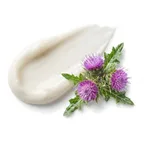 Silybum Marianum Extract
Average
- AverageOily Skin Fit
- AverageEffectiveness
- ExcellentSafety
Works for oily acne-prone skin; other eye cares fit it better.
This fit is calculated for the concerns frequently associated with oily acne-prone skin: shine, breakouts, blemishes, and enlarged pores. For scores and recommendations based on your full skin profile, including your 12D face scan results and any goals or preferences you have, please use the Lovi app.
Updated How the Fit score works
Lovi Assistant explains
- Offers moderate moisturizing for your oily skin, as glycerin and hydrogenated oil provide hydration, but it lacks targeted ingredients to address your primary concerns of acne and breakouts.
- While the formula is generally supportive for oily skin, it does not offer sufficient ingredients for strong oil control.
- The product is safe for your oily skin, with soothing ingredients like Aloe Barbadensis Leaf Juice and Bisabolol preventing irritation.
Buy online


Prices checked 20 Nov 2026
The Lovi Fit is the same in every country; only the stores and prices differ, and the ones here are for Europe.
People Say
★4.4Overall rating based on 700+ reviewsUsers with dry or mature skin frequently praise this rich balm for its intense hydration and ability to smooth fine lines without feeling greasy. Those seeking dramatic correction for deep wrinkles or puffiness often find it lacks potency for the price, and a small minority experienced texture issues or milia.
Highlights
Intense hydration Often Mentioned
- “melts into skin beautifully”
- “great for winter dryness”
- “instantly quenched dry skin”
- “keeps under-eye hydrated”
Expensive product Often Mentioned
- “price is quite steep”
- “not worth the money”
- “expensive for small tube”
- “better options for less”
Gentle formula Sometimes Noted
- “safe for sensitive eyes”
- “no burning or itching”
- “soothing chamomile ingredients”
- “calms irritated skin”
Pleasant texture Sometimes Noted
- “rich yet non-greasy”
- “absorbs quickly”
- “matte finish”
- “silky application”
Limited anti-aging Sometimes Noted
- “no change in wrinkles”
- “didn't help puffiness”
- “minimal difference in lines”
- “just a good moisturizer”
Makeup friendly Rarely Noted
- “concealer layers seamlessly”
- “good base for makeup”
- “does not pill”
Caused milia Rarely Noted
- “caused small white bumps”
- “too heavy for combination skin”
- “clogged pores”
Consistency issues Rarely Noted
- “turned yellow and sticky”
- “separated in the tube”
- “hard to squeeze out”
Sources: lovi.care, dermstore.com, lovelyskin.com, bluemercury.com, walmart.com, and more
Questions and answers
How well does SkinCeuticals Eye Balm work for oily acne-prone skin?
SkinCeuticals Eye Balm works moderately well for oily acne-prone skin, providing basic hydration with glycerin and soothing irritation with aloe, though it lacks targeted ingredients to control excess oil and breakouts. An eye product for this skin type needs lightweight hydrating ingredients and oil-balancing agents that hydrate the delicate eye area without clogging pores.
Clinical, Cosmetic and Investigational Dermatology, 2017Clinical Pharmacology, 2018
Which ingredients make this balm a good fit for oily acne-prone skin?
Glycerin, hydrogenated oil, aloe barbadensis leaf juice, and bisabolol make this balm a decent fit by providing moderate hydration and soothing the skin. However, an eye care product for oily acne-prone skin needs ingredients that actively control oil and target breakouts.
What does Retinyl Palmitate do for oily acne-prone skin?
Retinyl palmitate helps clear up breakouts and reduces acne spots while keeping irritation very low. For oily, acne-prone skin, a product of this type needs soothing ingredients and lightweight hydrators that balance oil without clogging pores.
Where does it go in a skincare routine for oily acne-prone skin?
SkinCeuticals Eye Balm goes in your routine after cleansing and before your moisturizer, in both the morning and the evening. While it provides moderate hydration and soothing ingredients, oily acne-prone skin needs lightweight, oil-controlling formulas with targeted acne-fighting ingredients like salicylic acid or niacinamide to truly manage breakouts.
Can I use this balm with vitamin C, and in what order?
You can use this balm with vitamin C by applying your vitamin C first and following with the balm once it absorbs. This product provides moderate moisture for oily skin, but an eye care product for this skin type needs oil-controlling and breakout-fighting ingredients like salicylic acid or niacinamide.
How often should I use it?
You can use this eye cream daily as part of your normal routine, because its soothing ingredients help prevent irritation on your oily skin.
Can this balm clog pores, cause breakouts or purging for oily acne-prone skin?
This balm is unlikely to cause purging, but it has a low chance of causing milia and lacks strong oil control for oily acne-prone skin. A product of this type needs lightweight hydration and targeted ingredients to help keep pores clear and manage breakouts.
Clinical, Cosmetic and Investigational Dermatology, 2017International Journal of Nanomedicine, 2021
Is it fragrance-free and alcohol-free?
It has no drying alcohol and contains fragrance (farnesol). Cetyl alcohol is a fatty alcohol, which soften the skin.
What the research says
A single application of a moisturizing fluid containing hyaluronic acid 1%, glycerin 5%, and Centella asiatica stem cells extract significantly increased skin hydration by 29% and reduced transepidermal water loss at 24 hours compared to baseline and an untreated control site in twenty healthy women.
Clinical, Cosmetic and Investigational Dermatology, 2017A cream combining propolis, tea tree oil, and Aloe vera reduced erythema scars, acne severity index, and total lesion count better than erythromycin cream in sixty patients with mild to moderate acne vulgaris compared to placebo.
Clinical Pharmacology, 2018Retinyl palmitate ethosomal hydrogel reduced non-inflammatory and total acne lesion counts significantly better than marketed tretinoin while improving tolerability with minimal skin irritation in patients with acne vulgaris.
International Journal of Nanomedicine, 2021Formulations containing 0.10%, 0.25%, and 0.50% freeze-dried Aloe vera extract increased stratum corneum water content compared with the vehicle in 20 female subjects, while transepidermal water loss was not modified.
Skin Research and Technology, 2006Kombucha-mediated fermentation of aloe vera gel for 10 and 20 days enhanced its phenolic and flavonoid content, antioxidant capacity, cytoprotective effects, enzyme inhibition against collagenase, elastase, and hyaluronidase, and moisturizing properties compared to unfermented gel.
Molecules, 2025Aloe vera gel phenolic and polysaccharide extracts demonstrated distinct wound-healing properties in vitro, with the phenolic extract exhibiting anti-inflammatory, antioxidant, and fibroblast-stimulating effects, and the polysaccharide extract showing enhanced collagen synthesis and antibacterial activity against Staphylococcus aureus.
Journal of Functional Biomaterials, 2024Topical bakuchiol 0.5% applied twice daily compared with retinol 0.5% applied daily significantly decreased wrinkle surface area and hyperpigmentation with no statistical difference between the compounds in 44 patients over 12 weeks, while retinol users reported more facial skin scaling and stinging.
The British Journal of Dermatology, 2019Topical 0.3% and 1% retinol comparably improved biomarkers of cutaneous photoageing in photoaged volunteers, while 0.3% retinol demonstrated better tolerance with fewer and milder adverse events compared to 1% retinol in a daily escalation regimen.
International Journal of Cosmetic Science, 2022Daily application of 0.3% and 0.5% retinol serums in 37 volunteers over 12 weeks reduced skin hyperpigmentation, unevenness, and wrinkles on both sides of the face, with the 0.5% concentration causing more frequent and intense skin irritation.
Skin Pharmacology and Physiology, 2020The emollient V0034CR significantly reduced TEWL compared to vehicle and vehicle plus glycerol, and significantly increased corneometry scores compared to vehicle and vehicle plus petrolatum in healthy volunteers with dry skin, demonstrating combined barrier function improvement from petrolatum and hydration improvement from glycerol.
Journal of Cosmetic Dermatology, 2020Ten days of treatment with a cream containing 20% glycerin significantly increased skin hydration measured by corneometer values in 17 healthy volunteers compared to a placebo cream, but showed no influence on transepidermal water loss or skin sensitivity to an irritating surfactant.
International Journal of Cosmetic Science, 2001Niacinamide/glycerin body moisturizers provided better rapid and prolonged improvement of cosmetic xerosis through functional improvement of stratum corneum barrier function compared to no treatment and conventional moisturizers in female subjects.
Journal of Drugs in Dermatology, 2012Wearing an N95 mask alone compared to using dimethicone cream or hydrocolloid dressing caused more adverse skin reactions among 73 military health care workers, with no significant differences in fit test failure rates between groups.
Military Medicine, 2024Petrolatum-based skin protectants demonstrated protection against irritants and maceration while providing skin hydration, whereas dimethicone and zinc oxide products showed varying or limited performance across parameters among 18 healthy volunteers compared to positive and negative controls.
Ostomy/wound Management, 2005Treatment with a moisturizer containing dimethicone and glycerine increased epidermal thickness by 0.019 mm, improved barrier function by decreasing transepidermal water loss by 13%, decreased melanin intensity, and induced keratins 6 and 16 in fifteen women with moderately photoaged forearms.
Clinical and Experimental Dermatology, 2007Topical 0.5% silymarin-loaded antioxidant serum applied twice daily significantly reduced clinical acne severity, lesion counts, and melanin pigmentation in 22 Korean acne patients over 4 weeks without associated adverse events.
Journal of Cosmetic Dermatology, 2023Topical silymarin cream 1.4% showed comparable results to salicylic acid 30% peels in reducing acne severity in 30 patients with mild to moderate acne vulgaris.
Journal of Cutaneous Medicine and Surgery, 2024Silymarin antioxidant serum reduced inflammatory lesions by 45% and noninflammatory lesions by 43% in 56 subjects over 12 weeks, and improved tolerability by reducing erythema, dryness, and scaling when added to prescription acne therapy in 40 subjects.
Journal of Drugs in Dermatology, 2024
Why other eye cares fit oily acne-prone skin better
Topical UP256 cream containing 0.5% bakuchiol administered twice daily significantly reduced inflammatory lesions and improved acne-related post-inflammatory hyperpigmentation in 13 subjects with mild or moderate facial acne.
Journal of Drugs in Dermatology, 2021Co-delivery of paeonol and madecassoside via nanoemulsions improved transdermal delivery, promoted barrier repair proteins, inhibited inflammatory cytokine secretion in cellular and 3D models, and reduced transepidermal water loss and acne in human facial skin compared to free components.
Molecules, 2023
Ingredients
Water, Glycerin, Aloe Barbadensis Leaf Juice, Myristyl Myristate, Cetyl Palmitate, Tocopherol, Stearic Acid, Hydrogenated Oil, Paraffin, Palmitic Acid, Petrolatum, Dimethicone, Hydrogenated Lecithin, Cetyl Alcohol, Caprylic Capric Myristic Stearic Triglyceride, Phenoxyethanol, Triethanolamine, Lauroyl Lysine, Carbomer, Glycine Soja Soybean Protein, Pentylene Glycol, Caprylyl Glycol, Chlorphenesin, Bisabolol, Myristic Acid, Pentaerythrityl Tetra-Di-T-Butyl Hydroxyhydrocinnamate, Silybum Marianum Extract, Disodium Edta, Retinyl Palmitate, Helianthus Annuus Sunflower Seed Oil, Sodium Benzoate, Potassium Sorbate, Farnesol, Crithmum Maritimum Extract
Behind this fit score
Lovi calculates every fit score from the full ingredient list with brand-independent rules our dermatologists and cosmetic chemists build and review, and personalizes every pick with AI trained on the real results of millions of users. Lovi trains its fit score models on a proprietary dataset built from more than 10,000 expert-labeled products and more than 100,000 simulated examples, following an internally consistent methodology presented at Cosmoprof, AMWC, and Skin of Color Update.
-

Co-founder, Medical Director
Cosmetic chemist, cosmetologist, aesthetic products developer
-

Co-founder, CEO and CTO
PhD in computer science, 3x US patent holder, ex-Google, ex-Yandex
-

Dr. Sofía Perea Pérez, MD, MSc
Medical Board
Aesthetic medicine practitioner, MSc in Longevity and Anti-Aging Medicine
-

Medical Board
Specialist dermatologist, MBBS, MD, IFAAD
-

Medical Board
Cosmetic chemist, SCS, IFSCC member
-

Medical Board, Medical Advisor
Dermatology MD
-

Elina Nazarenko, MD
Medical Board
Dermatology and diagnostic consultant
-

Victoria Derkova, MS
Medical Board
Cosmetic chemist, cosmetic development technologist


How does it fit your skin?
Scan your face, then any product: Lovi shows how well it fits you and what fits even better.