
Palmer's Cocoa Butter Formula for acne-prone skin

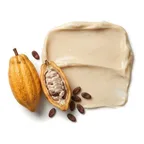 Theobroma Cacao Butter
 Vitamin E
 Dimethicone
 Octinoxate
 Oxybenzone
Caution
- AverageCombination Skin Fit
- AverageEffectiveness
- ConcerningSafety
A poor match for acne-prone skin; the sunscreens alongside fit it better.
This fit is calculated for the concerns frequently associated with acne-prone skin: breakouts, blackheads, and post-acne marks. For scores and recommendations based on your full skin profile, including your 12D face scan results and any goals or preferences you have, please use the Lovi app.
Updated How the Fit score works
Lovi Assistant explains
- Offers moderate moisturizing for your combination skin due to the presence of Theobroma Cacao Seed Butter and Glycerin, which hydrate and soften.
- The inclusion of Petrolatum and Mineral Oil, while providing general skincare benefits, may clog pores and is not ideal for your acne, blemishes, and breakouts.
Buy online

Prices checked 20 Nov 2026
The Lovi Fit is the same in every country; only the stores and prices differ, and the ones here are for Europe.
How to apply
- Apply this moisturizing sunscreen AM every morning as the final step of your daily routine.
- Layer the moisturizing sunscreen after your moisturizer has fully absorbed, right before heading out into the sun .
- Smooth a nickel-sized amount of the moisturizing sunscreen evenly over your face, avoiding harsh rubbing.
- Apply the moisturizing sunscreen onto clean, dry skin to ensure even coverage and protection.
- Perform a patch test before first use and avoid direct contact with the eyes.
People Say
★4.8Overall rating based on 15.0k+ reviewsUsers consistently report positive outcomes such as improved skin texture, faded stretch marks, and a soft, radiant complexion, though a few find the rich formula slightly heavy.
Highlights
Deeply moisturizes skin Mostly Mentioned
- “leaves skin visibly smooth and moisturized”
- “provides deep, long-lasting hydration”
- “keeps skin moisturized during winters”
- “transforms even the roughest, driest areas”
Improves skin texture Often Mentioned
- “reduces and fades stretch marks over time”
- “fading of stretch marks and spots”
- “arms and legs are smooth and young looking”
- “helps calm rough, flaky skin”
Pleasant cocoa scent Often Mentioned
- “leaves skin visibly smooth and moisturized”
- “provides deep, long-lasting hydration”
- “keeps skin moisturized during winters”
- “transforms even the roughest, driest areas”
Absorbs quickly Sometimes Noted
- “absorbs well into skin without residue”
- “does not feel oily the rest of the day”
- “melts nicely into skin”
- “absorbs quickly, creating a protective barrier”
Faulty pump dispenser Rarely Noted
- “pump breaks or detaches”
- “affecting lotion dispensing”
- “prone to clogging”
- “issues with the product's packaging”
Greasy or sticky Rarely Noted
- “feels a bit greasy, which is annoying”
- “was also sticky and didn't soak in”
- “heavier than a regular lotion”
- “demasiado grasosa”
Overpowering scent Rarely Noted
- “smell is much too strong”
- “walk around smelling like a Hershey chocolate bar”
- “didn't care for the smell”
- “cocoa butter scent is noticeable... not subtle”
Sources: lovi.care, walmart.com, target.com, amazon.com, palmers.com, gopicky.com, and more
Questions and answers
Why does Lovi advise caution with Palmer's Cocoa Butter Formula Moisturizing SPF for acne-prone skin?
Lovi advises caution because the petrolatum and mineral oil in this product may clog pores and worsen acne-prone skin. A product for this skin needs ingredients that hydrate and protect against the sun without adding excess oil or clogging pores.
Which ingredients make this cream a poor fit for acne-prone skin?
Petrolatum and mineral oil make this cream a poor match for acne-prone skin because they may clog pores and trigger breakouts. Moisturizing sunscreens for this skin type need to be oil-free, non-pore-clogging formulas with barrier-repairing ingredients like ceramides and soothing agents like niacinamide.
What does cocoa butter do for acne-prone skin?
Cocoa butter is generally a poor fit for acne-prone skin because it can clog pores and is likely to cause breakouts. Products for this skin type need lightweight, non-clogging ingredients that keep pores clear without feeling heavy.
Journal of the American Academy of Dermatology, 1984Bollettino Della Societa Italiana Di Biologia Sperimentale, 1984
What does vitamin E do for acne-prone skin?
Vitamin E helps soothe dry skin and ease redness when you have acne. It is unlikely to stop all breakouts on its own, so acne-prone skin typically needs a product that also includes ingredients to clear pores and balance oil.
Where does this cream go in a skincare routine for acne-prone skin?
This cream is a poor match for your acne-prone skin because petrolatum and mineral oil may clog pores and trigger breakouts. To care for this skin type, a product needs lightweight, oil-free hydration and ingredients that balance moisture without blocking pores.
Can I use it with retinol, and in what order?
You should exercise caution using this product with retinol on acne-prone skin, because its heavy ingredients like petrolatum and mineral oil may clog pores and trigger breakouts. When combining them, apply your retinol first to clean skin and let it absorb fully before putting on a lighter moisturizer. Acne-prone skin needs lightweight, oil-free moisturizers with non-clogging hydrators like hyaluronic acid or niacinamide to keep skin soft without blocking pores.
How often should I use it?
This product is a poor match for your acne-prone skin, as heavy ingredients like petrolatum and mineral oil may clog pores and cause breakouts. Instead, acne-prone skin needs lightweight, oil-free hydrators with ingredients like hyaluronic acid or niacinamide that keep skin soft and clear without clogging pores.
Can this cream clog pores, cause breakouts or purging for acne-prone skin?
This cream may clog pores and trigger breakouts on acne-prone skin because it contains heavy ingredients like petrolatum and mineral oil. Skin prone to breakouts needs a product of this type that uses lightweight, non-clogging hydrators and lacks heavy oils.
Is it fragrance-free and alcohol-free?
It has no drying alcohol and contains fragrance (parfum and benzyl alcohol). Cetyl alcohol, stearyl alcohol, and myristyl alcohol are fatty alcohols, which soften the skin.
What the research says
A single application of a moisturizing fluid containing hyaluronic acid 1%, glycerin 5%, and Centella asiatica stem cells extract significantly increased skin hydration by 29% and reduced transepidermal water loss at 24 hours compared to baseline and an untreated control site in twenty healthy women.
Clinical, Cosmetic and Investigational Dermatology, 2017A topical serum containing vitamin C, vitamin E, and raspberry leaf cell culture extract improved skin color, elasticity, radiance, smoothness, scaliness, and wrinkles compared to the untreated contralateral side in fifty female volunteers.
Journal of Cosmetic Dermatology, 2020A nighttime topical antioxidant containing resveratrol, baicalin, and vitamin E significantly improved fine lines, wrinkles, firmness, elasticity, laxity, hyperpigmentation, radiance, roughness, and dermal thickness in subjects with mild to moderately photodamaged skin over 12 weeks.
Journal of Drugs in Dermatology, 2014A topical antioxidant serum significantly reduced air pollution-induced skin pigmentation and proinflammatory gene expression ex vivo, and improved skin aging signs in 40 healthy adult females after 90 days of daily use.
Journal of Cosmetic Dermatology, 2022Wearing an N95 mask alone compared to using dimethicone cream or hydrocolloid dressing caused more adverse skin reactions among 73 military health care workers, with no significant differences in fit test failure rates between groups.
Military Medicine, 2024Petrolatum-based skin protectants demonstrated protection against irritants and maceration while providing skin hydration, whereas dimethicone and zinc oxide products showed varying or limited performance across parameters among 18 healthy volunteers compared to positive and negative controls.
Ostomy/wound Management, 2005Treatment with a moisturizer containing dimethicone and glycerine increased epidermal thickness by 0.019 mm, improved barrier function by decreasing transepidermal water loss by 13%, decreased melanin intensity, and induced keratins 6 and 16 in fifteen women with moderately photoaged forearms.
Clinical and Experimental Dermatology, 2007Encapsulation of ethylhexyl methoxycinnamate and butyl methoxydibenzoylmethane in lipid microparticles significantly reduced their in vivo human skin penetration compared to nonencapsulated filters.
Skin Pharmacology and Physiology, 2011Replacing 20% of the chemical UV filter octyl methoxycinnamate with urucum oil in solid lipid nanoparticles maintained the skin protection factor without inducing toxic responses or significant skin penetration in human volunteers.
Skin Pharmacology and Physiology, 2018The application of a sunscreen formulation containing ethylhexyl methoxycinnamate, ethylhexyl salicylate, methyl anthranilate, and octocrylene does not significantly affect critical acne-related species such as Cutibacterium acnes and Staphylococcus epidermidis, refuting the induction of facial dysbiosis in men.
Archives of Dermatological Research, 2024Daily whole-body topical application of sunscreens benzophenone-3, octyl-methoxycinnamate, and 3-(4-methylbenzylidene) camphor results in systemic absorption in healthy human volunteers but does not alter endogenous reproductive hormone levels.
The Journal of Investigative Dermatology, 2004Topical application of sunscreen agents in human volunteers resulted in significant skin penetration of all agents and systemic absorption of oxybenzone and its metabolites.
Journal of Chromatography. B, Analytical Technologies in the Biomedical and Life Sciences, 2004Sunscreen containing 5.72% benzophenone-3 (BP3) permeated the stratum corneum within 60 to 120 minutes during in vivo skin exposure, and was rapidly metabolized and excreted in urine, peaking at 6 hours for BP3 and 9 hours for its metabolite BP1.
Environmental Pollution (Barking, Essex, 2024
Ingredients
Water, Theobroma Cacao Extract, Glyceryl Stearate, Petrolatum, Propylene Glycol, Glycerin, Coconut Oil, Paraffinum Liquidum Mineral Oil, Theobroma Cacao Seed Butter, Palm Oil, Cetyl Alcohol, Dimethicone, Tocopherol Vitamin E, Helianthus Annuus Seed Oil Sunflower Seed Oil, Hydroxyethylcellulose, Peg-8 Stearate, Behentrimonium Methosulfate, Butylene Glycol, Stearalkonium Chloride, Cellulose, Sodium Acetate, Parfum, Dimethyl Stearamine, Phenoxyethanol, Sorbic Acid, Benzoic Acid, Stearyl Alcohol, Myristyl Alcohol, Yellow 5 Ci 19140, Ci 15510, Benzyl Alcohol
Behind this fit score
Lovi calculates every fit score from the full ingredient list with brand-independent rules our dermatologists and cosmetic chemists build and review, and personalizes every pick with AI trained on the real results of millions of users. Lovi trains its fit score models on a proprietary dataset built from more than 10,000 expert-labeled products and more than 100,000 simulated examples, following an internally consistent methodology presented at Cosmoprof, AMWC, and Skin of Color Update.
-

Co-founder, Medical Director
Cosmetic chemist, cosmetologist, aesthetic products developer
-

Co-founder, CEO and CTO
PhD in computer science, 3x US patent holder, ex-Google, ex-Yandex
-

Dr. Sofía Perea Pérez, MD, MSc
Medical Board
Aesthetic medicine practitioner, MSc in Longevity and Anti-Aging Medicine
-

Medical Board
Specialist dermatologist, MBBS, MD, IFAAD
-

Medical Board
Cosmetic chemist, SCS, IFSCC member
-

Medical Board, Medical Advisor
Dermatology MD
-

Elina Nazarenko, MD
Medical Board
Dermatology and diagnostic consultant
-

Victoria Derkova, MS
Medical Board
Cosmetic chemist, cosmetic development technologist


How does it fit your skin?
Scan your face, then any product: Lovi shows how well it fits you and what fits even better.