
Neutrogena Sensitive Skin Sunscreen Lotion SPF 60+ for dry skin

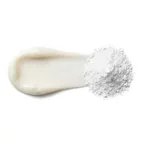 Titanium Dioxide
 Zinc Oxide
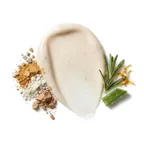 Naturally Sourced Sunscreen
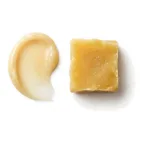 Beeswax
 Ascorbic Acid
High
- HighDry Skin Fit
- HighEffectiveness
- HighSafety
A great choice for dry skin; a few sunscreens fit it even better.
This fit is calculated for the concerns frequently associated with dry skin: flakiness, tightness, dehydration, fine lines, and wrinkles. For scores and recommendations based on your full skin profile, including your 12D face scan results and any goals or preferences you have, please use the Lovi app.
Updated How the Fit score works
Lovi Assistant explains
- Highly suitable for your dry skin, this sunscreen utilizes beeswax and dimethicone to provide emollient and occlusive benefits, effectively smoothing intercellular lipids and reducing water loss.
- Bisabolol and dipotassium glycyrrhizate offer soothing and anti-inflammatory properties, providing moderate hydration for your dry or flaky skin.
- The formulation is safe for your dry skin, containing no harsh ingredients and including bisabolol and dipotassium glycyrrhizate to prevent irritation.
How to apply
- Apply this sunscreen during your AM routine every morning. Reapply every two hours when exposed to the sun.
- Apply the sunscreen as the final step in your morning routine after your moisturizer.
- Gently smooth a nickel-sized amount over your face and neck, avoiding harsh rubbing.
- Apply the sunscreen on clean, dry skin to ensure even protection and absorption.
- Avoid the immediate eye area and do a patch test before first use.
People Say
★4.1Overall rating based on 1.5k+ reviewsHowever, a very large amount of data indicates that its physical filters often leave a noticeable white cast and a thick, heavy texture that can be difficult to blend, especially for those with darker skin tones.
Highlights
Gentle on sensitive skin Mostly Mentioned
- “Only sunscreen that doesn't sting my face”
- “Perfect for allergy-prone skin.”
Visible white cast Mostly Mentioned
- “Leaves a heavy white film”
- “Looked like a ghost”
- “Not usable for darker skin tones.”
Effective sun protection Often Mentioned
- “No burns on my trip”
- “Blocks the sun completely”
- “Reliable high SPF protection.”
Thick & heavy Often Mentioned
- “Hard to rub in”
- “Feels like a thick paste”
- “Suffocating feeling on skin.”
Fragrance-free formula Sometimes Noted
- “Love that it has no smell”
- “Great for fragrance allergies”
- “No masking scent.”
Mineral-based ingredients Sometimes Noted
- “Prefer mineral over chemical”
- “Safe ingredients”
- “Contains naturally sourced sunscreen filters.”
Greasy/shiny finish Sometimes Noted
- “Left my face shiny”
- “Feels greasy and sticky”
- “Never fully dries down.”
Stains clothing Rarely Noted
- “Ruined my black shirt”
- “Leaves white marks on car seats”
- “Stained my bathing suit.”
Sources: lovi.care, walmart.com, influenster.com, pickyskincare.com, glossypolish.com, youtube.com, and more
Questions and answers
What makes Neutrogena Sensitive Skin Sunscreen SPF 60+ a great fit for dry skin?
This sunscreen is a great fit for dry skin because it uses beeswax and dimethicone to lock in moisture and smooth dry spots, while bisabolol and dipotassium glycyrrhizate help calm and soothe the skin. These gentle ingredients work together to prevent irritation and keep your face comfortable.
Which ingredients make this sunscreen a good fit for dry skin?
This sunscreen is a great fit for dry skin because it uses beeswax and dimethicone to smooth skin and lock in moisture, while bisabolol and dipotassium glycyrrhizate help calm irritation. These ingredients work together to keep dry or flaky skin feeling comfortable and hydrated.
What does Titanium Dioxide do for dry skin?
Titanium dioxide acts as a physical UV filter in sunscreens, protecting dry skin from sun damage without disrupting the skin barrier. When applied to healthy skin, it stays on the surface rather than penetrating deeply, making it a safe and effective choice for daily sun protection.
Photodermatology, Photoimmunology & Photomedicine, 2019Journal of the European Academy of Dermatology and Venereology, 2019
What does Zinc Oxide do for dry skin?
Zinc oxide helps soothe dry skin by calming irritation and supporting the skin barrier to keep moisture locked in. When used in gentle creams, it is unlikely to cause irritation and safely keeps dry patches feeling calm and soft.
Journal of the Medical Association of Thailand = Chotmaihet Thangphaet, 2006
Where does this sunscreen go in a skincare routine for dry skin?
This sunscreen goes as the last step of your morning skincare routine, right after your moisturizer. Using it daily helps protect your dry skin from the sun while beeswax and dimethicone keep moisture locked in.
Can I use this sunscreen with retinol, and in what order?
You can use this sunscreen in the morning as the final step after your moisturizer and retinol routine. This sunscreen is unlikely to cause irritation and helps protect dry skin while you use retinol.
How often should I use this sunscreen?
You can use this sunscreen every morning as the final step in your daytime routine. It helps protect your skin from the sun while keeping it smooth and calm.
Can this sunscreen clog pores, cause breakouts or purging for dry skin?
This sunscreen is unlikely to clog pores or cause breakouts on dry skin, as it features soothing ingredients like bisabolol and dipotassium glycyrrhizate that help prevent irritation. However, because it has a thick and heavy feel, it may feel a bit greasy or shiny on some faces.
Is this sunscreen fragrance-free and alcohol-free?
It has no drying alcohol and contains fragrance (benzyl alcohol). Arachidyl alcohol and behenyl alcohol are fatty alcohols, which soften the skin.
What the research says
Treatment with a moisturizer containing dimethicone and glycerine increased epidermal thickness by 0.019 mm, improved barrier function by decreasing transepidermal water loss by 13%, decreased melanin intensity, and induced keratins 6 and 16 in fifteen women with moderately photoaged forearms.
Clinical and Experimental Dermatology, 2007A topical formulation containing panthenol, niacinamide, and dipotassium glycyrrhizate increased skin hydration by 74.1% and reduced transepidermal water loss by 13.5% at 28 days compared to baseline and untreated control in 35 individuals with xerosis.
Journal of Cosmetic Dermatology, 2026Microfine titanium dioxide does not penetrate human skin when formulated in an oil-in-water emulsion with the pigment dispersed in the aqueous phase, compared to oily dispersions and liposomal encapsulation which allow deeper skin penetration.
International Journal of Cosmetic Science, 2000Replacing microsized titanium dioxide and zinc oxide with nanoparticles in sunscreens eliminates opaqueness and alters UV protection balance while inducing (photo)cyto- and genotoxicity and penetrating viable skin layers during long-term exposures.
Nanotechnology, Science and Applications, 2011Hyaluronic acid-grafted titanium dioxide nanoparticles increased SPF from 13.3 to 19.1 while demonstrating low photocatalytic activity, exceptional thermal stability with >95% SPF retention, enhanced moisturization with >80% hydration retention, and minimal cytotoxicity with 88.5% cell viability in HaCaT keratinocytes compared to unmodified nanoparticles.
International Journal of Biological Macromolecules, 2025Topical 0.5% hyaluronic-ZnO nanogel applied twice daily reduced inflammatory-lesion counts by 58% at week four in human subjects compared to baseline without causing erythema.
Biomedicines, 2025Daily use of a deep cleansing gel containing salicylic acid 2%, zinc gluconate 0.2% and lipohydroxy acid 0.05% significantly reduced total lesion count by 56.3% after 84 days in 35 subjects with mild to moderate truncal acne.
Clinical, Cosmetic and Investigational Dermatology, 2023Topical zinc oxide nanogels formulated using Dendrobium anosmum showed greater effectiveness against Gram-positive acne-causing bacteria compared to chemogenic nanoparticles.
Molecules, 2023A prototype body cream containing bee venom, propolis, honey, beeswax, and royal jelly demonstrated stability for 90 days, high antioxidant capacity of 85.45%, lack of cytotoxicity with over 70% cell viability, and no irritation or allergic reaction in dermatological analysis, while improving skin parameters in a panel test.
Journal of Cosmetic Dermatology, 2022MUD1 protected human dermal fibroblasts against AAPH-induced oxidative stress by increasing cell viability, reducing oxidative damage, improving mitochondrial functionality, and enhancing wound healing capacities.
International Journal of Molecular Sciences, 2018An antiaggregation transdermal delivery tool composed of beeswax and hyaluronic acid successfully delivered cell membrane-coated nanoparticles to a depth of over 500 ̵m into skin tissue without aggregation or systemic toxicity.
ACS Nano, 2025Topical application of 5% vitamin C cream significantly improved global clinical scores, increased skin microrelief density, and induced elastic tissue repair in photoaged skin compared to excipient control in healthy female volunteers.
Experimental Dermatology, 2003Topical application of VC-IP cream twice daily for 8 weeks reduces periorbital wrinkles in female subjects compared to a placebo cream.
Journal of Cosmetic Dermatology, 2022Topical treatment with 5% vitamin C and 0.1% madecassoside significantly improved clinical scores for wrinkles, suppleness, firmness, roughness, and skin hydration, along with functional and structural remodeling of the elastic fiber network in 20 female volunteers with photoaged skin after 6 months compared to baseline.
Experimental Dermatology, 2008
Ingredients
Titanium Dioxide, Zinc Oxide, Water, Butyloctyl Salicylate, Beeswax, Styrene Acrylates Copolymer, Silica, Butylene Glycol, Peg-8, Glyceryl Stearate, Peg-100 Stearate, Cetyl Dimethicone, Benzyl Alcohol, Dimethicone, Methicone, Arachidyl Alcohol, Polyhydroxystearic Acid, Hydroxyethyl Acrylate Sodium Acryloyldimethyl Taurate Copolymer, Peg-8 Laurate, Xanthan Gum, Isohexadecane, Behenyl Alcohol, Trisiloxane, Ethylhexylglycerin, Disodium Edta, Trimethylsiloxysilicate, Arachidyl Glucoside, Bisabolol, Dipotassium Glycyrrhizate, Triethoxycaprylylsilane, Bht, Polysorbate 60, Stearic Acid, Methylisothiazolinone, Polyaminopropyl Biguanide, Polymethyl Methacrylate, Tocopheryl Acetate, Ascorbic Acid, Pantothenic Acid, Retinyl Palmitate, Alumina
Behind this fit score
Lovi calculates every fit score from the full ingredient list with brand-independent rules our dermatologists and cosmetic chemists build and review, and personalizes every pick with AI trained on the real results of millions of users. Lovi trains its fit score models on a proprietary dataset built from more than 10,000 expert-labeled products and more than 100,000 simulated examples, following an internally consistent methodology presented at Cosmoprof, AMWC, and Skin of Color Update.
-

Co-founder, Medical Director
Cosmetic chemist, cosmetologist, aesthetic products developer
-

Co-founder, CEO and CTO
PhD in computer science, 3x US patent holder, ex-Google, ex-Yandex
-

Dr. Sofía Perea Pérez, MD, MSc
Medical Board
Aesthetic medicine practitioner, MSc in Longevity and Anti-Aging Medicine
-

Medical Board
Specialist dermatologist, MBBS, MD, IFAAD
-

Medical Board
Cosmetic chemist, SCS, IFSCC member
-

Medical Board, Medical Advisor
Dermatology MD
-

Elina Nazarenko, MD
Medical Board
Dermatology and diagnostic consultant
-

Victoria Derkova, MS
Medical Board
Cosmetic chemist, cosmetic development technologist


How does it fit your skin?
Scan your face, then any product: Lovi shows how well it fits you and what fits even better.