
Murad City Skin Age Defense Broad Spectrum SPF 50 PA++++ for skin with dark spots

 Zinc Oxide
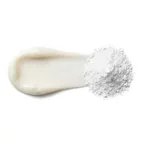 Titanium Dioxide
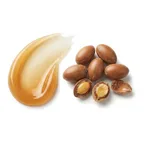 Argania Spinosa Kernel Oil
 Ascorbic Acid
 Retinyl Palmitate
Superior
- SuperiorNormal Skin Fit
- SuperiorEffectiveness
- ExcellentSafety
One of the best sunscreens for skin with dark spots.
This fit is calculated for the concerns frequently associated with dark spots: hyperpigmentation, sun spots, and uneven skin tone. For scores and recommendations based on your full skin profile, including your 12D face scan results and any goals or preferences you have, please use the Lovi app.
Updated How the Fit score works
Lovi Assistant explains
- Excellent suitability for your normal skin is provided by glycerin and argania spinosa kernel oil, which offer humectant and emollient benefits, while ascorbic acid and retinyl palmitate target pigmentation concerns with antioxidant and skin-renewing functions.
- The high concentrations of zinc oxide and titanium dioxide ensure superior UV protection, complementing the overall skin health benefits.
- This formula is safe for your skin, featuring oat kernel extract and bisabolol to soothe and an absence of harsh ingredients.
How to apply
- Apply your AM sunscreen as the final step of your morning skincare routine. Reapply every two hours when exposed to direct sunlight.
- Apply after your moisturizer and before applying any makeup. Make sure it is the very last step of your daytime skin care routine.
- Gently spread a generous amount evenly across your face and neck. Avoid rubbing too harshly to keep the protective layer even.
- Apply on completely dry skin after your moisturizer has fully absorbed. This ensures the protective barrier sits evenly on your face.
- Avoid direct contact with your eyes. Do a patch test before your first full application to ensure no irritation occurs.
People Say
★4.8Overall rating based on 200+ reviewsThis mineral sunscreen is highly rated for its ultra-light, serum-like texture and peach tint that color-corrects and provides a radiant finish. It is frequently praised by users with sensitive skin and those seeking protection from blue light and pollution. Users with darker skin tones often report a noticeable white or ashy cast despite claims of no white cast.
Highlights
Lightweight texture Mostly Mentioned
- “cushy gel-lotion”
- “serum-like feel”
- “absorbs quickly”
- “cosmetically elegant”
Expensive price point Mostly Mentioned
- “very pricey”
- “steep cost”
- “expensive per ounce”
Glowy finish Often Mentioned
- “luminous pearlized finish”
- “dewy glow”
- “radiant look”
- “skin looks bright”
No white cast (light/medium skin) Often Mentioned
- “disappeared completely”
- “no ashy residue”
- “invisible on fair skin”
- “blends seamlessly”
Blue light & pollution defense Sometimes Noted
- “shields against screens”
- “environmental protection”
- “blocks blue light”
- “prevent premature aging”
Great for sensitive skin Sometimes Noted
- “no stinging”
- “soothes redness”
- “non-irritating”
- “best for sensitive eyes”
White cast on dark skin Sometimes Noted
- “straight-up ashy”
- “grayish cast”
- “lightened skin tone”
- “not for dark complexions”
Greasy or shiny finish Rarely Noted
- “too shiny”
- “oily residue”
- “sits on top”
- “too dewy for oily skin”
Packaging issues Rarely Noted
- “hard to squeeze”
- “rigid bottle”
- “heavy ceramic bottle”
- “difficult dispenser”
Pilling under makeup Rarely Noted
- “starts peeling”
- “rubs off in clumps”
- “pills with foundation”
- “flakes off”
Sources: lovi.care, sephora.com, ulta.com, dermstore.com, lovelyskin.com, cultbeauty.co.uk, and more
Questions and answers
What makes Murad City Skin Age Defense one of the best fits for skin with dark spots?
This sunscreen is one of the best fits for skin with dark spots because it combines high sun protection with ingredients like ascorbic acid and retinyl palmitate that help fade dark spots and even out skin tone. It also keeps skin soft and smooth with glycerin and argan oil, while oat kernel extract and bisabolol soothe your face safely.
Journal of Cosmetic Dermatology, 2013Journal of Oral and Maxillofacial Pathology, 2020
Which ingredients make this cream a good fit for skin with dark spots?
Ascorbic acid and retinyl palmitate make this cream a great fit for skin with dark spots by targeting pigmentation concerns. These ingredients help fade dark spots while providing antioxidant and skin-renewing benefits.
Journal of Cosmetic Dermatology, 2013Journal of Oral and Maxillofacial Pathology, 2020
What does Titanium Dioxide do for skin with dark spots?
Titanium dioxide helps protect skin with dark spots from sunlight that can make them darker, especially when mixed with iron oxides to block visible light as well. This extra protection keeps dark spots from getting worse and helps treatments work better.
Photodermatology, Photoimmunology & Photomedicine, 2024Photodermatology, Photoimmunology & Photomedicine, 2014
Where does this cream go in a skincare routine for skin with dark spots?
This cream goes last in your morning routine after applying your cleanser, hydrating toner, and moisturizer, providing high UV protection and targeting dark spots. Using this daily vitamin C and sunscreen regimen helps improve overall skin clarity and brightness.
Can I use this cream with niacinamide, and in what order?
You can use this cream alongside niacinamide by applying niacinamide first, letting it absorb, and then smoothing on this SPF as the final step of your morning routine. This combination helps fade dark spots while keeping your skin calm, smooth, and fully protected from the sun.
How often should I use this cream?
Use this sunscreen every morning as the final step in your daytime routine to protect your skin and help fade dark spots. Daily use shields against UV rays while supporting an even, bright complexion.
Can this cream clog pores, cause breakouts or purging for skin with dark spots?
This cream is unlikely to clog pores or cause breakouts for skin with dark spots because it has a low chance of feeling greasy or shiny, and it avoids harsh ingredients while soothing the skin. Ascorbic acid and retinyl palmitate help improve dark spots safely without causing skin purging.
Journal of Cosmetic Dermatology, 2013Journal of Oral and Maxillofacial Pathology, 2020
Is this cream fragrance-free and alcohol-free?
Yes, it has no fragrance and no drying alcohol.
What the research says
A vitamin A palmitate and antioxidant-containing oil-based moisturizer improved fine lines, wrinkles, pigmentation, tone, texture, dryness, firmness, and clarity across various body sites compared to a no-treatment group over 12 weeks.
Journal of Cosmetic Dermatology, 2013Vitamin C is widely used as a depigmenting agent in dermatology, though limited studies evaluate its use for gingival depigmentation.
Journal of Oral and Maxillofacial Pathology, 2020Replacing microsized titanium dioxide and zinc oxide with nanoparticles in sunscreens eliminates opaqueness and alters UV protection balance while inducing (photo)cyto- and genotoxicity and penetrating viable skin layers during long-term exposures.
Nanotechnology, Science and Applications, 2011Topical 0.5% hyaluronic-ZnO nanogel applied twice daily reduced inflammatory-lesion counts by 58% at week four in human subjects compared to baseline without causing erythema.
Biomedicines, 2025Daily use of a deep cleansing gel containing salicylic acid 2%, zinc gluconate 0.2% and lipohydroxy acid 0.05% significantly reduced total lesion count by 56.3% after 84 days in 35 subjects with mild to moderate truncal acne.
Clinical, Cosmetic and Investigational Dermatology, 2023Topical zinc oxide nanogels formulated using Dendrobium anosmum showed greater effectiveness against Gram-positive acne-causing bacteria compared to chemogenic nanoparticles.
Molecules, 2023Microfine titanium dioxide does not penetrate human skin when formulated in an oil-in-water emulsion with the pigment dispersed in the aqueous phase, compared to oily dispersions and liposomal encapsulation which allow deeper skin penetration.
International Journal of Cosmetic Science, 2000Hyaluronic acid-grafted titanium dioxide nanoparticles increased SPF from 13.3 to 19.1 while demonstrating low photocatalytic activity, exceptional thermal stability with >95% SPF retention, enhanced moisturization with >80% hydration retention, and minimal cytotoxicity with 88.5% cell viability in HaCaT keratinocytes compared to unmodified nanoparticles.
International Journal of Biological Macromolecules, 2025Co-exposure to titanium dioxide nanoparticles exerted an antagonistic effect on zinc oxide nanoparticle-induced cytotoxicity and DNA damage in human keratinocytes and a reconstructed human epidermis model by restricting cellular uptake and decreasing zinc ion dissociation.
Nanomaterials, 2022Topical application of an argan oil NLC-based hydrogel formulation increased skin hydration in healthy volunteers over a one-month period through a synergistic effect of NLC occlusion and argan oil hydration.
International Journal of Nanomedicine, 2014Incorporating allantoin into argan oil enriched liposomes improved its accumulation in the dermis (~8.7μg/cm(2)) and permeation through the skin (~33μg/cm(2)) compared to conventional liposomes, water dispersion, and a commercial gel.
International Journal of Pharmaceutics, 2016Topical application of 5% vitamin C cream significantly improved global clinical scores, increased skin microrelief density, and induced elastic tissue repair in photoaged skin compared to excipient control in healthy female volunteers.
Experimental Dermatology, 2003Topical application of VC-IP cream twice daily for 8 weeks reduces periorbital wrinkles in female subjects compared to a placebo cream.
Journal of Cosmetic Dermatology, 2022Topical treatment with 5% vitamin C and 0.1% madecassoside significantly improved clinical scores for wrinkles, suppleness, firmness, roughness, and skin hydration, along with functional and structural remodeling of the elastic fiber network in 20 female volunteers with photoaged skin after 6 months compared to baseline.
Experimental Dermatology, 2008Topical bakuchiol 0.5% applied twice daily compared with retinol 0.5% applied daily significantly decreased wrinkle surface area and hyperpigmentation with no statistical difference between the compounds in 44 patients over 12 weeks, while retinol users reported more facial skin scaling and stinging.
The British Journal of Dermatology, 2019Topical 0.3% and 1% retinol comparably improved biomarkers of cutaneous photoageing in photoaged volunteers, while 0.3% retinol demonstrated better tolerance with fewer and milder adverse events compared to 1% retinol in a daily escalation regimen.
International Journal of Cosmetic Science, 2022Daily application of 0.3% and 0.5% retinol serums in 37 volunteers over 12 weeks reduced skin hyperpigmentation, unevenness, and wrinkles on both sides of the face, with the 0.5% concentration causing more frequent and intense skin irritation.
Skin Pharmacology and Physiology, 2020
Ingredients
Water, Dimethicone, Zinc Oxide, Titanium Dioxide, C12-15 Alkyl Benzoate, Glycerin, Triheptanoin, Caprylic Capric Triglyceride, C13-16 Isoparaffin, Argania Spinosa Kernel Oil, Tocopheryl Acetate, Polyurethane-35, Polyhydroxystearic Acid, Polymethylsilsesquioxane, Dimethicone Vinyl Dimethicone Crosspolymer, Avena Sativa Kernel Extract Oat Kernel Extract, Xanthophyll, Retinyl Palmitate, Ascorbic Acid, Bisabolol, Hydrolyzed Jojoba Esters, Urea, Yeast Amino Acids, Trehalose, Inositol, Taurine, Betaine, Biosaccharide Gum-4, Hydroxyphenyl Propamidobenzoic Acid, Silica, Tapioca Starch, Sucrose, Pentylene Glycol, Butylene Glycol, Dimethicone Peg-10 15 Crosspolymer, Lauryl Peg-9 Polydimethylsiloxyethyl Dimethicone, Peg-8 Dimethicone, Octyldodecanol, Sodium Propoxyhydroxypropyl Thiosulfate Silica, Peg Ppg-18 18 Dimethicone, Triethoxycaprylylsilane, Aluminum Stearate, Alumina, Ethylhexylglycerin, Phenoxyethanol, Iron Oxides Ci 77491
Behind this fit score
Lovi calculates every fit score from the full ingredient list with brand-independent rules our dermatologists and cosmetic chemists build and review, and personalizes every pick with AI trained on the real results of millions of users. Lovi trains its fit score models on a proprietary dataset built from more than 10,000 expert-labeled products and more than 100,000 simulated examples, following an internally consistent methodology presented at Cosmoprof, AMWC, and Skin of Color Update.
-

Co-founder, Medical Director
Cosmetic chemist, cosmetologist, aesthetic products developer
-

Co-founder, CEO and CTO
PhD in computer science, 3x US patent holder, ex-Google, ex-Yandex
-

Dr. Sofía Perea Pérez, MD, MSc
Medical Board
Aesthetic medicine practitioner, MSc in Longevity and Anti-Aging Medicine
-

Medical Board
Specialist dermatologist, MBBS, MD, IFAAD
-

Medical Board
Cosmetic chemist, SCS, IFSCC member
-

Medical Board, Medical Advisor
Dermatology MD
-

Elina Nazarenko, MD
Medical Board
Dermatology and diagnostic consultant
-

Victoria Derkova, MS
Medical Board
Cosmetic chemist, cosmetic development technologist


How does it fit your skin?
Scan your face, then any product: Lovi shows how well it fits you and what fits even better.