
Medicube Red Erasing Cream for oily acne-prone skin

 Niacinamide
 Zinc Oxide
 Squalane
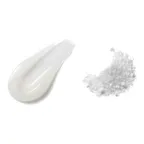 Adenosine
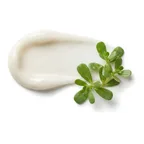 Purslane Extract
Average
- AverageOily Skin Fit
- AverageEffectiveness
- HighSafety
Works for oily acne-prone skin; other moisturizers fit it better.
This fit is calculated for the concerns frequently associated with oily acne-prone skin: shine, breakouts, blemishes, and enlarged pores. For scores and recommendations based on your full skin profile, including your 12D face scan results and any goals or preferences you have, please use the Lovi app.
Updated How the Fit score works
Lovi Assistant explains
- Offers moderate suitability for oily skin as Zinc Oxide and Niacinamide provide mild anti-inflammatory and sebum-regulating effects, which are supportive but not primary treatments for your acne, blemishes, and breakouts.
- Glycerin and purslane extract offer general hydration and soothing benefits, which are beneficial for your skin but do not directly address your primary concerns.
- The product is safe for your oily skin, with no risks of irritation due to the absence of harsh ingredients.
How to apply
- Use this AM and PM routine every day to help clear your skin. Always remember to finish with SPF in the morning.
- Apply the moisturizer after your cleanser and toner, right before your SPF during the day.
- Gently press a small amount into your skin and avoid rubbing to keep pores clear.
- Apply on clean, slightly damp skin to help the product absorb better and control oil.
- Avoid the sensitive eye area and do a simple patch test before your first use.
People Say
★4.7Overall rating based on 3.1k+ reviewsBased on a very large amount of data, this barrier cream is highly praised by users with acne-prone and sensitive skin for its ability to fade stubborn acne scars and calm redness over time. Its thick, paste-like consistency and significant white cast make it strictly a nighttime treatment for most, as it can be difficult to layer under makeup.
Highlights
Fades acne scars Mostly Mentioned
- “helped fade my scars”
- “scars became noticeably lighter”
- “significant improvement in pigmentation”
Strong white cast Mostly Mentioned
- “leaves a white cast”
- “whitins skin as much as sunscreen”
- “severe white cast”
Reduces redness Often Mentioned
- “calmed skin”
- “reduces redness”
- “inflammation has calmed down”
Thick/sticky texture Often Mentioned
- “thick and heavy”
- “feels sticky”
- “texture feels like an ointment”
Non-irritating Sometimes Noted
- “no irritation at all”
- “suits my acne sensitive prone skin”
- “mild and soothing”
Strengthens barrier Sometimes Noted
- “good for the barrier”
- “skin barrier has improved”
- “protect skin by forming a moisture barrier”
Pills under makeup Sometimes Noted
- “makeup won't set properly”
- “notice some pilling”
- “difficult to spread”
Hard to remove Rarely Noted
- “stubborn to remove”
- “difficult to wash off”
- “residue left behind”
Sources: lovi.care, yesstyle.com, oliveyoung.com, stylekorean.com, medicube.us, hwahae.co.kr, and more
Questions and answers
How well does Medicube Red Erasing Cream work for oily acne-prone skin?
Medicube Red Erasing Cream offers moderate suitability for oily acne-prone skin, providing mild calming and oil-balancing effects that support your routine without directly tackling main breakouts. A moisturizing treatment for this skin needs powerful hydrating and repairing ingredients, lightweight textures free of heavy oils, and ingredients that support the skin barrier without clogging pores.
Which ingredients make this cream a good fit for oily acne-prone skin?
Zinc oxide and niacinamide help your oily acne-prone skin by providing mild soothing and oil-controlling effects. Glycerin and purslane extract also offer general hydration and calm your skin without causing irritation. Oily skin of this type needs powerful targeted acne treatments along with lightweight hydrators that do not add excess oil or clog pores.
What does Niacinamide do for oily acne-prone skin?
Niacinamide helps control oily and acne-prone skin by reining in excess sebum production and visibly reducing breakouts and redness. It is well tolerated and may calm the skin while improving overall clarity.
Journal of Cosmetic and Laser Therapy, 2006International Journal of Dermatology, 2013
What does Zinc Oxide do for oily acne-prone skin?
Zinc oxide helps calm oily, acne-prone skin by reducing redness and targeting the bacteria that cause breakouts. It may also help decrease excess oil while remaining gentle, making it less likely to cause peeling or dryness than some harsher treatments.
Can I use this cream with retinol, and in what order?
How often should I use this cream?
You can use this moisturizing treatment twice a day as part of your morning and evening routine. It provides safe, moderate support for oily skin with soothing and oil-controlling ingredients, though oily and acne-prone skin often needs targeted acne treatments and oil-balancing active ingredients to get the best results.
Can this cream clog pores, cause breakouts or purging for oily acne-prone skin?
This cream is unlikely to cause irritation on oily acne-prone skin because it lacks harsh ingredients, though it offers only moderate suitability for your breakouts. Oily acne-prone skin needs targeted treatments that directly clear blemishes and regulate oil more strongly than this formula provides.
Is this cream fragrance-free and alcohol-free?
Yes, it has no fragrance and no drying alcohol.
What the research says
Biomimetic hyaluronic acid-stabilized zinc oxide nanoparticles selectively inhibited C. acnes, outperformed erythromycin in preclinical acne models, and safely reduced acne lesions and redness in a clinical trial.
Journal of Controlled Release, 2025Topical 0.5% hyaluronic-ZnO nanogel applied twice daily reduced inflammatory-lesion counts by 58% at week four in human subjects compared to baseline without causing erythema.
Biomedicines, 2025A single application of a moisturizing fluid containing hyaluronic acid 1%, glycerin 5%, and Centella asiatica stem cells extract significantly increased skin hydration by 29% and reduced transepidermal water loss at 24 hours compared to baseline and an untreated control site in twenty healthy women.
Clinical, Cosmetic and Investigational Dermatology, 2017Topical nicotinamide prevented solar-simulated UV-induced immunosuppression in healthy volunteers, and men experienced immunosuppression at solar-simulated UV doses three times lower than those required for women.
The Journal of Investigative Dermatology, 2008Topical 5% niacinamide applied twice daily for 12 weeks reduced fine lines and wrinkles, hyperpigmented spots, red blotchiness, and skin sallowness, and improved skin elasticity compared to vehicle control in 50 female white subjects with facial photoaging.
Dermatologic Surgery, 2005Topical 2% niacinamide significantly decreased sebum excretion rate in Japanese individuals and casual sebum levels in Caucasian individuals compared to placebo or baseline.
Journal of Cosmetic and Laser Therapy, 2006Daily use of a deep cleansing gel containing salicylic acid 2%, zinc gluconate 0.2% and lipohydroxy acid 0.05% significantly reduced total lesion count by 56.3% after 84 days in 35 subjects with mild to moderate truncal acne.
Clinical, Cosmetic and Investigational Dermatology, 2023Topical zinc oxide nanogels formulated using Dendrobium anosmum showed greater effectiveness against Gram-positive acne-causing bacteria compared to chemogenic nanoparticles.
Molecules, 2023Application of fullerene-C60 dissolved in squalane cream twice daily for 8 weeks significantly enhanced skin moisture and reduced wrinkle formation compared to placebo in 23 Japanese women without severe side effects.
Journal of Nanoscience and Nanotechnology, 2010Squalane at 0.005-0.015% counteracts UVA-induced oxidative stress, inflammation, and collagen metabolism inhibition while stimulating fibroblast migration in human dermal fibroblasts.
Molecules, 2025Plant-derived squalane protected human dermal fibroblasts against UVA-induced damage by counteracting ROS formation, suppressing apoptosis-related proteins p53, caspase-3, caspase-9, and PARP, and restoring the pro-survival p-Akt/mTOR pathway.
Antioxidants, 2025Topical application of a disodium adenosine monophosphate-based formulation reduced wrinkles and hyperpigmentation while improving hydration, barrier function, skin lifting, and epidermal turnover in female participants.
International Journal of Molecular Sciences, 2026Adenosine and cordycepin stimulate the Wnt/beta-catenin signaling pathway through adenosine receptor and PKA activation, promoting cell proliferation, migration, and growth factor secretion in cultured dermal fibroblasts.
International Journal of Molecular Sciences, 2021Topical application of the A2BAR agonist BAY60-6583 prevented TPA-induced inflammation, hyperproliferation, and acanthosis while normalizing epidermal barrier protein expression in a murine model of epidermal hyperplasia, effects that were reversed by the selective antagonist PSB-1115.
Biomedicine & Pharmacotherapy = Biomedecine & Pharmacotherapie, 2024Facial masks containing low-temperature extracted Portulaca oleracea protect sensitive skin from photothermal stimulation and improve skin barrier function during photorejuvenation.
Cutaneous and Ocular Toxicology, 2025Oleracone C attenuates UVB-induced photoaging in human keratinocytes by reducing intracellular ROS and MMP expression while restoring type I procollagen production through MAPK and TGF-beta/Smad pathways.
International Journal of Cosmetic Science, 2023Solvent-partitioned fractions and isolated homoisoflavonoids from Portulaca oleracea L. suppressed ROS generation, activated antioxidant enzymes via the Nrf-2 pathway, down-regulated MMPs, and increased type I procollagen production in UVB-stressed human keratinocytes.
Journal of Food Biochemistry, 2019
Why other moisturizers fit oily acne-prone skin better
Co-delivery of paeonol and madecassoside via nanoemulsions improved transdermal delivery, promoted barrier repair proteins, inhibited inflammatory cytokine secretion in cellular and 3D models, and reduced transepidermal water loss and acne in human facial skin compared to free components.
Molecules, 2023
Ingredients
Water, Zinc Oxide, Cyclopentasiloxane, Caprylic Capric Triglyceride, Glycerin, Isodecyl Neopentanoate, Cyclohexasiloxane, Diethylhexyl Carbonate, Quaternium-18 Bentonite, Peg-10 Dimethicone, Butylene Glycol, Niacinamide, Beeswax, Sodium Chloride, Sorbitan Sesquioleate, 1,2-Hexanediol, Vinyl-Dimethicone-Methicone-Silsesquioxane-Crosspolymer, Purslane Extract, Triethoxycaprylyl Silane, Dimethicone Vinyl Dimethicone Crosspolymer, Caprylyl Glycol, Chlorphenesin, Adenosine, Jojoba Seed Oil, Squalane, Tomato Extract
Behind this fit score
Lovi calculates every fit score from the full ingredient list with brand-independent rules our dermatologists and cosmetic chemists build and review, and personalizes every pick with AI trained on the real results of millions of users. Lovi trains its fit score models on a proprietary dataset built from more than 10,000 expert-labeled products and more than 100,000 simulated examples, following an internally consistent methodology presented at Cosmoprof, AMWC, and Skin of Color Update.
-

Co-founder, Medical Director
Cosmetic chemist, cosmetologist, aesthetic products developer
-

Co-founder, CEO and CTO
PhD in computer science, 3x US patent holder, ex-Google, ex-Yandex
-

Dr. Sofía Perea Pérez, MD, MSc
Medical Board
Aesthetic medicine practitioner, MSc in Longevity and Anti-Aging Medicine
-

Medical Board
Specialist dermatologist, MBBS, MD, IFAAD
-

Medical Board
Cosmetic chemist, SCS, IFSCC member
-

Medical Board, Medical Advisor
Dermatology MD
-

Elina Nazarenko, MD
Medical Board
Dermatology and diagnostic consultant
-

Victoria Derkova, MS
Medical Board
Cosmetic chemist, cosmetic development technologist


How does it fit your skin?
Scan your face, then any product: Lovi shows how well it fits you and what fits even better.