
MDSolarSciences Mineral Crème SPF 50 for dry skin

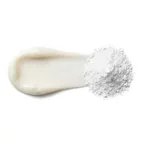 Titanium Dioxide
 Zinc Oxide
 Tetrahexyldecyl Ascorbate Ascorbic Acid
 Camellia Sinensis Leaf Extract
 Tocopheryl Acetate Vitamin E
High
- HighDry Skin Fit
- HighEffectiveness
- ExcellentSafety
A great choice for dry skin; a few sunscreens fit it even better.
This fit is calculated for the concerns frequently associated with dry skin: flakiness, tightness, dehydration, fine lines, and wrinkles. For scores and recommendations based on your full skin profile, including your 12D face scan results and any goals or preferences you have, please use the Lovi app.
Updated How the Fit score works
Lovi Assistant explains
- Offers excellent sun protection and moisturization for your dry skin, as titanium dioxide and zinc oxide shield against UV rays while caprylic capric triglyceride and tetrahexyldecyl ascorbate provide emollient and antioxidant benefits. Dimethicone and caprylic capric triglyceride further enhance barrier repair and hydration, making it highly suitable for dry or flaky skin.
- The formula is safe for your dry skin, with Camellia Sinensis Leaf Extract and Punica Granatum Extract offering soothing properties and a low risk of irritation due to the absence of harsh ingredients.
How to apply
- Apply this moisturizing sunscreen daily in your AM routine. Use it every morning as the final step of your skincare routine.
- Apply after your moisturizer and before putting on makeup. This ensures proper sun protection for your skin.
- Gently spread an even layer over your face and neck. Avoid rubbing too hard to keep your dry skin happy.
- Apply on completely dry skin for the best coverage and protection. Make sure your face is clean before application.
- Avoid the immediate eye area during application. Do a patch test before your first use.
People Say
★4.7Overall rating based on 1000+ reviewsThis sunscreen is highly regarded for its silky, pore-blurring texture and matte finish, making it suitable for oily and acne-prone skin. A significant number of users report a noticeable white cast, particularly on darker skin tones, and some experience pilling when worn under makeup.
Highlights
Silky, smooth texture Mostly Mentioned
- “feels like cashmere”
- “glides on effortlessly”
- “velvety silicone feel”
- “super soft application”
Matte, blurring finish Often Mentioned
- “blurs large pores”
- “leaves no shine”
- “perfect matte base”
- “acts like a primer”
Safe for sensitive skin Often Mentioned
- “no stinging eyes”
- “doesn't cause breakouts”
- “gentle on acne”
Visible white cast Often Mentioned
- “ghostly pale look”
- “leaves white residue”
- “not for dark skin”
- “purple tint on deep skin”
High mineral protection Sometimes Noted
- “great SPF 50”
- “pure mineral formula”
- “excellent sun protection”
- “reliable zinc oxide”
Pilling under makeup Sometimes Noted
- “balls up under foundation”
- “separates with liquid makeup”
- “rolls off the skin”
- “hard to layer”
Product separation Rarely Noted
- “comes out watery”
- “oil separates in tube”
- “needs vigorous shaking”
- “inconsistent consistency”
Slippery silicone feel Rarely Noted
- “feels too greasy”
- “slippery texture”
- “never fully dries down”
- “feels like pure silicone”
Sources: lovi.care, mdsolarsciences.com, dermstore.com, walmart.com, hsastore.com, skinsort.com, and more
Questions and answers
What makes MDSolarSciences Mineral Crème SPF 50 a great fit for dry skin?
MDSolarSciences Mineral Crème SPF 50 is a great fit for dry skin because it combines mineral UV blockers with nourishing ingredients like caprylic capric triglyceride, dimethicone, and vitamin C that boost hydration, repair the skin barrier, and soothe flaky areas. It is gentle on your skin and unlikely to cause irritation.
Which ingredients make this cream a good fit for dry skin?
This cream is a great fit for dry skin because caprylic capric triglyceride and dimethicone help lock in hydration and repair the skin barrier, while titanium dioxide and zinc oxide protect against UV rays. Vitamin C and green tea extract also provide soothing antioxidant benefits to keep your skin smooth and calm.
What does Titanium Dioxide do for dry skin?
Titanium dioxide acts as a physical UV filter in sunscreens, protecting dry skin from sun damage without disrupting the skin barrier. When applied to healthy skin, it stays on the surface rather than penetrating deeply, making it a safe and effective choice for daily sun protection.
Photodermatology, Photoimmunology & Photomedicine, 2019Journal of the European Academy of Dermatology and Venereology, 2019
What does Zinc Oxide do for dry skin?
Zinc oxide helps soothe dry skin by calming irritation and supporting the skin barrier to keep moisture locked in. When used in gentle creams, it is unlikely to cause irritation and safely keeps dry patches feeling calm and soft.
Journal of the Medical Association of Thailand = Chotmaihet Thangphaet, 2006
Where does it go in a skincare routine for dry skin?
Apply this sunscreen as the last step in your morning routine after your moisturizer, to protect your dry skin from UV rays while adding hydration. It is unlikely to irritate your skin, as it contains soothing plant extracts and minerals without harsh ingredients.
Can I use this cream with retinol, and in what order?
You can use this moisturizing spf in the morning as the final step before sun exposure, which helps protect your dry skin while keeping it soft and hydrated. It is unlikely to cause irritation when paired with a nighttime retinol routine.
How often should I use it?
You can use this moisturizing SPF every morning as the final step in your daytime routine to shield against UV rays and keep your skin hydrated throughout the day. Daily application helps maintain skin barrier function and offers soothing antioxidant benefits without irritation.
Journal of Cosmetic Dermatology, 2020Health Science Reports, 2021
Can this cream clog pores, cause breakouts or purging for dry skin?
This cream is unlikely to clog pores or cause breakouts on dry skin, as its soothing ingredients and lack of harsh additives keep irritation risk low. It helps calm the skin while protecting it from the sun.
Is it fragrance-free and alcohol-free?
Yes, it has no fragrance and no drying alcohol.
What the research says
Topical application of an emollient emulsion containing 15.0% caprylic/capric triglyceride doubled the amount of urocanic acid isomers and increased skin hydration with reduced transepidermal water loss in healthy subjects, though it did not prevent ultraviolet-induced urocanic acid isomerization.
Life, 2023Treatment with a moisturizer containing dimethicone and glycerine increased epidermal thickness by 0.019 mm, improved barrier function by decreasing transepidermal water loss by 13%, decreased melanin intensity, and induced keratins 6 and 16 in fifteen women with moderately photoaged forearms.
Clinical and Experimental Dermatology, 2007Topical application of a 6% green tea extract formulation increased skin moisture, enhanced skin elasticity, and improved skin microrelief by reducing roughness in 24 volunteers compared to vehicle and control over 30 days.
Dermatologic Therapy, 2013Daily consumption of fermented pomegranate extract drinks and serums improved skin moisture, brightness, elasticity, and collagen density while reducing spots in healthy subjects compared to baseline.
Journal of Cosmetic Dermatology, 2022Microfine titanium dioxide does not penetrate human skin when formulated in an oil-in-water emulsion with the pigment dispersed in the aqueous phase, compared to oily dispersions and liposomal encapsulation which allow deeper skin penetration.
International Journal of Cosmetic Science, 2000Replacing microsized titanium dioxide and zinc oxide with nanoparticles in sunscreens eliminates opaqueness and alters UV protection balance while inducing (photo)cyto- and genotoxicity and penetrating viable skin layers during long-term exposures.
Nanotechnology, Science and Applications, 2011Hyaluronic acid-grafted titanium dioxide nanoparticles increased SPF from 13.3 to 19.1 while demonstrating low photocatalytic activity, exceptional thermal stability with >95% SPF retention, enhanced moisturization with >80% hydration retention, and minimal cytotoxicity with 88.5% cell viability in HaCaT keratinocytes compared to unmodified nanoparticles.
International Journal of Biological Macromolecules, 2025Topical 0.5% hyaluronic-ZnO nanogel applied twice daily reduced inflammatory-lesion counts by 58% at week four in human subjects compared to baseline without causing erythema.
Biomedicines, 2025Daily use of a deep cleansing gel containing salicylic acid 2%, zinc gluconate 0.2% and lipohydroxy acid 0.05% significantly reduced total lesion count by 56.3% after 84 days in 35 subjects with mild to moderate truncal acne.
Clinical, Cosmetic and Investigational Dermatology, 2023Topical zinc oxide nanogels formulated using Dendrobium anosmum showed greater effectiveness against Gram-positive acne-causing bacteria compared to chemogenic nanoparticles.
Molecules, 2023Topical application of 5% vitamin C cream significantly improved global clinical scores, increased skin microrelief density, and induced elastic tissue repair in photoaged skin compared to excipient control in healthy female volunteers.
Experimental Dermatology, 2003Topical application of VC-IP cream twice daily for 8 weeks reduces periorbital wrinkles in female subjects compared to a placebo cream.
Journal of Cosmetic Dermatology, 2022Topical treatment with 5% vitamin C and 0.1% madecassoside significantly improved clinical scores for wrinkles, suppleness, firmness, roughness, and skin hydration, along with functional and structural remodeling of the elastic fiber network in 20 female volunteers with photoaged skin after 6 months compared to baseline.
Experimental Dermatology, 2008Topically formulated tea polyphenols show some benefit in reducing sebum secretion and treating acne vulgaris compared to baseline or control.
Antioxidants, 2016Topical application of tannase-converted green tea extract (TGE) significantly improved skin wrinkle indices and self-assessed wrinkle reduction compared to normal green tea extract (NGE) in human subjects over 8 weeks.
Journal of Cosmetic Dermatology, 2013An anti-acne hydrogel containing Aloe barbadensis, Garcinia mangostana, and Camellia sinensis extracts showed superior antiacne and antiblotch activities compared to 1% clindamycin gel in sixty subjects with mild-moderate acne.
Clinical, Cosmetic and Investigational Dermatology, 2019A topical serum containing vitamin C, vitamin E, and raspberry leaf cell culture extract improved skin color, elasticity, radiance, smoothness, scaliness, and wrinkles compared to the untreated contralateral side in fifty female volunteers.
Journal of Cosmetic Dermatology, 2020A nighttime topical antioxidant containing resveratrol, baicalin, and vitamin E significantly improved fine lines, wrinkles, firmness, elasticity, laxity, hyperpigmentation, radiance, roughness, and dermal thickness in subjects with mild to moderately photodamaged skin over 12 weeks.
Journal of Drugs in Dermatology, 2014A topical antioxidant serum significantly reduced air pollution-induced skin pigmentation and proinflammatory gene expression ex vivo, and improved skin aging signs in 40 healthy adult females after 90 days of daily use.
Journal of Cosmetic Dermatology, 2022
Ingredients
Titanium Dioxide, Zinc Oxide, Dimethicone, Caprylic Capric Triglyceride, Dimethicone Crosspolymer, Dimethicone Vinyl Dimethicone Crosspolymer, Butyloctyl Salicylate, Glyceryl Isostearate, Polysilicone-15, Tetrahexyldecyl Ascorbate Ascorbic Acid, Camellia Sinensis Leaf Extract, Punica Granatum Extract, Cranberry Fruit Extract, Tocopheryl Acetate Vitamin E, Silica, Polyhydroxystearic Acid, Cyclotetrasiloxane, Isoceteth-10, Peg Ppg-18 18 Dimethicone, Triethoxycaprylylsilane
Behind this fit score
Lovi calculates every fit score from the full ingredient list with brand-independent rules our dermatologists and cosmetic chemists build and review, and personalizes every pick with AI trained on the real results of millions of users. Lovi trains its fit score models on a proprietary dataset built from more than 10,000 expert-labeled products and more than 100,000 simulated examples, following an internally consistent methodology presented at Cosmoprof, AMWC, and Skin of Color Update.
-

Co-founder, Medical Director
Cosmetic chemist, cosmetologist, aesthetic products developer
-

Co-founder, CEO and CTO
PhD in computer science, 3x US patent holder, ex-Google, ex-Yandex
-

Dr. Sofía Perea Pérez, MD, MSc
Medical Board
Aesthetic medicine practitioner, MSc in Longevity and Anti-Aging Medicine
-

Medical Board
Specialist dermatologist, MBBS, MD, IFAAD
-

Medical Board
Cosmetic chemist, SCS, IFSCC member
-

Medical Board, Medical Advisor
Dermatology MD
-

Elina Nazarenko, MD
Medical Board
Dermatology and diagnostic consultant
-

Victoria Derkova, MS
Medical Board
Cosmetic chemist, cosmetic development technologist


How does it fit your skin?
Scan your face, then any product: Lovi shows how well it fits you and what fits even better.