
EltaMD PM Restore Moisturizer for sensitive skin

 Niacinamide
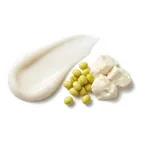 Hydrolyzed Rice Protein
 Sodium Hyaluronate
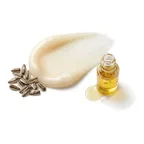 Linoleic Acid
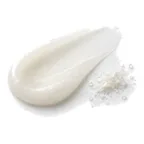 Peptides
Average
- HighNormal Skin Fit
- HighEffectiveness
- HighSafety
Works for sensitive skin; other moisturizers fit it better.
- Clinical, Cosmetic and Investigational Dermatology, 2017
- The Journal of Investigative Dermatology, 2008
This fit is calculated for the concerns frequently associated with sensitive skin: redness, stinging, and reactions to new products. For scores and recommendations based on your full skin profile, including your 12D face scan results and any goals or preferences you have, please use the Lovi app.
Updated How the Fit score works
Lovi Assistant explains
- Offers moderate benefits for your normal skin with sensitivity, as niacinamide and linoleic acid help soothe inflammation and repair the skin barrier. Hydroxypropyl bispalmitamide mea further supports barrier function and reduces redness, making it suitable for your concerns.
- The inclusion of sodium hyaluronate and glycerin provides excellent hydration, enhancing overall skin resilience and comfort.
- The product is safe for your skin, with no identified risks of irritation due to the absence of harsh or prohibited ingredients.
How to apply
- Use this soothing AM and PM routine every day to keep your normal skin calm. Always remember to apply SPF in the morning after your moisturizer.
- Apply your moisturizer after your toner in the morning, and after your serum in the evening. This step locks in hydration and protects your skin.
- Gently press a small amount of the moisturizer evenly across your face. Avoid rubbing to keep your sensitive skin happy and calm.
- You can apply this gentle formula on dry or slightly damp skin for the best comfort. It works wonderfully on clean skin to soothe redness and irritation.
- Do a patch test before your very first use to check your skin's reaction. Avoid getting the product directly into your eyes .
People Say
★4.4Overall rating based on 1.6k+ reviewsBased on a very large amount of data, this moisturizer is highly regarded for its lightweight, non-greasy texture that effectively hydrates and repairs the skin barrier overnight. Some users noted issues with packaging visibility and a few found it insufficient for very dry skin, with occasional comments about formula changes or the price point.
Highlights
Lightweight, non-greasy Mostly Mentioned
- “Absorbs quickly”
- “not oily”
- “feels weightless”
Effective hydration Often Mentioned
- “Skin feels soft”
- “supple in morning”
- “deeply moisturizing”
Soothing for sensitive Often Mentioned
- “Calms redness”
- “non-irritating”
- “great for sensitive skin”
Fragrance-free formula Sometimes Noted
- “No noticeable smell”
- “no irritation”
- “clean scent”
Packaging visibility Sometimes Noted
- “Cannot see remaining product”
- “runs out unexpectedly”
Formula changes Rarely Noted
- “Not the same as old”
- “caused breakouts”
- “texture changed”
Insufficient hydration Rarely Noted
- “Not hydrating enough”
- “need something heavier”
- “felt dry”
Price point Rarely Noted
- “Expensive for size”
- “value varies”
- “pricey”
Sources: lovi.care, walmart.com, bluemercury.com, lovelyskin.com, trustpilot.com, whatsinmyjar.com, and more
Questions and answers
How well does EltaMD PM Restore work for sensitive skin?
EltaMD PM Restore works reasonably well for sensitive skin, as niacinamide and linoleic acid help calm inflammation and repair the skin barrier. However, a moisturizing treatment for this skin needs fermented Centella Asiatica, cica ceramide, and nourishing oils to provide better hydration and target redness without overwhelming the skin.
Which ingredients make this cream a good fit for sensitive skin?
Niacinamide, linoleic acid, and hydroxypropyl bispalmitamide mea help soothe inflammation, repair the skin barrier, and reduce redness, while sodium hyaluronate and glycerin provide hydration and comfort. A moisturizing treatment for sensitive skin of this type needs soothing ingredients like fermented Centella Asiatica and cica ceramide with nourishing oils to enhance barrier function and hydration without overwhelming the skin.
What does Niacinamide do for sensitive skin?
Niacinamide helps calm sensitive skin and keeps it comfortable by supporting the skin barrier and reducing irritation. Clinical studies show that it is well tolerated and helps decrease redness and inflammation in reactive skin.
What does Hydrolyzed Rice Protein do for sensitive skin?
Hydrolyzed Rice Protein helps calm sensitive skin by offering gentle moisture and antioxidant support. It is generally safe and well-tolerated, making it unlikely to cause irritation while keeping the skin soft and smooth.
Journal of Cosmetic Dermatology, 2022International Journal of Toxicology, 2006
Where does this cream go in a skincare routine for sensitive skin?
This moisturizing treatment goes in the evening routine after your toner and before your regular moisturizer. Sensitive skin benefits from products with niacinamide, linoleic acid, and soothing barrier ingredients to calm redness and repair dryness.
The Journal of Dermatological Treatment, 2022International Journal of Cosmetic Science, 2020
Can I use this cream with retinol, and in what order?
You can use this cream with retinol by applying it as your last step after your retinol treatment. Using a barrier-repairing moisturizer like this helps reduce dryness and irritation while you use retinol, making the routine much more comfortable.
How often should I use this cream?
You can use this moisturizing treatment twice daily to help keep sensitive skin calm and hydrated. Daily application of moisturizers of this type supports skin barrier function and improves comfort, though sensitive skin often benefits most from formulas with extra soothing plant extracts and minimal ingredients.
Journal of Cosmetic Dermatology, 2020Health Science Reports, 2021
Can this cream clog pores, cause breakouts or purging for sensitive skin?
This cream is unlikely to clog pores or cause breakouts on sensitive skin, as it contains no harsh or prohibited ingredients that trigger irritation. To be a great fit for sensitive skin, a product of this type needs soothing ingredients like niacinamide and linoleic acid to calm redness and repair the skin barrier without heaviness.
Can I use this cream around the eyes or on my body?
This cream is generally safe to use around the eyes or on the body, though it is designed primarily for the face. Sensitive skin in these areas needs a product of this type that provides gentle hydration and barrier-repairing ingredients like niacinamide and hyaluronic acid to keep the skin comfortable and calm.
Is this cream fragrance-free and alcohol-free?
Yes, it has no fragrance and no drying alcohol.
What the research says
A single application of a moisturizing fluid containing hyaluronic acid 1%, glycerin 5%, and Centella asiatica stem cells extract significantly increased skin hydration by 29% and reduced transepidermal water loss at 24 hours compared to baseline and an untreated control site in twenty healthy women.
Clinical, Cosmetic and Investigational Dermatology, 2017Topical nicotinamide prevented solar-simulated UV-induced immunosuppression in healthy volunteers, and men experienced immunosuppression at solar-simulated UV doses three times lower than those required for women.
The Journal of Investigative Dermatology, 2008Topical 5% niacinamide applied twice daily for 12 weeks reduced fine lines and wrinkles, hyperpigmented spots, red blotchiness, and skin sallowness, and improved skin elasticity compared to vehicle control in 50 female white subjects with facial photoaging.
Dermatologic Surgery, 2005Topical 2% niacinamide significantly decreased sebum excretion rate in Japanese individuals and casual sebum levels in Caucasian individuals compared to placebo or baseline.
Journal of Cosmetic and Laser Therapy, 2006Topical application of 0.1% hyaluronic acid formulations of different molecular weights led to significant improvements in skin hydration and elasticity, with low-molecular-weight formulations also significantly reducing wrinkle depth in seventy-six female subjects compared to a vehicle control.
Journal of Drugs in Dermatology, 2011Topical hyaluronic acid serum used twice daily by 40 females with facial photoaging produced an immediate 134% increase in skin hydration, a sustained 55% increase at week 6, and significant improvements in smoothness, plumping, fine lines, wrinkles, and global appearance without causing irritation.
Dermatology and Therapy, 2021A topical antioxidant serum significantly reduced air pollution-induced skin pigmentation and proinflammatory gene expression ex vivo, and improved skin aging signs in 40 healthy adult females after 90 days of daily use.
Journal of Cosmetic Dermatology, 2022Topical application of linoleic acid achieved an almost 25% reduction in the overall size of follicular casts and microcomedones over a 1-month treatment period in patients with mild acne compared to no change at placebo-treated sites.
Clinical and Experimental Dermatology, 1998A lotion containing triethyl citrate and ethyl linoleate reduced Leeds grading, total, inflammatory, and noninflammatory lesion counts, and sebum production compared with a placebo in patients with mild to moderate acne.
The British Journal of Dermatology, 2007Liposomal formulation of linoleic acid significantly enhances its skin whitening effect compared to non-liposomal forms in UV-stimulated guinea pig and human skin.
Biological & Pharmaceutical Bulletin, 2004Topical application of an autophagy-activating peptide reduced closed comedones, skin surface lipids, and trans-epidermal water loss, while altering lipid composition in acne-prone skin compared to vehicle.
Journal of Cosmetic Dermatology, 2021Topical exosomes and peptides improve skin rejuvenation by increasing collagen deposition, enhancing skin texture, and accelerating wound healing.
Aesthetic Surgery Journal. Open Forum, 2024Topical omiganan gels exhibited rapid, dose-dependent bactericidal and fungicidal activity against a broad spectrum of bacteria and yeasts in ex vivo pig skin and in vivo guinea pig skin models.
International Journal of Antimicrobial Agents, 2009
Ingredients
Water, Ethylhexyl Isononanoate, Niacinamide, Glyceryl Stearate, Peg-100 Stearate, Glycerin, Hydroxyethyl Acrylate Sodium Acryloyldimethyl Taurate Copolymer, C10-30 Cholesterol Lanosterol Esters, Glycereth-26, Phenoxyethanol, Linoleic Acid, Hydroxypropyl Bispalmitamide Mea, Potassium Cetyl Phosphate, Xanthan Gum, Tocopheryl Acetate, Hydrolyzed Caesalpinia Spinosa Gum, Oleth-3 Phosphate, Oleic Acid, Ethylhexylglycerin, Caesalpinia Spinosa Gum, Polysorbate 60, Sorbitan Isostearate, Hydrolyzed Rice Protein, Disodium Edta, Thioctic Acid, Sodium Hyaluronate, Palmitic Acid, Stearic Acid, Sodium Bisulfite, Potassium Sorbate, Sodium Benzoate, Phosphoric Acid, Tetrasodium Edta
Behind this fit score
Lovi calculates every fit score from the full ingredient list with brand-independent rules our dermatologists and cosmetic chemists build and review, and personalizes every pick with AI trained on the real results of millions of users. Lovi trains its fit score models on a proprietary dataset built from more than 10,000 expert-labeled products and more than 100,000 simulated examples, following an internally consistent methodology presented at Cosmoprof, AMWC, and Skin of Color Update.
-

Co-founder, Medical Director
Cosmetic chemist, cosmetologist, aesthetic products developer
-

Co-founder, CEO and CTO
PhD in computer science, 3x US patent holder, ex-Google, ex-Yandex
-

Dr. Sofía Perea Pérez, MD, MSc
Medical Board
Aesthetic medicine practitioner, MSc in Longevity and Anti-Aging Medicine
-

Medical Board
Specialist dermatologist, MBBS, MD, IFAAD
-

Medical Board
Cosmetic chemist, SCS, IFSCC member
-

Medical Board, Medical Advisor
Dermatology MD
-

Elina Nazarenko, MD
Medical Board
Dermatology and diagnostic consultant
-

Victoria Derkova, MS
Medical Board
Cosmetic chemist, cosmetic development technologist


How does it fit your skin?
Scan your face, then any product: Lovi shows how well it fits you and what fits even better.