Eucerin Photoaging Control Sun Fluid SPF 50 for acne-prone skin

 Sodium Hyaluronate
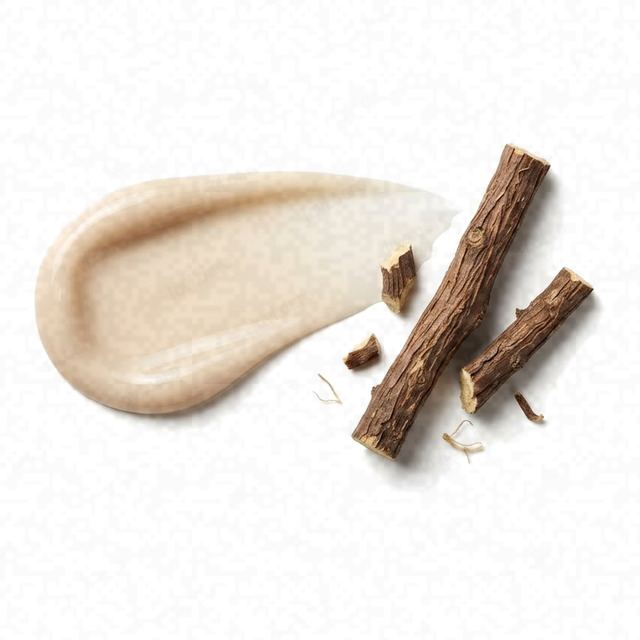 Glycyrrhiza Inflata Root Extract
 Butyl Methoxydibenzoylmethane
 Bis-Ethylhexyloxyphenol Methoxyphenyl Triazine
 Ethylhexyl Triazone
High
- SuperiorCombination Skin Fit
- HighEffectiveness
- HighSafety
A great choice for acne-prone skin; a few sunscreens fit it even better.
This fit is calculated for the concerns frequently associated with acne-prone skin: breakouts, blackheads, and post-acne marks. For scores and recommendations based on your full skin profile, including your 12D face scan results and any goals or preferences you have, please use the Lovi app.
Page built Nov 8, 2026How the Fit score works
Lovi Assistant explains
- Excellent suitability for your combination skin and acne concerns is provided by Glycyrrhetinic Acid and Glycyrrhiza Inflata Root Extract, which offer anti-inflammatory and soothing effects to calm breakouts. Glycerin and Sodium Hyaluronate further support your skin by providing essential hydration without clogging pores.
- The formula offers excellent protection against UV damage, a crucial benefit for managing post-inflammatory hyperpigmentation associated with acne.
- This product is safe for your skin, with no risks of irritation due to the absence of prohibited or harsh ingredients.
How to apply
- Apply this moisturizing sunscreen AM every morning as the final step of your daily routine.
- Layer the moisturizing sunscreen after your moisturizer has fully absorbed, right before heading out into the sun .
- Smooth a nickel-sized amount of the moisturizing sunscreen evenly over your face, avoiding harsh rubbing.
- Apply the moisturizing sunscreen onto clean, dry skin to ensure even coverage and protection.
- Perform a patch test before first use and avoid direct contact with the eyes.
People Say
★4.5Overall rating based on 200+ reviewsUsers with various skin types, including sensitive and dry, appreciate this sunscreen for its lightweight, hydrating formula that also offers anti-aging benefits. It is frequently noted for absorbing quickly without a white cast, serving as an excellent makeup base. Some users report occasional pilling or a formula that is too rich for very oily skin.
Highlights
Lightweight and fast Mostly Mentioned
- “absorbs quickly”
- “light texture”
- “non-greasy finish”
- “feels like nothing”
- “sinks in immediately”
Good makeup base Often Mentioned
- “great under foundation”
- “acts as primer”
- “makeup sits well”
- “no peeling under makeup”
- “smooth canvas”
No white cast Often Mentioned
- “invisible finish”
- “no white residue”
- “clear on skin”
- “no ghosting”
- “transparent application”
Hydrating and plumping Sometimes Noted
- “moisturizing”
- “contains hyaluronic acid”
- “softens fine lines”
- “skin feels plump”
- “non-drying”
Non-irritating for sensitive skin Sometimes Noted
- “good for sensitive skin”
- “no breakouts”
- “gentle formula”
- “didn't sting”
- “calming”
Caused breakouts Rarely Noted
- “caused spots”
- “clogged pores”
- “small bumps”
- “acne flare-up”
Eye irritation Rarely Noted
- “stings eyes”
- “burns if it runs”
- “watery eyes”
- “eye sensitivity”
- “irritates eye area”
Greasy or sticky Rarely Noted
- “sticky initially”
- “too shiny”
- “felt heavy”
- “oily residue”
- “rich for oily skin”
Pilling under makeup Rarely Noted
- “pills under makeup”
- “rolls off skin”
- “clumps after hours”
- “flakes when rubbed”
- “balling up”
Unpleasant scent Rarely Noted
- “chemical smell”
- “strong sunscreen odor”
- “weird scent”
- “smells like alcohol”
- “medicinal smell”
Sources: lovi.care, boots.com, eucerin.co.uk, walmart.com, hometesterclub.com, gopicky.com, and more
Questions and answers
What makes Eucerin Photoaging Control Sun Fluid SPF 50 a great fit for acne-prone skin?
This product is a great fit because it uses soothing root extracts to help calm breakouts while glycerin and sodium hyaluronate provide essential hydration without clogging pores. It also offers strong UV protection, which is very helpful for managing dark spots left behind by acne. Additionally, the formula is safe and unlikely to cause irritation.
Clinical, Cosmetic and Investigational Dermatology, 2017BioMed Research International, 2020
Which ingredients make this fluid a good fit for acne-prone skin?
Glycyrrhetinic Acid and Glycyrrhiza Inflata Root Extract calm breakouts, while glycerin and sodium hyaluronate keep acne-prone skin hydrated without clogging pores. This fluid is very safe and unlikely to cause irritation.
Clinical, Cosmetic and Investigational Dermatology, 2017BioMed Research International, 2020
What does Hyaluronic Acid do for acne-prone skin?
Hyaluronic acid helps acne-prone skin by soothing irritation, calming redness, and keeping the skin balanced without clogging pores. When combined with targeted ingredients like zinc oxide, it may also help reduce breakouts.
What does Licorice Root Extract do for acne-prone skin?
Licorice root extract helps calm redness and irritation while supporting acne-prone skin, making it less likely to break out. A product of this type for acne-prone skin also needs ingredients like salicylic acid and licochalcone A to clear pores and reduce blemishes.
BioMed Research International, 2020Journal of the European Academy of Dermatology and Venereology, 2016
Where does this fluid go in a skincare routine for acne-prone skin?
This fluid goes in the morning routine as the final step before makeup, right after applying your moisturizer. It is very safe for acne-prone skin and helps calm breakouts while protecting against UV damage.
Journal of Drugs in Dermatology, 2023BioMed Research International, 2020
Can I use this fluid with retinol, and in what order?
Yes, you can use this fluid in the morning after applying your retinol treatment to protect your skin from UV damage, which helps manage dark spots left by breakouts. The soothing ingredients in the formula are unlikely to irritate acne-prone skin.
The Journal of Dermatological Treatment, 2016BioMed Research International, 2020
How often should I use this fluid?
You can use this fluid every morning as the final step in your daytime routine. It helps protect your skin from UV damage while providing soothing hydration that calms breakouts and keeps your face feeling comfortable all day.
Can this fluid clog pores, cause breakouts or purging for acne-prone skin?
This fluid is unlikely to clog pores or cause breakouts because it uses ingredients that calm redness and provide light hydration without heavy oils. It is very safe for this skin type and carries no risk of irritation from harsh ingredients.
Clinical, Cosmetic and Investigational Dermatology, 2017BioMed Research International, 2020
Is this fluid fragrance-free and alcohol-free?
It has no fragrance and contains drying alcohol (alcohol denat).
What the research says
A single application of a moisturizing fluid containing hyaluronic acid 1%, glycerin 5%, and Centella asiatica stem cells extract significantly increased skin hydration by 29% and reduced transepidermal water loss at 24 hours compared to baseline and an untreated control site in twenty healthy women.
Clinical, Cosmetic and Investigational Dermatology, 2017A moisturizer containing licochalcone A, 1,2-decanediol, L-carnitine, and salicylic acid significantly reduced noninflammatory, inflammatory, and total acne lesion counts compared to a vehicle control in Thai patients during a 12-week maintenance phase.
BioMed Research International, 2020The topical application of a combination of the TRPV1 antagonist 4-t-butylcyclohexanol and the anti-inflammatory licochalcone A provided an effective treatment for sensitive skin, resulting in immediate relief from symptoms such as erythema, stinging, and burning.
Journal of the European Academy of Dermatology and Venereology, 2016Encapsulating avobenzone in low-porosity TiO2-embedded mesoporous silica (TiO2/SBA-S) reduced cutaneous avobenzone absorption from 0.76 to 0.50 nmol/mg while providing effective pollutant adsorbability, UVA protection, and a two- to three-fold reduction in photoaged skin cytokines/chemokines compared to the non-treatment control.
European Journal of Pharmaceutical Sciences, 2023A dermo-cosmetic formula containing 2% enoxolone significantly reduced erythema at 24 hours and pain at 30 minutes following non-ablative fractional laser treatment in 10 healthy subjects compared to a moisturizer control.
Journal of Cosmetic Dermatology, 2024Topical application of 0.1% hyaluronic acid formulations of different molecular weights led to significant improvements in skin hydration and elasticity, with low-molecular-weight formulations also significantly reducing wrinkle depth in seventy-six female subjects compared to a vehicle control.
Journal of Drugs in Dermatology, 2011Topical application of hyaluronic acid in conjunction with free gingival graft significantly reduced donor site postoperative pain until day 7 compared to normal saline, with no significant differences in graft dimensions or patient satisfaction.
Clinical Oral Investigations, 2022Treatment with a hyaluronic acid-containing mouth rinse or topical gel led to significant lesion reduction, pain relief, and normalization of lesion color in adult patients with minor recurrent aphthous stomatitis, with the gel formulation showing an earlier healing onset at 3 days.
BMC Oral Health, 2019Combining 755 nm alexandrite laser with topical licorice gel significantly reduces terminal hair counts compared to alexandrite laser with placebo in women with idiopathic hirsutism.
Evidence-based Complementary and Alternative Medicine, 2015Licochalcone A activated Nrf2 signaling, elevated cytoprotective enzymes, increased the reduced-to-oxidized glutathione ratio, and decreased reactive oxygen species in human fibroblasts and neutrophils, while a LicA-rich licorice extract lowered UVA-induced oxidative processes in vivo.
Experimental Dermatology, 2015Bioactive glycyrrhizic acid and oxymatrine ionic liquid self-assembled nanomicelles significantly promoted the transdermal permeation, subcutaneous retention, and anti-photoaging efficacy of palmitoyl pentapeptide-4 in cellular and animal models compared to unformulated peptide.
Advanced Science, 2025Encapsulation of ethylhexyl methoxycinnamate and butyl methoxydibenzoylmethane in lipid microparticles significantly reduced their in vivo human skin penetration compared to nonencapsulated filters.
Skin Pharmacology and Physiology, 2011Microencapsulation of the BMDBM/HP-beta-CD complex in lipid microparticles significantly decreased the percutaneous penetration of the UV filter into the stratum corneum of human volunteers compared to the non-encapsulated sunscreen agent.
Journal of Pharmaceutical and Biomedical Analysis, 2011Following human skin application of an O/W emulsion containing 2% BMDBM loaded in lipospheres, 15% of the sunscreen accumulated in the uppermost layers of the stratum corneum without remarkably modifying skin permeation compared to unencapsulated sunscreen.
Skin Pharmacology and Physiology, 2008Maximal topical applications of 6% bemotrizinol in a model sunscreen formulation did not result in meaningful systemic exposure in humans.
Regulatory Toxicology and Pharmacology, 2023Microencapsulation of ethylhexyl triazone in lipid microparticles significantly reduced its in vivo human stratum corneum penetration by 45.7% compared to the nonencapsulated sunscreen.
Skin Pharmacology and Physiology, 2019A topical sunscreen containing octyl triazone, phenylbenzimidazole sulfonic acid, and methylbenzylidene camphor prevented UVB-induced suppression of intercellular adhesion molecule-1 expression and mixed-lymphocyte reaction in epidermal cell cultures compared to control sunscreens with comparable SPF lacking octyl triazone.
Toxicology in Vitro, 1994
Ingredients
Water, Homosalate, Glycerin, Butyl Methoxydibenzoylmethane, Ethylhexyl Salicylate, Butylene Glycol Dicaprylate Dicaprate, Ethylhexyl Triazone, Alcohol Denat, Bis-Ethylhexyloxyphenol Methoxyphenyl Triazine, Cetearyl Alcohol, Phenylbenzimidazole Sulfonic Acid, C12-15 Alkyl Benzoate, Tapioca Starch, Sodium Hyaluronate, Glycyrrhetinic Acid, Glycyrrhiza Inflata Root Extract, Glyceryl Stearate, Sodium Stearoyl Glutamate, Acrylates C10-30 Alkyl Acrylate Crosspolymer, Carbomer, Xanthan Gum, Dimethicone, Sodium Hydroxide, Sodium Chloride, Trisodium Edta, Ethylhexylglycerin, Phenoxyethanol
Behind this fit score
Lovi calculates every fit score from the full ingredient list with brand-independent rules our dermatologists and cosmetic chemists build and review, and personalizes every pick with AI trained on the real results of millions of users. Lovi trains its fit score models on a proprietary dataset built from more than 10,000 expert-labeled products and more than 100,000 simulated examples, following an internally consistent methodology presented at Cosmoprof, AMWC, and Skin of Color Update.
-

Co-founder, Medical Director
Cosmetic chemist, cosmetologist, aesthetic products developer
-

Co-founder, CEO and CTO
PhD in computer science, 3x US patent holder, ex-Google, ex-Yandex
-

Dr. Sofía Perea Pérez, MD, MSc
Medical Board
Aesthetic medicine practitioner, MSc in Longevity and Anti-Aging Medicine
-

Medical Board
Specialist dermatologist, MBBS, MD, IFAAD
-

Medical Board
Cosmetic chemist, SCS, IFSCC member
-

Medical Board, Medical Advisor
Dermatology MD
-

Elina Nazarenko, MD
Medical Board
Dermatology and diagnostic consultant
-

Victoria Derkova, MS
Medical Board
Cosmetic chemist, cosmetic development technologist


How does it fit your skin?
Scan your face, then any product: Lovi shows how well it fits you and what fits even better.