Palmer's Cocoa Butter Formula for oily skin

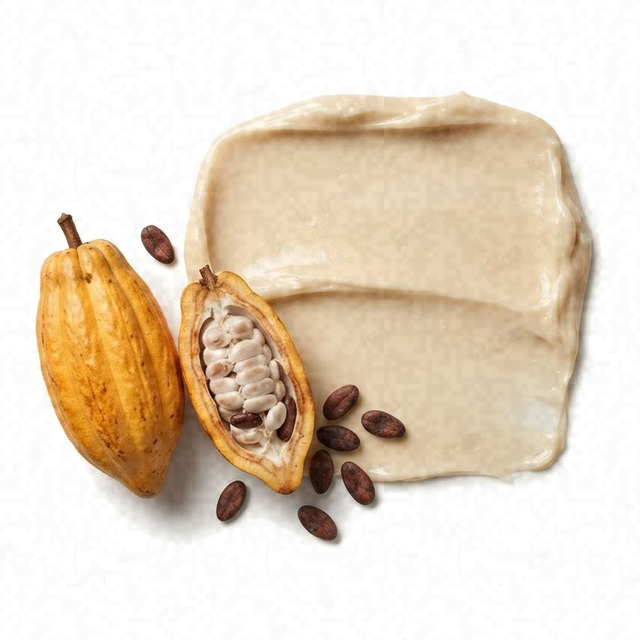 Theobroma Cacao Butter
 Vitamin E
 Dimethicone
 Octinoxate
 Oxybenzone
Caution
- LowOily Skin Fit
- AverageEffectiveness
- ConcerningSafety
A poor match for oily skin; the sunscreens alongside fit it better.
This fit is calculated for the concerns frequently associated with oily skin: shine, enlarged pores, blackheads, and blemishes. For scores and recommendations based on your full skin profile, including your 12D face scan results and any goals or preferences you have, please use the Lovi app.
Page built Nov 8, 2026How the Fit score works
Lovi Assistant explains
- Moderately unsuitable for oily skin due to occlusive ingredients like petrolatum and mineral oil, which can exacerbate oiliness and clog pores, offering limited benefits for oil control.
- While glycerin and cocoa extract provide some hydration and softening, the formula's primary function is not aligned with addressing your oily shine.
How to apply
- Use this moisturizing sunscreen daily in your AM routine. Reapply every two hours when exposed to direct sun.
- Apply this moisturizing sunscreen as the final step of your morning routine after your moisturizer.
- Smooth an even layer of the moisturizing sunscreen over your face and neck, avoiding harsh rubbing.
- Apply the moisturizing sunscreen onto clean, dry skin for the best protection and even coverage.
- Avoid the immediate eye area and discontinue use if any irritation occurs.
People Say
★4.8Overall rating based on 15.0k+ reviewsUsers consistently report positive outcomes such as improved skin texture, faded stretch marks, and a soft, radiant complexion, though a few find the rich formula slightly heavy.
Highlights
Deeply moisturizes skin Mostly Mentioned
- “leaves skin visibly smooth and moisturized”
- “provides deep, long-lasting hydration”
- “keeps skin moisturized during winters”
- “transforms even the roughest, driest areas”
Improves skin texture Often Mentioned
- “reduces and fades stretch marks over time”
- “fading of stretch marks and spots”
- “arms and legs are smooth and young looking”
- “helps calm rough, flaky skin”
Pleasant cocoa scent Often Mentioned
- “leaves skin visibly smooth and moisturized”
- “provides deep, long-lasting hydration”
- “keeps skin moisturized during winters”
- “transforms even the roughest, driest areas”
Absorbs quickly Sometimes Noted
- “absorbs well into skin without residue”
- “does not feel oily the rest of the day”
- “melts nicely into skin”
- “absorbs quickly, creating a protective barrier”
Faulty pump dispenser Rarely Noted
- “pump breaks or detaches”
- “affecting lotion dispensing”
- “prone to clogging”
- “issues with the product's packaging”
Greasy or sticky Rarely Noted
- “feels a bit greasy, which is annoying”
- “was also sticky and didn't soak in”
- “heavier than a regular lotion”
- “demasiado grasosa”
Overpowering scent Rarely Noted
- “smell is much too strong”
- “walk around smelling like a Hershey chocolate bar”
- “didn't care for the smell”
- “cocoa butter scent is noticeable... not subtle”
Sources: lovi.care, walmart.com, target.com, amazon.com, palmers.com, gopicky.com, and more
Questions and answers
Why does Lovi advise caution with Palmer's Cocoa Butter Formula for oily skin?
Lovi advises caution because heavy ingredients like petrolatum and mineral oil can clog pores and worsen oily shine. An oily skin type needs lightweight moisturizers and sun protection that hydrate without heavy oils or pore-clogging ingredients.
Which ingredients make this cream a poor fit for oily skin?
This cream is a poor match for oily skin due to heavy ingredients like petrolatum and mineral oil, which can trap oil and clog pores. Oily skin needs lightweight moisturizers and sun protection that hydrate without leaving a greasy shine or blocking pores.
What does Cocoa Butter do for oily skin?
Cocoa butter is likely to clog pores and is a poor fit for oily skin because it tends to form comedones. Oily skin needs lightweight ingredients that provide hydration without heaviness, such as water-based formulas and non-comedogenic hydrators.
What does Vitamin E do for oily skin?
Vitamin E helps balance oily skin by reducing excess oil and calming redness. It is also unlikely to clog pores while helping to keep your skin smooth and properly hydrated.
Where does this cream go in a skincare routine for oily skin?
This cream is a poor match for oily skin because heavy ingredients like petrolatum and mineral oil can clog pores and increase oiliness. Oily skin needs lightweight, oil-free moisturizers with ingredients like niacinamide or hyaluronic acid that hydrate without adding shine.
Can I use it with retinol, and in what order?
Using this product with retinol is not recommended because its heavy ingredients can easily clog pores and worsen oily shine. Oily skin needs lightweight, oil-free hydrators and non-clogging ingredients that control excess oil instead of heavy oils and butters.
How often should I use this cream?
This cream is a poor match for oily skin because heavy ingredients like petroleum jelly and mineral oil can clog pores and increase oiliness. Oily skin needs lightweight, oil-free moisturizers with hydrating ingredients like glycerin and hyaluronic acid that balance moisture without clogging pores.
Can it clog pores, cause breakouts or purging for oily skin?
Palmer's Cocoa Butter Formula may clog pores and increase oiliness on oily skin because it contains heavy ingredients like petrolatum and mineral oil. Oily skin needs lightweight, oil-free formulas with ingredients that balance oil and keep pores clear without adding extra shine.
Is this cream fragrance-free and alcohol-free?
It has no drying alcohol and contains fragrance (parfum and benzyl alcohol). Cetyl alcohol, stearyl alcohol, and myristyl alcohol are fatty alcohols, which soften the skin.
What the research says
A single application of a moisturizing fluid containing hyaluronic acid 1%, glycerin 5%, and Centella asiatica stem cells extract significantly increased skin hydration by 29% and reduced transepidermal water loss at 24 hours compared to baseline and an untreated control site in twenty healthy women.
Clinical, Cosmetic and Investigational Dermatology, 2017Topical application of an antioxidant serum containing 15% ascorbic acid, 0.5% ferulic acid, and 1% tocopherol prevented particulate matter-induced degradation of extracellular matrix components, inflammation, and oxidative stress in the skin of 15 female volunteers compared to untreated controls.
Journal of Cosmetic Dermatology, 2025Dermatological products containing d-alpha tocopheryl acetate showed non-comedogenic potential with less than a 50% increase in microcomedones in 12 healthy male subjects compared to octyl palmitate.
Contemporary Clinical Trials Communications, 2021Topical application of an antioxidant mix containing 15% ascorbic acid, 0.5% ferulic acid, and 1% tocopherol prevented PM and UV-induced skin barrier perturbation, lipid peroxidation, inflammatory markers, MMP9 activation, and Type I collagen loss in 15 healthy females compared to untreated exposed skin.
Journal of Cosmetic Dermatology, 2024Wearing an N95 mask alone compared to using dimethicone cream or hydrocolloid dressing caused more adverse skin reactions among 73 military health care workers, with no significant differences in fit test failure rates between groups.
Military Medicine, 2024A dimethicone skin protectant lotion significantly decreased visual scoring and transepidermal water loss compared to vehicle control and SLS-only treated sites in 12 healthy humans exposed to sodium lauryl sulfate.
Skin Research and Technology, 2000Treatment with a moisturizer containing dimethicone and glycerine increased epidermal thickness by 0.019 mm, improved barrier function by decreasing transepidermal water loss by 13%, decreased melanin intensity, and induced keratins 6 and 16 in fifteen women with moderately photoaged forearms.
Clinical and Experimental Dermatology, 2007Replacing 20% of the chemical UV filter octyl methoxycinnamate with urucum oil in solid lipid nanoparticles maintained the skin protection factor without inducing toxic responses or significant skin penetration in human volunteers.
Skin Pharmacology and Physiology, 2018Liposomal encapsulation of octyl methoxycinnamate increases its safety, skin affinity, and in vivo solar photoprotection factor while slowing its release and enhancing retention in the stratum corneum compared to a conventional formulation.
International Journal of Nanomedicine, 2013Encapsulation of ethylhexyl methoxycinnamate and butyl methoxydibenzoylmethane in lipid microparticles significantly reduced their in vivo human skin penetration compared to nonencapsulated filters.
Skin Pharmacology and Physiology, 2011Daily whole-body topical application of sunscreens benzophenone-3, octyl-methoxycinnamate, and 3-(4-methylbenzylidene) camphor results in systemic absorption in healthy human volunteers but does not alter endogenous reproductive hormone levels.
The Journal of Investigative Dermatology, 2004Topical application of sunscreen agents in human volunteers resulted in significant skin penetration of all agents and systemic absorption of oxybenzone and its metabolites.
Journal of Chromatography. B, Analytical Technologies in the Biomedical and Life Sciences, 2004Benzophenone-3 loaded starch microsponges provided improved photoprotection, higher sun protection factor, and reduced cutaneous penetration compared to raw benzophenone-3 cream.
Materials Science & Engineering. C, Materials for Biological Applications, 2019
Ingredients
Water, Theobroma Cacao Extract, Glyceryl Stearate, Petrolatum, Propylene Glycol, Glycerin, Coconut Oil, Paraffinum Liquidum Mineral Oil, Theobroma Cacao Seed Butter, Palm Oil, Cetyl Alcohol, Dimethicone, Tocopherol Vitamin E, Helianthus Annuus Seed Oil Sunflower Seed Oil, Hydroxyethylcellulose, Peg-8 Stearate, Behentrimonium Methosulfate, Butylene Glycol, Stearalkonium Chloride, Cellulose, Sodium Acetate, Parfum, Dimethyl Stearamine, Phenoxyethanol, Sorbic Acid, Benzoic Acid, Stearyl Alcohol, Myristyl Alcohol, Yellow 5 Ci 19140, Ci 15510, Benzyl Alcohol
Behind this fit score
Lovi calculates every fit score from the full ingredient list with brand-independent rules our dermatologists and cosmetic chemists build and review, and personalizes every pick with AI trained on the real results of millions of users. Lovi trains its fit score models on a proprietary dataset built from more than 10,000 expert-labeled products and more than 100,000 simulated examples, following an internally consistent methodology presented at Cosmoprof, AMWC, and Skin of Color Update.
-

Co-founder, Medical Director
Cosmetic chemist, cosmetologist, aesthetic products developer
-

Co-founder, CEO and CTO
PhD in computer science, 3x US patent holder, ex-Google, ex-Yandex
-

Dr. Sofía Perea Pérez, MD, MSc
Medical Board
Aesthetic medicine practitioner, MSc in Longevity and Anti-Aging Medicine
-

Medical Board
Specialist dermatologist, MBBS, MD, IFAAD
-

Medical Board
Cosmetic chemist, SCS, IFSCC member
-

Medical Board, Medical Advisor
Dermatology MD
-

Elina Nazarenko, MD
Medical Board
Dermatology and diagnostic consultant
-

Victoria Derkova, MS
Medical Board
Cosmetic chemist, cosmetic development technologist


How does it fit your skin?
Scan your face, then any product: Lovi shows how well it fits you and what fits even better.