
Tatcha The Silk Sunscreen SPF 50 for skin with dark spots

 Niacinamide
 Sodium Hyaluronate
 Zinc Oxide
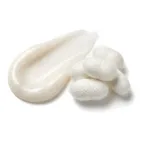 Hydrolyzed Silk
 Squalane
Average
- AverageNormal Skin Fit
- HighEffectiveness
- Low RiskSafety
Works for skin with dark spots; other sunscreens fit it better.
This fit is calculated for the concerns frequently associated with dark spots: hyperpigmentation, sun spots, and uneven skin tone. For scores and recommendations based on your full skin profile, including your 12D face scan results and any goals or preferences you have, please use the Lovi app.
Updated How the Fit score works
Lovi Assistant explains
- Offers moderate suitability for your normal skin due to the emollient action of squalane and hydrolyzed silk, though it lacks higher concentrations of humectants for optimal hydration.
- The product provides general skincare benefits like hydration and soothing from ingredients such as Saccharomyces Rice Ferment Filtrate and Allantoin, which are supportive but not targeted for your main goal of pigmentation.
- It is generally safe for your normal skin, with some risks of irritation due to the presence of zinc oxide and tridecyl salicylate.
How to apply
- Use this moisturizing sunscreen AM daily to protect your normal skin and fight dark spots.
- Apply this product as the final step of your morning routine after your moisturizer.
- Gently spread a coin-sized amount evenly over your face, avoiding rough rubbing.
- Apply this product on clean, dry skin for the best coverage and protection.
- Avoid the sensitive eye area and reapply every two hours when outdoors.
People Say
★4.1Overall rating based on 1.2k+ reviewsBased on a very large amount of data, users consistently praise this mineral sunscreen for its ultra-lightweight, liquid texture that functions exceptionally well as a makeup primer, leaving skin with a radiant, dewy finish. The product faces significant criticism regarding its packaging, specifically a tendency for the bottle's purple coating to flake off onto hands and faces, as well as a white cast that can be problematic for deeper skin tones.
Highlights
Weightless texture Mostly Mentioned
- “feels like nothing”
- “liquid silk”
- “absorbs instantly”
- “serum-like consistency”
Hydrating finish Often Mentioned
- “dewy glow”
- “moisturizing”
- “radiant look”
- “not greasy”
Makeup compatibility Often Mentioned
- “great primer”
- “no pilling”
- “foundation glides on”
- “smooths pores”
Defective packaging Often Mentioned
- “purple paint flakes off”
- “bottle peeling”
- “flecks on face”
- “leaky cap”
High price Often Mentioned
- “too expensive”
- “small bottle”
- “pricey for amount”
Gentle formula Sometimes Noted
- “no irritation”
- “great for sensitive skin”
- “didn't break me out”
- “soothing zinc”
White cast Sometimes Noted
- “ghostly on dark skin”
- “purple tint”
- “ashy look”
- “needs blending”
Runny consistency Rarely Noted
- “spills easily”
- “too watery”
- “messy application”
- “hard to control”
Sources: lovi.care, sephora.com, ulta.com, influenster.com, amazon.com, spacenk.com, and more
Questions and answers
How well does Tatcha The Silk Sunscreen work for skin with dark spots?
This sunscreen works moderately well for dark spots because it provides general hydration and soothing along with sun protection, though its brightening ingredients are not targeted enough for your main goal. Sunscreens for dark spots need effective brightening ingredients that tackle pigmentation directly while keeping the skin calm and well-hydrated.
Which ingredients make this sunscreen a good fit for skin with dark spots?
Niacinamide is the key ingredient that helps address dark spots, while zinc oxide provides sun protection to prevent further darkening. Skin with dark spots needs products featuring targeted brightening ingredients, effective sun protection, and plenty of hydrating humectants.
What does Niacinamide do for skin with dark spots?
Niacinamide helps fade dark spots and uneven pigmentation by slowing down the transfer of pigment in the skin. It is generally well tolerated and may improve overall skin brightness with consistent use.
What does Hyaluronic Acid do for skin with dark spots?
Hyaluronic acid is primarily used to boost hydration and smooth out fine lines rather than to fade dark spots. A product of this type needs added ingredients like vitamin C or niacinamide to help brighten uneven skin tone and lighten dark spots.
Clinical, Cosmetic and Investigational Dermatology, 2017Journal of Drugs in Dermatology, 2016
Where does this sunscreen go in a skincare routine for skin with dark spots?
This sunscreen goes as the last step of your morning routine, after your moisturizer. Skin with dark spots needs products that include targeted brightening ingredients like vitamin C or alpha arbutin to help fade dark spots effectively.
Can I use this sunscreen with retinol, and in what order?
You can use this sunscreen in the morning as the final step of your routine, after your moisturizer and before any makeup. For skin with dark spots, this sunscreen needs to be paired with brightening ingredients like vitamin C or tranexamic acid to effectively target pigmentation.
How often should I use this sunscreen?
You should apply this sunscreen every morning as the final step of your morning skincare routine. Skin with dark spots needs products that include high concentrations of brightening ingredients to effectively target pigmentation.
Can this sunscreen clog pores, cause breakouts or purging for skin with dark spots?
This sunscreen is unlikely to clog pores or cause breakouts for skin with dark spots, as it has a generally safe profile. To best care for dark spots, this skin type needs targeted brightening ingredients and antioxidants like vitamin C or higher levels of niacinamide.
Is this sunscreen fragrance-free and alcohol-free?
Yes, it has no fragrance and no drying alcohol.
What the research says
Application of Galactomyces ferment filtrate skin care formula significantly reduced the net values and daily fluctuation of facial pore area, roughness, and redness in young Japanese women.
Journal of Clinical Medicine, 2021Replacing microsized titanium dioxide and zinc oxide with nanoparticles in sunscreens eliminates opaqueness and alters UV protection balance while inducing (photo)cyto- and genotoxicity and penetrating viable skin layers during long-term exposures.
Nanotechnology, Science and Applications, 2011Topical nicotinamide prevented solar-simulated UV-induced immunosuppression in healthy volunteers, and men experienced immunosuppression at solar-simulated UV doses three times lower than those required for women.
The Journal of Investigative Dermatology, 2008Topical 5% niacinamide applied twice daily for 12 weeks reduced fine lines and wrinkles, hyperpigmented spots, red blotchiness, and skin sallowness, and improved skin elasticity compared to vehicle control in 50 female white subjects with facial photoaging.
Dermatologic Surgery, 2005Topical 2% niacinamide significantly decreased sebum excretion rate in Japanese individuals and casual sebum levels in Caucasian individuals compared to placebo or baseline.
Journal of Cosmetic and Laser Therapy, 2006Topical application of 0.1% hyaluronic acid formulations of different molecular weights led to significant improvements in skin hydration and elasticity, with low-molecular-weight formulations also significantly reducing wrinkle depth in seventy-six female subjects compared to a vehicle control.
Journal of Drugs in Dermatology, 2011Topical hyaluronic acid serum used twice daily by 40 females with facial photoaging produced an immediate 134% increase in skin hydration, a sustained 55% increase at week 6, and significant improvements in smoothness, plumping, fine lines, wrinkles, and global appearance without causing irritation.
Dermatology and Therapy, 2021A topical antioxidant serum significantly reduced air pollution-induced skin pigmentation and proinflammatory gene expression ex vivo, and improved skin aging signs in 40 healthy adult females after 90 days of daily use.
Journal of Cosmetic Dermatology, 2022Topical 0.5% hyaluronic-ZnO nanogel applied twice daily reduced inflammatory-lesion counts by 58% at week four in human subjects compared to baseline without causing erythema.
Biomedicines, 2025Daily use of a deep cleansing gel containing salicylic acid 2%, zinc gluconate 0.2% and lipohydroxy acid 0.05% significantly reduced total lesion count by 56.3% after 84 days in 35 subjects with mild to moderate truncal acne.
Clinical, Cosmetic and Investigational Dermatology, 2023Topical zinc oxide nanogels formulated using Dendrobium anosmum showed greater effectiveness against Gram-positive acne-causing bacteria compared to chemogenic nanoparticles.
Molecules, 2023Topical application of sericin gels increased skin intrinsic moisturization, hydroxyproline content, and epidermal hydration while decreasing transepidermal water loss and skin impedance in healthy human volunteers.
Journal of Cosmetic Dermatology, 2005Silk protein sericin from the non-mulberry tropical tasar silkworm offers protection against hydrogen peroxide-induced oxidative stress in skin fibroblasts, restoring cell viability and lowering catalase, lactate dehydrogenase, and malondialdehyde activity compared to untreated cells.
BMB Reports, 2008Sericin enhances the initial attachment and increases the living cell number of cultured human skin fibroblasts to 250% compared to a no-sericin control after 72 hours, with sericin M and its serine-rich repetitive domain acting as the active principles.
Bioscience, Biotechnology, and Biochemistry, 2005Application of fullerene-C60 dissolved in squalane cream twice daily for 8 weeks significantly enhanced skin moisture and reduced wrinkle formation compared to placebo in 23 Japanese women without severe side effects.
Journal of Nanoscience and Nanotechnology, 2010Squalane at 0.005-0.015% counteracts UVA-induced oxidative stress, inflammation, and collagen metabolism inhibition while stimulating fibroblast migration in human dermal fibroblasts.
Molecules, 2025Plant-derived squalane protected human dermal fibroblasts against UVA-induced damage by counteracting ROS formation, suppressing apoptosis-related proteins p53, caspase-3, caspase-9, and PARP, and restoring the pro-survival p-Akt/mTOR pathway.
Antioxidants, 2025
Why other sunscreens fit skin with dark spots better
Combining oral and topical astaxanthin in 30 healthy females improved skin wrinkles, age spots, elasticity, texture, and moisture, while 6 mg daily oral supplementation in 36 healthy males improved crow's feet wrinkles, elasticity, and transepidermal water loss.
Acta Biochimica Polonica, 2012Parsol 1789 and Eusolex 8020 provided slightly better photoprotection than oxybenzone in both normal and sensitized human skin when assessed using pigmentation end points, whereas all three sunscreens performed similarly against UVA-induced erythema.
Journal of the American Academy of Dermatology, 1987Daily application of a serum containing tetrahexyldecyl ascorbate and acetyl zingerone significantly decreased skin pigmentation, fine lines, wrinkles, and transepidermal water loss while increasing smoothness, firmness, and elasticity in 35 healthy individuals compared to baseline over 12 weeks.
Journal of Cosmetic Dermatology, 2024
Ingredients
Zinc Oxide, Water, C12-15 Alkyl Benzoate, Caprylic Capric Triglyceride, Lauryl Peg-8 Dimethicone, Dimethicone, Isododecane, Tridecyl Salicylate, Hdi Trimethylol Hexyllactone Crosspolymer, Propanediol, Caprylyl Methicone, Polymethylsilsesquioxane, Niacinamide, Saccharomyces Rice Ferment Filtrate, Silica, Squalane, Camellia Sinensis Leaf Extract, Cladosiphon Okamuranus Extract, Hydrolyzed Silk, Bisabolol, Allantoin, Tocopherol, Theobroma Cacao Seed Extract, Arctium Lappa Root Extract, Kappaphycus Alvarezii Extract, Sodium Hyaluronate, Lecithin, Caesalpinia Spinosa Fruit Extract, Lactobacillus, Maltodextrin, Caprylyl Glycol, Dimethicone Crosspolymer, Hydrogenated Lecithin, Tetrasodium Glutamate Diacetate, Peg-10, Polyglyceryl-2 Dipolyhydroxystearate, Propylene Glycol, Lauryl Peg-10 Tris Trimethylsiloxy Silylethyl Dimethicone, Polyglyceryl-4 Diisostearate Polyhydroxystearate Sebacate, Butylene Glycol, Phosphoric Acid, Sodium Hydroxide, Sodium Chloride, Hexylene Glycol, Ethylhexylglycerin, Phenoxyethanol
Behind this fit score
Lovi calculates every fit score from the full ingredient list with brand-independent rules our dermatologists and cosmetic chemists build and review, and personalizes every pick with AI trained on the real results of millions of users. Lovi trains its fit score models on a proprietary dataset built from more than 10,000 expert-labeled products and more than 100,000 simulated examples, following an internally consistent methodology presented at Cosmoprof, AMWC, and Skin of Color Update.
-

Co-founder, Medical Director
Cosmetic chemist, cosmetologist, aesthetic products developer
-

Co-founder, CEO and CTO
PhD in computer science, 3x US patent holder, ex-Google, ex-Yandex
-

Dr. Sofía Perea Pérez, MD, MSc
Medical Board
Aesthetic medicine practitioner, MSc in Longevity and Anti-Aging Medicine
-

Medical Board
Specialist dermatologist, MBBS, MD, IFAAD
-

Medical Board
Cosmetic chemist, SCS, IFSCC member
-

Medical Board, Medical Advisor
Dermatology MD
-

Elina Nazarenko, MD
Medical Board
Dermatology and diagnostic consultant
-

Victoria Derkova, MS
Medical Board
Cosmetic chemist, cosmetic development technologist


How does it fit your skin?
Scan your face, then any product: Lovi shows how well it fits you and what fits even better.