
Silka Papaya Soap for acne-prone skin

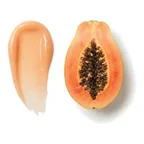 Carica Papaya Fruit
 Salicylic Acid
 Tocopheryl Acetate Vitamin E
 Glycerin
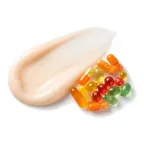 Vitarich Actives
Low
- AverageCombination Skin Fit
- AverageEffectiveness
- HighSafety
A weak match for acne-prone skin; the products alongside fit it better.
- Indian Journal of Pharmaceutical Sciences, 2016
- Indian Journal of Dermatology, Venereology and Leprology, 2007
This fit is calculated for the concerns frequently associated with acne-prone skin: breakouts, blackheads, and post-acne marks. For scores and recommendations based on your full skin profile, including your 12D face scan results and any goals or preferences you have, please use the Lovi app.
Updated How the Fit score works
Lovi Assistant explains
- Offers moderate exfoliation for your acne-prone skin due to salicylic acid, which aids in pore cleansing and smoothing texture, but it lacks sufficient humectants for your combination skin's drier areas.
- Tocopheryl acetate (Vitamin E) provides some antioxidant benefits, though its concentration may not be optimal for significant anti-blemish support.
- The formula is safe for your skin, as it contains no harsh or prohibited ingredients that would cause irritation.
How to apply
- Use this exfoliant PM once a week to start, and gradually increase if your combination skin tolerates it well. Always apply SPF the next morning to protect your clear skin.
- Apply the exfoliant after cleansing and toning, but right before your moisturizer step. This ensures the treatment targets blemishes effectively.
- Gently press 2-3 drops of the exfoliant into your skin without rubbing. Let it absorb for a minute before moving to the next step.
- Apply the exfoliant on clean, dry skin to help control breakouts safely. Since your skin is not sensitive, this dry application method ensures good product absorption.
- Avoid the sensitive eye area and do a patch test before your first use. Do not mix this exfoliant with other strong acids in the same routine.
Questions and answers
Why is Silka Papaya Soap a weak match for acne-prone skin?
Silka Silka Papaya Soap is a weak match because, while its salicylic acid helps clean pores and smooth texture, it lacks enough hydrating ingredients to care for the drier areas of combination skin. An exfoliant treatment for this skin needs powerful blemish-fighting ingredients alongside barrier-repairing agents like niacinamide, ceramides, or hyaluronic acid to balance oil and moisture without irritation.
Journal of Cosmetic Dermatology, 2024BioMed Research International, 2020
Which ingredients make this exfoliant a poor fit for acne-prone skin?
This exfoliant is a weak match because its salicylic acid offers only moderate pore cleansing while lacking enough hydrating ingredients for drier areas of combination skin. To properly care for acne-prone skin, an exfoliant of this type needs powerful blemish-fighting ingredients alongside soothing and hydrating agents that balance oily and dry areas without causing irritation.
BioMed Research International, 2020Journal of Cosmetic Dermatology, 2024
What does Papaya Fruit Extract do for acne-prone skin?
Papaya Fruit Extract helps clear clogged pores and smooth acne-prone skin by gently removing dead skin cells. This keeps your skin feeling soft and helps reduce bumps and breakouts over time.
What does Salicylic Acid do for acne-prone skin?
Salicylic acid helps clear acne-prone skin by reducing pimples and calming redness. It works by diving deep into pores to clear out trapped oil and dead skin, making breakouts less likely to return.
Journal of Cosmetic Dermatology, 2024Journal of Drugs in Dermatology, 2023
Where does this exfoliant go in a skincare routine for acne-prone skin?
This exfoliant treatment goes in the evening routine. A product of this type needs enough moisturizing ingredients to keep drier areas comfortable while cleansing pores.
Can I use this exfoliant with retinol, and in what order?
Using this exfoliant with retinol may easily dry or irritate your skin because both ingredients actively peel the surface. To help prevent redness, use them on separate days or keep your routine gentle with plenty of hydrating ingredients and moisturizers.
How often should I use this exfoliant?
Start using this exfoliant once a week, and if your skin tolerates it well and sees good results, you may carefully use it more often. Because this product is a weak match for your acne-prone skin, an alternative for this skin needs salicylic acid to help clear pores and smooth texture, along with plenty of hydrating ingredients to keep drier areas comfortable.
Can this exfoliant clog pores, cause breakouts or purging for acne-prone skin?
This exfoliant is unlikely to cause clogged pores or breakouts on acne-prone skin because it contains salicylic acid to help keep pores clean and smooth. However, it may dry out the drier areas of your skin, so an acne-prone skin routine of this type needs extra hydrating ingredients like glycerin to keep skin balanced.
BioMed Research International, 2020Journal of Cosmetic Dermatology, 2024
Is this exfoliant fragrance-free and alcohol-free?
Yes, it has no fragrance and no drying alcohol.
What the research says
A moisturizer containing licochalcone A, 1,2-decanediol, L-carnitine, and salicylic acid significantly reduced noninflammatory, inflammatory, and total acne lesion counts compared to a vehicle control in Thai patients during a 12-week maintenance phase.
BioMed Research International, 2020Treatment with 45% mandelic acid peel showed nearly equal overall efficacy as 30% salicylic acid peel in patients with mild-to-moderate facial acne vulgaris, but with fewer adverse effects.
Journal of Cosmetic Dermatology, 2020Twice daily application of a multitargeted dermocosmetic cream provided comparable efficacy to benzoyl peroxide 5% gel in reducing inflammatory, non-inflammatory, and total lesions in 150 Caucasian subjects with mild-to-moderate acne over 56 days, while demonstrating superior skin tolerability.
Journal of Cosmetic Dermatology, 2024Dermatological products containing d-alpha tocopheryl acetate showed non-comedogenic potential with less than a 50% increase in microcomedones in 12 healthy male subjects compared to octyl palmitate.
Contemporary Clinical Trials Communications, 2021Topical papain treatment may slightly decrease pain within 30 minutes in humans stung by Chrysaora chinensis compared to placebo.
Wilderness & Environmental Medicine, 2016A fixed combination of hydroxypinacolone retinoate, retinol glycospheres, and papain glycospheres in aqueous gel applied once daily for 12 weeks achieved a 41% mean reduction in GAGS score and a 40.8% mean reduction in total lesions, with 15.3% of patients experiencing mild to moderate local side effects, in 94 evaluable patients with comedonal-papular, mild to moderate acne of the face.
Giornale Italiano Di Dermatologia E Venereologia, 2015Reflux extraction of Carica papaya leaves yielded higher antioxidant capacity and superior in vitro wound-healing activities including fibroblast proliferation, cell migration, and collagen synthesis in human skin fibroblasts compared to ultrasonic-assisted extraction and agitation.
Molecules, 2020Treatment with 2% supramolecular salicylic acid hydrogel resulted in a regression and markedly improvement rate of 51.01% compared to 43.10% for Adapaline gel in patients with mild to moderate facial acne vulgaris, showing no significant difference in efficacy.
Journal of Cosmetic Dermatology, 2024Topical 5% benzoyl peroxide plus salicylic acid achieved the greatest lesion reduction at early 2 to 4 week time points compared to benzoyl peroxide, clindamycin, and combination benzoyl peroxide/clindamycin, while 5% benzoyl peroxide plus salicylic acid and combination benzoyl peroxide/clindamycin showed similar efficacy at 10 to 12 weeks in acne patients.
Journal of the American Academy of Dermatology, 2010Post-peel application of either topical tretinoin (0.25%) or retinol (0.25%) after a 30% salicylic acid peel effectively improves signs of photodamage compared to baseline in female subjects, with tretinoin performing slightly better than retinol in texture, roughness, and overall appearance at week 4.
Journal of Drugs in Dermatology, 2016Topical application of an antioxidant serum containing 15% ascorbic acid, 0.5% ferulic acid, and 1% tocopherol prevented particulate matter-induced degradation of extracellular matrix components, inflammation, and oxidative stress in the skin of 15 female volunteers compared to untreated controls.
Journal of Cosmetic Dermatology, 2025Topical application of an antioxidant mix containing 15% ascorbic acid, 0.5% ferulic acid, and 1% tocopherol prevented PM and UV-induced skin barrier perturbation, lipid peroxidation, inflammatory markers, MMP9 activation, and Type I collagen loss in 15 healthy females compared to untreated exposed skin.
Journal of Cosmetic Dermatology, 2024A topical antioxidant serum significantly reduced air pollution-induced skin pigmentation and proinflammatory gene expression ex vivo, and improved skin aging signs in 40 healthy adult females after 90 days of daily use.
Journal of Cosmetic Dermatology, 2022A single application of a moisturizing fluid containing hyaluronic acid 1%, glycerin 5%, and Centella asiatica stem cells extract significantly increased skin hydration by 29% and reduced transepidermal water loss at 24 hours compared to baseline and an untreated control site in twenty healthy women.
Clinical, Cosmetic and Investigational Dermatology, 2017The emollient V0034CR significantly reduced TEWL compared to vehicle and vehicle plus glycerol, and significantly increased corneometry scores compared to vehicle and vehicle plus petrolatum in healthy volunteers with dry skin, demonstrating combined barrier function improvement from petrolatum and hydration improvement from glycerol.
Journal of Cosmetic Dermatology, 2020Ten days of treatment with a cream containing 20% glycerin significantly increased skin hydration measured by corneometer values in 17 healthy volunteers compared to a placebo cream, but showed no influence on transepidermal water loss or skin sensitivity to an irritating surfactant.
International Journal of Cosmetic Science, 2001
Why other products fit acne-prone skin better
Cosmetic formulations containing 5% Centella asiatica extract showed the best efficacy in improving skin moisture and decreasing transepidermal water loss, while also exhibiting antiinflammatory properties in 25 volunteers compared to baseline measurements.
Indian Journal of Pharmaceutical Sciences, 2016Topical 5% tea tree oil gel significantly improved total acne lesions and acne severity index compared to placebo in 60 patients with mild to moderate acne vulgaris, showing 3.55 times and 5.75 times greater efficacy respectively.
Indian Journal of Dermatology, Venereology and Leprology, 2007Co-delivery of paeonol and madecassoside via nanoemulsions improved transdermal delivery, promoted barrier repair proteins, inhibited inflammatory cytokine secretion in cellular and 3D models, and reduced transepidermal water loss and acne in human facial skin compared to free components.
Molecules, 2023
Ingredients
Sodium Palm Kernelate, Glycerin, Carica Papaya Fruit, Salicylic Acid, Sodium Palmitate, Tocopheryl Acetate Vitamin E, Ci 47000, Mineral Oil
Behind this fit score
Lovi calculates every fit score from the full ingredient list with brand-independent rules our dermatologists and cosmetic chemists build and review, and personalizes every pick with AI trained on the real results of millions of users. Lovi trains its fit score models on a proprietary dataset built from more than 10,000 expert-labeled products and more than 100,000 simulated examples, following an internally consistent methodology presented at Cosmoprof, AMWC, and Skin of Color Update.
-

Co-founder, Medical Director
Cosmetic chemist, cosmetologist, aesthetic products developer
-

Co-founder, CEO and CTO
PhD in computer science, 3x US patent holder, ex-Google, ex-Yandex
-

Dr. Sofía Perea Pérez, MD, MSc
Medical Board
Aesthetic medicine practitioner, MSc in Longevity and Anti-Aging Medicine
-

Medical Board
Specialist dermatologist, MBBS, MD, IFAAD
-

Medical Board
Cosmetic chemist, SCS, IFSCC member
-

Medical Board, Medical Advisor
Dermatology MD
-

Elina Nazarenko, MD
Medical Board
Dermatology and diagnostic consultant
-

Victoria Derkova, MS
Medical Board
Cosmetic chemist, cosmetic development technologist


How does it fit your skin?
Scan your face, then any product: Lovi shows how well it fits you and what fits even better.