
Sephora All Day Hydrator for acne-prone skin

 Sodium Hyaluronate
 Ascorbic Acid
 Vitamin E
 Glycerin
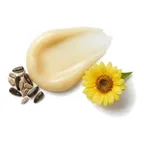 Sunflower Seed Oil
Average
- HighCombination Skin Fit
- AverageEffectiveness
- HighSafety
Works for acne-prone skin; other moisturizers fit it better.
- Clinical, Cosmetic and Investigational Dermatology, 2017
- International Journal of Biological Macromolecules, 2018
This fit is calculated for the concerns frequently associated with acne-prone skin: breakouts, blackheads, and post-acne marks. For scores and recommendations based on your full skin profile, including your 12D face scan results and any goals or preferences you have, please use the Lovi app.
Updated How the Fit score works
Lovi Assistant explains
- Offers moderate hydration for your combination skin, as Sodium Hyaluronate and Glycerin provide humectant action, though it lacks targeted ingredients for strong oil control.
- Ascorbic Acid offers antioxidant protection, which is supportive for general skin health, but not specifically for your acne, blemishes, and breakouts.
- The product is safe for your combination skin, with no risks of irritation due to the absence of harsh ingredients and the inclusion of soothing Bisabolol.
How to apply
- Use your moisturizer twice a day in your AM and PM routines. Apply it daily to help keep breakouts under control.
- Apply after your cleanser and toner, and make sure to use your SPF right after in the morning.
- Gently spread a small amount of moisturizer over your face using soft motions. Let it absorb into the skin for a minute before getting dressed or applying makeup.
- Apply on slightly damp skin to help lock in extra moisture. This keeps your combination skin balanced without feeling heavy.
- Avoid the eye area and do a patch test before your first use. Stop using if you feel any irritation.
People Say
★4.4Overall rating based on 1.6k+ reviewsBased on a very large amount of data, this lightweight, unscented moisturizer is highly praised by users with normal to oily skin for its hydrating, non-greasy feel and effectiveness as a makeup primer. Users with dry skin frequently find its thin consistency insufficient for their needs. A moderate number of users also report an unusual chemical or crayon-like scent.
Highlights
Lightweight & non-greasy Mostly Mentioned
- “sinks into skin nicely”
- “weightless moisturizer”
- “not heavy at all”
- “feels like nothing on”
Excellent makeup primer Often Mentioned
- “perfect primer under makeup”
- “makeup applied beautifully”
- “keeps makeup looking fresh”
- “smooth canvas”
Good for oily/combo skin Sometimes Noted
- “doesn't make me oily”
- “great for combination skin”
- “balanced my T-zone”
- “perfect for summer”
Natural glow Sometimes Noted
- “gives a natural glow”
- “skin looks radiant”
- “dewy finish”
- “nice healthy shine”
Insufficient for dry skin Sometimes Noted
- “not enough for dry skin”
- “skin felt tight after”
- “need to apply twice”
- “too light for winter”
Too watery Sometimes Noted
- “extremely watery”
- “runs out of the tube”
- “consistency of milk”
- “too thin to moisturize”
Unpleasant scent Sometimes Noted
- “smells like crayons”
- “weird chemical scent”
- “smells like plastic”
- “scent is off-putting”
Potential breakouts Rarely Noted
- “caused small bumps”
- “broke me out”
- “worsened my acne”
- “clogged my pores”
Sources: lovi.care, sephora.sg, kohls.com, influenster.com, reddit.com, sephora.ph, and more
Questions and answers
How well does SEPHORA All Day Hydrator work for acne-prone skin?
SEPHORA All Day Hydrator works reasonably well for acne-prone skin, providing moderate hydration and antioxidant protection without causing irritation. However, it lacks targeted ingredients for strong oil control and blemishes. A moisturizer for this skin needs specific ingredients that manage oil and target breakouts effectively while keeping the skin calm and hydrated.
Clinical, Cosmetic and Investigational Dermatology, 2017Journal of Cosmetic Dermatology, 2020
Which ingredients make this moisturizer a good fit for acne-prone skin?
Sodium Hyaluronate and Glycerin make this moisturizer a good fit for acne-prone skin by providing moderate hydration, while Bisabolol helps soothe the skin. To work best for this skin type, a product of this type needs targeted ingredients for strong oil control and ingredients that are specifically beneficial for acne and blemishes.
What does Hyaluronic Acid do for acne-prone skin?
Hyaluronic acid helps acne-prone skin by improving hydration and calming inflammation. Formulas with this ingredient also support targeted delivery of acne treatments to pores.
What does Vitamin C do for acne-prone skin?
Vitamin C helps brighten uneven skin tones and smooth out marks left by breakouts while fighting dark spots. It is unlikely to clog pores and may improve overall skin texture when used regularly in your routine.
Journal of Cosmetic Dermatology, 2023Journal of Drugs in Dermatology, 2024
Where does this moisturizer go in a skincare routine for acne-prone skin?
This moisturizer goes as the last daytime step before sunscreen, and as the final step in your evening routine. A daily moisturizing routine helps keep skin comfortable and supports overall skin health.
Can I use this moisturizer with retinol, and in what order?
You can use this moisturizer with retinol by applying your retinol treatment first and then following with the moisturizer. This product is safe and unlikely to cause irritation due to soothing ingredients like bisabolol, but acne-prone skin often does better with a moisturizer that also includes targeted oil control ingredients.
How often should I use this moisturizer?
You can use this moisturizer twice a day as part of your morning and evening routine to keep your skin soft and hydrated. Daily application helps maintain skin moisture and supports your skin barrier without causing irritation.
Can this moisturizer clog pores, cause breakouts or purging for acne-prone skin?
This moisturizer is unlikely to cause severe breakouts on acne-prone skin, as it has a very low risk of irritation and includes soothing Bisabolol. However, because it lacks targeted ingredients for strong oil control, an acne-prone skin type needs oil-balancing and blemish-clearing ingredients to stay clear.
Can I use this moisturizer around the eyes or on my body?
You can use this moisturizer around the eyes and on your body, as its safe formula is generally well-tolerated by different areas of skin. However, because the skin around the eyes is much thinner than most other body regions, it requires lightweight hydration and gentle care to avoid irritation.
Is this moisturizer fragrance-free and alcohol-free?
It has no drying alcohol and contains fragrance (parfum).
What the research says
A single application of a moisturizing fluid containing hyaluronic acid 1%, glycerin 5%, and Centella asiatica stem cells extract significantly increased skin hydration by 29% and reduced transepidermal water loss at 24 hours compared to baseline and an untreated control site in twenty healthy women.
Clinical, Cosmetic and Investigational Dermatology, 2017Hyaluronic acid-based formulations exhibit remarkable anti-wrinkle, anti-aging, and skin rejuvenating effects via soft tissue augmentation, improved skin hydration, and face volume restoration.
International Journal of Biological Macromolecules, 2018A topical serum containing vitamin C, vitamin E, and raspberry leaf cell culture extract improved skin color, elasticity, radiance, smoothness, scaliness, and wrinkles compared to the untreated contralateral side in fifty female volunteers.
Journal of Cosmetic Dermatology, 2020Vitamin C is widely used as a depigmenting agent in dermatology, though limited studies evaluate its use for gingival depigmentation.
Journal of Oral and Maxillofacial Pathology, 2020Topical application of 0.1% hyaluronic acid formulations of different molecular weights led to significant improvements in skin hydration and elasticity, with low-molecular-weight formulations also significantly reducing wrinkle depth in seventy-six female subjects compared to a vehicle control.
Journal of Drugs in Dermatology, 2011Topical hyaluronic acid serum used twice daily by 40 females with facial photoaging produced an immediate 134% increase in skin hydration, a sustained 55% increase at week 6, and significant improvements in smoothness, plumping, fine lines, wrinkles, and global appearance without causing irritation.
Dermatology and Therapy, 2021A topical antioxidant serum significantly reduced air pollution-induced skin pigmentation and proinflammatory gene expression ex vivo, and improved skin aging signs in 40 healthy adult females after 90 days of daily use.
Journal of Cosmetic Dermatology, 2022Topical application of 5% vitamin C cream significantly improved global clinical scores, increased skin microrelief density, and induced elastic tissue repair in photoaged skin compared to excipient control in healthy female volunteers.
Experimental Dermatology, 2003Topical application of VC-IP cream twice daily for 8 weeks reduces periorbital wrinkles in female subjects compared to a placebo cream.
Journal of Cosmetic Dermatology, 2022Topical treatment with 5% vitamin C and 0.1% madecassoside significantly improved clinical scores for wrinkles, suppleness, firmness, roughness, and skin hydration, along with functional and structural remodeling of the elastic fiber network in 20 female volunteers with photoaged skin after 6 months compared to baseline.
Experimental Dermatology, 2008Topical application of an antioxidant serum containing 15% ascorbic acid, 0.5% ferulic acid, and 1% tocopherol prevented particulate matter-induced degradation of extracellular matrix components, inflammation, and oxidative stress in the skin of 15 female volunteers compared to untreated controls.
Journal of Cosmetic Dermatology, 2025Dermatological products containing d-alpha tocopheryl acetate showed non-comedogenic potential with less than a 50% increase in microcomedones in 12 healthy male subjects compared to octyl palmitate.
Contemporary Clinical Trials Communications, 2021Topical application of an antioxidant mix containing 15% ascorbic acid, 0.5% ferulic acid, and 1% tocopherol prevented PM and UV-induced skin barrier perturbation, lipid peroxidation, inflammatory markers, MMP9 activation, and Type I collagen loss in 15 healthy females compared to untreated exposed skin.
Journal of Cosmetic Dermatology, 2024The emollient V0034CR significantly reduced TEWL compared to vehicle and vehicle plus glycerol, and significantly increased corneometry scores compared to vehicle and vehicle plus petrolatum in healthy volunteers with dry skin, demonstrating combined barrier function improvement from petrolatum and hydration improvement from glycerol.
Journal of Cosmetic Dermatology, 2020Ten days of treatment with a cream containing 20% glycerin significantly increased skin hydration measured by corneometer values in 17 healthy volunteers compared to a placebo cream, but showed no influence on transepidermal water loss or skin sensitivity to an irritating surfactant.
International Journal of Cosmetic Science, 2001Niacinamide/glycerin body moisturizers provided better rapid and prolonged improvement of cosmetic xerosis through functional improvement of stratum corneum barrier function compared to no treatment and conventional moisturizers in female subjects.
Journal of Drugs in Dermatology, 2012
Why other moisturizers fit acne-prone skin better
A panthenol-enriched mask improved skin hydration, regulated sebum, and reduced redness and TEWL across dry sensitive, oily sensitive, and oily acne skin subgroups with excellent tolerance and no adverse reactions.
Journal of Cosmetic Dermatology, 2024Co-delivery of paeonol and madecassoside via nanoemulsions improved transdermal delivery, promoted barrier repair proteins, inhibited inflammatory cytokine secretion in cellular and 3D models, and reduced transepidermal water loss and acne in human facial skin compared to free components.
Molecules, 2023A facial serum containing snail secretion filtrate, Calendula officinalis, and Glycyrrhiza glabra root extract significantly reduced inflammatory acne lesions compared to placebo in 66 participants with mild-to-moderate maskne over 12 weeks.
Journal of Cosmetic Dermatology, 2022
Ingredients
Sodium Hyaluronate, Ascorbic Acid, Water, Caprylic Capric Triglyceride, Glycerin, Butylene Glycol, Heptyl Undecylenate, Glyceryl Stearate, Peg-100 Stearate, Glyceryl Stearate Citrate, Palmitic Acid, Stearic Acid, Hydroxyacetophenone, Hydroxyethyl Acrylate Sodium Acryloyldimethyl Taurate Copolymer, Microcrystalline Cellulose, Caprylyl Glycol, Parfum, Helianthus Annuus Seed Oil Sunflower Seed Oil, Tocopherol, Vitamin E, Caesalpinia Spinosa Gum, Bisabolol, Sodium Benzoate, Cellulose Gum, Polysorbate 60, Sorbitan Isostearate, Sodium Phytate, Physicochemical Formula Stabilizer, Arginine, Ascorbyl Glucoside
Behind this fit score
Lovi calculates every fit score from the full ingredient list with brand-independent rules our dermatologists and cosmetic chemists build and review, and personalizes every pick with AI trained on the real results of millions of users. Lovi trains its fit score models on a proprietary dataset built from more than 10,000 expert-labeled products and more than 100,000 simulated examples, following an internally consistent methodology presented at Cosmoprof, AMWC, and Skin of Color Update.
-

Co-founder, Medical Director
Cosmetic chemist, cosmetologist, aesthetic products developer
-

Co-founder, CEO and CTO
PhD in computer science, 3x US patent holder, ex-Google, ex-Yandex
-

Dr. Sofía Perea Pérez, MD, MSc
Medical Board
Aesthetic medicine practitioner, MSc in Longevity and Anti-Aging Medicine
-

Medical Board
Specialist dermatologist, MBBS, MD, IFAAD
-

Medical Board
Cosmetic chemist, SCS, IFSCC member
-

Medical Board, Medical Advisor
Dermatology MD
-

Elina Nazarenko, MD
Medical Board
Dermatology and diagnostic consultant
-

Victoria Derkova, MS
Medical Board
Cosmetic chemist, cosmetic development technologist


How does it fit your skin?
Scan your face, then any product: Lovi shows how well it fits you and what fits even better.