
Obagi Retinol 0.5 for oily acne-prone skin

 Retinol 0.5
 Sodium Hyaluronate
 Butyrospermum Parkii Butter Shea Butter
 Ascorbic Acid
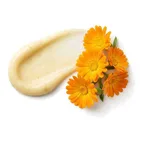 Calendula Officinalis Flower Extract
Average
- AverageOily Skin Fit
- AverageEffectiveness
- HighSafety
Works for oily acne-prone skin; other serums fit it better.
This fit is calculated for the concerns frequently associated with oily acne-prone skin: shine, breakouts, blemishes, and enlarged pores. For scores and recommendations based on your full skin profile, including your 12D face scan results and any goals or preferences you have, please use the Lovi app.
Updated How the Fit score works
Lovi Assistant explains
- Offers moderate suitability for oily skin due to retinol's keratolytic action and desquamation regulation, but lacks sufficient seboregulating ingredients to fully address your main concerns of acne, blemishes, and breakouts.
- The presence of glycerin and calendula officinalis flower extract provides general hydration and soothing benefits, which are supportive but not primary for your specific issues.
- The safety profile is good, with no risks of irritation for your oily skin due to the absence of harsh ingredients and the inclusion of soothing botanicals like chamomile and green tea extracts.
How to apply
- Could be used as part of your PM routine. Start 3 times a week and build up to daily use if your skin tolerates it well.
- Apply your serum after cleansing and toning, but before putting on your moisturizer.
- Gently press 2 to 3 drops of the serum into your skin and let it absorb for a minute.
- Apply the serum on clean, dry skin to help manage your blemishes safely.
- Do a patch test before your first use and avoid the delicate eye area.
People Say
★4.6Overall rating based on 500+ reviewsUsers with sensitive and mature skin frequently praise this product for its ability to smooth skin texture, reduce fine lines, and clear pores with minimal irritation. While it consistently delivers anti-aging and skin-clearing benefits, a moderate number of users with naturally dry skin report experiencing mild tightness and flaking during the initial adjustment period.
Highlights
Gentle and non-irritating Mostly Mentioned
- “Didn't cause any irritation...”
- “Very gentle, doesn't dry at all...”
- “Pleasantly surprised that my skin didn't freak out.”
- “The perfect retinol to begin with.”
Improves skin texture Often Mentioned
- “Does seem to keep my skin smooth.”
- “My pores look cleaner, my skin looks more youthful.”
- “Smooths fine lines and evens skin tone.”
- “My skin is freaking flawless after just a week!”
Great texture and packaging Sometimes Noted
- “The lightweight cream absorbs quickly.”
- “A little goes a long way.”
- “Like the texture.”
- “The pump is great to have.”
Suits sensitive skin Sometimes Noted
- “Great for sensitive skin.”
- “I have super sensitive skin... I have not been able to use retinol products [until this].”
- “I am so happy that I did, because I have sensitive skin.”
- “I have had a hard time using retinol creams... I decided to give the OBAGI Clinical a try.”
Causes mild dryness Sometimes Noted
- “It makes my dry skin even drier.”
- “Yes, it was a little dry at first.”
- “A Bit Drying.”
- “My skin feeling a little 'tight' after the first few uses.”
High price point Rarely Noted
- “They're spendy but they're worth it.”
- “Comes at a higher price point.”
- “Good investment, though it comes at a higher price point.”
Occasional quality issues Rarely Noted
- “The tube I received was old... product is yellow.”
- “When I went to use the product the top part... [broke].”
- “It smells like a drugstore medicine.”
Sources: lovi.care, walmart.com, lovelyskin.com, influenster.com, skincareessentials.com, newbeauty.com, and more
Questions and answers
How well does Obagi Retinol 0.5 work for oily acne-prone skin?
Obagi Retinol 0.5 works moderately well for oily acne-prone skin, as it provides basic skin renewal and soothing benefits, but lacks strong oil-controlling ingredients to fully target breakouts. A treatment of this type needs dedicated oil-regulating and blemish-clearing ingredients like niacinamide, propolis, benzoyl peroxide, or Vitamin C to properly address oily acne-prone concerns.
Which ingredients make this cream a good fit for oily acne-prone skin?
This cream works moderately well for oily acne-prone skin because Retinol 0.5 helps regulate skin shedding, while glycerin and calendula extract provide light hydration and comfort. However, oily acne-prone skin needs products with ingredients like niacinamide, propolis, benzoyl peroxide, or Vitamin C to better manage excess oil and breakouts.
What does Hyaluronic Acid do for oily acne-prone skin?
Hyaluronic acid helps oily acne-prone skin by lowering excess oil production and improving skin hydration without causing irritation. It may also enhance the effectiveness of acne treatments while keeping the skin barrier strong.
Where does this cream go in a skincare routine for oily acne-prone skin?
This treatment goes in the evening routine after cleansing and before moisturizing. Oily acne-prone skin needs a product of this type to include targeted ingredients that control oil and manage breakouts.
Can I use this cream with niacinamide, and in what order?
Yes, you can use this cream with niacinamide by applying niacinamide first in your routine and following with this treatment once it absorbs. This approach helps keep your oily skin balanced while minimizing potential irritation.
How often should I use this cream?
This treatment works best applied in the evening. Oily acne-prone skin needs a product of this type to include strong oil-controlling and breakout-fighting ingredients.
Can this cream clog pores, cause breakouts or purging for oily acne-prone skin?
This cream is unlikely to cause irritation or breakouts on your oily skin because it lacks harsh ingredients and includes soothing botanicals, but oily acne-prone skin still needs powerful oil-controlling and breakout-clearing ingredients to fully manage acne and blemishes.
Is this cream fragrance-free and alcohol-free?
Yes, it has no fragrance and no drying alcohol. Stearyl alcohol is a fatty alcohol, which soften the skin.
What the research says
Topical application of Calendula officinalis extract cream significantly improved skin hydration and firmness (reflected in significant changes in R0 and R6 parameters) in 21 healthy human volunteers compared to a base cream.
Acta Poloniae Pharmaceutica, 2011A single application of a moisturizing fluid containing hyaluronic acid 1%, glycerin 5%, and Centella asiatica stem cells extract significantly increased skin hydration by 29% and reduced transepidermal water loss at 24 hours compared to baseline and an untreated control site in twenty healthy women.
Clinical, Cosmetic and Investigational Dermatology, 2017A facial serum containing snail secretion filtrate, Calendula officinalis, and Glycyrrhiza glabra root extract significantly reduced inflammatory acne lesions compared to placebo in 66 participants with mild-to-moderate maskne over 12 weeks.
Journal of Cosmetic Dermatology, 2022Topical bakuchiol 0.5% applied twice daily compared with retinol 0.5% applied daily significantly decreased wrinkle surface area and hyperpigmentation with no statistical difference between the compounds in 44 patients over 12 weeks, while retinol users reported more facial skin scaling and stinging.
The British Journal of Dermatology, 2019Topical 0.3% and 1% retinol comparably improved biomarkers of cutaneous photoageing in photoaged volunteers, while 0.3% retinol demonstrated better tolerance with fewer and milder adverse events compared to 1% retinol in a daily escalation regimen.
International Journal of Cosmetic Science, 2022Daily application of 0.3% and 0.5% retinol serums in 37 volunteers over 12 weeks reduced skin hyperpigmentation, unevenness, and wrinkles on both sides of the face, with the 0.5% concentration causing more frequent and intense skin irritation.
Skin Pharmacology and Physiology, 2020Topical application of 0.1% hyaluronic acid formulations of different molecular weights led to significant improvements in skin hydration and elasticity, with low-molecular-weight formulations also significantly reducing wrinkle depth in seventy-six female subjects compared to a vehicle control.
Journal of Drugs in Dermatology, 2011Topical hyaluronic acid serum used twice daily by 40 females with facial photoaging produced an immediate 134% increase in skin hydration, a sustained 55% increase at week 6, and significant improvements in smoothness, plumping, fine lines, wrinkles, and global appearance without causing irritation.
Dermatology and Therapy, 2021A topical antioxidant serum significantly reduced air pollution-induced skin pigmentation and proinflammatory gene expression ex vivo, and improved skin aging signs in 40 healthy adult females after 90 days of daily use.
Journal of Cosmetic Dermatology, 2022A skin barrier restoring cream with shea butter, silkflo, and vitamin E increased type I procollagen synthesis, enhanced antioxidant enzyme activity, decreased reactive oxygen species generation, and promoted hyaluronic acid production in H2O2-stimulated human keratinocyte cells compared to untreated cells.
International Journal of Cosmetic Science, 2025Topical application of 5% vitamin C cream significantly improved global clinical scores, increased skin microrelief density, and induced elastic tissue repair in photoaged skin compared to excipient control in healthy female volunteers.
Experimental Dermatology, 2003Topical application of VC-IP cream twice daily for 8 weeks reduces periorbital wrinkles in female subjects compared to a placebo cream.
Journal of Cosmetic Dermatology, 2022Topical treatment with 5% vitamin C and 0.1% madecassoside significantly improved clinical scores for wrinkles, suppleness, firmness, roughness, and skin hydration, along with functional and structural remodeling of the elastic fiber network in 20 female volunteers with photoaged skin after 6 months compared to baseline.
Experimental Dermatology, 2008Calendula officinalis extracts stimulated proliferation and migration of Swiss 3T3 albino mouse fibroblasts at low concentrations by enhancing cell numbers up to 70.53%, outperforming Matricaria recutita extracts and Hypericum oil.
Journal of Ethnopharmacology, 2009Geranium and Calendula essential oil-loaded ethanolic lipid vesicular creams exhibited notable antioxidant capacity, sun protection factor values of 10.26 and 18.54, and collagenase and elastase inhibition capacity compared to nonvesicular creams.
BioMed Research International, 2021Pre-incubation with Calendula officinalis flower extracts for 24 and 48 hours increased human skin cell survival by 20% and 40% respectively against hydrogen peroxide induced oxidative stress.
Phytotherapy Research, 2015
Why other serums fit oily acne-prone skin better
Topical benzoyl peroxide 5% gel treatment improved acne severity, sebum, stratum corneum hydration, and transepidermal water loss, while significantly reducing microbial diversity and the prevalence of Cutibacterium in 33 patients with acne vulgaris.
Dermatologic Therapy, 2022Co-delivery of paeonol and madecassoside via nanoemulsions improved transdermal delivery, promoted barrier repair proteins, inhibited inflammatory cytokine secretion in cellular and 3D models, and reduced transepidermal water loss and acne in human facial skin compared to free components.
Molecules, 2023A cream combining propolis, tea tree oil, and Aloe vera reduced erythema scars, acne severity index, and total lesion count better than erythromycin cream in sixty patients with mild to moderate acne vulgaris compared to placebo.
Clinical Pharmacology, 2018
Ingredients
Water, Caprylic Capric Triglyceride, Glyceryl Stearate, Cyclopentasiloxane, Butylene Glycol, Stearic Acid, Polysorbate 60, Butyrospermum Parkii Butter Shea Butter, Glycerin, Stearyl Alcohol, Cyclohexasiloxane, Dimethicone, Retinol, Calendula Officinalis Flower Extract, Camellia Sinensis Leaf Extract, Chamomilla Recutita Flower Extract Matricaria Flower Extract, Dipotassium Glycyrrhizate, Sodium Hyaluronate, Tocopheryl Acetate, Bisabolol, Ascorbic Acid, Carthamus Tinctorius Seed Oil, Sorbitol, Glyceryl Acrylate Acrylic Acid Copolymer, Dimethicone Vinyl Dimethicone Crosspolymer, Allyl Methacrylates Crosspolymer, Caprylyl Glycol, Ethylhexylglycerin, Hexylene Glycol, Polysorbate 20, Carbomer, Disodium Edta, Triethanolamine, Bht, Phenoxyethanol
Behind this fit score
Lovi calculates every fit score from the full ingredient list with brand-independent rules our dermatologists and cosmetic chemists build and review, and personalizes every pick with AI trained on the real results of millions of users. Lovi trains its fit score models on a proprietary dataset built from more than 10,000 expert-labeled products and more than 100,000 simulated examples, following an internally consistent methodology presented at Cosmoprof, AMWC, and Skin of Color Update.
-

Co-founder, Medical Director
Cosmetic chemist, cosmetologist, aesthetic products developer
-

Co-founder, CEO and CTO
PhD in computer science, 3x US patent holder, ex-Google, ex-Yandex
-

Dr. Sofía Perea Pérez, MD, MSc
Medical Board
Aesthetic medicine practitioner, MSc in Longevity and Anti-Aging Medicine
-

Medical Board
Specialist dermatologist, MBBS, MD, IFAAD
-

Medical Board
Cosmetic chemist, SCS, IFSCC member
-

Medical Board, Medical Advisor
Dermatology MD
-

Elina Nazarenko, MD
Medical Board
Dermatology and diagnostic consultant
-

Victoria Derkova, MS
Medical Board
Cosmetic chemist, cosmetic development technologist


How does it fit your skin?
Scan your face, then any product: Lovi shows how well it fits you and what fits even better.