
Murad Targeted Pore Corrector for sensitive skin

 Hyaluronic Acid
 Squalane
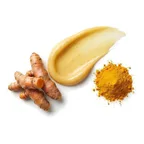 Curcuma Kwangsiensis Extract
 Lactic Acid
 Glycerin
High
- HighNormal Skin Fit
- HighEffectiveness
- HighSafety
A great choice for sensitive skin; a few serums fit it even better.
This fit is calculated for the concerns frequently associated with sensitive skin: redness, stinging, and reactions to new products. For scores and recommendations based on your full skin profile, including your 12D face scan results and any goals or preferences you have, please use the Lovi app.
Updated How the Fit score works
Lovi Assistant explains
- Highly suitable for your normal skin, this product leverages high concentrations of lactic acid and hyaluronic acid to effectively exfoliate and hydrate, addressing your primary goal of redness and irritation.
- The inclusion of Curcuma Kwangsiensis Extract and Curcuma Wenyujin Extract offers soothing properties that further benefit your sensitive skin by calming inflammation.
- The formulation is safe for your sensitive skin, as it lacks any harsh or prohibited ingredients that could cause irritation.
How to apply
- Use your serum in the PM routine, starting 3 times a week before building up to daily use if your skin is happy.
- Apply the serum after cleansing and toning, but before putting on your moisturizer for the best results.
- Gently press 2-3 drops of the serum into your skin and wait a minute ⏱ for it to soak in.
- Since your skin is sensitive and easily irritated, apply the serum on completely dry skin to help keep it calm.
- Always do a patch test before your first use and avoid getting the serum too close to your eyes .
People Say
★4.5Overall rating based on 400+ reviewsUsers report this product effectively blurs pores and smooths skin texture immediately, acting as a primer for a flawless makeup base and mattifying the T-zone. While many appreciate its instant cosmetic effects, some note that the pore-minimizing benefits are temporary and not a long-term solution.
Highlights
Instant pore blurring Mostly Mentioned
- “blurs the pores”
- “pore reduction instantly”
- “open pore blending in”
Smooth texture Often Mentioned
- “lightweight formula”
- “absorbs quickly”
- “satin-cream texture”
Expensive for size Often Mentioned
- “expensive”
- “pricey”
- “tiny tube”
Good makeup base Sometimes Noted
- “lays well under makeup”
- “improves wear of makeup”
- “smooth base”
Precise applicator Sometimes Noted
- “loved the applicator”
- “easy application”
- “smooth applicator”
Temporary results Sometimes Noted
- “didn't notice huge changes”
- “results didn't last all day”
- “temporary fix”
Not effective for all Rarely Noted
- “didn't work”
- “no difference”
- “little iffy about results”
Unpleasant scent Rarely Noted
- “strong smell”
- “smell is the only thing I don't like”
Sources: lovi.care, sephora.com, kohls.com, murad.com, spacenk.com, johnlewis.com, and more
Questions and answers
What makes Murad Targeted Pore Corrector a great fit for sensitive skin?
Murad Targeted Pore Corrector is a great fit for sensitive skin because it uses lactic acid and hyaluronic acid to smooth and hydrate while helping to calm redness and irritation. It also includes soothing turmeric extract to help keep inflammation down, and it avoids harsh ingredients that may trouble your skin.
Which ingredients make this treatment a good fit for sensitive skin?
This treatment is a great fit for sensitive skin because it uses Curcuma Kwangsiensis Extract and Curcuma Wenyujin Extract to help calm inflammation and soothe redness. Hyaluronic acid and glycerin also add deep moisture, while lactic acid gently smooths the skin without causing irritation.
What does Hyaluronic Acid do for sensitive skin?
Hyaluronic acid helps improve hydration, smoothness, and overall comfort in sensitive skin while supporting a strong skin barrier. It is very gentle and unlikely to cause irritation, making it a well-tolerated choice for skin that is easily prone to redness or dryness.
Journal of Cosmetic Dermatology, 2018Journal of Drugs in Dermatology, 2025
What does Squalane do for sensitive skin?
Squalane helps calm sensitive skin and protects it against daily damage from sunlight and stress. It supports the skin barrier and keeps skin feeling soft and smooth.
Where does this treatment go in a skincare routine for sensitive skin?
This treatment goes in your evening routine, applied after your soothing toner and before your moisturizer. Starting out, use it just once a week, and if your skin tolerates it well without irritation, you may carefully use it more often.
Can I use this treatment with retinol, and in what order?
This product is a great fit for your sensitive skin and is used in the evening routine after your toner and before your moisturizer. When combining with retinol, it is best to alternate nights or apply them cautiously because both ingredients actively exfoliate and may cause dryness or irritation.
How often should I use this treatment?
Start by using this treatment once a week in the evening, and if your skin tolerates it well without irritation, you can carefully use it more often. The gentle formula includes soothing ingredients that help calm inflammation while lactic acid and hyaluronic acid exfoliate and hydrate.
Can this treatment clog pores, cause breakouts or purging for sensitive skin?
This treatment is unlikely to clog pores or cause breakouts on sensitive skin, because it lacks heavy, pore-blocking ingredients and uses soothing plant extracts that help calm irritation. The inclusion of lactic acid may cause very mild initial purging as it gently clears dead skin cells, but this typically settles quickly.
Is this treatment fragrance-free and alcohol-free?
Yes, it has no fragrance and no drying alcohol. Cetyl alcohol is a fatty alcohol, which soften the skin.
What the research says
Topical application of 0.1% hyaluronic acid formulations of different molecular weights led to significant improvements in skin hydration and elasticity, with low-molecular-weight formulations also significantly reducing wrinkle depth in seventy-six female subjects compared to a vehicle control.
Journal of Drugs in Dermatology, 2011Topical hyaluronic acid serum used twice daily by 40 females with facial photoaging produced an immediate 134% increase in skin hydration, a sustained 55% increase at week 6, and significant improvements in smoothness, plumping, fine lines, wrinkles, and global appearance without causing irritation.
Dermatology and Therapy, 2021A topical antioxidant serum significantly reduced air pollution-induced skin pigmentation and proinflammatory gene expression ex vivo, and improved skin aging signs in 40 healthy adult females after 90 days of daily use.
Journal of Cosmetic Dermatology, 2022Application of fullerene-C60 dissolved in squalane cream twice daily for 8 weeks significantly enhanced skin moisture and reduced wrinkle formation compared to placebo in 23 Japanese women without severe side effects.
Journal of Nanoscience and Nanotechnology, 2010Squalane at 0.005-0.015% counteracts UVA-induced oxidative stress, inflammation, and collagen metabolism inhibition while stimulating fibroblast migration in human dermal fibroblasts.
Molecules, 2025Plant-derived squalane protected human dermal fibroblasts against UVA-induced damage by counteracting ROS formation, suppressing apoptosis-related proteins p53, caspase-3, caspase-9, and PARP, and restoring the pro-survival p-Akt/mTOR pathway.
Antioxidants, 2025Topical application of curcumin or turmeric treats various skin conditions by leveraging antioxidant, anti-inflammatory, and antimicrobial properties.
Skin Pharmacology and Physiology, 2023A curcumin-loaded spanlastic anti-aging gel utilizing formula F5 incorporated into 2% HPMC E50 demonstrated sustained release action, compatibility, and the ability to penetrate skin layers to a depth of about 112.5 um without signs of irritation.
Saudi Pharmaceutical Journal, 2024Application of a cream containing lactic acid 12% and pramoxine HCl 1% significantly improved skin dryness, hydration, and itch compared with a nontreated control in 24 women with a history of dry itchy skin.
Cutis, 2004A lactic acid/ceramide lotion significantly improved skin moisturization and desquamation compared to no treatment in women with dry, rough skin on the anterior shins.
The Journal of Clinical and Aesthetic Dermatology, 2020Treatment with 12% lactic acid increased epidermal and dermal firmness and thickness and improved skin smoothness and wrinkles compared to baseline, whereas 5% lactic acid induced clinical and epidermal changes without dermal changes.
Journal of the American Academy of Dermatology, 1996A single application of a moisturizing fluid containing hyaluronic acid 1%, glycerin 5%, and Centella asiatica stem cells extract significantly increased skin hydration by 29% and reduced transepidermal water loss at 24 hours compared to baseline and an untreated control site in twenty healthy women.
Clinical, Cosmetic and Investigational Dermatology, 2017The emollient V0034CR significantly reduced TEWL compared to vehicle and vehicle plus glycerol, and significantly increased corneometry scores compared to vehicle and vehicle plus petrolatum in healthy volunteers with dry skin, demonstrating combined barrier function improvement from petrolatum and hydration improvement from glycerol.
Journal of Cosmetic Dermatology, 2020Ten days of treatment with a cream containing 20% glycerin significantly increased skin hydration measured by corneometer values in 17 healthy volunteers compared to a placebo cream, but showed no influence on transepidermal water loss or skin sensitivity to an irritating surfactant.
International Journal of Cosmetic Science, 2001
Ingredients
Water, Polysilicone-11, Squalane, Propanediol, Sodium Acrylates Crosspolymer-2, Cetyl Alcohol, Potassium Cetyl Phosphate, Curcuma Kwangsiensis Extract, Curcuma Wenyujin Extract, Hyaluronic Acid, Glycine Soja Extract, Soybean Extract, Germ Extract, Lysine, Proline, Urea, Yeast Amino Acids, Trehalose, Inositol, Taurine, Betaine, Lactic Acid, Mannose, Polyglyceryl-3 Laurate, Butylene Glycol, Ethylhexylglycerin, Sodium Mannose Phosphate, Laureth-12, Barium Sulfate, Xanthan Gum, Tetrasodium Glutamate Diacetate, Sodium Carbonate, Leuconostoc Radish Root Ferment Filtrate, Tocopherol, Glycerin, Lauric Acid, Phenoxyethanol, Chlorphenesin, Dehydroacetic Acid, Copper Sulfate, Potassium Sorbate
Behind this fit score
Lovi calculates every fit score from the full ingredient list with brand-independent rules our dermatologists and cosmetic chemists build and review, and personalizes every pick with AI trained on the real results of millions of users. Lovi trains its fit score models on a proprietary dataset built from more than 10,000 expert-labeled products and more than 100,000 simulated examples, following an internally consistent methodology presented at Cosmoprof, AMWC, and Skin of Color Update.
-

Co-founder, Medical Director
Cosmetic chemist, cosmetologist, aesthetic products developer
-

Co-founder, CEO and CTO
PhD in computer science, 3x US patent holder, ex-Google, ex-Yandex
-

Dr. Sofía Perea Pérez, MD, MSc
Medical Board
Aesthetic medicine practitioner, MSc in Longevity and Anti-Aging Medicine
-

Medical Board
Specialist dermatologist, MBBS, MD, IFAAD
-

Medical Board
Cosmetic chemist, SCS, IFSCC member
-

Medical Board, Medical Advisor
Dermatology MD
-

Elina Nazarenko, MD
Medical Board
Dermatology and diagnostic consultant
-

Victoria Derkova, MS
Medical Board
Cosmetic chemist, cosmetic development technologist


How does it fit your skin?
Scan your face, then any product: Lovi shows how well it fits you and what fits even better.