
MIDHA Rice Cream for oily skin

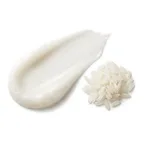 Rice Extract
 Niacinamide
 Glycerin
 Squalane
 Tocopherol Vitamin E
Average
- HighOily Skin Fit
- AverageEffectiveness
- HighSafety
Works for oily skin; other moisturizers fit it better.
- Clinical, Cosmetic and Investigational Dermatology, 2017
- International Journal of Cosmetic Science, 2024
This fit is calculated for the concerns frequently associated with oily skin: shine, enlarged pores, blackheads, and blemishes. For scores and recommendations based on your full skin profile, including your 12D face scan results and any goals or preferences you have, please use the Lovi app.
Updated How the Fit score works
Lovi Assistant explains
- Offers moderate suitability for your oily skin, as glycerin and squalane provide excellent moisturization and barrier support, while niacinamide helps with seboregulation.
- While it offers general skincare benefits, it does not directly address your concern about oily shine.
- The product is safe for your oily skin, with no risks of irritation due to the absence of harsh ingredients and the presence of soothing components like rice extract and allantoin.
How to apply
- Could be used as part of your AM or PM routine every day to keep your face fresh.
- Apply this moisturizer after cleansing and toning, but right before your SPF in the morning.
- Gently press a small amount into your skin and let it absorb fully.
- Apply on clean, slightly dry skin to help control that oily shine.
- Avoid the eye area and do a quick patch test before your first use.
People Say
★4.2Overall rating based on 100+ reviewsBased on limited data, users consistently praise this cream for its ability to provide deep, long-lasting hydration without feeling overly heavy, making it a favorite for those with dry, dehydrated, or sensitive skin. While many appreciate its brightening effects and smooth absorption, some users with oily skin find it slightly too rich or greasy, and others have expressed concerns about the jar packaging being unhygienic.
Highlights
Deep hydration Mostly Mentioned
- “perfectly addressing deep dryness”
- “maintains good hydration considering its texture”
- “leaves skin feeling deeply moisturized”
Lightweight texture Often Mentioned
- “absorbs quickly without leaving residue”
- “glides on softly”
- “rich yet lightweight texture”
- “not thick or runny”
Gentle and soothing Sometimes Noted
- “no irritation even on sensitive skin”
- “calms blemishes and soothes”
- “mild and non-pore-clogging”
- “caused no blemishes”
Oily skin incompatibility Sometimes Noted
- “finish feels greasy rather than moisturizing”
- “leaves a shiny, oil-like residue”
- “too rich for oily skin”
- “caused some blemishes”
Unhygienic packaging Sometimes Noted
- “no spatula included”
- “dust gets in easily”
- “jar packaging is disappointing”
- “wish it came with a pump”
Brightening effect Rarely Noted
- “helped brighten my complexion”
- “cultivate clear, radiant skin”
- “gives a glow to the skin”
Pricey for size Rarely Noted
- “price is a bit steep”
- “quantity is so small”
- “pricier than I anticipated”
Unpleasant scent Rarely Noted
- “smell of glycerin/silicone”
- “scent can be off-putting”
- “smells like raw ingredients”
Sources: lovi.care, amazon.com, skinsort.com, reddit.com, hwahae.co.kr, ubuy.com, and more
Questions and answers
How well does MIDHA Rice Cream work for oily skin?
MIDHA Rice Cream works moderately well for oily skin, as glycerin and squalane provide good moisture and niacinamide helps balance oil, though it does not directly target oily shine. An oily skin type needs lightweight hydrating products with peptides that manage shine without heavy oils or clogged pores.
Which ingredients make this cream a good fit for oily skin?
Glycerin and squalane make this cream a good fit by providing balanced moisturization and barrier support, while niacinamide helps manage oil. To work best for oily skin, a moisturizing treatment needs peptides and lightweight hydrating ingredients that control shine without clogging pores or feeling heavy.
What does Rice Extract do for oily skin?
Rice extract helps balance oily skin by providing gentle care that keeps the face feeling smooth and fresh without clogging pores. Clinical studies show that rice-derived ingredients support a clear and even complexion while maintaining proper moisture levels.
Journal of Cosmetic Dermatology, 2022International Journal of Toxicology, 2006
What does Niacinamide do for oily skin?
Niacinamide helps balance oily skin by significantly reducing excess oil production and shine. It is well tolerated and may improve skin texture without clogging pores.
Journal of Cosmetic and Laser Therapy, 2006Antioxidants, 2021
Where does it go in a skincare routine for oily skin?
This moisturizing treatment goes in the evening routine after cleansing and any cleansing toner, and before your moisturizer. Oily skin works best with products that provide lightweight moisturization and ingredients that help control shine.
Can I use this cream with retinol, and in what order?
You can use this cream with retinol, and it is safe to apply it after your retinol treatment to help soothe your skin. A moisturizer of this type for oily skin needs ingredients that help balance oil and keep pores clear.
How often should I use it?
You can use this moisturizing treatment twice a day as part of your morning and evening routine. Daily application helps keep skin soft and balanced.
Journal of Cosmetic Dermatology, 2020Health Science Reports, 2021
Can this cream clog pores, cause breakouts or purging for oily skin?
This cream is unlikely to cause breakouts or clog pores on oily skin because it lacks harsh ingredients and includes soothing components like rice extract and allantoin, though it does not directly help with oily shine. To better manage excess oil and shine, an oily skin type needs a product with targeted oil-balancing and mattifying ingredients.
Can I use it around the eyes or on my body?
You can use this moisturizing treatment around the eyes and on your body, though oily skin of this type needs a lightweight formula with oil-controlling ingredients like niacinamide or clay in those areas.
Is this cream fragrance-free and alcohol-free?
Yes, it has no fragrance and no drying alcohol. Cetearyl alcohol is a fatty alcohol, which soften the skin.
What the research says
A single application of a moisturizing fluid containing hyaluronic acid 1%, glycerin 5%, and Centella asiatica stem cells extract significantly increased skin hydration by 29% and reduced transepidermal water loss at 24 hours compared to baseline and an untreated control site in twenty healthy women.
Clinical, Cosmetic and Investigational Dermatology, 2017The combination of allantoin, bisabolol, D-panthenol and dipotassium glycyrrhizinate reduces UVB-induced PGE2, inflammatory cytokines, and mitochondrial superoxide in human epidermal keratinocytes.
International Journal of Cosmetic Science, 2024Topical gel and cream formulations containing niosomes entrapped with rice bran bioactive compounds improved skin hydration, lightening, thickness, roughness, and elasticity in 30 human volunteers over 28 days compared to baseline.
Pharmaceutical Biology, 2012Daily application of a cream containing niosomes loaded with purple glutinous rice extract in 20 human volunteers for 28 days resulted in a significant decrease in melanin index and skin roughness by -14.05% and -9.95%, and increases in skin hydration and elastic recovery by +48.73% and +35.98% compared to initial values.
International Journal of Cosmetic Science, 2020Encapsulation of ferulic acid in phosphorylated rice starch enhanced its stability against heat and light and improved skin lightening, elasticity, smoothness, roughness, scaliness, and wrinkles compared to free ferulic acid in 16 volunteers over 1 month.
Molecules, 2022Topical nicotinamide prevented solar-simulated UV-induced immunosuppression in healthy volunteers, and men experienced immunosuppression at solar-simulated UV doses three times lower than those required for women.
The Journal of Investigative Dermatology, 2008Topical 5% niacinamide applied twice daily for 12 weeks reduced fine lines and wrinkles, hyperpigmented spots, red blotchiness, and skin sallowness, and improved skin elasticity compared to vehicle control in 50 female white subjects with facial photoaging.
Dermatologic Surgery, 2005Topical 2% niacinamide significantly decreased sebum excretion rate in Japanese individuals and casual sebum levels in Caucasian individuals compared to placebo or baseline.
Journal of Cosmetic and Laser Therapy, 2006The emollient V0034CR significantly reduced TEWL compared to vehicle and vehicle plus glycerol, and significantly increased corneometry scores compared to vehicle and vehicle plus petrolatum in healthy volunteers with dry skin, demonstrating combined barrier function improvement from petrolatum and hydration improvement from glycerol.
Journal of Cosmetic Dermatology, 2020Ten days of treatment with a cream containing 20% glycerin significantly increased skin hydration measured by corneometer values in 17 healthy volunteers compared to a placebo cream, but showed no influence on transepidermal water loss or skin sensitivity to an irritating surfactant.
International Journal of Cosmetic Science, 2001Niacinamide/glycerin body moisturizers provided better rapid and prolonged improvement of cosmetic xerosis through functional improvement of stratum corneum barrier function compared to no treatment and conventional moisturizers in female subjects.
Journal of Drugs in Dermatology, 2012Application of fullerene-C60 dissolved in squalane cream twice daily for 8 weeks significantly enhanced skin moisture and reduced wrinkle formation compared to placebo in 23 Japanese women without severe side effects.
Journal of Nanoscience and Nanotechnology, 2010Squalane at 0.005-0.015% counteracts UVA-induced oxidative stress, inflammation, and collagen metabolism inhibition while stimulating fibroblast migration in human dermal fibroblasts.
Molecules, 2025Plant-derived squalane protected human dermal fibroblasts against UVA-induced damage by counteracting ROS formation, suppressing apoptosis-related proteins p53, caspase-3, caspase-9, and PARP, and restoring the pro-survival p-Akt/mTOR pathway.
Antioxidants, 2025Topical application of an antioxidant serum containing 15% ascorbic acid, 0.5% ferulic acid, and 1% tocopherol prevented particulate matter-induced degradation of extracellular matrix components, inflammation, and oxidative stress in the skin of 15 female volunteers compared to untreated controls.
Journal of Cosmetic Dermatology, 2025Dermatological products containing d-alpha tocopheryl acetate showed non-comedogenic potential with less than a 50% increase in microcomedones in 12 healthy male subjects compared to octyl palmitate.
Contemporary Clinical Trials Communications, 2021Topical application of an antioxidant mix containing 15% ascorbic acid, 0.5% ferulic acid, and 1% tocopherol prevented PM and UV-induced skin barrier perturbation, lipid peroxidation, inflammatory markers, MMP9 activation, and Type I collagen loss in 15 healthy females compared to untreated exposed skin.
Journal of Cosmetic Dermatology, 2024
Ingredients
Water, Rice Extract, Glycerin, Niacinamide, Squalane, Butylene Glycol, Cetearyl Alcohol, Caprylic Capric Triglyceride, Dimethicone, Tocopherol Vitamin E, Allantoin, Panthenol, Phenoxyethanol, Ethylhexylglycerin
Behind this fit score
Lovi calculates every fit score from the full ingredient list with brand-independent rules our dermatologists and cosmetic chemists build and review, and personalizes every pick with AI trained on the real results of millions of users. Lovi trains its fit score models on a proprietary dataset built from more than 10,000 expert-labeled products and more than 100,000 simulated examples, following an internally consistent methodology presented at Cosmoprof, AMWC, and Skin of Color Update.
-

Co-founder, Medical Director
Cosmetic chemist, cosmetologist, aesthetic products developer
-

Co-founder, CEO and CTO
PhD in computer science, 3x US patent holder, ex-Google, ex-Yandex
-

Dr. Sofía Perea Pérez, MD, MSc
Medical Board
Aesthetic medicine practitioner, MSc in Longevity and Anti-Aging Medicine
-

Medical Board
Specialist dermatologist, MBBS, MD, IFAAD
-

Medical Board
Cosmetic chemist, SCS, IFSCC member
-

Medical Board, Medical Advisor
Dermatology MD
-

Elina Nazarenko, MD
Medical Board
Dermatology and diagnostic consultant
-

Victoria Derkova, MS
Medical Board
Cosmetic chemist, cosmetic development technologist


How does it fit your skin?
Scan your face, then any product: Lovi shows how well it fits you and what fits even better.