
Medik8 CRYSTAL RETINAL 6 for acne-prone skin

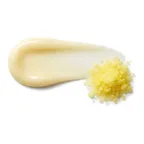 Retinaldehyde Vitamin A
 Hyaluronic Acid
 Tocopherol Vitamin E
 Squalane
 Glycerin
Average
- LowCombination Skin Fit
- AverageEffectiveness
- Low RiskSafety
Works for acne-prone skin; other serums fit it better.
This fit is calculated for the concerns frequently associated with acne-prone skin: breakouts, blackheads, and post-acne marks. For scores and recommendations based on your full skin profile, including your 12D face scan results and any goals or preferences you have, please use the Lovi app.
Updated How the Fit score works
Lovi Assistant explains
- Offers excellent visible anti-aging effects due to retinaldehyde and hyaluronic acid, which promote skin renewal and hydration, but may be too potent for some areas of your combination skin.
- While glycerin and squalane provide general hydration supportive for acne-prone skin, the formula lacks specialized ingredients to directly target your acne, blemishes, and breakouts.
- The product is generally safe for your combination skin, with a low risk of irritation from retinaldehyde.
How to apply
- Use your serum as part of your PM routine and start 3x/week before working up to daily use.
- Apply this treatment after cleansing and toner, and before your moisturizer.
- Gently press 2-3 drops of the serum into your skin and let it absorb for a minute.
- Apply the product on clean, dry skin to help manage your breakouts safely.
- Avoid the eye area and do a patch test before your first use.
People Say
★4.7Overall rating based on 3.5k+ reviewsBased on a very large amount of data, users consistently praise this serum as a "game-changer" for smoothing texture and brightening dull complexions without the harsh irritation often associated with retinoids. It is frequently recommended for those with acne-prone or sensitive skin who want to target fine lines and congestion, with many reporting "glass skin" results and visibly clearer pores within weeks.
Highlights
Gentle yet effective Mostly Mentioned
- “Zero irritation unlike tretinoin”
- “Gentle enough for sensitive skin”
- “No peeling or redness”
- “Great balance of power and comfort.”
Improves skin texture Mostly Mentioned
- “Woke up with baby soft skin”
- “Bumps and texture vanished”
- “Glass skin effect”
- “Smoothed out my forehead.”
Clears acne & congestion Often Mentioned
- “Keeps hormonal acne at bay”
- “Cleared my congestion”
- “Pores look smaller”
- “Stopped my breakouts.”
High price point Often Mentioned
- “Very expensive for 30ml”
- “Wish it was cheaper”
- “Pricey investment”
- “Hard to justify the cost.”
Brightening & firming Sometimes Noted
- “Skin looks brighter”
- “Noticeable glow in the morning”
- “Face feels firmer”
- “Faded my dark spots.”
Pleasant user experience Sometimes Noted
- “Sinks in immediately”
- “Lightweight creamy texture”
- “Smells like vanilla/tonka”
- “Non-greasy finish.”
Packaging issues Sometimes Noted
- “Pump stopped working”
- “Hard to get the last bit out”
- “Tube topples over easily”
- “Cannot see how much is left.”
Yellow staining Sometimes Noted
- “Stained my white pillowcases”
- “Leaves yellow residue”
- “Turns my face orange”
- “Watch out for your sheets.”
Mild dryness/purging Rarely Noted
- “Caused some dry patches”
- “Had a slight purge initially”
- “Need a thick moisturizer after”
- “Made me flake a little.”
Scent preference Rarely Noted
- “Smell is too strong”
- “Don't like the vanilla scent”
- “Wish it was fragrance-free”
- “Scent lingers.”
Sources: lovi.care, cultbeauty.com, spacenk.com, dermstore.com, lookfantastic.com, adorebeauty.com.au, and more
Questions and answers
How well does Medik8 Crystal Retinal 6 work for acne-prone skin?
Medik8 Crystal Retinal 6 works moderately well for acne-prone skin, though other products fit this skin type better. While it offers great anti-aging and hydrating benefits, it lacks specialized ingredients to directly target acne and breakouts. A treatment for this skin needs ingredients like niacinamide, zinc PCA, or propolis to properly manage blemishes and balance oil.
Which ingredients make this serum a good fit for acne-prone skin?
Glycerin and squalane provide general hydration that helps support acne-prone skin, while hyaluronic acid brings moisture. To be a top fit for acne-prone skin, this type of product needs ingredients like niacinamide, propolis, or zinc PCA to target breakouts and help control oiliness.
What does Retinaldehyde do for acne-prone skin?
Retinaldehyde helps clear acne-prone skin by reducing pimples, clogged pores, and bumps when used regularly. It is generally well tolerated with very uncommon side effects, making it a good choice for keeping skin smooth and calm.
International Journal of Cosmetic Science, 2026Clinical and Experimental Dermatology, 1999
What does Hyaluronic Acid do for acne-prone skin?
Hyaluronic acid helps calm acne-prone skin and reduces inflammation when used consistently in targeted formulations. It is unlikely to cause irritation and works well to keep skin soft while managing blemishes.
Where does this serum go in a skincare routine for acne-prone skin?
Apply this treatment in the evening after cleansing and toning, and follow with a moisturizer. For acne-prone skin, a product of this type needs specialized ingredients to directly target acne, blemishes, and breakouts.
Can I use this serum with niacinamide, and in what order?
You can use this treatment with niacinamide by applying niacinamide first and letting it absorb before putting on this serum. This order helps keep your skin calm while delivering anti-aging benefits.
How often should I use this serum?
Use this treatment in your evening routine, starting just once a week and carefully using it more often if your skin tolerates it well. Applying it at night provides extra safety around sun exposure.
Can this serum clog pores, cause breakouts or purging for acne-prone skin?
Medik8 CRYSTAL RETINAL 6 may cause mild dryness or purging on acne-prone skin while promoting skin renewal and hydration. Although it offers a low risk of irritation, this product lacks specialized ingredients to directly target blemishes and breakouts. Acne-prone skin needs formulas containing ingredients like salicylic acid or benzoyl peroxide to effectively clear pores and prevent breakouts.
Is this serum fragrance-free and alcohol-free?
Yes, it has no fragrance and no drying alcohol. Cetearyl alcohol is a fatty alcohol, which soften the skin.
What the research says
Topical hyaluronic acid filler serum combined with Botulinum toxin type A lengthened the duration of the toxin's effect in reducing wrinkles compared to Botulinum toxin type A alone.
Dermatologic Therapy, 2022Optimized transfersomes loaded with epigallocatechin-3-gallate and hyaluronic acid increased cell viability while reducing lipid peroxidation, intracellular ROS, and MMP expression in HaCaT cells, and exhibited higher skin permeation and deposition compared to plain EGCG.
Drug Delivery, 2017An OLELNVs@HA/TA hydrogel dressing effectively reduced UV-induced skin damage and promoted skin repair and regeneration by down-regulating the NF-κB signaling pathway in in vitro and in vivo experiments.
Materials Today. Bio, 2024A single application of a moisturizing fluid containing hyaluronic acid 1%, glycerin 5%, and Centella asiatica stem cells extract significantly increased skin hydration by 29% and reduced transepidermal water loss at 24 hours compared to baseline and an untreated control site in twenty healthy women.
Clinical, Cosmetic and Investigational Dermatology, 2017Twice daily application of retinaldehyde 0.1% and 0.05% creams for 3 months improved skin texture and hydration and reduced transepidermal water loss in 40 female Korean volunteers, with only the 0.1% cream significantly improving the melanin index.
Journal of Cosmetic Dermatology, 2018Topical 0.05% retinaldehyde applied over 1 year significantly increased epidermal thickness of the temple and cutaneous elasticity compared to an emollient control group in 40 aging skin patients.
Dermatology, 1999Topical 0.05% retinaldehyde cream reduced wrinkle and roughness features similarly to 0.05% retinoic acid cream in patients with photodamaged facial skin, while demonstrating superior local tolerance and better patient compliance.
Journal of the American Academy of Dermatology, 1998Topical application of 0.1% hyaluronic acid formulations of different molecular weights led to significant improvements in skin hydration and elasticity, with low-molecular-weight formulations also significantly reducing wrinkle depth in seventy-six female subjects compared to a vehicle control.
Journal of Drugs in Dermatology, 2011Topical hyaluronic acid serum used twice daily by 40 females with facial photoaging produced an immediate 134% increase in skin hydration, a sustained 55% increase at week 6, and significant improvements in smoothness, plumping, fine lines, wrinkles, and global appearance without causing irritation.
Dermatology and Therapy, 2021A topical antioxidant serum significantly reduced air pollution-induced skin pigmentation and proinflammatory gene expression ex vivo, and improved skin aging signs in 40 healthy adult females after 90 days of daily use.
Journal of Cosmetic Dermatology, 2022Topical application of an antioxidant serum containing 15% ascorbic acid, 0.5% ferulic acid, and 1% tocopherol prevented particulate matter-induced degradation of extracellular matrix components, inflammation, and oxidative stress in the skin of 15 female volunteers compared to untreated controls.
Journal of Cosmetic Dermatology, 2025Dermatological products containing d-alpha tocopheryl acetate showed non-comedogenic potential with less than a 50% increase in microcomedones in 12 healthy male subjects compared to octyl palmitate.
Contemporary Clinical Trials Communications, 2021Topical application of an antioxidant mix containing 15% ascorbic acid, 0.5% ferulic acid, and 1% tocopherol prevented PM and UV-induced skin barrier perturbation, lipid peroxidation, inflammatory markers, MMP9 activation, and Type I collagen loss in 15 healthy females compared to untreated exposed skin.
Journal of Cosmetic Dermatology, 2024Application of fullerene-C60 dissolved in squalane cream twice daily for 8 weeks significantly enhanced skin moisture and reduced wrinkle formation compared to placebo in 23 Japanese women without severe side effects.
Journal of Nanoscience and Nanotechnology, 2010Squalane at 0.005-0.015% counteracts UVA-induced oxidative stress, inflammation, and collagen metabolism inhibition while stimulating fibroblast migration in human dermal fibroblasts.
Molecules, 2025Plant-derived squalane protected human dermal fibroblasts against UVA-induced damage by counteracting ROS formation, suppressing apoptosis-related proteins p53, caspase-3, caspase-9, and PARP, and restoring the pro-survival p-Akt/mTOR pathway.
Antioxidants, 2025The emollient V0034CR significantly reduced TEWL compared to vehicle and vehicle plus glycerol, and significantly increased corneometry scores compared to vehicle and vehicle plus petrolatum in healthy volunteers with dry skin, demonstrating combined barrier function improvement from petrolatum and hydration improvement from glycerol.
Journal of Cosmetic Dermatology, 2020Ten days of treatment with a cream containing 20% glycerin significantly increased skin hydration measured by corneometer values in 17 healthy volunteers compared to a placebo cream, but showed no influence on transepidermal water loss or skin sensitivity to an irritating surfactant.
International Journal of Cosmetic Science, 2001Niacinamide/glycerin body moisturizers provided better rapid and prolonged improvement of cosmetic xerosis through functional improvement of stratum corneum barrier function compared to no treatment and conventional moisturizers in female subjects.
Journal of Drugs in Dermatology, 2012
Why other serums fit acne-prone skin better
Topical UP256 cream containing 0.5% bakuchiol administered twice daily significantly reduced inflammatory lesions and improved acne-related post-inflammatory hyperpigmentation in 13 subjects with mild or moderate facial acne.
Journal of Drugs in Dermatology, 2021Co-delivery of paeonol and madecassoside via nanoemulsions improved transdermal delivery, promoted barrier repair proteins, inhibited inflammatory cytokine secretion in cellular and 3D models, and reduced transepidermal water loss and acne in human facial skin compared to free components.
Molecules, 2023A cream combining propolis, tea tree oil, and Aloe vera reduced erythema scars, acne severity index, and total lesion count better than erythromycin cream in sixty patients with mild to moderate acne vulgaris compared to placebo.
Clinical Pharmacology, 2018
Ingredients
Water, Glycerin, Caprylic Capric Triglyceride, Cetearyl Alcohol, Dimethicone, Hydrogenated Polydecene, Cetearyl Olivate, Sorbitan Olivate, Retinaldehyde, Hyaluronic Acid, Tocopherol Vitamin E, Phenoxyethanol, Ethylhexylglycerin, Carbomer, Sodium Hydroxide, Disodium Edta, Lecithin, Squalane, Glyceryl Stearate, Peg-100 Stearate
Behind this fit score
Lovi calculates every fit score from the full ingredient list with brand-independent rules our dermatologists and cosmetic chemists build and review, and personalizes every pick with AI trained on the real results of millions of users. Lovi trains its fit score models on a proprietary dataset built from more than 10,000 expert-labeled products and more than 100,000 simulated examples, following an internally consistent methodology presented at Cosmoprof, AMWC, and Skin of Color Update.
-

Co-founder, Medical Director
Cosmetic chemist, cosmetologist, aesthetic products developer
-

Co-founder, CEO and CTO
PhD in computer science, 3x US patent holder, ex-Google, ex-Yandex
-

Dr. Sofía Perea Pérez, MD, MSc
Medical Board
Aesthetic medicine practitioner, MSc in Longevity and Anti-Aging Medicine
-

Medical Board
Specialist dermatologist, MBBS, MD, IFAAD
-

Medical Board
Cosmetic chemist, SCS, IFSCC member
-

Medical Board, Medical Advisor
Dermatology MD
-

Elina Nazarenko, MD
Medical Board
Dermatology and diagnostic consultant
-

Victoria Derkova, MS
Medical Board
Cosmetic chemist, cosmetic development technologist


How does it fit your skin?
Scan your face, then any product: Lovi shows how well it fits you and what fits even better.