
Hawaiian Tropic Sheer Touch Lotion Sunscreen for combination skin

 Avobenzone
 Octocrylene
 Oxybenzone
 Aloe Barbadensis Leaf Juice
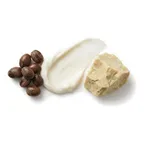 Butyrospermum Parkii Butter Shea Butter
Average
- HighCombination Skin Fit
- AverageEffectiveness
- HighSafety
Works for combination skin; other sunscreens fit it better.
This fit is calculated for the concerns frequently associated with combination skin: an oily T-zone, enlarged pores, and dry cheeks. For scores and recommendations based on your full skin profile, including your 12D face scan results and any goals or preferences you have, please use the Lovi app.
Updated How the Fit score works
Lovi Assistant explains
- Offers moderate sun protection for your combination skin due to avobenzone and octocrylene, while aloe barbadensis leaf juice and tocopheryl acetate vitamin E provide general hydration and soothing benefits that are supportive but not primary for your oily shine.
- Ascorbic acid and tocopheryl acetate vitamin E offer antioxidant activity suitable for combination skin, though the formula's primary function is sun protection rather than targeted oil control.
- The product is safe for your combination skin, with no risks of irritation due to the absence of prohibited or harsh ingredients.
How to apply
- Apply this moisturizing sunscreen AM daily to protect your skin and control shine. Reapply as needed throughout the day.
- Use it as the final step of your morning routine after applying your moisturizer. It combines hydration and sun protection in one.
- Gently smooth a nickel-sized amount evenly over your face, avoiding harsh rubbing. Let it absorb fully before putting on makeup.
- Apply it directly to clean, dry skin for the best oil-controlling finish. Ensure your face is completely dry so the product sets properly.
- Avoid the immediate eye area during application. Do a patch test before your first use to check for any sensitivity.
Questions and answers
How well does Hawaiian Tropic Sheer Touch work for combination skin?
Hawaiian Tropic Sheer Touch Lotion Sunscreen works reasonably well for combination skin by providing moderate sun protection along with general soothing and hydration. However, to truly excel on combination skin, a product of this type needs lightweight oils and humectants that balance both dry and oily areas without clogging pores or adding unwanted shine.
Which ingredients make this sunscreen a good fit for combination skin?
Avobenzone and octocrylene make this sunscreen a good fit by offering sun protection, while aloe leaf juice and vitamin E help soothe and hydrate your skin. To work even better for combination skin, a product of this type needs lightweight oils and moisture-binding ingredients that hydrate dry areas and control oily shine without clogging pores.
What does Avobenzone do for combination skin?
Avobenzone helps protect combination skin from ultraviolet rays with minimal risk of irritation. It is widely used in sunscreens to provide effective sun protection without clogging pores or feeling too heavy.
What does Octocrylene do for combination skin?
Octocrylene acts as a UV filter to protect combination skin from sun damage, but it may cause contact allergy or irritation in some people. This type of product needs soothing antioxidants and lightweight, non-clogging ingredients to keep oily areas balanced and dry patches soft.
Where does this sunscreen go in a skincare routine for combination skin?
This sunscreen goes as the last step of your morning skincare routine, right after your moisturizer. A product of this type for combination skin needs lightweight sun protection and oil-controlling ingredients to manage shine while keeping skin balanced.
Can I use it with retinol, and in what order?
You can use this sunscreen in the morning after applying your retinol and moisturizer, as it is safe for your combination skin. However, since it offers only moderate sun protection and lacks targeted oil control, your skin type needs a lightweight, oil-controlling sunscreen with niacinamide or lightweight hydrators to better manage shine.
How often should I use this sunscreen?
This sunscreen works well as an everyday morning step to protect your combination skin from the sun. Combination skin of this type needs lightweight hydration and ingredients that balance oil while keeping the skin soft and calm.
Can it clog pores, cause breakouts or purging for combination skin?
Hawaiian Tropic Sheer Touch Lotion Sunscreen is unlikely to cause irritation or breakouts on combination skin due to the absence of harsh ingredients, though it lacks targeted oil control. A product for this skin type needs lightweight hydration and oil-balancing ingredients to manage shine effectively.
Is this sunscreen fragrance-free and alcohol-free?
Yes, it has no fragrance and no drying alcohol. Cetearyl alcohol is a fatty alcohol, which soften the skin.
What the research says
Parsol 1789 and Eusolex 8020 provided slightly better photoprotection than oxybenzone in both normal and sensitized human skin when assessed using pigmentation end points, whereas all three sunscreens performed similarly against UVA-induced erythema.
Journal of the American Academy of Dermatology, 1987Co-encapsulation of alpha-tocopherol and alpha-tocopheryl acetate in nanostructured lipid carrier gel formulations significantly enhanced moisture retention up to 68% and improved skin elasticity in human volunteers compared to a solution gel.
Scientific Reports, 2025A topical serum containing vitamin C, vitamin E, and raspberry leaf cell culture extract improved skin color, elasticity, radiance, smoothness, scaliness, and wrinkles compared to the untreated contralateral side in fifty female volunteers.
Journal of Cosmetic Dermatology, 2020Dermatological products containing d-alpha tocopheryl acetate showed non-comedogenic potential with less than a 50% increase in microcomedones in 12 healthy male subjects compared to octyl palmitate.
Contemporary Clinical Trials Communications, 2021Methoxy-monobenzoylmethane protects human skin against UV-induced damage by converting to avobenzone under UVB light irradiation and demonstrating antioxidant and radical scavenging properties in vitro and in cell assays.
Molecules, 2021Encapsulation of ethylhexyl methoxycinnamate and butyl methoxydibenzoylmethane in lipid microparticles significantly reduced their in vivo human skin penetration compared to nonencapsulated filters.
Skin Pharmacology and Physiology, 2011Microencapsulation of the BMDBM/HP-beta-CD complex in lipid microparticles significantly decreased the percutaneous penetration of the UV filter into the stratum corneum of human volunteers compared to the non-encapsulated sunscreen agent.
Journal of Pharmaceutical and Biomedical Analysis, 2011Dermal sunscreen exposure in 20 healthy volunteers led to plasma concentrations of avobenzone, octocrylene, and its metabolite CDAA reaching up to 11 μg/L, 25 μg/L, and 1352 μg/L, respectively.
Environment International, 2019The application of a sunscreen formulation containing ethylhexyl methoxycinnamate, ethylhexyl salicylate, methyl anthranilate, and octocrylene does not significantly affect critical acne-related species such as Cutibacterium acnes and Staphylococcus epidermidis, refuting the induction of facial dysbiosis in men.
Archives of Dermatological Research, 2024Chemical sunscreens containing avobenzone, octocrylene, homosalate, and octisalate showed no to minimal risks of dermal irritation, sensitization, photo-allergy, and photo-irritation in human subjects.
Journal of Drugs in Dermatology, 2025Daily whole-body topical application of sunscreens benzophenone-3, octyl-methoxycinnamate, and 3-(4-methylbenzylidene) camphor results in systemic absorption in healthy human volunteers but does not alter endogenous reproductive hormone levels.
The Journal of Investigative Dermatology, 2004Topical application of sunscreen agents in human volunteers resulted in significant skin penetration of all agents and systemic absorption of oxybenzone and its metabolites.
Journal of Chromatography. B, Analytical Technologies in the Biomedical and Life Sciences, 2004Sunscreen containing 5.72% benzophenone-3 (BP3) permeated the stratum corneum within 60 to 120 minutes during in vivo skin exposure, and was rapidly metabolized and excreted in urine, peaking at 6 hours for BP3 and 9 hours for its metabolite BP1.
Environmental Pollution (Barking, Essex, 2024A cream combining propolis, tea tree oil, and Aloe vera reduced erythema scars, acne severity index, and total lesion count better than erythromycin cream in sixty patients with mild to moderate acne vulgaris compared to placebo.
Clinical Pharmacology, 2018Formulations containing 0.10%, 0.25%, and 0.50% freeze-dried Aloe vera extract increased stratum corneum water content compared with the vehicle in 20 female subjects, while transepidermal water loss was not modified.
Skin Research and Technology, 2006Kombucha-mediated fermentation of aloe vera gel for 10 and 20 days enhanced its phenolic and flavonoid content, antioxidant capacity, cytoprotective effects, enzyme inhibition against collagenase, elastase, and hyaluronidase, and moisturizing properties compared to unfermented gel.
Molecules, 2025A skin barrier restoring cream with shea butter, silkflo, and vitamin E increased type I procollagen synthesis, enhanced antioxidant enzyme activity, decreased reactive oxygen species generation, and promoted hyaluronic acid production in H2O2-stimulated human keratinocyte cells compared to untreated cells.
International Journal of Cosmetic Science, 2025
Why other sunscreens fit combination skin better
A panthenol-enriched mask improved skin hydration, regulated sebum, and reduced redness and TEWL across dry sensitive, oily sensitive, and oily acne skin subgroups with excellent tolerance and no adverse reactions.
Journal of Cosmetic Dermatology, 2024
Ingredients
Avobenzone, Octocrylene, Oxybenzone, Water, Ethylhexyl Benzoate, Butyloctyl Salicylate, Cetearyl Alcohol, Dicetyl Phosphate, Ceteth-10 Phosphate, Retinyl Palmitate Vitamin A, Ascorbic Acid, Tocopheryl Acetate Vitamin E, Peg-8 Dimethicone, Sodium Propoxyhydroxypropyl Thiosulfate Silica, Octyldodecanol, Silica, Carica Papaya Fruit Extract, Mangifera Indica Fruit Extract, Plumeria Acutifolia Flower Extract Plumeria Flower Extract, Colocasia Antiquorum Root Extract, Psidium Guajava Fruit Extract, Passiflora Incarnata Fruit Extract, Aloe Barbadensis Leaf Juice, Butyrospermum Parkii Butter Shea Butter, Mangifera Indica Seed Butter, Phenethyl Benzoate, Polymethylsilsesquioxane, Neopentyl Glycol Diheptanoate, Vp Eicosene Copolymer, Coco-Glucoside, Caprylyl Glycol, Glycerin, Dimethicone, Paraffin, Acrylates C10-30 Alkyl Acrylate Crosspolymer, Disodium Edta, Xanthan Gum, Triethanolamine, Phenoxyethanol, Propylparaben, Methylparaben
Behind this fit score
Lovi calculates every fit score from the full ingredient list with brand-independent rules our dermatologists and cosmetic chemists build and review, and personalizes every pick with AI trained on the real results of millions of users. Lovi trains its fit score models on a proprietary dataset built from more than 10,000 expert-labeled products and more than 100,000 simulated examples, following an internally consistent methodology presented at Cosmoprof, AMWC, and Skin of Color Update.
-

Co-founder, Medical Director
Cosmetic chemist, cosmetologist, aesthetic products developer
-

Co-founder, CEO and CTO
PhD in computer science, 3x US patent holder, ex-Google, ex-Yandex
-

Dr. Sofía Perea Pérez, MD, MSc
Medical Board
Aesthetic medicine practitioner, MSc in Longevity and Anti-Aging Medicine
-

Medical Board
Specialist dermatologist, MBBS, MD, IFAAD
-

Medical Board
Cosmetic chemist, SCS, IFSCC member
-

Medical Board, Medical Advisor
Dermatology MD
-

Elina Nazarenko, MD
Medical Board
Dermatology and diagnostic consultant
-

Victoria Derkova, MS
Medical Board
Cosmetic chemist, cosmetic development technologist


How does it fit your skin?
Scan your face, then any product: Lovi shows how well it fits you and what fits even better.