
Clarins Tinted Oleo-Serum for oily skin

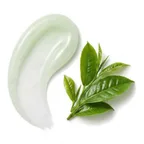 Plant Extracts
 Sodium Hyaluronate
 Vitamin E
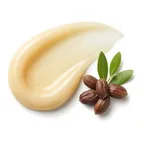 Jojoba Oil
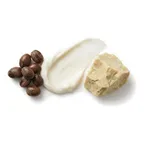 Shea Butter
Average
- AverageOily Skin Fit
- AverageEffectiveness
- HighSafety
Works for oily skin; other moisturizers fit it better.
This fit is calculated for the concerns frequently associated with oily skin: shine, enlarged pores, blackheads, and blemishes. For scores and recommendations based on your full skin profile, including your 12D face scan results and any goals or preferences you have, please use the Lovi app.
Updated How the Fit score works
Lovi Assistant explains
- Offers moderate suitability for your oily skin, as jojoba seed oil and squalane provide emollient action that supports hydration and barrier resilience. Glycerin and sodium hyaluronate further enhance moisturizing benefits, though these ingredients are not specifically targeted for controlling oily shine.
- The formula is generally safe for your oily skin, with no harsh ingredients that would cause irritation.
- While providing good hydration, the product does not directly address your primary concern of oily shine.
How to apply
- Could be used as part of your AM or PM routine every day to keep your face fresh.
- Apply this moisturizer after cleansing and toning, but right before your SPF in the morning.
- Gently press a small amount into your skin and let it absorb fully.
- Apply on clean, slightly dry skin to help control that oily shine.
- Avoid the eye area and do a quick patch test before your first use.
People Say
★3.8Overall rating based on 800+ reviewsThis serum foundation is widely praised by users with dry or mature skin for its deeply hydrating properties and "your skin but better" dewy finish. It is frequently criticized for its messy packaging and may be unsuitable for oily skin types due to its rich, oil-based texture that can feel greasy or sit on top of the skin.
Highlights
Natural glowy finish Mostly Mentioned
- “Gave her skin a stunning glow”
- “Perfect for a quick natural make up look”
- “Complexion instantly appears more even and radiant”
- “Leaves a healthy glow effect.”
Hydrating for dry skin Often Mentioned
- “Nourishes dry plant oils”
- “Does so much more for me than other glow products”
- “Skin feels hydrated all day”
- “Great for midlife skin.”
Lightweight feel Often Mentioned
- “Feels like you are not wearing any product”
- “Lightweight skin tint”
- “Melts into the face”
- “Barely there feel.”
Leaky packaging Often Mentioned
- “Bottle cannot be stored on its side, it leaks”
- “Oil seems to ooze from the top”
- “Messy pipette dropper”
- “Leaks even when fully tightened.”
Easy application Sometimes Noted
- “Blends well and feels comfortable”
- “Easy to apply with fingertips”
- “You don't even really need a mirror.”
Greasy/Oily texture Sometimes Noted
- “Sits on top of the skin and feels oily”
- “Feels greasy”
- “Looked oily or sweaty”
- “Separates on the face.”
Very sheer coverage Sometimes Noted
- “Shows every imperfection”
- “Does not cover acne scarring”
- “Accentuates every pore”
- “Too sheer for evening wear.”
Strong fragrance Rarely Noted
- “Has a vague watermelon smell”
- “Fragrance is delicious (but strong)”
- “Typical Clarins fragrance.”
Sources: lovi.care, clarins.co.uk, johnlewis.com, sephora.com.au, escentual.com, bellyrubzbeauty.com, and more
Questions and answers
How well does Clarins Tinted Oleo-Serum work for oily skin?
Clarins Tinted Oleo-Serum works reasonably well for oily skin by providing safe hydration and barrier support, though it does not target oily shine. An ideal product of this type for oily skin needs a lightweight texture with peptides and hydrating agents, along with the absence of heavy oils to keep the skin clear and comfortable.
Which ingredients make this serum a good fit for oily skin?
This serum works for your oily skin because jojoba seed oil and squalane help keep your skin barrier strong, while glycerin and sodium hyaluronate provide good moisture. However, because it does not control oily shine, a moisturizing treatment for this skin needs lightweight peptides and hydrating ingredients that manage oil and keep pores clear without heavy oils.
What do Plant Extracts do for oily skin?
Plant extracts help balance oily skin by controlling extra oil and calming redness. They work by regulating the body processes that make oil and keeping pores clear so your face looks less shiny and feels smooth.
What does Hyaluronic Acid do for oily skin?
Hyaluronic acid helps oily skin by reducing extra oil and sebum production without causing irritation. Clinical studies show that it decreases lipid synthesis in the skin's oil glands, leaving the face balanced and calm.
Where does this serum go in a skincare routine for oily skin?
This treatment goes in the evening routine, after cleansing and before your moisturizer. Oily skin also needs ingredients and products that help control shine and reduce excess oil.
Can I use this serum with retinol, and in what order?
You can use this moisturizing treatment with retinol by applying the treatment after your retinol absorbs, as it helps keep your skin soft and comfortable without harsh irritation. Oily skin works best with lighter hydrators and ingredients that help balance shine while maintaining moisture.
How often should I use this serum?
You can use this treatment in the evening as part of your routine. It provides good hydration for your skin, though an oily skin type needs lightweight or oil-controlling ingredients that specifically target shine.
Can this serum clog pores, cause breakouts or purging for oily skin?
This moisturizing treatment is unlikely to clog your pores or cause irritation on oily skin, though its jojoba oil and shea butter may feel a bit greasy since it is not made to control shine. Oily skin often does better with lightweight, oil-free hydrators and ingredients that help clear excess oil without heavy butters.
Can I use this serum around the eyes or on my body?
You can use this moisturizing treatment on your body, but it is not specifically designed for the thin skin around the eyes. A product for this area needs light, targeted ingredients that absorb easily without feeling heavy.
Is this serum fragrance-free and alcohol-free?
It has no drying alcohol and contains fragrance (parfum). Cetearyl alcohol is a fatty alcohol, which soften the skin.
What the research says
A single application of a moisturizing fluid containing hyaluronic acid 1%, glycerin 5%, and Centella asiatica stem cells extract significantly increased skin hydration by 29% and reduced transepidermal water loss at 24 hours compared to baseline and an untreated control site in twenty healthy women.
Clinical, Cosmetic and Investigational Dermatology, 2017Topical application of tocopherol succinate ethosomal gel decreased erythema, melanin, and sebum levels while improving moisture content and skin elasticity in 34 human women.
Journal of Cosmetic Dermatology, 2024Clay jojoba oil facial masks reduced total skin lesions by a mean of 54% after 6 weeks in 133 participants with acne-prone, lesioned skin and mild acne compared to baseline.
Forschende Komplementarmedizin, 2012Topical application of 0.1% hyaluronic acid formulations of different molecular weights led to significant improvements in skin hydration and elasticity, with low-molecular-weight formulations also significantly reducing wrinkle depth in seventy-six female subjects compared to a vehicle control.
Journal of Drugs in Dermatology, 2011Topical hyaluronic acid serum used twice daily by 40 females with facial photoaging produced an immediate 134% increase in skin hydration, a sustained 55% increase at week 6, and significant improvements in smoothness, plumping, fine lines, wrinkles, and global appearance without causing irritation.
Dermatology and Therapy, 2021A topical antioxidant serum significantly reduced air pollution-induced skin pigmentation and proinflammatory gene expression ex vivo, and improved skin aging signs in 40 healthy adult females after 90 days of daily use.
Journal of Cosmetic Dermatology, 2022Topical application of an antioxidant serum containing 15% ascorbic acid, 0.5% ferulic acid, and 1% tocopherol prevented particulate matter-induced degradation of extracellular matrix components, inflammation, and oxidative stress in the skin of 15 female volunteers compared to untreated controls.
Journal of Cosmetic Dermatology, 2025Dermatological products containing d-alpha tocopheryl acetate showed non-comedogenic potential with less than a 50% increase in microcomedones in 12 healthy male subjects compared to octyl palmitate.
Contemporary Clinical Trials Communications, 2021Topical application of an antioxidant mix containing 15% ascorbic acid, 0.5% ferulic acid, and 1% tocopherol prevented PM and UV-induced skin barrier perturbation, lipid peroxidation, inflammatory markers, MMP9 activation, and Type I collagen loss in 15 healthy females compared to untreated exposed skin.
Journal of Cosmetic Dermatology, 2024Topical formulations containing 3.75% glycerol and 1.25% hydrolyzed jojoba esters produced significantly lower evaporative TEWL values compared to glycerol alone at 8 and 24 hours posttreatment in human subjects.
Journal of Cosmetic Dermatology, 2008Topical application of 1.0% Lactobacillus ferment from jojoba cake significantly increased skin collagen fluorescence compared to baseline and placebo cream over 56 days in 46 individuals.
International Journal of Cosmetic Science, 2026Topical application of jojoba, almond, paraffin, and petrolatum oils on human skin increases free water and transforms water toward a weakly hydrogen-bonded state in the uppermost stratum corneum.
International Journal of Cosmetic Science, 2020A skin barrier restoring cream with shea butter, silkflo, and vitamin E increased type I procollagen synthesis, enhanced antioxidant enzyme activity, decreased reactive oxygen species generation, and promoted hyaluronic acid production in H2O2-stimulated human keratinocyte cells compared to untreated cells.
International Journal of Cosmetic Science, 2025
Why other moisturizers fit oily skin better
Epigallocatechin-3-gallate significantly improved acne in patients compared to the control side during an 8-week clinical trial.
The Journal of Investigative Dermatology, 2013
Ingredients
Water, Glycerin, Caprylic Capric Triglyceride, Cetearyl Alcohol, Cetearyl Glucoside, Squalane, Jojoba Seed Oil, Shea Butter, Tocopherol Vitamin E, Aloe Barbadensis Leaf Juice, Sodium Hyaluronate, Parfum, Phenoxyethanol, Ethylhexylglycerin, Ci 77891 Titanium Dioxide, Ci 77491 Iron Oxides
Behind this fit score
Lovi calculates every fit score from the full ingredient list with brand-independent rules our dermatologists and cosmetic chemists build and review, and personalizes every pick with AI trained on the real results of millions of users. Lovi trains its fit score models on a proprietary dataset built from more than 10,000 expert-labeled products and more than 100,000 simulated examples, following an internally consistent methodology presented at Cosmoprof, AMWC, and Skin of Color Update.
-

Co-founder, Medical Director
Cosmetic chemist, cosmetologist, aesthetic products developer
-

Co-founder, CEO and CTO
PhD in computer science, 3x US patent holder, ex-Google, ex-Yandex
-

Dr. Sofía Perea Pérez, MD, MSc
Medical Board
Aesthetic medicine practitioner, MSc in Longevity and Anti-Aging Medicine
-

Medical Board
Specialist dermatologist, MBBS, MD, IFAAD
-

Medical Board
Cosmetic chemist, SCS, IFSCC member
-

Medical Board, Medical Advisor
Dermatology MD
-

Elina Nazarenko, MD
Medical Board
Dermatology and diagnostic consultant
-

Victoria Derkova, MS
Medical Board
Cosmetic chemist, cosmetic development technologist


How does it fit your skin?
Scan your face, then any product: Lovi shows how well it fits you and what fits even better.