
BYOMA Sensitive Retinol Oil for dry sensitive skin

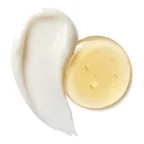 Barrier Lipids
 Vitamin A
 Squalane
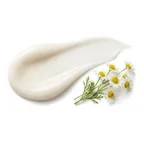 Bisabolol
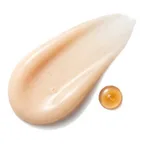 Hydroxypinacolone Retinoate
Average
- AverageDry Skin Fit
- AverageEffectiveness
- HighSafety
Works for dry sensitive skin; other moisturizers fit it better.
This fit is calculated for the concerns frequently associated with dry sensitive skin: flakiness, tightness, redness, fine lines, and wrinkles. For scores and recommendations based on your full skin profile, including your 12D face scan results and any goals or preferences you have, please use the Lovi app.
Updated How the Fit score works
Lovi Assistant explains
- Offers moderate suitability for your dry skin, as squalane and caprylic capric triglyceride provide emollient action to address dryness and flakiness. However, the formula lacks sufficient humectants for optimal hydration.
- The presence of squalane and bisabolol offers excellent moisturizing and soothing benefits, aligning well with your dry and sensitive skin concerns.
- The product is safe for your dry and sensitive skin, featuring soothing ingredients like Bisabolol and Magnolia Officinalis Bark Extract with no harsh or prohibited components.
How to apply
- Could be used as part of your AM or PM routine. Start using this moisturizer 3 times a week and move to daily use if your dry skin tolerates it well.
- Apply this moisturizer after cleansing and toner in the morning, or after your serum in the evening. Always pair it with SPF in the morning.
- Gently press a small amount of the moisturizer into your skin. Avoid rubbing it harshly to protect your sensitive skin.
- Apply the moisturizer on slightly damp skin to help with hydration absorption. This also works well for dry and flaky skin types.
- Do a patch test before your first use. Avoid the eye area to prevent any irritation.
People Say
★4.6Overall rating based on 300+ reviewsThis lightweight oil is praised as an excellent retinol for sensitive skin, with users frequently reporting softer, brighter, and smoother complexions without irritation. Most users find it absorbs quickly and hydrates well, though a moderate number of users with oily skin experience absorption issues and a low number find it too gentle for dramatic results.
Highlights
Gentle, non-irritating Mostly Mentioned
- “no irritation at all”
- “didn't experience any flaky skin”
- “great for sensitive skin”
- “skin felt calmer”
Improves texture Often Mentioned
- “skin was soft the next morning”
- “texture greatly improved”
- “visibly improving skin's tone”
- “complexion looked brighter”
Lightweight, absorbs fast Often Mentioned
- “absorbs quickly”
- “felt practically weightless”
- “non-greasy”
- “sinking into skin”
Hydrating, barrier support Sometimes Noted
- “hydrates while delivering benefits”
- “nourish the skin barrier”
- “hydrated as can be”
- “reduces moisture loss”
Absorption issues Sometimes Noted
- “sat over my skin like a glaze”
- “would not absorb”
- “tacky residue”
- “lingering stickiness”
Adverse reactions Rarely Noted
- “made my wrinkles worse”
- “hated every minute”
- “caused breakouts”
- “clogged pores”
Packaging complaints Rarely Noted
- “packaging feels a little cheap”
- “hard to read directions”
- “impossible to read the bottle”
Subtle results Rarely Noted
- “didn't notice much difference”
- “too gentle”
- “weak for experienced users”
- “ok but not a favourite”
Sources: lovi.care, boots.com, spacenk.com, ulta.com, independent.co.uk, cultbeauty.co.uk, and more
Questions and answers
How well does BYOMA Sensitive Retinol Oil work for dry sensitive skin?
BYOMA Sensitive Retinol Oil works reasonably well for dry sensitive skin because squalane and bisabolol help soothe and soften dryness, though other products fit this skin type better. To provide optimal care for dry sensitive skin, a product of this type needs multiple forms of hyaluronic acid, pro vitamin B5, and ceramides to deliver deep and lasting hydration and support the skin barrier.
Which ingredients make this oil a good fit for dry sensitive skin?
Squalane and caprylic capric triglyceride help smooth dry areas, while bisabolol and magnolia officinalis bark extract soothe sensitive skin. To truly thrive, dry sensitive skin needs a product of this type that also includes multiple forms of hyaluronic acid, pro vitamin B5, and ceramides for deep, lasting hydration and barrier support.
What do Barrier Lipids do for dry sensitive skin?
Barrier lipids help dry sensitive skin by locking in moisture and strengthening the skin barrier against irritation. Using creams with ceramides and other natural skin fats may reduce water loss, calm redness, and make dry skin feel much softer.
What does Vitamin A do for dry sensitive skin?
Vitamin A helps build collagen and smooth lines, but for dry sensitive skin it needs a gentle delivery system and added hydrating ingredients to improve dryness and keep skin comfortable.
The Journal of Investigative Dermatology, 2000Journal of Cosmetic Dermatology, 2016
Where does this oil go in a skincare routine for dry sensitive skin?
This oil goes in the evening routine after your toner and before your moisturizer. A product of this type for dry sensitive skin also needs plenty of water-attracting ingredients to keep skin fully hydrated.
Can I use this oil with vitamin C, and in what order?
You can use this oil with vitamin C by applying vitamin C in the morning and saving this oil for your evening routine. Using both together in the same routine may be too strong for dry and sensitive skin, so separating them helps prevent irritation. A product of this type needs extra moisture-attracting ingredients and barrier-supporting lipids to fully comfort and hydrate dry skin.
How often should I use this oil?
This oil works well as an evening treatment, so you can apply it as part of your nighttime routine. To give dry and sensitive skin the best care, this product type also needs extra water-attracting ingredients to lock in optimal hydration.
Journal of Cosmetic Dermatology, 2020Health Science Reports, 2021
Can this oil clog pores, cause breakouts or purging for dry sensitive skin?
This oil is unlikely to clog pores or cause breakouts on dry sensitive skin, as it features soothing ingredients like bisabolol and magnolia bark extract with a very low risk of adverse reactions. However, because retinol can sometimes cause initial skin shedding or purging, you may want to start using it slowly.
Can I use this oil around the eyes or on my body?
You can use this moisturizing treatment on your body and around the eyes, though dry and sensitive skin needs a product with extra moisture-binding ingredients for best results.
Is this oil fragrance-free and alcohol-free?
Yes, it has no fragrance and no drying alcohol.
What the research says
Topical application of an emollient emulsion containing 15.0% caprylic/capric triglyceride doubled the amount of urocanic acid isomers and increased skin hydration with reduced transepidermal water loss in healthy subjects, though it did not prevent ultraviolet-induced urocanic acid isomerization.
Life, 2023Application of squalene/phosphotungstate calcium nanowires (Sql/PWC) oleogel on UVB-irradiated skin decreased epidermal thickness, increased dermal thickness, and promoted the expression of elastin, collagen, and skin barrier markers through antioxidant and anti-inflammatory activities.
Journal of Nanobiotechnology, 2025Plant-derived squalane protected human dermal fibroblasts against UVA-induced damage by counteracting ROS formation, suppressing apoptosis-related proteins p53, caspase-3, caspase-9, and PARP, and restoring the pro-survival p-Akt/mTOR pathway.
Antioxidants, 2025Methoxylation of magnolol and honokiol significantly enhanced dermal accumulation and follicular targeting while decreasing transdermal penetration and skin irritation, producing efficient and safe candidates for treating inflammatory skin disorders.
International Journal of Pharmaceutics, 2013Topical bakuchiol 0.5% applied twice daily compared with retinol 0.5% applied daily significantly decreased wrinkle surface area and hyperpigmentation with no statistical difference between the compounds in 44 patients over 12 weeks, while retinol users reported more facial skin scaling and stinging.
The British Journal of Dermatology, 2019Topical 0.3% and 1% retinol comparably improved biomarkers of cutaneous photoageing in photoaged volunteers, while 0.3% retinol demonstrated better tolerance with fewer and milder adverse events compared to 1% retinol in a daily escalation regimen.
International Journal of Cosmetic Science, 2022Daily application of 0.3% and 0.5% retinol serums in 37 volunteers over 12 weeks reduced skin hyperpigmentation, unevenness, and wrinkles on both sides of the face, with the 0.5% concentration causing more frequent and intense skin irritation.
Skin Pharmacology and Physiology, 2020Application of fullerene-C60 dissolved in squalane cream twice daily for 8 weeks significantly enhanced skin moisture and reduced wrinkle formation compared to placebo in 23 Japanese women without severe side effects.
Journal of Nanoscience and Nanotechnology, 2010Squalane at 0.005-0.015% counteracts UVA-induced oxidative stress, inflammation, and collagen metabolism inhibition while stimulating fibroblast migration in human dermal fibroblasts.
Molecules, 2025Application of an alpha-bisabolol-containing cream produced a significant skin-lightening effect in pigmented skin compared to a vehicle control in the majority of female subjects after 8 weeks.
International Journal of Cosmetic Science, 2010The combination of allantoin, bisabolol, D-panthenol and dipotassium glycyrrhizinate reduces UVB-induced PGE2, inflammatory cytokines, and mitochondrial superoxide in human epidermal keratinocytes.
International Journal of Cosmetic Science, 2024A topical serum containing hydroxypinacolone retinoate and peptides used twice daily for 16 weeks achieved parity or statistically significantly better improvement in facial aging parameters compared to a single fractional CO2 laser treatment in women with moderate global photodamage.
Journal of Cosmetic Dermatology, 2025Combined probiotic supplementation and topical azelaic acid with hydroxypinacolone retinoate reduced non-inflammatory lesions from 11.5 to 7.3 and decreased microscopic acne features measured by reflectance confocal microscopy and dynamic optical coherence tomography in 20 patients over 12 weeks.
Journal of Clinical Medicine, 2023Hydroxypinacolone retinoate and retinyl propionate at a 5:9 weight ratio synergistically enhanced antiaging gene expressions in vitro and improved skin wrinkles, smoothness, transepidermal water loss, and elasticity in 42 Chinese urban women over an 8-week period without adverse reactions compared to retinol.
Journal of Cosmetic Dermatology, 2023
Why other moisturizers fit dry sensitive skin better
In 50 participants with sensitive skin, a Ceramide NP C15-containing emollient improved skin barrier function with a significant reduction in transepidermal water loss and induced modest changes in skin microbiota compared to the vehicle.
Skin Pharmacology and Physiology, 2026A formulation containing glycerol (5%) and xylitol (5%) applied twice daily for 14 days increased skin hydration, filaggrin protein quantity, interdigitation index, and biomechanical properties, and decreased transepidermal water loss compared to untreated and vehicle-treated skin in twelve volunteers with dry skin.
Acta Dermato-venereologica, 2017Topical dexpanthenol acts as a moisturizer, improves stratum corneum hydration, accelerates wound healing and epidermal regeneration, reduces erythema, and improves symptoms of skin irritation compared to vehicle or no pretreatment.
American Journal of Clinical Dermatology, 2002
Ingredients
Cetyl Ethylhexanoate, Squalane, Glycine Soja Oil Soybean Oil, Dimethyl Isosorbide, Hydroxypinacolone Retinoate, Tocopherol, Helianthus Annuus Seed Oil Sunflower Seed Oil, Daucus Carota Sativa Seed Oil Carrot Seed Oil, Caprylic Capric Triglyceride, Bisabolol, Magnolia Officinalis Bark Extract, Camellia Oleifera Seed Oil
Behind this fit score
Lovi calculates every fit score from the full ingredient list with brand-independent rules our dermatologists and cosmetic chemists build and review, and personalizes every pick with AI trained on the real results of millions of users. Lovi trains its fit score models on a proprietary dataset built from more than 10,000 expert-labeled products and more than 100,000 simulated examples, following an internally consistent methodology presented at Cosmoprof, AMWC, and Skin of Color Update.
-

Co-founder, Medical Director
Cosmetic chemist, cosmetologist, aesthetic products developer
-

Co-founder, CEO and CTO
PhD in computer science, 3x US patent holder, ex-Google, ex-Yandex
-

Dr. Sofía Perea Pérez, MD, MSc
Medical Board
Aesthetic medicine practitioner, MSc in Longevity and Anti-Aging Medicine
-

Medical Board
Specialist dermatologist, MBBS, MD, IFAAD
-

Medical Board
Cosmetic chemist, SCS, IFSCC member
-

Medical Board, Medical Advisor
Dermatology MD
-

Elina Nazarenko, MD
Medical Board
Dermatology and diagnostic consultant
-

Victoria Derkova, MS
Medical Board
Cosmetic chemist, cosmetic development technologist


How does it fit your skin?
Scan your face, then any product: Lovi shows how well it fits you and what fits even better.