
Aēsop Damascan Rose Facial Treatment for acne-prone skin

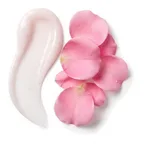 Damascan Rose
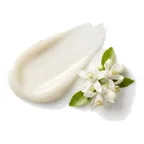 Neroli Blossom
 Vitamin A
 Vitamin E
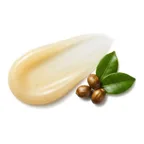 Camellia Japonica Seed Oil
Low
- AverageCombination Skin Fit
- HighEffectiveness
- ConcerningSafety
A weak match for acne-prone skin; the moisturizers alongside fit it better.
This fit is calculated for the concerns frequently associated with acne-prone skin: breakouts, blackheads, and post-acne marks. For scores and recommendations based on your full skin profile, including your 12D face scan results and any goals or preferences you have, please use the Lovi app.
Updated How the Fit score works
Lovi Assistant explains
- Offers moderate moisturizing for your combination skin, as Camellia Japonica Seed Oil and Rosa Canina Oil Fruit provide emollient action, though they may not sufficiently address oilier areas.
- The formula provides general skincare benefits like hydration and soothing, which are supportive but not directly targeted at your acne, blemishes, and breakouts.
How to apply
- Use your moisturizer twice a day in your AM and PM routines. Apply it daily to help keep breakouts under control.
- Apply after your cleanser and toner, and make sure to use your SPF right after in the morning.
- Gently spread a small amount of moisturizer over your face using soft motions. Let it absorb into the skin for a minute before getting dressed or applying makeup.
- Apply on slightly damp skin to help lock in extra moisture. This keeps your combination skin balanced without feeling heavy.
- Avoid the eye area and do a patch test before your first use. Stop using if you feel any irritation.
People Say
★4.4Overall rating based on 100+ reviewsBased on limited data, this facial oil is frequently recommended for dry and distressed skin, providing immediate softness and hydration. Most users appreciate its earthy, botanical scent and non-greasy feel. However, some users report breakouts or find the herbal fragrance polarizing.
Highlights
Deep Hydration Mostly Mentioned
- “woke up with baby-soft skin”
- “hefty hit of hydration”
- “sinks in quickly without greasy after-feel”
Luxurious Scent Often Mentioned
- “smells divine”
- “earthy and warm”
- “relaxing and real scent”
- “intoxicating smell”
High Price Often Mentioned
- “quantity is too small”
- “expensive for the amount”
- “price is the downside”
- “luxury splurge”
Non-Greasy Texture Sometimes Noted
- “absorbs well into the skin”
- “light silky oil”
- “doesn't leave residue”
- “dry oil finish”
Skin Rescue Sometimes Noted
- “saved my skin”
- “calms redness”
- “restores balance to parched skin”
Scent Dislike Sometimes Noted
- “smells like carrots”
- “too herbal”
- “not a typical rose scent”
- “spicy aspect”
Packaging Concerns Rarely Noted
- “pipette means potential contamination”
- “exposure to air”
- “risk of oxidation”
Skin Reactions Rarely Noted
- “caused breakouts”
- “bad reaction”
- “redness and itching”
Sources: lovi.care, spacenk.com, cultbeauty.co.uk, sephora.co.uk, influenster.com, dermstore.com, and more
Questions and answers
Why is Aēsop Damascan Rose Facial Treatment a weak match for acne-prone skin?
This product is a weak match for your acne-prone skin because its oils may not sufficiently address oilier areas, and it lacks targeted ingredients for breakouts. To fit this skin type well, a product of this type needs effective ingredients that target blemishes without irritation, along with soothing extracts and hydration that balance combination skin.
Which ingredients make this treatment a poor fit for acne-prone skin?
Oils like Camellia Japonica Seed Oil and Rosa Canina Oil Fruit make this a weak match by offering moisturizing benefits that may not suit oilier areas or address breakouts. Acne-prone skin needs a product that is highly suitable with effective ingredients for blemishes, poses no irritation risk, and includes peptides and soothing extracts to hydrate and repair without imbalance.
What does Damask Rose do for acne-prone skin?
Damask Rose helps keep acne-prone skin clear because its extracts reduce the bacteria that cause breakouts. It may also calm redness and soothe irritation safely.
What does Neroli Blossom do for acne-prone skin?
Neroli Blossom helps calm acne-prone skin by soothing redness and balancing natural oils without feeling heavy. Its gentle nature is unlikely to clog pores while keeping your face feeling soft and smooth.
Where does this treatment go in a skincare routine for acne-prone skin?
This treatment goes in the evening routine, after cleansing and before moisturizing, to keep things simple and safe around sun exposure. Because this is a weak match for your acne-prone skin, a product of this type needs lightweight hydrators and ingredients that directly target breakouts and blemishes.
Can I use it with retinol, and in what order?
You can use this moisturizing treatment with retinol by applying the retinol first, letting it absorb, and then following with the treatment to help soothe dry skin. This type of routine needs lightweight hydrators and ingredients that target breakouts without clogging pores for acne-prone skin.
How often should I use it?
This treatment is typically used in the evening as part of an acne-prone skincare routine. Daily application helps maintain skin moisture and smoothness, though acne-prone skin needs a product with targeted ingredients like salicylic acid or benzoyl peroxide to effectively manage breakouts.
Health Science Reports, 2021Journal of Drugs in Dermatology, 2015
Can this treatment clog pores, cause breakouts or purging for acne-prone skin?
This moisturizing treatment may not be the best match for acne-prone skin because its rich oils can feel too heavy and potentially clog pores in oilier areas. A product for this type of skin needs lightweight, non-greasy hydrators and ingredients that directly target blemishes to help keep skin clear and smooth.
Can I use it around the eyes or on my body?
This product can be used on the body and around the eyes, as its rich oils help soften and lock in moisture for thinner skin areas. Studies show that similar nourishing plant oils support the skin barrier and maintain hydration without causing irritation.
Is this treatment fragrance-free and alcohol-free?
It has no drying alcohol and contains fragrance (citronellol, geraniol, linalool, d-limonene, farnesol, and eugenol).
What the research says
Camellia japonica oil activated the human COL1A2 promoter, induced type I procollagen synthesis, inhibited matrix metalloproteinase-1 activity, and reduced trans-epidermal water loss without inducing adverse reactions in human skin.
Journal of Ethnopharmacology, 2007Alpha-tocopherol loaded nanostructured lipid carrier gel provided enhanced moisturizing and anti-aging properties in human volunteers over 12 weeks.
Journal of Cosmetic Dermatology, 2020Tocopherol succinate-loaded ethosomal gel increased skin deposition, stability, moisture, and mechanical properties in 13 human subjects compared to a control gel over 12 weeks.
Journal of Cosmetic Dermatology, 2022An emulgel containing 20% green tea extract and 5% rose oil provided good hydrating properties and effectiveness on the skin barrier function in ten female subjects.
Acta Pharmaceutica, 2013Topical bakuchiol 0.5% applied twice daily compared with retinol 0.5% applied daily significantly decreased wrinkle surface area and hyperpigmentation with no statistical difference between the compounds in 44 patients over 12 weeks, while retinol users reported more facial skin scaling and stinging.
The British Journal of Dermatology, 2019Topical 0.3% and 1% retinol comparably improved biomarkers of cutaneous photoageing in photoaged volunteers, while 0.3% retinol demonstrated better tolerance with fewer and milder adverse events compared to 1% retinol in a daily escalation regimen.
International Journal of Cosmetic Science, 2022Daily application of 0.3% and 0.5% retinol serums in 37 volunteers over 12 weeks reduced skin hyperpigmentation, unevenness, and wrinkles on both sides of the face, with the 0.5% concentration causing more frequent and intense skin irritation.
Skin Pharmacology and Physiology, 2020Topical application of an antioxidant serum containing 15% ascorbic acid, 0.5% ferulic acid, and 1% tocopherol prevented particulate matter-induced degradation of extracellular matrix components, inflammation, and oxidative stress in the skin of 15 female volunteers compared to untreated controls.
Journal of Cosmetic Dermatology, 2025Dermatological products containing d-alpha tocopheryl acetate showed non-comedogenic potential with less than a 50% increase in microcomedones in 12 healthy male subjects compared to octyl palmitate.
Contemporary Clinical Trials Communications, 2021Topical application of an antioxidant mix containing 15% ascorbic acid, 0.5% ferulic acid, and 1% tocopherol prevented PM and UV-induced skin barrier perturbation, lipid peroxidation, inflammatory markers, MMP9 activation, and Type I collagen loss in 15 healthy females compared to untreated exposed skin.
Journal of Cosmetic Dermatology, 2024
Why other moisturizers fit acne-prone skin better
Co-delivery of paeonol and madecassoside via nanoemulsions improved transdermal delivery, promoted barrier repair proteins, inhibited inflammatory cytokine secretion in cellular and 3D models, and reduced transepidermal water loss and acne in human facial skin compared to free components.
Molecules, 2023A facial serum containing snail secretion filtrate, Calendula officinalis, and Glycyrrhiza glabra root extract significantly reduced inflammatory acne lesions compared to placebo in 66 participants with mild-to-moderate maskne over 12 weeks.
Journal of Cosmetic Dermatology, 2022
Ingredients
Camellia Japonica Seed Oil, Oenothera Biennis Oil, Prunus Amygdalus Dulcis Oil, Rosa Canina Oil Fruit, Rice Bran Oil, Glycine Soja Oil Soybean Oil, Tocopherol, Helianthus Annuus Seed Oil Sunflower Seed Oil, Daucus Carota Sativa Seed Oil Carrot Seed Oil, Rosa Damascena Oil Flower, Citrus Aurantium Dulcis Oil Flower, Viola Odorata Oil, Daucus Carota Sativa Root Extract Carrot Root Extract, Beta-Carotene, Citronellol, Geraniol, Linalool, D-Limonene, Farnesol, Eugenol
Behind this fit score
Lovi calculates every fit score from the full ingredient list with brand-independent rules our dermatologists and cosmetic chemists build and review, and personalizes every pick with AI trained on the real results of millions of users. Lovi trains its fit score models on a proprietary dataset built from more than 10,000 expert-labeled products and more than 100,000 simulated examples, following an internally consistent methodology presented at Cosmoprof, AMWC, and Skin of Color Update.
-

Co-founder, Medical Director
Cosmetic chemist, cosmetologist, aesthetic products developer
-

Co-founder, CEO and CTO
PhD in computer science, 3x US patent holder, ex-Google, ex-Yandex
-

Dr. Sofía Perea Pérez, MD, MSc
Medical Board
Aesthetic medicine practitioner, MSc in Longevity and Anti-Aging Medicine
-

Medical Board
Specialist dermatologist, MBBS, MD, IFAAD
-

Medical Board
Cosmetic chemist, SCS, IFSCC member
-

Medical Board, Medical Advisor
Dermatology MD
-

Elina Nazarenko, MD
Medical Board
Dermatology and diagnostic consultant
-

Victoria Derkova, MS
Medical Board
Cosmetic chemist, cosmetic development technologist


How does it fit your skin?
Scan your face, then any product: Lovi shows how well it fits you and what fits even better.