Aveeno Protect + Hydrate Sunscreen for oily acne-prone skin

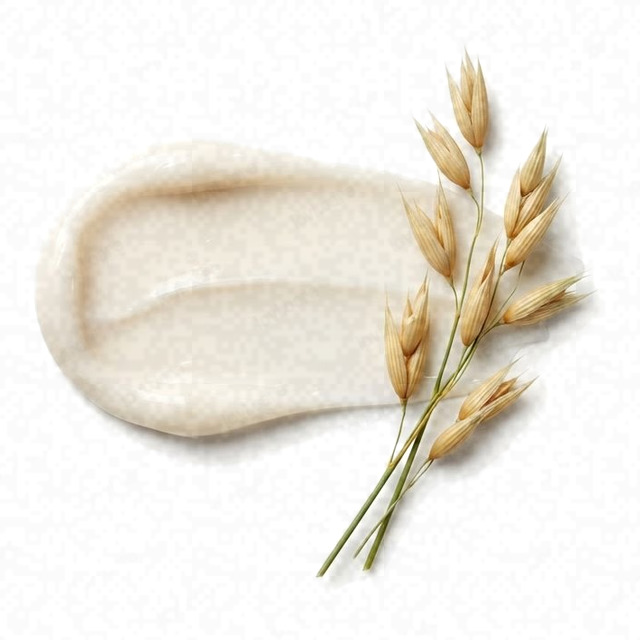 Oat
 Spf 50
Average
- HighOily Skin Fit
- AverageEffectiveness
- HighSafety
Works for oily acne-prone skin; other sunscreens fit it better.
- Clinical, Cosmetic and Investigational Dermatology, 2017
- Clinical, Cosmetic and Investigational Dermatology, 2018
This fit is calculated for the concerns frequently associated with oily acne-prone skin: shine, breakouts, blemishes, and enlarged pores. For scores and recommendations based on your full skin profile, including your 12D face scan results and any goals or preferences you have, please use the Lovi app.
Page built Nov 8, 2026How the Fit score works
Lovi Assistant explains
- Offers moderate moisturizing and a matte finish for your oily skin, with glycerin providing hydration and dimethicone helping to balance oil production. While beneficial for general skin health, these ingredients do not directly address your primary concerns of acne, blemishes, and breakouts.
- The inclusion of aloe vera and vitamin E offers some soothing and antioxidant benefits, which are supportive but not targeted for your specific skin issues.
- The product is safe for your skin, as it lacks harsh ingredients and is formulated without known irritants.
How to apply
- Use your moisturizing sunscreen every morning. Reapply throughout the day if you are outside.
- Apply this moisturizing sunscreen as the final step of your morning routine after your moisturizer.
- Gently smooth a nickel-sized amount over your face and neck, avoiding harsh rubbing to keep oily areas calm.
- Apply this moisturizing sunscreen on clean, dry skin to ensure even coverage and protection.
- Avoid getting the product into your eyes and do a patch test before your first use.
People Say
★4.5Overall rating based on 11.0k+ reviewsBased on a very large amount of data, this sunscreen is highly regarded for its hydrating properties and broad-spectrum protection, leaving no white cast, which is particularly beneficial for dry and sensitive skin. Some users with oily or acne-prone skin have noted a greasy feel, and a moderate number of reviews mention mild eye irritation from the chemical filters.
Highlights
Highly moisturizing Mostly Mentioned
- “Keeps my face hydrated”
- “Skin feels moisturized”
- “Provides all-day hydration”
- “Soft and moisturizing”
Lightweight, non-greasy Often Mentioned
- “Absorbs quickly, no greasy feel”
- “Not sticky, doesn't leave a greasy shine”
- “Lightweight sunscreen absorbs quickly”
- “Refreshing and weightless”
No white cast Often Mentioned
- “Does not cause whitening of the skin”
- “Not leaving a white residue”
- “Invisible lotion for face”
- “Rarely leaves a white cast”
Gentle on skin Sometimes Noted
- “Gentle on the skin”
- “No allergy after using it”
- “Suitable for sensitive skin”
- “Hypoallergenic and soothing”
Eye irritation Sometimes Noted
- “Stinging their eyes”
- “Can sting eyes”
- “Experienced eye irritation”
May cause oiliness Rarely Noted
- “Causing an oily look”
- “Made their skin oily”
- “Caused some breakouts”
Strong scent Rarely Noted
- “Scent too strong”
- “Slightly alcohol-like scent”
- “Fragrance is noticeable”
Watery texture Rarely Noted
- “Texture too watery”
- “More like face fluid”
- “Consistency is a bit thin”
Sources: lovi.care, iherb.com, influenster.com, whatsinmyjar.com, well.ca, skinsort.com, and more
Questions and answers
How well does Aveeno Protect + Hydrate Sunscreen work for oily acne-prone skin?
This sunscreen works moderately well for oily skin by offering hydration and a matte finish, though it does not directly target breakouts. Because it lacks ingredients to actively clear blemishes, a product of this type needs ingredients like niacinamide, zinc oxide, or centella asiatica to better support acne-prone skin.
Which ingredients make this sunscreen a good fit for oily acne-prone skin?
Glycerin helps provide lightweight hydration and dimethicone helps balance oil production for your oily skin. However, to truly fit oily and acne-prone skin well, a product of this type needs ingredients that directly address breakouts and blemishes, such as niacinamide, zinc oxide, or centella asiatica, alongside non-clogging hydrating components.
What does Oat do for oily acne-prone skin?
Oat helps calm redness and swelling on oily, acne-prone skin while easing irritation. It provides soothing care that is unlikely to clog pores.
Clinical and Experimental Dermatology, 2007Journal of Drugs in Dermatology, 2010
What does Spf 50 do for oily acne-prone skin?
Spf 50 helps protect oily, acne-prone skin from sun exposure that can trigger breakouts and worsen dark spots left by pimples. Using a specially formulated sunscreen may also improve overall acne symptoms and enhance your usual acne treatments without clogging pores.
Where does this sunscreen go in a skincare routine for oily acne-prone skin?
This sunscreen goes as the last step in your morning routine after you apply your moisturizer. While it provides moderate hydration and a matte finish for your oily skin, a product of this type needs targeted blemish-fighting ingredients and oil-balancing actives to truly fit acne-prone skin.
Can I use this sunscreen with retinol, and in what order?
You can use this moisturizing SPF in the morning after your treatment and before sun exposure, but it works best for your skin when paired with targeted acne-fighting ingredients like salicylic acid or benzoyl peroxide. This product provides gentle hydration and sun protection without irritation, though acne-prone skin often requires specialized active ingredients to properly manage breakouts.
How often should I use this sunscreen?
You can use this sunscreen every morning as the final step of your daytime routine to protect against the sun while keeping your skin balanced. For an oily and acne-prone skin type, this sunscreen works well enough, but this skin also needs targeted ingredients like salicylic acid or benzoyl peroxide to actively clear breakouts and blemishes.
Can this sunscreen clog pores, cause breakouts or purging for oily acne-prone skin?
This sunscreen is unlikely to cause harsh irritation or breakouts, but it does not directly target acne or blemishes. Because your skin is oily and prone to breakouts, this type of product needs ingredients that actively clear pores and keep oil completely under control.
Is this sunscreen fragrance-free and alcohol-free?
Yes, it has no fragrance and no drying alcohol. Cetearyl alcohol is a fatty alcohol, which soften the skin.
What the research says
A single application of a moisturizing fluid containing hyaluronic acid 1%, glycerin 5%, and Centella asiatica stem cells extract significantly increased skin hydration by 29% and reduced transepidermal water loss at 24 hours compared to baseline and an untreated control site in twenty healthy women.
Clinical, Cosmetic and Investigational Dermatology, 2017A repair cream containing Rhealba oat plantlets extract, l-ALA-l-GLU dipeptide, and hyaluronic acid provided immediate relief and was judged by doctors as good or very good in 96.8% of cases for wound healing in 2,363 patients following dermatological acts.
Clinical, Cosmetic and Investigational Dermatology, 2018Topically applied Avena sativa and Avena Rhealba oatmeal extracts significantly reduced skin irritation parameters including a* parameter increase and blood flow increase compared to vehicle in 12 healthy individuals subjected to the sodium lauryl sulfate irritation model.
Skin Pharmacology and Applied Skin Physiology, 2002Colloidal oat extracts diminished pro-inflammatory cytokines in vitro and colloidal oat lotion improved skin dryness, scaling, roughness, and itch intensity in healthy female subjects compared to baseline.
Journal of Drugs in Dermatology, 2015
Why other sunscreens fit oily acne-prone skin better
Co-delivery of paeonol and madecassoside via nanoemulsions improved transdermal delivery, promoted barrier repair proteins, inhibited inflammatory cytokine secretion in cellular and 3D models, and reduced transepidermal water loss and acne in human facial skin compared to free components.
Molecules, 2023Biomimetic hyaluronic acid-stabilized zinc oxide nanoparticles selectively inhibited C. acnes, outperformed erythromycin in preclinical acne models, and safely reduced acne lesions and redness in a clinical trial.
Journal of Controlled Release, 2025Topical 0.5% hyaluronic-ZnO nanogel applied twice daily reduced inflammatory-lesion counts by 58% at week four in human subjects compared to baseline without causing erythema.
Biomedicines, 2025
Ingredients
Avobenzone, Homosalate, Octisalate, Octocrylene, Oxybenzone, Water, Glycerin, Dimethicone, Aloe Barbadensis Leaf Juice, Tocopheryl Acetate Vitamin E, Cetearyl Alcohol, Steareth-21, Steareth-2, Glyceryl Stearate, Peg-100 Stearate, Acrylates C10-30 Alkyl Acrylate Crosspolymer, Triethanolamine, Disodium Edta, Phenoxyethanol
Behind this fit score
Lovi calculates every fit score from the full ingredient list with brand-independent rules our dermatologists and cosmetic chemists build and review, and personalizes every pick with AI trained on the real results of millions of users. Lovi trains its fit score models on a proprietary dataset built from more than 10,000 expert-labeled products and more than 100,000 simulated examples, following an internally consistent methodology presented at Cosmoprof, AMWC, and Skin of Color Update.
-

Co-founder, Medical Director
Cosmetic chemist, cosmetologist, aesthetic products developer
-

Co-founder, CEO and CTO
PhD in computer science, 3x US patent holder, ex-Google, ex-Yandex
-

Dr. Sofía Perea Pérez, MD, MSc
Medical Board
Aesthetic medicine practitioner, MSc in Longevity and Anti-Aging Medicine
-

Medical Board
Specialist dermatologist, MBBS, MD, IFAAD
-

Medical Board
Cosmetic chemist, SCS, IFSCC member
-

Medical Board, Medical Advisor
Dermatology MD
-

Elina Nazarenko, MD
Medical Board
Dermatology and diagnostic consultant
-

Victoria Derkova, MS
Medical Board
Cosmetic chemist, cosmetic development technologist


How does it fit your skin?
Scan your face, then any product: Lovi shows how well it fits you and what fits even better.