
The Ordinary Vitamin C Suspension 23% + HA Spheres 2% for oily acne-prone skin

 Ascorbic Acid
 Hyaluronic Acid Spheres
 Squalane
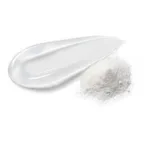 Silica Dimethyl Silylate
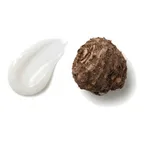 Glucomannan
Low
- AverageOily Skin Fit
- HighEffectiveness
- ConcerningSafety
A weak match for oily acne-prone skin; the serums alongside fit it better.
This fit is calculated for the concerns frequently associated with oily acne-prone skin: shine, breakouts, blemishes, and enlarged pores. For scores and recommendations based on your full skin profile, including your 12D face scan results and any goals or preferences you have, please use the Lovi app.
Updated How the Fit score works
Lovi Assistant explains
- Offers moderate brightening for your oily skin due to the high concentration of Ascorbic Acid, which helps even skin tone, but it lacks targeted ingredients to effectively address your acne, blemishes, and breakouts.
- While Sodium Hyaluronate provides general hydration, the formula does not offer strong seboregulation, which could pose risks for your oily skin.
Buy online


Prices checked 20 Nov 2026
The Lovi Fit is the same in every country; only the stores and prices differ, and the ones here are for Europe.
How to apply
- Could be used as part of your PM routine. Start 3 times a week and build up to daily use if your skin tolerates it well.
- Apply your serum after cleansing and toning, but before putting on your moisturizer.
- Gently press 2 to 3 drops of the serum into your skin and let it absorb for a minute.
- Apply the serum on clean, dry skin to help manage your blemishes safely.
- Do a patch test before your first use and avoid the delicate eye area.
People Say
★3.5Overall rating based on 2.6k+ reviewsBased on a very large amount of data, this product is widely polarized; users with resilient skin praise its high potency for rapidly fading hyperpigmentation and brightening dull complexions at an unbeatable price. A significant number of reviewers find the gritty, sandy texture and strong stinging sensation unpleasant, often deeming it unsuitable for sensitive skin or daytime use.
Highlights
Affordable price Mostly Mentioned
- “very affordable”
- “great price point”
- “best value vitamin C”
Gritty texture Mostly Mentioned
- “feels like sandpaper”
- “grainy and rough”
- “unpleasant sandy feel”
Brightens skin Often Mentioned
- “skin looks incredibly brighter”
- “wake up with radiant skin”
- “immediate glow”
Fades dark spots Often Mentioned
- “acne scarring fading faster”
- “reduced dark spots”
- “evened out skin tone”
Stinging and irritation Often Mentioned
- “burns upon application”
- “strong tingling sensation”
- “caused redness and peeling”
Smooths texture Sometimes Noted
- “skin feels plumper”
- “smooths texture”
- “softens fine lines”
Greasy finish Sometimes Noted
- “sits on skin”
- “looks very oily”
- “leaves greasy film”
Pilling issues Sometimes Noted
- “balls up immediately”
- “rolls off skin”
- “doesn't layer well”
Sources: lovi.care, theordinary.com, sephora.com, ultabeauty.com, cultbeauty.co.uk, reddit.com, and more
Questions and answers
Why is The Ordinary Vitamin C Suspension 23% + HA Spheres 2% a weak match for oily acne-prone skin?
This treatment is a weak match because it lacks targeted ingredients for acne and does not help control excess oil, which could pose risks for your oily skin. Treatments of this type need ingredients like niacinamide and propolis that manage excess oil and address blemishes without causing irritation.
Which ingredients make this cream a poor fit for oily acne-prone skin?
This cream is a weak match for your oily acne-prone skin because the heavy oils and squalane base lack oil control and breakout-fighting ingredients. Treatments for this skin need ingredients like niacinamide and propolis to balance oil and target blemishes safely.
What does Vitamin C do for oily acne-prone skin?
Vitamin C helps clear up oily acne-prone skin by reducing pimples and calming redness. It is a great choice for this skin type because it has a very safe profile and balances skin tone while fighting breakouts.
International Journal of Cosmetic Science, 2009Journal of Cosmetic Dermatology, 2010
What does Hyaluronic Acid do for oily acne-prone skin?
Hyaluronic acid helps oily, acne-prone skin by reducing excess oil production and calming breakouts without causing dryness or irritation. It may also help improve skin barrier function and reduce redness while delivering lightweight hydration.
The Journal of Investigative Dermatology, 2017Journal of Cosmetic Dermatology, 2022
Where does this cream go in a skincare routine for oily acne-prone skin?
This treatment goes in the evening routine after cleansing and toning, and before your moisturizer. Oily acne-prone skin needs a treatment that provides targeted ingredients to clear breakouts along with oil-balancing benefits.
Can I use this cream with niacinamide, and in what order?
You can use this cream with niacinamide by applying niacinamide first and following with this vitamin C treatment once it absorbs. This product is a weak match for your oily acne-prone skin because it lacks ingredients to target breakouts and oil control, so an acne-prone skin routine needs treatments with pore-clearing and oil-balancing ingredients.
How often should I use this cream?
This treatment is used in the evening once a week for your oily acne-prone skin, and people who tolerate it well and see good results can carefully use it more often. This product is a weak match because it lacks ingredients to target breakouts and does not control oil well, so this skin type needs targeted blemish-fighting ingredients and oil-balancing benefits.
Can this cream clog pores, cause breakouts or purging for oily acne-prone skin?
This cream is a weak match for your oily acne-prone skin because it lacks ingredients to address breakouts and may leave a greasy finish. A product for this skin needs oil-controlling ingredients and blemish-fighting agents to keep pores clear.
Is this cream fragrance-free and alcohol-free?
Yes, it has no fragrance and no drying alcohol.
What the research says
A topical serum containing vitamin C, vitamin E, and raspberry leaf cell culture extract improved skin color, elasticity, radiance, smoothness, scaliness, and wrinkles compared to the untreated contralateral side in fifty female volunteers.
Journal of Cosmetic Dermatology, 2020Vitamin C is widely used as a depigmenting agent in dermatology, though limited studies evaluate its use for gingival depigmentation.
Journal of Oral and Maxillofacial Pathology, 2020Hyaluronic acid-based formulations exhibit remarkable anti-wrinkle, anti-aging, and skin rejuvenating effects via soft tissue augmentation, improved skin hydration, and face volume restoration.
International Journal of Biological Macromolecules, 2018Topical application of 5% vitamin C cream significantly improved global clinical scores, increased skin microrelief density, and induced elastic tissue repair in photoaged skin compared to excipient control in healthy female volunteers.
Experimental Dermatology, 2003Topical application of VC-IP cream twice daily for 8 weeks reduces periorbital wrinkles in female subjects compared to a placebo cream.
Journal of Cosmetic Dermatology, 2022Topical treatment with 5% vitamin C and 0.1% madecassoside significantly improved clinical scores for wrinkles, suppleness, firmness, roughness, and skin hydration, along with functional and structural remodeling of the elastic fiber network in 20 female volunteers with photoaged skin after 6 months compared to baseline.
Experimental Dermatology, 2008Topical application of 0.1% hyaluronic acid formulations of different molecular weights led to significant improvements in skin hydration and elasticity, with low-molecular-weight formulations also significantly reducing wrinkle depth in seventy-six female subjects compared to a vehicle control.
Journal of Drugs in Dermatology, 2011Topical hyaluronic acid serum used twice daily by 40 females with facial photoaging produced an immediate 134% increase in skin hydration, a sustained 55% increase at week 6, and significant improvements in smoothness, plumping, fine lines, wrinkles, and global appearance without causing irritation.
Dermatology and Therapy, 2021A topical antioxidant serum significantly reduced air pollution-induced skin pigmentation and proinflammatory gene expression ex vivo, and improved skin aging signs in 40 healthy adult females after 90 days of daily use.
Journal of Cosmetic Dermatology, 2022Application of fullerene-C60 dissolved in squalane cream twice daily for 8 weeks significantly enhanced skin moisture and reduced wrinkle formation compared to placebo in 23 Japanese women without severe side effects.
Journal of Nanoscience and Nanotechnology, 2010Squalane at 0.005-0.015% counteracts UVA-induced oxidative stress, inflammation, and collagen metabolism inhibition while stimulating fibroblast migration in human dermal fibroblasts.
Molecules, 2025Plant-derived squalane protected human dermal fibroblasts against UVA-induced damage by counteracting ROS formation, suppressing apoptosis-related proteins p53, caspase-3, caspase-9, and PARP, and restoring the pro-survival p-Akt/mTOR pathway.
Antioxidants, 2025Glucomannan isolated from Candida utilis suppressed UVB-induced decreases in keratinocyte viability and apoptosis in vitro, and decreased UV-induced skin erythema formation in human volunteers in vivo.
Carbohydrate Research, 2008Konjac glucomannan alleviates skin damage by increasing the proportion of young cell populations and decreasing age- and pigmentation-related factors in UVB-exposed senescent human epidermal primary melanocytes and human fibroblasts.
Nutrients, 2020
Why other serums fit oily acne-prone skin better
Co-delivery of paeonol and madecassoside via nanoemulsions improved transdermal delivery, promoted barrier repair proteins, inhibited inflammatory cytokine secretion in cellular and 3D models, and reduced transepidermal water loss and acne in human facial skin compared to free components.
Molecules, 2023
Ingredients
Ascorbic Acid, Squalane, Isodecyl Neopentanoate, Isononyl Isononanoate, Coconut Alkanes, Ethylene Propylene Styrene Copolymer, Ethylhexyl Palmitate, Silica Dimethyl Silylate, Sodium Hyaluronate, Glucomannan, Coco-Caprylate Caprate, Butylene Ethylene Styrene Copolymer, Acrylates Ethylhexyl Acrylate Crosspolymer, Trihydroxystearin, Bht
Behind this fit score
Lovi calculates every fit score from the full ingredient list with brand-independent rules our dermatologists and cosmetic chemists build and review, and personalizes every pick with AI trained on the real results of millions of users. Lovi trains its fit score models on a proprietary dataset built from more than 10,000 expert-labeled products and more than 100,000 simulated examples, following an internally consistent methodology presented at Cosmoprof, AMWC, and Skin of Color Update.
-

Co-founder, Medical Director
Cosmetic chemist, cosmetologist, aesthetic products developer
-

Co-founder, CEO and CTO
PhD in computer science, 3x US patent holder, ex-Google, ex-Yandex
-

Dr. Sofía Perea Pérez, MD, MSc
Medical Board
Aesthetic medicine practitioner, MSc in Longevity and Anti-Aging Medicine
-

Medical Board
Specialist dermatologist, MBBS, MD, IFAAD
-

Medical Board
Cosmetic chemist, SCS, IFSCC member
-

Medical Board, Medical Advisor
Dermatology MD
-

Elina Nazarenko, MD
Medical Board
Dermatology and diagnostic consultant
-

Victoria Derkova, MS
Medical Board
Cosmetic chemist, cosmetic development technologist


How does it fit your skin?
Scan your face, then any product: Lovi shows how well it fits you and what fits even better.