
Desitin Maximum Strength Diaper Rash Paste for skin with dark spots

 Zinc Oxide
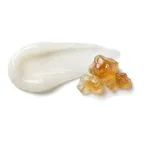 Petrolatum
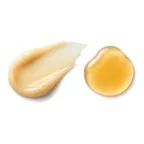 Cod Liver Oil
 Lanolin
 Tocopheryl Acetate
Caution
- AverageNormal Skin Fit
- HighEffectiveness
- ConcerningSafety
A poor match for skin with dark spots; the products alongside fit it better.
This fit is calculated for the concerns frequently associated with dark spots: hyperpigmentation, sun spots, and uneven skin tone. For scores and recommendations based on your full skin profile, including your 12D face scan results and any goals or preferences you have, please use the Lovi app.
Updated How the Fit score works
Lovi Assistant explains
- Offers supportive benefits for pigmentation and normal skin due to zinc oxide and tocopheryl acetate providing antioxidant and soothing functions, while glycerin offers humectant action.
- The formula's primary function is diaper rash protection, which is well-supported by zinc oxide and petrolatum, but it lacks targeted ingredients for significant pigmentation improvement.
Questions and answers
Why does Lovi advise caution with Desitin Maximum Strength Paste for skin with dark spots?
This product receives a caution rating for dark spots because its primary function is diaper rash protection and it lacks targeted ingredients for significant pigmentation improvement. A product for this skin needs effective brightening and exfoliating ingredients along with sun protection.
Which ingredients make this paste a poor fit for skin with dark spots?
This paste is a poor match for skin with dark spots because it is designed for diaper rash protection and lacks targeted brightening or exfoliating ingredients. Skin with dark spots needs products containing effective brightening and exfoliating ingredients that align with pigmentation goals, along with sun protection.
What does Petrolatum do for skin with dark spots?
Petrolatum is unlikely to directly fade dark spots, but it helps protect the skin barrier and lock in moisture. For dark spots, a product of this type needs added ingredients like niacinamide and N-acetyl glucosamine.
Where does this paste go in a skincare routine for skin with dark spots?
This paste is a poor match for skin with dark spots because it is made to protect against diaper rash rather than fade dark spots. Skin with dark spots needs targeted brightening ingredients and a proper treatment step to help improve uneven tone.
Can I use this paste with hydrocortisone, and in what order?
You should use hydrocortisone first, let it absorb fully, and then apply this paste on top to help seal it in. Because this product is made for diaper rash and lacks targeted ingredients for dark spots, skin with dark spots needs dedicated brightening treatments and antioxidant serums to fade uneven tone.
How often should I use this paste?
This paste is meant for protecting against diaper rash rather than fading dark spots, so it is not a routine part of caring for this skin type. Skin with dark spots needs targeted brightening ingredients and gentle exfoliants to help even out skin tone.
Can this paste clog pores, cause breakouts or purging for skin with dark spots?
This paste is unlikely to clog pores or cause breakouts for skin with dark spots, though its heavy petrolatum base may feel too thick on the face. Skin with dark spots needs lightweight brightening ingredients like vitamin C and exfoliating acids rather than heavy barrier-protection pastes.
Is this paste fragrance-free and alcohol-free?
Yes, it has no fragrance and no drying alcohol.
What the research says
A single application of a moisturizing fluid containing hyaluronic acid 1%, glycerin 5%, and Centella asiatica stem cells extract significantly increased skin hydration by 29% and reduced transepidermal water loss at 24 hours compared to baseline and an untreated control site in twenty healthy women.
Clinical, Cosmetic and Investigational Dermatology, 2017Topical 0.5% hyaluronic-ZnO nanogel applied twice daily reduced inflammatory-lesion counts by 58% at week four in human subjects compared to baseline without causing erythema.
Biomedicines, 2025Daily use of a deep cleansing gel containing salicylic acid 2%, zinc gluconate 0.2% and lipohydroxy acid 0.05% significantly reduced total lesion count by 56.3% after 84 days in 35 subjects with mild to moderate truncal acne.
Clinical, Cosmetic and Investigational Dermatology, 2023Topical zinc oxide nanogels formulated using Dendrobium anosmum showed greater effectiveness against Gram-positive acne-causing bacteria compared to chemogenic nanoparticles.
Molecules, 2023Topically applied extra virgin olive oil and petrolatum both significantly improved skin barrier function and microtopographic features in 54 healthy adult volunteers, with petrolatum exerting stronger occlusive effects and extra virgin olive oil uniquely promoting epidermal renewal.
Journal of Clinical Medicine, 2025Vaseline Petroleum Jelly accelerated barrier recovery and penetrated throughout the stratum corneum interstices in human volunteers after acetone-induced barrier disruption.
Journal of the American Academy of Dermatology, 1992Daily bathing with an emulsified lanolin and mineral oil bath additive significantly reduced dry skin severity on the lower legs of patients compared to usual bath soap over 17 days.
Cutis, 1981Sunscreen formulations containing ethoxylated lanolin as an additional film former resulted in lower and constant physical-mechanical parameters and a higher and better reproducible SPF compared to the formulation without it.
International Journal of Pharmaceutics, 2021Nanoemulsion-based lanolin derivatives increased skin hydration and oiliness without changing cutaneous pH values and proved non-toxic by causing no skin irritation.
Molecules, 2016A topical serum containing vitamin C, vitamin E, and raspberry leaf cell culture extract improved skin color, elasticity, radiance, smoothness, scaliness, and wrinkles compared to the untreated contralateral side in fifty female volunteers.
Journal of Cosmetic Dermatology, 2020A nighttime topical antioxidant containing resveratrol, baicalin, and vitamin E significantly improved fine lines, wrinkles, firmness, elasticity, laxity, hyperpigmentation, radiance, roughness, and dermal thickness in subjects with mild to moderately photodamaged skin over 12 weeks.
Journal of Drugs in Dermatology, 2014A topical antioxidant serum significantly reduced air pollution-induced skin pigmentation and proinflammatory gene expression ex vivo, and improved skin aging signs in 40 healthy adult females after 90 days of daily use.
Journal of Cosmetic Dermatology, 2022
Ingredients
Zinc Oxide, Petrolatum, Cod Liver Oil, Lanolin, Glycerin, Beeswax, Sorbitan Sesquioleate, Pentaerythrityl Tetra-Di-T-Butyl Hydroxyhydrocinnamate, Tocopheryl Acetate, Talc
Behind this fit score
Lovi calculates every fit score from the full ingredient list with brand-independent rules our dermatologists and cosmetic chemists build and review, and personalizes every pick with AI trained on the real results of millions of users. Lovi trains its fit score models on a proprietary dataset built from more than 10,000 expert-labeled products and more than 100,000 simulated examples, following an internally consistent methodology presented at Cosmoprof, AMWC, and Skin of Color Update.
-

Co-founder, Medical Director
Cosmetic chemist, cosmetologist, aesthetic products developer
-

Co-founder, CEO and CTO
PhD in computer science, 3x US patent holder, ex-Google, ex-Yandex
-

Dr. Sofía Perea Pérez, MD, MSc
Medical Board
Aesthetic medicine practitioner, MSc in Longevity and Anti-Aging Medicine
-

Medical Board
Specialist dermatologist, MBBS, MD, IFAAD
-

Medical Board
Cosmetic chemist, SCS, IFSCC member
-

Medical Board, Medical Advisor
Dermatology MD
-

Elina Nazarenko, MD
Medical Board
Dermatology and diagnostic consultant
-

Victoria Derkova, MS
Medical Board
Cosmetic chemist, cosmetic development technologist


How does it fit your skin?
Scan your face, then any product: Lovi shows how well it fits you and what fits even better.