
Supergoop! Glow Screen

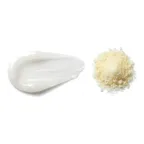 Avobenzone
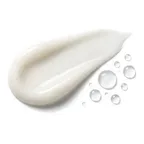 Octisalate
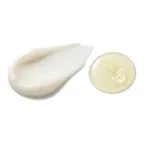 Octocrylene
Avobenzone, octisalate, and octocrylene filter UV rays and protect against the sun, so it suits most skin types. For skin that needs light hydration, sunscreens with hyaluronic acid get higher fit scores. Where to buy in Germany: Amazon.de and Notino, €42.50 to €65.80.
Each fit is calculated for the concerns frequently associated with that skin type. For scores and recommendations based on your full skin profile, including your 12D face scan results and goals, use the Lovi app.
Updated How the Fit score works
Where it fits best and least
Best fit Average
Oily Skin, Dry Skin, Sensitive Skin, Acne-Prone Skin, Skin with Dark Spots, Mature Skin, Dry Sensitive Skin, Oily Acne-Prone Skin
Works for oily skin; other sunscreens fit it better.
- Offers moderate suitability for your oily skin, as niacinamide helps regulate sebum and glycerin and hyaluronic acid provide hydration, though stronger mattifying or exfoliating ingredients would be more beneficial for oily shine.
Lowest fit Low
A weak match for combination skin.
- Offers moderate moisturizing and sun protection for your combination skin, with glycerin and hyaluronic acid providing hydration while avobenzone, octisalate, and octocrylene offer UV defense.
Buy online


Prices checked 22 Nov 2026
The Lovi Fit is the same in every country; only the stores and prices differ, and the ones here are for Germany.
How to apply
- Use this moisturizing sunscreen daily in your AM routine. Reapply every two hours when exposed to direct sun.
- Apply this moisturizing sunscreen as the final step of your morning routine after your moisturizer.
- Smooth an even layer of the moisturizing sunscreen over your face and neck, avoiding harsh rubbing.
- Avoid the immediate eye area and discontinue use if any irritation occurs.
People Say
★4.5Overall rating based on 15.0k+ reviewsBased on a very large amount of data, this product is highly regarded for creating a luminous and hydrating base, particularly beneficial for normal to dry skin, resulting in a healthy, sun-kissed appearance. Some users with oily, acne-prone, or sensitive skin have reported issues with greasiness, breakouts, or eye irritation. Additionally, individuals with very fair or deep skin tones have occasionally observed an unnatural orange or metallic cast.
Highlights
Radiant dewy finish Mostly Mentioned
- “It gives my skin the perfect dewy, luminous finish without looking greasy.”
- “Without being glittery the product gives your face a soft pearlescent glow.”
- “It gives a luminous, sunkissed finish that makes you look like you just had a great vacation.”
- “Loves the glow it gives me.”
Excellent makeup primer Often Mentioned
- “My foundation glides on seamlessly and stays put all day.”
- “Doubles amazingly as a makeup primer to smooth over pores and fine lines.”
- “It works beautifully under makeup as a hydrating primer.”
- “It also primes your face for makeup!”
Lightweight and hydrating Sometimes Noted
- “The lightweight texture is a dream to apply—it feels more like a moisturizer than sunscreen.”
- “Glowscreen doesn't feel like sunscreen, you'll forget you have on spf 40.”
- “My skin stayed hydrated even at high altitude, which can be really drying.”
- “It sinks in immediately to the skin leaving it feeling soft.”
Unnatural color cast Sometimes Noted
- “I am very pale with pink undertones and it is a bit too orange imo.”
- “If I applied that much... this makes me look straight up orange.”
- “Oily and messy, separates in the bottle and is very orange toned.”
- “I'm left looking like a melanated version of the tin man.”
Causes skin irritation Rarely Noted
- “I still get this burning sensation all over my face, especially around my eyes.”
- “4 out of 5 times I wear it, my eyes BURN.”
- “May lead to occasional breakouts.”
- “Broke me out.”
Greasy on oily Rarely Noted
- “If you're combination or oily, the dewy finish might feel like a lot.”
- “Some reviews mention that the product can feel a bit greasy.”
- “The shine feels too intense.”
- “Not suitable for those who prefer a matte finish.”
Sources: lovi.care, sephora.com, ulta.com, supergoop.com, target.com, bloomingdales.com, and more
Questions and answers
How well does Glow Screen work for oily skin?
Supergoop! Glow Screen works reasonably well for oily skin, as niacinamide helps keep extra oil in check while glycerin and hyaluronic acid provide light hydration without causing irritation. However, because it focuses heavily on a dewy glow and hydration, it does not specifically target oily shine the way stronger mattifying or exfoliating ingredients would.
Clinical, Cosmetic and Investigational Dermatology, 2017Archives of Dermatological Research, 2024
How well does Supergoop! Glow Screen work for dry skin?
Supergoop! Glow Screen works reasonably well for dry skin, providing helpful sun protection alongside hydration from glycerin and hyaluronic acid. It is very unlikely to cause irritation, but a product of this type for dry skin needs extra barrier-repairing ingredients like ceramides and soothing components like Centella Asiatica to fit even better.
Why is Supergoop! Glow Screen a weak match for combination skin?
Supergoop! Glow Screen is a weak match for combination skin because it lacks specific ingredients to target oily shine. A product of this type needs ingredients that effectively manage oily shine and provide sun protection without clogging pores.
Is it fragrance-free and alcohol-free?
Yes, it has no fragrance and no drying alcohol. Cetearyl alcohol, behenyl alcohol, and cetyl alcohol are fatty alcohols, which soften the skin.
How well does Supergoop! Glow Screen work for sensitive skin?
Supergoop! Glow Screen works reasonably well for sensitive skin, though other products fit it better because they have stronger soothing ingredients and ceramides that better calm redness and irritation without any risk of trouble.
How well does Supergoop! Glow Screen work for acne-prone skin?
Supergoop! Glow Screen works reasonably well for acne-prone skin by offering sun protection and hydration, but it lacks targeted ingredients to directly address blemishes. A moisturizing sunscreen for this skin type needs effective soothing ingredients that clear breakouts and provide sun protection without clogging pores.
How well does Supergoop! Glow Screen work for skin with dark spots?
Supergoop! Glow Screen works moderately well for skin with dark spots, as its niacinamide and sodium ascorbyl phosphate help brighten the skin and prevent further pigmentation with strong sun protection. To fit this skin even better, a product of this type needs multiple ceramides, soothing agents, and additional high-quality brightening and hydrating ingredients.
The British Journal of Dermatology, 2002Experimental Dermatology, 2012
How well does Supergoop! Glow Screen work for mature skin?
Supergoop! Glow Screen works reasonably well for mature skin by offering moderate moisture and sun protection, while niacinamide and hyaluronic acid help keep skin hydrated and smooth. However, a product for this skin needs deeper nourishment, potent wrinkle-fighting components, and soothing agents to provide an optimal fit.
Scientific Reports, 2024Clinical, Cosmetic and Investigational Dermatology, 2017
How well does Supergoop! Glow Screen work for dry sensitive skin?
Supergoop! Glow Screen works for dry sensitive skin, though other products fit it better. It helps keep your skin soft and hydrated using glycerin and hyaluronic acid, but a product for this skin needs specialized ingredients like ceramides and Centella Asiatica for intense dryness.
How well does Supergoop! Glow Screen work for oily acne-prone skin?
Supergoop! Glow Screen works reasonably well for your oily acne-prone skin, providing sun protection and hydration without causing irritation, though other products fit it better. Because it lacks targeted ingredients for breakouts, an ideal product for this skin type needs soothing elements and ingredients that actively manage excess oil and acne.
Clinical, Cosmetic and Investigational Dermatology, 2017Archives of Dermatological Research, 2024
What the research says
The application of a sunscreen formulation containing ethylhexyl methoxycinnamate, ethylhexyl salicylate, methyl anthranilate, and octocrylene does not significantly affect critical acne-related species such as Cutibacterium acnes and Staphylococcus epidermidis, refuting the induction of facial dysbiosis in men.
Archives of Dermatological Research, 2024Methoxy-monobenzoylmethane protects human skin against UV-induced damage by converting to avobenzone under UVB light irradiation and demonstrating antioxidant and radical scavenging properties in vitro and in cell assays.
Molecules, 2021Encapsulation of ethylhexyl methoxycinnamate and butyl methoxydibenzoylmethane in lipid microparticles significantly reduced their in vivo human skin penetration compared to nonencapsulated filters.
Skin Pharmacology and Physiology, 2011Microencapsulation of the BMDBM/HP-beta-CD complex in lipid microparticles significantly decreased the percutaneous penetration of the UV filter into the stratum corneum of human volunteers compared to the non-encapsulated sunscreen agent.
Journal of Pharmaceutical and Biomedical Analysis, 2011Simulated real-life dermal sunscreen exposure in twenty human volunteers leads to the systemic bioavailability and urinary excretion of the UV filter 2-ethylhexyl salicylate and its metabolite, reaching concentration peaks at 7 to 8 hours with 70-80% of overall excretion within 24 hours.
Archives of Toxicology, 2019Controlled single dermal exposure to an EHS-containing sunscreen in three volunteers resulted in delayed systemic resorption with elimination half-lives between 6.6 and 9.7 hours, where the parent compound EHS occurred as the dominant urinary parameter.
Archives of Toxicology, 2024Chemical sunscreens containing avobenzone, octocrylene, homosalate, and octisalate showed no to minimal risks of dermal irritation, sensitization, photo-allergy, and photo-irritation in human subjects.
Journal of Drugs in Dermatology, 2025Dermal sunscreen exposure in 20 healthy volunteers led to plasma concentrations of avobenzone, octocrylene, and its metabolite CDAA reaching up to 11 μg/L, 25 μg/L, and 1352 μg/L, respectively.
Environment International, 2019Incorporating rosmarinic acid into sunscreens enhanced the in vivo SPF of octocrylene by over 157% and reduced lipid peroxidation in the human stratum corneum.
Antioxidants, 2025A single application of a moisturizing fluid containing hyaluronic acid 1%, glycerin 5%, and Centella asiatica stem cells extract significantly increased skin hydration by 29% and reduced transepidermal water loss at 24 hours compared to baseline and an untreated control site in twenty healthy women.
Clinical, Cosmetic and Investigational Dermatology, 2017Parsol 1789 and Eusolex 8020 provided slightly better photoprotection than oxybenzone in both normal and sensitized human skin when assessed using pigmentation end points, whereas all three sunscreens performed similarly against UVA-induced erythema.
Journal of the American Academy of Dermatology, 1987UV filters octocrylene, octylmethoxycinnamate, and benzophenone-3 increase the generation of UV-induced reactive oxygen species in the nucleated epidermis above control levels when left on the skin surface for 60 minutes.
Free Radical Biology & Medicine, 2006Topical treatment of nicotinamide, alone or in combination with other active ingredients, reduces the progression of skin aging and hyperpigmentation in clinical trials while being well tolerated.
Antioxidants, 2021Treatment with a combination of niacinamide and hyaluronic acid improved skin aging signs and demonstrated a senomorphic effect by decreasing SASP and autocrine signaling genes in women.
Scientific Reports, 2024Niacinamide significantly decreased hyperpigmentation and increased skin lightness compared with vehicle alone after 4 weeks of use in women by inhibiting melanosome transfer.
The British Journal of Dermatology, 2002The tetrapeptide PKEK exerts skin whitening effects by reducing UVB-stimulated mRNA expression of pigmentation-inducing mediators like POMC and tyrosinase, and significantly fades facial pigment spots when combined with sodium ascorbyl phosphate.
Experimental Dermatology, 2012Topical hyaluronic acid filler serum combined with Botulinum toxin type A lengthened the duration of the toxin's effect in reducing wrinkles compared to Botulinum toxin type A alone.
Dermatologic Therapy, 2022
Ingredients
Avobenzone, Octisalate, Octocrylene, Water, Butyloctyl Salicylate, Propanediol, Glycerin, Cetearyl Alcohol, Behenyl Alcohol, Cetyl Alcohol, Glyceryl Stearate, Peg-100 Stearate, Butyrospermum Parkii Butter Shea Butter, Watermelon Fruit Extract, Lens Esculenta Fruit Extract, Pyrus Malus Fruit Extract, Niacinamide, Hyaluronic Acid, Tocopherol, Sodium Ascorbyl Phosphate, Titanium Dioxide Ci 77891, Mica, Caprylyl Glycol, Hexylene Glycol, Ethylhexylglycerin, Phenoxyethanol
Behind these fit scores
Lovi calculates every fit score from the full ingredient list with brand-independent rules our dermatologists and cosmetic chemists build and review, and personalizes every pick with AI trained on the real results of millions of users. Lovi trains its fit score models on a proprietary dataset built from more than 10,000 expert-labeled products and more than 100,000 simulated examples, following an internally consistent methodology presented at Cosmoprof, AMWC, and Skin of Color Update.
-

Co-founder, Medical Director
Cosmetic chemist, cosmetologist, aesthetic products developer
-

Co-founder, CEO and CTO
PhD in computer science, 3x US patent holder, ex-Google, ex-Yandex
-

Dr. Sofía Perea Pérez, MD, MSc
Medical Board
Aesthetic medicine practitioner, MSc in Longevity and Anti-Aging Medicine
-

Medical Board
Specialist dermatologist, MBBS, MD, IFAAD
-

Medical Board
Cosmetic chemist, SCS, IFSCC member
-

Medical Board, Medical Advisor
Dermatology MD
-

Elina Nazarenko, MD
Medical Board
Dermatology and diagnostic consultant
-

Victoria Derkova, MS
Medical Board
Cosmetic chemist, cosmetic development technologist


How does it fit your skin?
Scan your face, then any product: Lovi shows how well it fits you and what fits even better.