Trader Joe's Daily Facial Sunscreen SPF 40 for sensitive skin

 Avobenzone
 Homosalate
 Octisalate
 Octocrylene
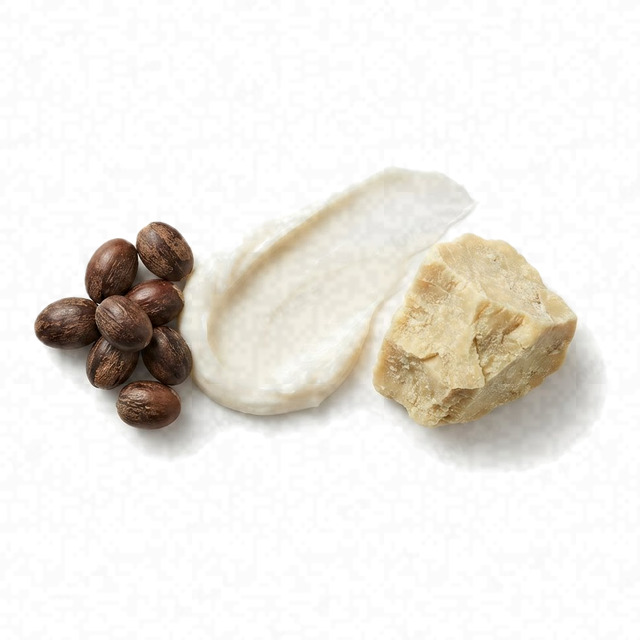 Butyrospermum Parkii Butter Shea Butter
Average
- HighNormal Skin Fit
- AverageEffectiveness
- HighSafety
Works for sensitive skin; other sunscreens fit it better.
This fit is calculated for the concerns frequently associated with sensitive skin: redness, stinging, and reactions to new products. For scores and recommendations based on your full skin profile, including your 12D face scan results and any goals or preferences you have, please use the Lovi app.
Page built Nov 8, 2026How the Fit score works
Lovi Assistant explains
- Suitable for normal skin due to jojoba esters and shea butter providing emollient action and barrier repair, which indirectly support your redness and irritation by maintaining skin hydration. Tocopherol and shea butter offer general skincare benefits that are supportive for your concerns.
- The formula is highly compatible with normal skin types and offers excellent UV protection from avobenzone, homosalate, octisalate, and octocrylene, ensuring your skin is shielded from sun damage.
- The safety profile is excellent, with no risks of irritation for your sensitive skin due to the absence of prohibited or harsh ingredients.
How to apply
- Apply this sunscreen during your AM routine every morning. Reapply every two hours if you are staying outdoors under direct sunlight.
- Order in routine: apply the sunscreen as the final step after your moisturizer and before applying makeup.
- Application method: gently press a nickel-sized amount over your face and neck without harsh rubbing.
- Skin condition guidance: apply the sunscreen directly onto dry skin for even coverage and reliable sun protection.
- Safety note: avoid direct contact with your eyes and do a patch test before first use to check for sensitivity.
People Say
★4.4Overall rating based on 500+ reviewsThis chemical sunscreen is highly praised for its invisible, primer-like finish and silky texture, making it a popular choice for various skin types. Many users appreciate its value and compare it favorably to more expensive alternatives. A moderate number of users with oily skin find the texture to be slippery or heavy, and a small number report breakouts or product separation.
Highlights
Invisible, no white cast Mostly Mentioned
- “completely clear gel”
- “zero white cast on dark skin”
- “invisible once applied”
- “no ghostly residue”
Supergoop dupe Mostly Mentioned
- “exact dupe for Unseen Sunscreen”
- “same silky silicone texture”
- “fraction of the price”
Unbeatable price Mostly Mentioned
- “best budget sunscreen”
- “stocking up because it's so cheap”
- “affordable daily wear”
Silky primer finish Often Mentioned
- “leaves skin velvet soft”
- “makeup glides right over it”
- “blurs pores like a primer”
- “soft matte finish”
Availability issues Often Mentioned
- “always sold out”
- “impossible to find”
- “had to go to three stores”
- “shelf was empty again”
Greasy or silicone feel Sometimes Noted
- “felt like a layer of grease”
- “too slippery for my oily skin”
- “silicone feeling was heavy”
- “never fully absorbed”
Caused breakouts Rarely Noted
- “broke me out in cystic acne”
- “clogged my pores immediately”
- “caused tiny bumps on forehead”
- “wrecked my skin barrier”
Product separation Rarely Noted
- “oil squirted out first”
- “separated in the tube”
- “liquid came out before the gel”
- “consistency got weird”
Sources: lovi.care, reddit.com, gopicky.com, skinsafeproducts.com, apartmenttherapy.com, becomebetty.com, and more
Questions and answers
How well does Trader Joe's Daily Facial Sunscreen SPF 40 work for sensitive skin?
Trader Joe's Daily Facial Sunscreen SPF 40 works reasonably well for sensitive skin, though other products fit it better. It is unlikely to cause irritation because it leaves out harsh ingredients, and chemical filters provide reliable sun protection. To match top-rated sunscreens for sensitive skin, this product needs soothing properties and a formula specifically designed to be gentle and non-irritating.
Journal of Drugs in Dermatology, 2025Journal of Cosmetic Dermatology, 2008
Which ingredients make this sunscreen a good fit for sensitive skin?
Jojoba esters and shea butter make this sunscreen a good fit by softening the skin and helping repair the moisture barrier, while tocopherol and chemical UV blockers provide protection without irritation. However, because this is an average fit, sensitive skin needs a sunscreen that is specifically formulated to be extra gentle and actively soothe redness without any potential triggers.
Journal of Cosmetic Dermatology, 2008Journal of Drugs in Dermatology, 2025
What does Avobenzone do for sensitive skin?
Avobenzone helps protect sensitive skin from UV rays, though it may cause irritation or allergic reactions in some individuals. Chemical sunscreens containing avobenzone generally show minimal risks of skin irritation and sensitization in human subjects.
Chemical Research in Toxicology, 2009Journal of Drugs in Dermatology, 2025
What does Homosalate do for sensitive skin?
Homosalate acts as a chemical UV filter in sunscreens to help protect skin from harmful sun rays. When used on sensitive skin, chemical sunscreens containing ingredients like homosalate are unlikely to cause irritation or allergic reactions.
Where does this sunscreen go in a skincare routine for sensitive skin?
This sunscreen goes in the morning routine as the final step after your cleanser and soothing toner. Chemical sunscreens like this are unlikely to irritate sensitive skin, though this skin type needs extra soothing ingredients and barrier-repairing oils to fit best.
Can I use this sunscreen with retinol, and in what order?
You can use this sunscreen in the morning after applying your retinol and moisturizer to keep your skin shielded from the sun. Chemical sunscreens like this are unlikely to cause irritation on sensitive skin, though this skin type often does better with mineral sunscreens or formulas with soothing ingredients and without chemical UV blockers.
How often should I use this sunscreen?
You can use this sunscreen every morning as the final step of your daytime routine to shield your skin from sun damage. Chemical sunscreens of this type are generally well tolerated, but sensitive skin needs a formula with extra soothing ingredients and gentle, hydrating oils to prevent irritation.
Can this sunscreen clog pores, cause breakouts or purging for sensitive skin?
This sunscreen is unlikely to clog pores or cause breakouts for sensitive skin, as its safety profile shows no harsh ingredients and low complaints of breakouts. However, because it is an average fit for this skin type, sensitive skin needs a product with gentle, soothing ingredients and a lightweight texture that protects against UV rays without feeling heavy.
Is this sunscreen fragrance-free and alcohol-free?
Yes, it has no fragrance and no drying alcohol.
What the research says
Topical formulations containing 3.75% glycerol and 1.25% hydrolyzed jojoba esters produced significantly lower evaporative TEWL values compared to glycerol alone at 8 and 24 hours posttreatment in human subjects.
Journal of Cosmetic Dermatology, 2008Chemical sunscreens containing avobenzone, octocrylene, homosalate, and octisalate showed no to minimal risks of dermal irritation, sensitization, photo-allergy, and photo-irritation in human subjects.
Journal of Drugs in Dermatology, 2025Encapsulation of ethylhexyl methoxycinnamate and butyl methoxydibenzoylmethane in lipid microparticles significantly reduced their in vivo human skin penetration compared to nonencapsulated filters.
Skin Pharmacology and Physiology, 2011Microencapsulation of the BMDBM/HP-beta-CD complex in lipid microparticles significantly decreased the percutaneous penetration of the UV filter into the stratum corneum of human volunteers compared to the non-encapsulated sunscreen agent.
Journal of Pharmaceutical and Biomedical Analysis, 2011Following human skin application of an O/W emulsion containing 2% BMDBM loaded in lipospheres, 15% of the sunscreen accumulated in the uppermost layers of the stratum corneum without remarkably modifying skin permeation compared to unencapsulated sunscreen.
Skin Pharmacology and Physiology, 2008Dermal application of a sunscreen containing 10% homosalate in four volunteers resulted in delayed elimination with terminal half-times around 24 h and a bioavailability of cis-homosalate a factor of 2 lower than trans-homosalate, while metabolite ratios supported using oral-route urinary excretion fractions for dermal exposure assessments.
Archives of Toxicology, 2024Homosalate exhibited the highest permeation among tested filters with a relative permeability rate of 4.2% and a depth of 60 um, and specific thickeners and emulsifiers successfully reduced its permeation without inhibiting the skin permeation of niacinamide.
Photodermatology, Photoimmunology & Photomedicine, 2026An online-SPE-LC-MS/MS method successfully quantified specific urinary homosalate metabolites for up to 96 hours after dermal sunscreen application in a volunteer and detected metabolites exclusively in three German pilot participants who had used sunscreen within five days.
Analytica Chimica Acta, 2021Simulated real-life dermal sunscreen exposure in twenty human volunteers leads to the systemic bioavailability and urinary excretion of the UV filter 2-ethylhexyl salicylate and its metabolite, reaching concentration peaks at 7 to 8 hours with 70-80% of overall excretion within 24 hours.
Archives of Toxicology, 2019The application of a sunscreen formulation containing ethylhexyl methoxycinnamate, ethylhexyl salicylate, methyl anthranilate, and octocrylene does not significantly affect critical acne-related species such as Cutibacterium acnes and Staphylococcus epidermidis, refuting the induction of facial dysbiosis in men.
Archives of Dermatological Research, 2024Controlled single dermal exposure to an EHS-containing sunscreen in three volunteers resulted in delayed systemic resorption with elimination half-lives between 6.6 and 9.7 hours, where the parent compound EHS occurred as the dominant urinary parameter.
Archives of Toxicology, 2024Incorporating rosmarinic acid into sunscreens enhanced the in vivo SPF of octocrylene by over 157% and reduced lipid peroxidation in the human stratum corneum.
Antioxidants, 2025Early application of sunscreen after ablative fractional skin resurfacing significantly increased the sensitization rate of the UV-filter, octocrylene, and the sunscreen compared to intact skin.
The Journal of Dermatological Treatment, 2015Dermal sunscreen exposure in 20 healthy volunteers led to plasma concentrations of avobenzone, octocrylene, and its metabolite CDAA reaching up to 11 μg/L, 25 μg/L, and 1352 μg/L, respectively.
Environment International, 2019A combination cream of stimu-tex AS and saccharide isomerate reduced erythema, increased skin capacitance, and reduced transepidermal water loss compared to placebo in 20 subjects after fractional CO2 laser procedure without causing serious adverse events.
Lasers in Medical Science, 2025A skin barrier restoring cream with shea butter, silkflo, and vitamin E increased type I procollagen synthesis, enhanced antioxidant enzyme activity, decreased reactive oxygen species generation, and promoted hyaluronic acid production in H2O2-stimulated human keratinocyte cells compared to untreated cells.
International Journal of Cosmetic Science, 2025
Ingredients
Avobenzone, Homosalate, Octisalate, Octocrylene, Isododecane, Dimethicone Crosspolymer, Polymethylsilsesquioxane, Dimethicone Bis-Isobutyl Ppg-20 Crosspolymer, Neopentyl Glycol Diheptanoate, Polyester-7, Isohexadecane, Jojoba Esters, Silica, Butyrospermum Parkii Butter Shea Butter, Dicaprylyl Carbonate, Tocopheryl Acetate, Caprylic Capric Triglyceride, Tocopherol
Behind this fit score
Lovi calculates every fit score from the full ingredient list with brand-independent rules our dermatologists and cosmetic chemists build and review, and personalizes every pick with AI trained on the real results of millions of users. Lovi trains its fit score models on a proprietary dataset built from more than 10,000 expert-labeled products and more than 100,000 simulated examples, following an internally consistent methodology presented at Cosmoprof, AMWC, and Skin of Color Update.
-

Co-founder, Medical Director
Cosmetic chemist, cosmetologist, aesthetic products developer
-

Co-founder, CEO and CTO
PhD in computer science, 3x US patent holder, ex-Google, ex-Yandex
-

Dr. Sofía Perea Pérez, MD, MSc
Medical Board
Aesthetic medicine practitioner, MSc in Longevity and Anti-Aging Medicine
-

Medical Board
Specialist dermatologist, MBBS, MD, IFAAD
-

Medical Board
Cosmetic chemist, SCS, IFSCC member
-

Medical Board, Medical Advisor
Dermatology MD
-

Elina Nazarenko, MD
Medical Board
Dermatology and diagnostic consultant
-

Victoria Derkova, MS
Medical Board
Cosmetic chemist, cosmetic development technologist


How does it fit your skin?
Scan your face, then any product: Lovi shows how well it fits you and what fits even better.