Indie Lee Clearing Mask for dry sensitive skin

 Salicylic Acid
 Glycolic Acid
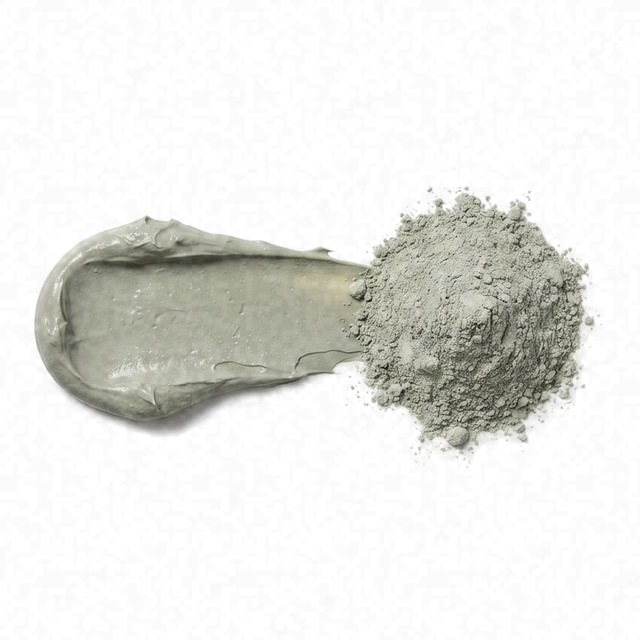 Bentonite Clay
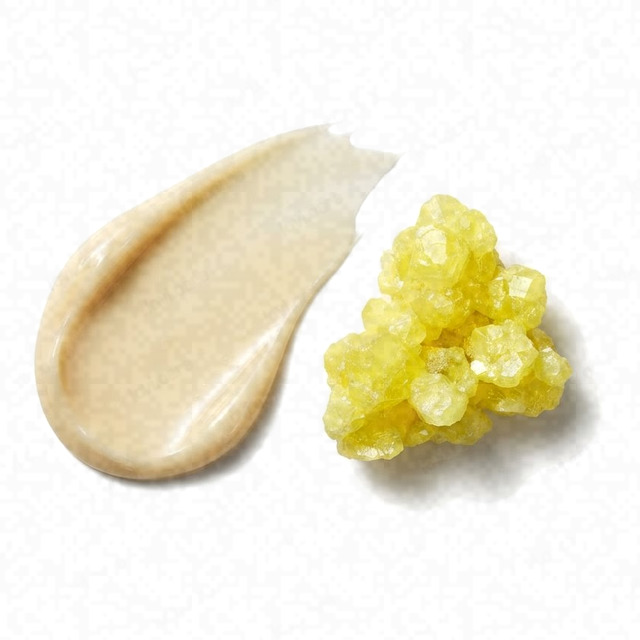 Colloidal Sulfur
 Zinc Oxide
Warning
- LowDry Skin Fit
- SuperiorEffectiveness
- RiskySafety
A poor match for dry sensitive skin; the cleansing masks alongside fit it better.
This fit is calculated for the concerns frequently associated with dry sensitive skin: flakiness, tightness, redness, fine lines, and wrinkles. For scores and recommendations based on your full skin profile, including your 12D face scan results and any goals or preferences you have, please use the Lovi app.
Page built Nov 8, 2026How the Fit score works
Lovi Assistant explains
- Offers excellent pore cleansing and blemish reduction for your skin due to colloidal sulfur and salicylic acid, but poses moderate risks of direct worsening for your dry and sensitive skin.
- The presence of glycolic acid and salicylic acid can cause dryness and irritation for your dry skin, even with the inclusion of sodium hyaluronate for humectant action.
How to apply
- Use your cleansing mask PM once a week as part of your weekly routine, and increase to twice a week if your dry skin tolerates it well.
- Apply the cleansing mask after cleansing and enzyme powder, but before your hydrating toner, serum, and moisturizer.
- Smooth an even layer of the cleansing mask over your face while gently avoiding any unnecessary rubbing.
- Apply the cleansing mask to clean and dry skin to ensure better comfort for your sensitive skin type.
- Always avoid the eye area and do a patch test before using the cleansing mask for the first time.
People Say
★4.6Overall rating based on 200+ reviewsUsers with oily, acne-prone, and congested skin frequently praise this mask for its ability to rapidly calm breakouts and unclog pores without stripping the skin of moisture. While most find it effectively smooths texture and reduces redness, a minority of users find the medicinal scent overpowering or the price point too high for the small jar size.
Highlights
Clears acne Mostly Mentioned
- “zaps zits overnight”
- “great for hormonal breakouts”
- “cleared my skin fast”
- “stops pimples coming”
Decongests pores Often Mentioned
- “de-clogs pores”
- “draws out impurities”
- “pores look smaller”
- “skin feels detoxed”
Non-drying formula Often Mentioned
- “doesn't dry me out”
- “creamy texture”
- “hydrating for clay”
- “no cracking feeling”
Smooths texture Sometimes Noted
- “skin feels baby soft”
- “smooths texture”
- “face feels polished”
- “reduces roughness”
Expensive for size Sometimes Noted
- “tiny jar for price”
- “expensive”
- “wish it was bigger”
- “pricey per ounce”
Medicinal scent Sometimes Noted
- “smells like sulfur”
- “strong camphor scent”
- “medicinal smell”
- “scent is overpowering”
Can be drying Rarely Noted
- “left skin tight”
- “too drying”
- “caused dry patches”
- “irritated my skin”
Ineffective for some Rarely Noted
- “did nothing”
- “no difference seen”
- “just average”
- “didn't help acne”
Sources: lovi.care, sephora.sg, dermstore.com, cultbeauty.co.uk, bluemercury.com, aillea.com, and more
Questions and answers
Why does Lovi advise against Indie Lee Clearing Mask for dry sensitive skin?
Lovi advises against this cleansing mask because its salicylic acid and glycolic acid may cause dryness and irritation for your dry sensitive skin. A product for this skin type needs soothing and nourishing ingredients that provide moisture and relief without any risks of irritation or allergens.
Journal of Cosmetic Dermatology, 2024Journal of Drugs in Dermatology, 2023
Which ingredients make this mask a poor fit for dry sensitive skin?
Salicylic acid, glycolic acid, colloidal sulfur, and bentonite clay make this mask a poor fit because they may dry out and irritate dry sensitive skin. A cleansing mask for this skin needs soothing and nourishing ingredients, moisturizing agents, and skin-repairing extracts that provide relief and hydration without any risks of irritation.
What does Salicylic Acid do for dry sensitive skin?
Salicylic acid is generally a poor fit for dry, sensitive skin because it is designed to clear out pores by removing excess oil, which can easily leave dry skin irritated. A product of this type needs gentle exfoliating helpers paired with rich, soothing moisturizers and barrier-repairing ingredients to keep dry skin calm and comfortable.
What does Glycolic Acid do for dry sensitive skin?
Glycolic acid can be too harsh for dry sensitive skin and may cause irritation, so this skin type needs gentle calming ingredients and deeply nourishing moisturizers to keep the skin barrier safe and smooth.
Acta Dermato-venereologica, 1995The British Journal of Dermatology, 1997
Where does it go in a skincare routine for dry sensitive skin?
This cleansing mask is not recommended for your dry sensitive skin because its ingredients can cause dryness and irritation. To care for this skin type, a product needs gentle hydrators and soothing ingredients instead.
Can I use it with retinol, and in what order?
How often should I use this mask?
This mask poses moderate risks of dryness and irritation for your dry sensitive skin, so a poor match like this is not recommended for regular use. A mask of this type needs soothing ingredients and gentle nourishing moisturizers to comfort dry skin without causing irritation.
Can it clog pores, cause breakouts or purging for dry sensitive skin?
This mask is unlikely to clog pores since it is designed to clean them out, but it can easily worsen dryness and irritation on your skin. A product for dry sensitive skin needs gentle, hydrating ingredients like ceramides and soothing plant extracts instead of strong exfoliating acids and clay.
Is it fragrance-free and alcohol-free?
It has no drying alcohol and contains fragrance (limonene). Cetyl alcohol is a fatty alcohol, which soften the skin.
What the research says
Twice daily application of a multitargeted dermocosmetic cream provided comparable efficacy to benzoyl peroxide 5% gel in reducing inflammatory, non-inflammatory, and total lesions in 150 Caucasian subjects with mild-to-moderate acne over 56 days, while demonstrating superior skin tolerability.
Journal of Cosmetic Dermatology, 2024The use of a salicylic acid-based dermocosmetic significantly reduces the needed quantity of benzoyl peroxide without impacting efficacy in mild to moderate acne, and as maintenance post-benzoyl peroxide allows a significant reduction of acne relapse compared to vehicle.
Journal of Drugs in Dermatology, 2023A moisturizer containing licochalcone A, 1,2-decanediol, L-carnitine, and salicylic acid significantly reduced noninflammatory, inflammatory, and total acne lesion counts compared to a vehicle control in Thai patients during a 12-week maintenance phase.
BioMed Research International, 2020Cryotherapy with liquid nitrogen achieved a higher cure rate (39%) than salicylic acid (24%) and a wait-and-see approach (16%) for cutaneous warts at 13 weeks in primary care patients.
CMAJ, 2010Treatment with 2% supramolecular salicylic acid hydrogel resulted in a regression and markedly improvement rate of 51.01% compared to 43.10% for Adapaline gel in patients with mild to moderate facial acne vulgaris, showing no significant difference in efficacy.
Journal of Cosmetic Dermatology, 2024Topical 5% benzoyl peroxide plus salicylic acid achieved the greatest lesion reduction at early 2 to 4 week time points compared to benzoyl peroxide, clindamycin, and combination benzoyl peroxide/clindamycin, while 5% benzoyl peroxide plus salicylic acid and combination benzoyl peroxide/clindamycin showed similar efficacy at 10 to 12 weeks in acne patients.
Journal of the American Academy of Dermatology, 2010Repeated short-contact 70% glycolic acid peels provided superior results in atrophic acne scars compared to daily low-strength glycolic acid cream or placebo in 58 women over 24 weeks.
International Journal of Dermatology, 2000Serial glycolic acid peels combined with a modified Kligman formula significantly reduced facial PIH severity in Indian patients compared to the modified Kligman formula alone.
Dermatologic Surgery, 2017Vectorization of high molecular weight hyaluronic acid with clay enabled its penetration into deeper skin layers and led to a significant clinical reduction in fine lines in the crow's feet area compared to placebo after 28 days.
Skin Research and Technology, 2024Quaternized carboxymethyl chitosan/organic montmorillonite nanocomposite demonstrated superior moisture-adsorption and retention compared to hyaluronic acid, good UV-protection ability, negligible dermal irritation, and prominent moisture-retention efficacy on human stratum corneum when formulated into a cosmetic cream.
Carbohydrate Polymers, 2017Twice-weekly use of a clay mask over 4 weeks in 75 adults with oily or combination skin improved acne-related outcomes, sebum content, skin evenness, hydration, and reduced dryness and irritation.
Skin Research and Technology, 2023Azelaic acid was probably less effective than benzoyl peroxide in acne treatment response, while showing little or no difference compared to tretinoin, and adverse events were mild and transient across evaluated topical treatments.
Journal of Evidence-based Medicine, 2020Topical application of precipitated sulphur 2-8% petrolatum achieved a 95% clinical and ectoparasitological cure rate in 40 ambulatory scabies patients without relevant adverse effects.
Revista de Investigacion Clinica; Organo Del Hospital de Enfermedades de la Nutricion, 2004Topical 10% benzoyl peroxide and 2%-5% sulfur cream achieved "good" to "excellent" results with no undesirable side effects in 113 consecutive patients with acne.
Canadian Medical Association Journal, 1966Topical 0.5% hyaluronic-ZnO nanogel applied twice daily reduced inflammatory-lesion counts by 58% at week four in human subjects compared to baseline without causing erythema.
Biomedicines, 2025Nels cream achieved a similar reduction in inflammatory and noninflammatory lesion counts compared to 5% benzoyl peroxide in acne vulgaris patients, but caused significantly fewer side-effects such as peeling and dryness.
Clinical and Experimental Dermatology, 2000Topically applied coated and uncoated zinc oxide nanoparticles under flexing and massage are retained in the stratum corneum with no significant penetration into the viable epidermis and no cellular toxicity in human skin.
Nanomedicine, 2016
Ingredients
Water, Bentonite, Zinc Oxide, Colloidal Sulfur, Propanediol, Glycolic Acid, Salicylic Acid, Sodium Hyaluronate, Camphor, Cetyl Alcohol, Glyceryl Stearate, Chondrus Crispus Extract, Anthemis Nobilis Flower Extract, Titanium Dioxide, Limonene, Ethylhexylglycerin, Potassium Sorbate
Behind this fit score
Lovi calculates every fit score from the full ingredient list with brand-independent rules our dermatologists and cosmetic chemists build and review, and personalizes every pick with AI trained on the real results of millions of users. Lovi trains its fit score models on a proprietary dataset built from more than 10,000 expert-labeled products and more than 100,000 simulated examples, following an internally consistent methodology presented at Cosmoprof, AMWC, and Skin of Color Update.
-

Co-founder, Medical Director
Cosmetic chemist, cosmetologist, aesthetic products developer
-

Co-founder, CEO and CTO
PhD in computer science, 3x US patent holder, ex-Google, ex-Yandex
-

Dr. Sofía Perea Pérez, MD, MSc
Medical Board
Aesthetic medicine practitioner, MSc in Longevity and Anti-Aging Medicine
-

Medical Board
Specialist dermatologist, MBBS, MD, IFAAD
-

Medical Board
Cosmetic chemist, SCS, IFSCC member
-

Medical Board, Medical Advisor
Dermatology MD
-

Elina Nazarenko, MD
Medical Board
Dermatology and diagnostic consultant
-

Victoria Derkova, MS
Medical Board
Cosmetic chemist, cosmetic development technologist


How does it fit your skin?
Scan your face, then any product: Lovi shows how well it fits you and what fits even better.