
THE FACE SHOP Natural Sun Eco No Shine Hydrating Sun Cream for dry sensitive skin

 Ethylhexyl Methoxycinnamate
 Butyl Methoxydibenzoylmethane
 Panthenol
 Helianthus Annuus Extract Sprout Sunflower Extract Sprout
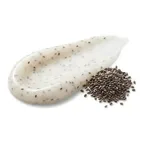 Salvia Hispanica Seed Extract
Low
- AverageDry Skin Fit
- AverageEffectiveness
- HighSafety
A weak match for dry sensitive skin; the sunscreens alongside fit it better.
This fit is calculated for the concerns frequently associated with dry sensitive skin: flakiness, tightness, redness, fine lines, and wrinkles. For scores and recommendations based on your full skin profile, including your 12D face scan results and any goals or preferences you have, please use the Lovi app.
Updated How the Fit score works
Lovi Assistant explains
- Offers moderate suitability for your dry and sensitive skin, as Panthenol and Helianthus Annuus Extract Sprout provide some humectant and emollient benefits, but it lacks sufficient occlusive ingredients for optimal hydration.
- The product provides excellent sun protection with Ethylhexyl Methoxycinnamate and Butyl Methoxydibenzoylmethane, which shield from UV rays, though it does not offer specialized ingredients like hyaluronic acid or ceramides to address your dry or flaky skin concerns.
- The safety profile is excellent, with no risks of irritation for your dry and sensitive skin due to the absence of prohibited or harsh ingredients.
How to apply
- Use this moisturizing sunscreen daily in your morning routine. Reapply every two hours if you are staying outdoors.
- Apply this product at the very end of your morning routine right after your regular moisturizer.
- Gently pat a nickel-sized amount of the moisturizing sunscreen evenly across your face and neck.
- Apply this product onto clean, dry skin before you go outside into the sun.
- Avoid the immediate eye area and do a patch test before your first use to check for sensitivity.
People Say
★4.5Overall rating based on 100+ reviewsBased on limited data, users with oily and combination skin highly appreciate this sunscreen for its effective sun protection and matte finish, often noting its ability to control shine and serve as a makeup primer. While the absence of a white cast is frequently praised, some users with very oily skin found the oil control to be insufficient, leading to a dewy appearance later in the day. A moderate number of users also found the fragrance to be strong.
Highlights
No white cast Mostly Mentioned
- “Zero white cast”
- “Transparent finish”
- “No white tint”
Matte & shine-free Often Mentioned
- “Controls excess sebum”
- “Leaves skin shine-free”
- “Matte finish”
Hydrating texture Sometimes Noted
- “Hydrates deeply”
- “Skin feels soft”
- “Good for dehydrated skin”
Makeup primer Sometimes Noted
- “Works as a primer”
- “Smooths pores”
- “Makeup sits well”
Strong fragrance Sometimes Noted
- “Scent is overpowering”
- “Strong fragrance”
- “Smell is too much”
Dewy finish Rarely Noted
- “More dewy than matte”
- “Leaves a glow”
- “Not completely matte”
Limited oil control Rarely Noted
- “T-zone still got oily”
- “Not fully controlling sebum”
- “Dewy by midday”
Price/quantity Rarely Noted
- “Small quantity (50ml)”
- “Pricey for size”
- “Finished quickly”
Sources: lovi.care, clinikally.com, influenster.com, yesstyle.com, purplle.com, stylevana.com, and more
Questions and answers
Why is Natural Sun Eco No Shine Hydrating Sun Cream a weak match for dry sensitive skin?
This sunscreen is a weak match for your dry and sensitive skin because it lacks sufficient heavy moisture-locking ingredients and specialized hydrators like hyaluronic acid or ceramides. A sunscreen of this type needs rich moisturizing ingredients and protective components to properly care for dry skin.
Which ingredients make this cream a poor fit for dry sensitive skin?
This cream is a weak match for dry sensitive skin because it lacks sufficient rich sealing ingredients to lock in moisture. To properly care for dry skin, a product of this type needs extra nourishing agents like hyaluronic acid, ceramides, and richer softeners.
American Journal of Clinical Dermatology, 2002The Journal of Dermatological Treatment, 2017
What does Octinoxate do for dry sensitive skin?
Octinoxate filters UV rays to protect dry sensitive skin from sun damage, though it may cause irritation or allergic reactions in some people with delicate skin. A sunscreen for this skin type needs gentle moisturizing ingredients and soothing agents to prevent dryness and keep the skin calm.
What does Avobenzone do for dry sensitive skin?
Avobenzone helps protect dry sensitive skin from UVA rays, but because it can degrade in the sun and cause irritation, formulations of this type need added antioxidants or microencapsulation to keep sensitive skin calm and safe.
European Journal of Pharmaceutical Sciences, 2023Journal of Cosmetic Dermatology, 2025
Where does this cream go in a skincare routine for dry sensitive skin?
This cream goes in the morning routine as the final step after a soothing toner. A sunscreen for dry and sensitive skin needs rich hydrating ingredients like ceramides and sealing agents to lock in moisture and prevent flaking.
The Journal of Dermatological Treatment, 2022American Journal of Clinical Dermatology, 2002
Can I use this cream with niacinamide, and in what order?
Yes, you can use this cream with niacinamide by applying your niacinamide serum first and following with this sunscreen in the morning. This product is a weak match for your dry and sensitive skin because it lacks enough heavy sealing ingredients to lock in moisture, so a dry skin type needs a richer formula with ingredients like ceramides or hyaluronic acid to stay soft.
American Journal of Clinical Dermatology, 2002The Journal of Dermatological Treatment, 2017
How often should I use this cream?
You can use this moisturizing spf every morning as part of your daytime routine. While it provides good sun protection, dry sensitive skin requires heavier protective creams and richer hydrating ingredients like hyaluronic acid or ceramides to stay truly soft and smooth.
Can this cream clog pores, cause breakouts or purging for dry sensitive skin?
This cream is unlikely to cause breakouts or irritation for dry sensitive skin due to its safe ingredients and lack of harsh components. However, because it is a weak match for your skin, a product of this type needs extra rich sealing ingredients and barrier-repairing elements like ceramides or hyaluronic acid to keep dry skin fully comfortable.
American Journal of Clinical Dermatology, 2002The Journal of Dermatological Treatment, 2017
Is this cream fragrance-free and alcohol-free?
It contains fragrance (parfum) and drying alcohol (alcohol denat).
What the research says
Topical dexpanthenol acts as a moisturizer, improves stratum corneum hydration, accelerates wound healing and epidermal regeneration, reduces erythema, and improves symptoms of skin irritation compared to vehicle or no pretreatment.
American Journal of Clinical Dermatology, 2002A new topical panthenol-containing emollient significantly improved transepidermal water loss reduction, stratum corneum hydration, and intercellular lipid lamellae length compared with control in healthy subjects without negatively impacting bacterial viability.
The Journal of Dermatological Treatment, 2017Multilamellar liposomes containing octyl methoxycinnamate increased stratum corneum accumulation and reduced deeper skin penetration compared to conventional emulsions and small unilamellar liposomes in six volunteers, resulting in a slightly better sun protection factor.
Journal of Cosmetic Science, 2008Parsol 1789 and Eusolex 8020 provided slightly better photoprotection than oxybenzone in both normal and sensitized human skin when assessed using pigmentation end points, whereas all three sunscreens performed similarly against UVA-induced erythema.
Journal of the American Academy of Dermatology, 1987Encapsulation of ethylhexyl methoxycinnamate and butyl methoxydibenzoylmethane in lipid microparticles significantly reduced their in vivo human skin penetration compared to nonencapsulated filters.
Skin Pharmacology and Physiology, 2011Replacing 20% of the chemical UV filter octyl methoxycinnamate with urucum oil in solid lipid nanoparticles maintained the skin protection factor without inducing toxic responses or significant skin penetration in human volunteers.
Skin Pharmacology and Physiology, 2018The application of a sunscreen formulation containing ethylhexyl methoxycinnamate, ethylhexyl salicylate, methyl anthranilate, and octocrylene does not significantly affect critical acne-related species such as Cutibacterium acnes and Staphylococcus epidermidis, refuting the induction of facial dysbiosis in men.
Archives of Dermatological Research, 2024Methoxy-monobenzoylmethane protects human skin against UV-induced damage by converting to avobenzone under UVB light irradiation and demonstrating antioxidant and radical scavenging properties in vitro and in cell assays.
Molecules, 2021Microencapsulation of the BMDBM/HP-beta-CD complex in lipid microparticles significantly decreased the percutaneous penetration of the UV filter into the stratum corneum of human volunteers compared to the non-encapsulated sunscreen agent.
Journal of Pharmaceutical and Biomedical Analysis, 2011Following human skin application of an O/W emulsion containing 2% BMDBM loaded in lipospheres, 15% of the sunscreen accumulated in the uppermost layers of the stratum corneum without remarkably modifying skin permeation compared to unencapsulated sunscreen.
Skin Pharmacology and Physiology, 2008Topical dexpanthenol formulated in lipophilic vehicles improved stratum corneum hydration and reduced transepidermal water loss compared to vehicle control in humans.
Arzneimittel-Forschung, 2000A combination serum containing galactomyces ferment filtrate, dexpanthenol, and Centella asiatica effectively treated post-acne hyperpigmentation in subjects with colored skin by significantly increasing lightness scores in Fitzpatrick skin type V and reducing the melanin index in Fitzpatrick skin type IV compared to placebo.
Skinmed, 2021A cream containing panthenol, prebiotics, and probiotic lysate improved facial sensitive skin symptoms and skin barrier function in 110 participants over 28 days.
Skin Research and Technology, 2024An anti-aging daily serum containing sunflower sprout extract significantly improved fatigued and photodamaged skin over 7 days in 28 female subjects when used alone and in combination with an anti-aging facial moisturizer, and was well tolerated.
Journal of Cosmetic Dermatology, 2022A 50% ethanol extract of Helianthus annuus L. flower prevents UVB-induced photodamage in normal human dermal fibroblasts by blocking ROS and MMP production, reducing inflammation, and regulating the MAPK/AP-1, NFAT, and Nrf2 signaling pathways.
Journal of Cellular Biochemistry, 2019The mixture of Helianthus annuus L. and Oenothera biennis L. oils showed good oxidative stability and biocompatibility without irritant or phototoxic effects on 3D EpiDerm models, suggesting that Oenothera biennis L. oil can prevent the oxidative damage of Helianthus annuus L. oil.
Plants, 2022Topical 0.1% HYVIA cream improves skin hydration in 16 human subjects.
Journal of Cosmetic Dermatology, 2020
Why other sunscreens fit dry sensitive skin better
A formulation containing glycerol (5%) and xylitol (5%) applied twice daily for 14 days increased skin hydration, filaggrin protein quantity, interdigitation index, and biomechanical properties, and decreased transepidermal water loss compared to untreated and vehicle-treated skin in twelve volunteers with dry skin.
Acta Dermato-venereologica, 2017Cosmetic formulations containing 5% Centella asiatica extract showed the best efficacy in improving skin moisture and decreasing transepidermal water loss, while also exhibiting antiinflammatory properties in 25 volunteers compared to baseline measurements.
Indian Journal of Pharmaceutical Sciences, 2016
Ingredients
Water, Cyclopentasiloxane, Ethylhexyl Methoxycinnamate, Alcohol Denat, Isoamyl P-Methoxycinnamate, Ethylhexyl Salicylate, Phenylbenzimidazole Sulfonic Acid, Dipropylene Glycol, Butyl Methoxydibenzoylmethane, Polyglyceryl-6 Stearate, Ethylhexyl Methoxycrylene, Tromethamine, Vinyl Dimethicone Methicone Silsesquioxane Crosspolymer, Methyl Methacrylate Crosspolymer, Panthenol, Polyglyceryl-3 Methylglucose Distearate, Potassium Cetyl Phosphate, Propanediol, Dimethicone Vinyl Dimethicone Crosspolymer, Cetearyl Olivate, Polyglyceryl-6 Behenate, Dimethicone, Acrylates Vinyl Isodecanoate Crosspolymer, Sorbitan Olivate, Sodium Hydroxide, Acrylates C10-30 Alkyl Acrylate Crosspolymer, Sodium Polyacrylate, Xanthan Gum, Caprylhydroxamic Acid, Trisodium Edta, Helianthus Annuus Extract Sprout Sunflower Extract Sprout, Cetearyl Alcohol, Glyceryl Stearate, Menthyl Pca, Plankton Extract, Silica, Butylene Glycol, Sodium Pca, Salvia Hispanica Seed Extract, Gossypium Herbaceum Seed Extract, Parfum
Behind this fit score
Lovi calculates every fit score from the full ingredient list with brand-independent rules our dermatologists and cosmetic chemists build and review, and personalizes every pick with AI trained on the real results of millions of users. Lovi trains its fit score models on a proprietary dataset built from more than 10,000 expert-labeled products and more than 100,000 simulated examples, following an internally consistent methodology presented at Cosmoprof, AMWC, and Skin of Color Update.
-

Co-founder, Medical Director
Cosmetic chemist, cosmetologist, aesthetic products developer
-

Co-founder, CEO and CTO
PhD in computer science, 3x US patent holder, ex-Google, ex-Yandex
-

Dr. Sofía Perea Pérez, MD, MSc
Medical Board
Aesthetic medicine practitioner, MSc in Longevity and Anti-Aging Medicine
-

Medical Board
Specialist dermatologist, MBBS, MD, IFAAD
-

Medical Board
Cosmetic chemist, SCS, IFSCC member
-

Medical Board, Medical Advisor
Dermatology MD
-

Elina Nazarenko, MD
Medical Board
Dermatology and diagnostic consultant
-

Victoria Derkova, MS
Medical Board
Cosmetic chemist, cosmetic development technologist


How does it fit your skin?
Scan your face, then any product: Lovi shows how well it fits you and what fits even better.