SKINFOOD Carrot Carotene Relief Cream for oily acne-prone skin

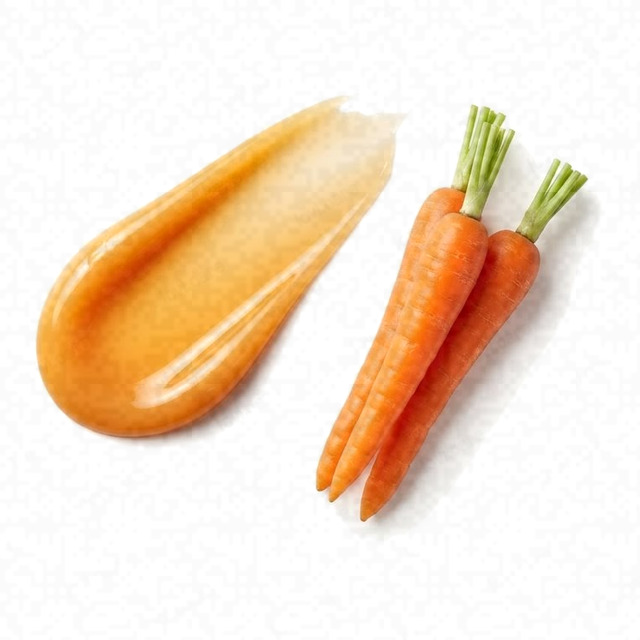 Carrot Carotene
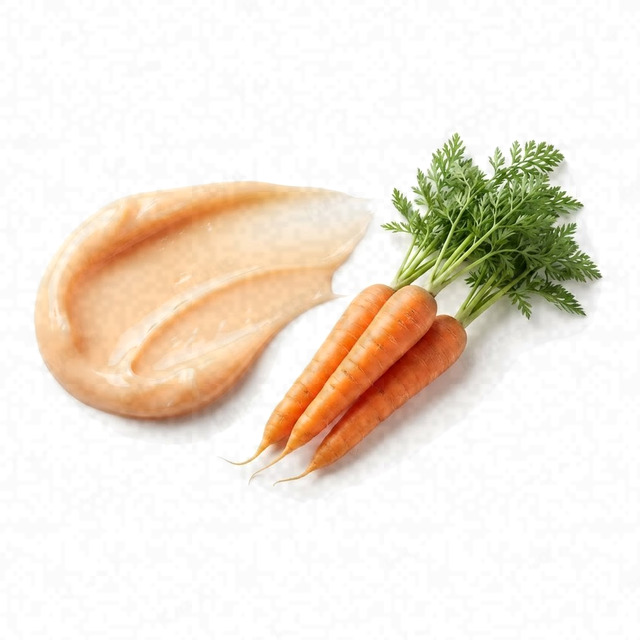 Daucus Carota Sativa Root Extract Carrot Root Extract
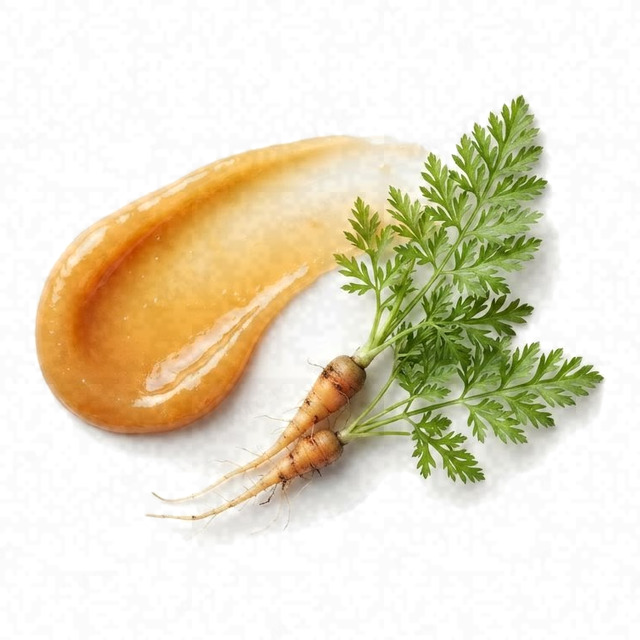 Daucus Carota Sativa Seed Oil Carrot Seed Oil
 Sodium Hyaluronate
 Allantoin
Average
- AverageOily Skin Fit
- AverageEffectiveness
- Low RiskSafety
Works for oily acne-prone skin; other moisturizers fit it better.
- Clinical, Cosmetic and Investigational Dermatology, 2017
- Materials Science & Engineering. C, Materials for Biological Applications, 2020
This fit is calculated for the concerns frequently associated with oily acne-prone skin: shine, breakouts, blemishes, and enlarged pores. For scores and recommendations based on your full skin profile, including your 12D face scan results and any goals or preferences you have, please use the Lovi app.
Page built Nov 8, 2026How the Fit score works
Lovi Assistant explains
- Offers moderate suitability for your oily skin, as glycerin and sodium hyaluronate provide excellent hydration and plumping effects, though it lacks strong oil-control ingredients.
- The inclusion of allantoin offers some soothing benefits for your acne, blemishes, and breakouts, but the formula does not contain targeted ingredients for significant improvement.
- The product is generally safe for your oily skin, with minimal risks of irritation from fragrance and essential oils.
How to apply
- Use this AM and PM routine every day to help clear your skin. Always remember to finish with SPF in the morning.
- Apply the moisturizer after your cleanser and toner, right before your SPF during the day.
- Gently press a small amount into your skin and avoid rubbing to keep pores clear.
- Apply on clean, slightly damp skin to help the product absorb better and control oil.
- Avoid the sensitive eye area and do a simple patch test before your first use.
People Say
★4.7Overall rating based on 100+ reviewsBased on limited data, the Skinfood Carrot Carotene Relief Cream is highly praised for its lightweight, gel-like texture that provides soothing hydration without feeling heavy or greasy, making it ideal for oily, acne-prone, and sensitive skin types. Users report that it effectively calms redness and irritation, though those with very dry skin may find it lacks sufficient moisture for winter use.
Highlights
Lightweight texture Often Mentioned
- “lightweight and perfect for hydration”
- “doesn't feel overly rich at all”
- “doesn't get greasy during summer”
- “gel texture, quickly absorbed”
Soothes skin Often Mentioned
- “strong soothing effect when I apply it after popping pimples”
- “feels very soothing”
- “relieves irritated skin”
Good for oily skin Sometimes Noted
- “lifesaver for my oily skin”
- “didn't cause any additional blemishes to pop up”
- “strongly recommend for acne and oily skin”
Quick absorption Sometimes Noted
- “absorbs well is seriously impressive”
- “quickly absorbed, moisturizes”
- “absorbs well, provides moisture throughout the day”
Not for dry skin Sometimes Noted
- “those with very dry skin might find it disappointing”
- “can be dry during winter because the texture is light”
- “except for severe dry skin”
Inconvenient packaging Rarely Noted
- “comes in a paper container, which made things really inconvenient”
- “inconvenient whenever it got wet”
- “paper container gets wet”
Small product size Rarely Noted
- “amount of solution is not enough”
- “expect a big size of jar but this one is a bit small”
- “amount is a bit small for the price”
Sources: lovi.care, walmart.com, iherb.com, hwahae.com, gopicky.com, koreanskincare.com, and more
Questions and answers
How well does Skinfood Carrot Carotene Relief Cream work for oily acne-prone skin?
Skinfood Carrot Carotene Relief Cream works moderately well for oily acne-prone skin, as its glycerin and sodium hyaluronate provide good hydration without heavy oil-control ingredients, while allantoin offers mild soothing benefits for breakouts. A moisturizer for this skin needs powerful hydration and repairing ingredients, targeted blemish-fighting components, and a lightweight texture that avoids excess oil or clogged pores.
Which ingredients make this cream a good fit for oily acne-prone skin?
Glycerin and sodium hyaluronate make this cream a good fit for oily skin by providing hydration, while allantoin offers soothing benefits. However, because it lacks strong oil-control ingredients and targeted blemish treatments, an oily acne-prone skin type needs a moisturizer with powerful hydrating and repairing ingredients, lightweight textures, and the absence of heavy oils to manage excess oil and breakouts effectively.
What does Carrot Carotene do for oily acne-prone skin?
Carrot Carotene helps nourish oily, acne-prone skin while keeping it soft and smooth. Because this skin type needs balancing moisture and soothing support, products for it should include lightweight hydrators and gentle calming ingredients.
What does Carrot Root Extract do for oily acne-prone skin?
Carrot Root Extract helps calm and hydrate oily acne-prone skin while supporting clearer skin without causing irritation. It works well in formulas that provide antioxidants and soothe redness to keep skin looking smooth and balanced.
Materials Science & Engineering. C, Materials for Biological Applications, 2020
Where does this cream go in a skincare routine for oily acne-prone skin?
This moisturizer goes as the last step in the morning and evening before your sunscreen or makeup. While it gives your skin good hydration and soothing care, oily acne-prone skin also needs strong oil-control ingredients and targeted blemish-fighting actives to work best.
Can I use this cream with retinol, and in what order?
You can use this cream with your retinol, applying it right after your retinol treatment to help calm the skin and keep it soft and comfortable. This type of routine helps reduce irritation and dryness while supporting your skin barrier, though oily skin of this type needs a moisturizer with strong oil-control ingredients and targeted blemish treatments for the best results.
How often should I use this cream?
You can use this cream daily in the morning and evening as part of your routine. Daily application helps keep your skin hydrated and comfortable, though oily acne-prone skin also needs targeted oil-control and blemish-fighting ingredients.
Journal of Cosmetic Dermatology, 2020Health Science Reports, 2021
Can this cream clog pores, cause breakouts or purging for oily acne-prone skin?
This cream is generally safe for oily skin, with minimal risks of irritation, though it may not do much to actively prevent or improve breakouts. Oily acne-prone skin typically needs targeted oil-control ingredients and acne-fighting components to keep pores clear and manage blemishes effectively.
Can I use this cream around the eyes or on my body?
You can use this cream on your body and around the eyes, though the skin on your body is thicker while the skin around your eyes is much thinner. This moisturizer gives your skin good hydration with glycerin and sodium hyaluronate, but oily acne-prone skin needs strong oil-control ingredients and targeted blemish treatments to fit better.
Surgical and Radiologic Anatomy, 2002Clinical, Cosmetic and Investigational Dermatology, 2017
Is this cream fragrance-free and alcohol-free?
Yes, it has no fragrance and no drying alcohol. Cetearyl alcohol is a fatty alcohol, which soften the skin.
What the research says
A single application of a moisturizing fluid containing hyaluronic acid 1%, glycerin 5%, and Centella asiatica stem cells extract significantly increased skin hydration by 29% and reduced transepidermal water loss at 24 hours compared to baseline and an untreated control site in twenty healthy women.
Clinical, Cosmetic and Investigational Dermatology, 2017Hydrogel-conditioned nanostructured lipid carriers incorporating carrot extract, marigold extract, and azelaic acid improved antioxidant, anti-inflammatory, and anti-acne responses in treated subjects, achieving enhanced skin hydration up to 74% and elasticity up to 90% without adverse effects.
Materials Science & Engineering. C, Materials for Biological Applications, 2020Topical beta-carotene provided protection for the human skin of healthy volunteers against IR radiation by acting as a superficial antioxidant, though dermal carotenoid degradation was significantly higher for standard infrared radiator than for water filter infrared irradiation.
Experimental Dermatology, 2011Pre-treatment with beta-carotene at 1.5 microM modulated UVA-induced gene regulation in HaCaT human keratinocytes through multiple mechanisms not restricted to singlet oxygen quenching, reducing the effect for 143 genes and enhancing it for 180 out of 568 UVA-regulated genes.
The Journal of Investigative Dermatology, 2005Alginate hydrogel dressings co-loaded with cinnamon-mediated silver nanoparticles, beta-carotene nanocarriers, and Centella asiatica extract demonstrated antimicrobial and antibiofilm activities against Staphylococcus aureus and Escherichia coli over a 24-h period while mitigating silver-induced cytotoxicity and oxidative stress in human keratinocyte cells.
Gels, 2025Beta-carotene at low concentrations significantly decreased the major metabolites of arachidonic acid and linoleic acid in human epidermal homogenates and inhibited 13-hydroxy-cis-9, trans-11-octadeca dienoic acid formation by up to 80% compared with the control in a semi-in vivo skin penetration model.
The International Journal of Biochemistry & Cell Biology, 1996Topical application of 0.1% hyaluronic acid formulations of different molecular weights led to significant improvements in skin hydration and elasticity, with low-molecular-weight formulations also significantly reducing wrinkle depth in seventy-six female subjects compared to a vehicle control.
Journal of Drugs in Dermatology, 2011Topical application of hyaluronic acid in conjunction with free gingival graft significantly reduced donor site postoperative pain until day 7 compared to normal saline, with no significant differences in graft dimensions or patient satisfaction.
Clinical Oral Investigations, 2022Treatment with a hyaluronic acid-containing mouth rinse or topical gel led to significant lesion reduction, pain relief, and normalization of lesion color in adult patients with minor recurrent aphthous stomatitis, with the gel formulation showing an earlier healing onset at 3 days.
BMC Oral Health, 2019Topical gel containing chitosan, 0.2% chlorhexidine, allantoin and dexpanthenol did not improve postoperative comfort regarding swelling and pain, but improved the wound's aesthetic appearance following impacted lower third molar extraction compared to no gel.
Medicina Oral, Patologia Oral Y Cirugia Bucal, 2016A topical gel containing chitosan, chlorhexidine, allantoin, and dexpanthenol significantly reduced postoperative pain, trismus, swelling, and analgesic consumption, while improving wound healing after third molar surgery compared to a placebo.
Medicina Oral, Patologia Oral Y Cirugia Bucal, 2020An overnight patch containing Allium cepa extract and allantoin safely promotes scar healing after dermatologic surgery, resulting in significantly greater reductions in observer- and patient-assessed POSAS scores compared to no treatment.
Aesthetic Plastic Surgery, 2018
Why other moisturizers fit oily acne-prone skin better
A panthenol-enriched mask improved skin hydration, regulated sebum, and reduced redness and TEWL across dry sensitive, oily sensitive, and oily acne skin subgroups with excellent tolerance and no adverse reactions.
Journal of Cosmetic Dermatology, 2024Co-delivery of paeonol and madecassoside via nanoemulsions improved transdermal delivery, promoted barrier repair proteins, inhibited inflammatory cytokine secretion in cellular and 3D models, and reduced transepidermal water loss and acne in human facial skin compared to free components.
Molecules, 2023A facial serum containing snail secretion filtrate, Calendula officinalis, and Glycyrrhiza glabra root extract significantly reduced inflammatory acne lesions compared to placebo in 66 participants with mild-to-moderate maskne over 12 weeks.
Journal of Cosmetic Dermatology, 2022
Ingredients
Water, Daucus Carota Sativa Root Extract Carrot Root Extract, Isohexadecane, Polyglyceryl-6 Stearate, Dipropylene Glycol, Pentylene Glycol, Glycerin, Beta-Glucan, Butylene Glycol, Carbomer, Cetearyl Alcohol, 1,2-Hexanediol, Polyglyceryl-6 Behenate, Daucus Carota Sativa Seed Oil Carrot Seed Oil, Cetyl Ethylhexanoate, Ethylhexylglycerin, Tromethamine, Caprylic Capric Triglyceride, Undaria Pinnatifida Extract, Maltodextrin, Saccharide Hydrolysate, Sodium Hyaluronate, Allantoin, Olea Europaea Oil Fruit Olive Oil Fruit, Pogostemon Cablin Oil, Lavandula Hybrida Oil, Salvia Officinalis Oil, Artemisia Vulgaris Oil, Citrus Aurantium Dulcis Peel Oil
Behind this fit score
Lovi calculates every fit score from the full ingredient list with brand-independent rules our dermatologists and cosmetic chemists build and review, and personalizes every pick with AI trained on the real results of millions of users. Lovi trains its fit score models on a proprietary dataset built from more than 10,000 expert-labeled products and more than 100,000 simulated examples, following an internally consistent methodology presented at Cosmoprof, AMWC, and Skin of Color Update.
-

Co-founder, Medical Director
Cosmetic chemist, cosmetologist, aesthetic products developer
-

Co-founder, CEO and CTO
PhD in computer science, 3x US patent holder, ex-Google, ex-Yandex
-

Dr. Sofía Perea Pérez, MD, MSc
Medical Board
Aesthetic medicine practitioner, MSc in Longevity and Anti-Aging Medicine
-

Medical Board
Specialist dermatologist, MBBS, MD, IFAAD
-

Medical Board
Cosmetic chemist, SCS, IFSCC member
-

Medical Board, Medical Advisor
Dermatology MD
-

Elina Nazarenko, MD
Medical Board
Dermatology and diagnostic consultant
-

Victoria Derkova, MS
Medical Board
Cosmetic chemist, cosmetic development technologist


How does it fit your skin?
Scan your face, then any product: Lovi shows how well it fits you and what fits even better.